Back
Share
Like

place
Article Highlights
Gwangjang Market's Retail Shift: F&B drives traffic, while major spending occurs in retail, healthcare, and blankets (retail +20%, healthcare +80%).
Diverse Customer Base: K-fashion/beauty rely on foreigners for 80-95% of sales, whereas blanket stores and pharmacies maintain a local customer share of over 50%.
Evolution of the Market Format: Traditional markets have evolved into a major retail format, from Namdaemun's B2C wholesale shift to Hyundai Outlet's 'alley market' (foreigner sales +122%).
In 2025, approximately 18.94 million foreigners visited South Korea. This was an all-time high, and this year, the number of visitors exceeded 10 million in the first half alone. Their footsteps moved past department stores and high streets into the alleys of traditional markets. The reason they stand in line at market stalls and bedding shops instead of luxury brand stores is simple: they want to buy the 'real Korea.' Traditional markets have captured the largest share of this demand. Looking at card transaction data in two areas—Gwangjang Market and Namdaemun Market—CBRE Korea Retail found that these two markets are changing in completely different ways, but for the same reason.
Gwangjang Market: A place where people come to eat, and leave after buying
Gwangjang Market, which opened in 1905, is South Korea's first permanent market. It is located in the heart of Seoul between Jongno, Cheonggyecheon, and Dongdaemun. It began as a fabric market selling silk and textiles, but it has now become one of Seoul's premier attractions, drawing tourists from all over the world with street food represented by bindaetteok (mung bean pancakes) and yukhoe (beef tartare), as well as vintage clothing.
At Gwangjang Market on a weekday afternoon, foreign languages are heard more frequently than Korean. The menus at the street stalls are written in English, Japanese, and Chinese, and most of those waiting in line for bindaetteok are tourists. Google search volume for 'Gwangjang Market' was negligible just a few years ago, but hit an all-time high this year. In a survey of foreign visitors to Seoul, the visitation rate for Gwangjang Market was 34.9%, outpacing Insadong, Samcheong-dong, and Namdaemun Market. The generations visiting have also shifted. In the fourth quarter of last year, the proportion of visitors in their 20s and younger to traditional markets in Seoul surpassed those in their 60s and older for the first time. The conventional wisdom that traditional markets are for middle-aged and older people is being shaken.
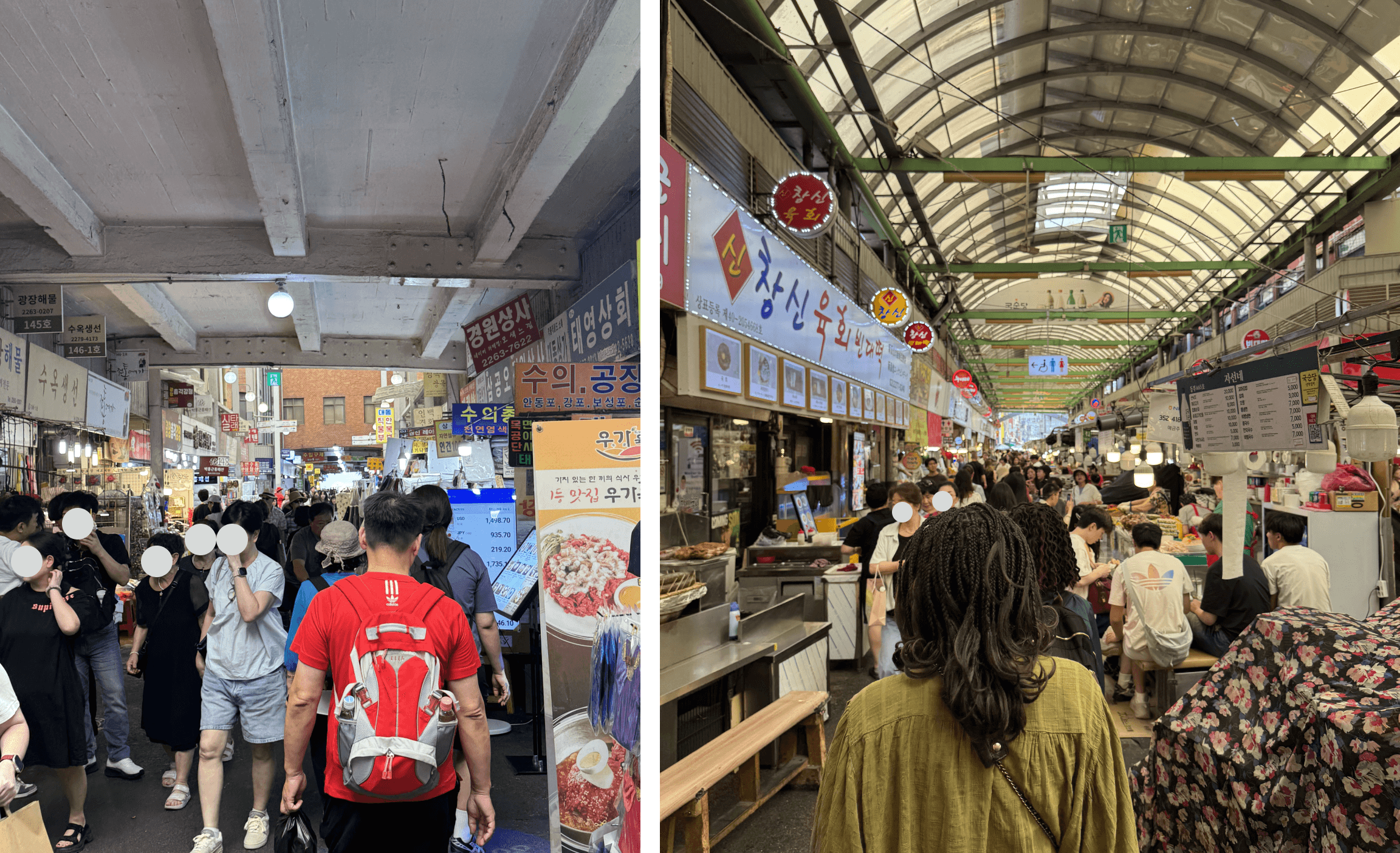
Even on weekday afternoons, Gwangjang Market's passageways are packed with foreign tourists. Many of those in line at the stalls are foreigners.
However, the flow of money moves slightly differently than physical impressions suggest. Over the past year, food sales in the Gwangjang Market area were 48.3 billion won, actually down slightly from the previous year. The growth happened in other sectors. Retail sales reached 35 billion won, up more than 20% in a year, and medical sales jumped by over 80% to 32.2 billion won. This trend is accelerating. Looking at the single month of May this year, retail and medical sales grew in the tens of billions of won, while food sales declined. While food draws people to the market, they actually open their wallets more for things outside of food. Alongside the multi-language gimbap and sundae menus, new foods like gelato have set up shop.
A closer look at the increased retail sales reveals two notable points. One is bedding. Gwangjang Market originally started as a silk and textile market, and going to Gwangjang to buy bedding for weddings was long a consumer tradition for locals. On top of that, foreign consumption has been added. As the quality and price of Korean bedding spread through social media, the bedding alley became famous, particularly among Taiwanese tourists. According to CBRE Korea Retail data, the average transaction amount at bedding stores in the Gwangjang Market area exceeds 230,000 won. Items that have anchored the market for a century are being sold again to new customers. What stands out is that local and foreign consumers are closely matched in bedding sales. At one bedding store in the area, foreign transactions slightly edged out domestic ones in May 2026 sales, while at other nearby stores, domestic sales were slightly ahead in tight races. Unlike fashion and beauty, where over 90% of sales rely on foreigners, domestic consumers still support about half of bedding sales, while foreigners drive the growth on top of that.
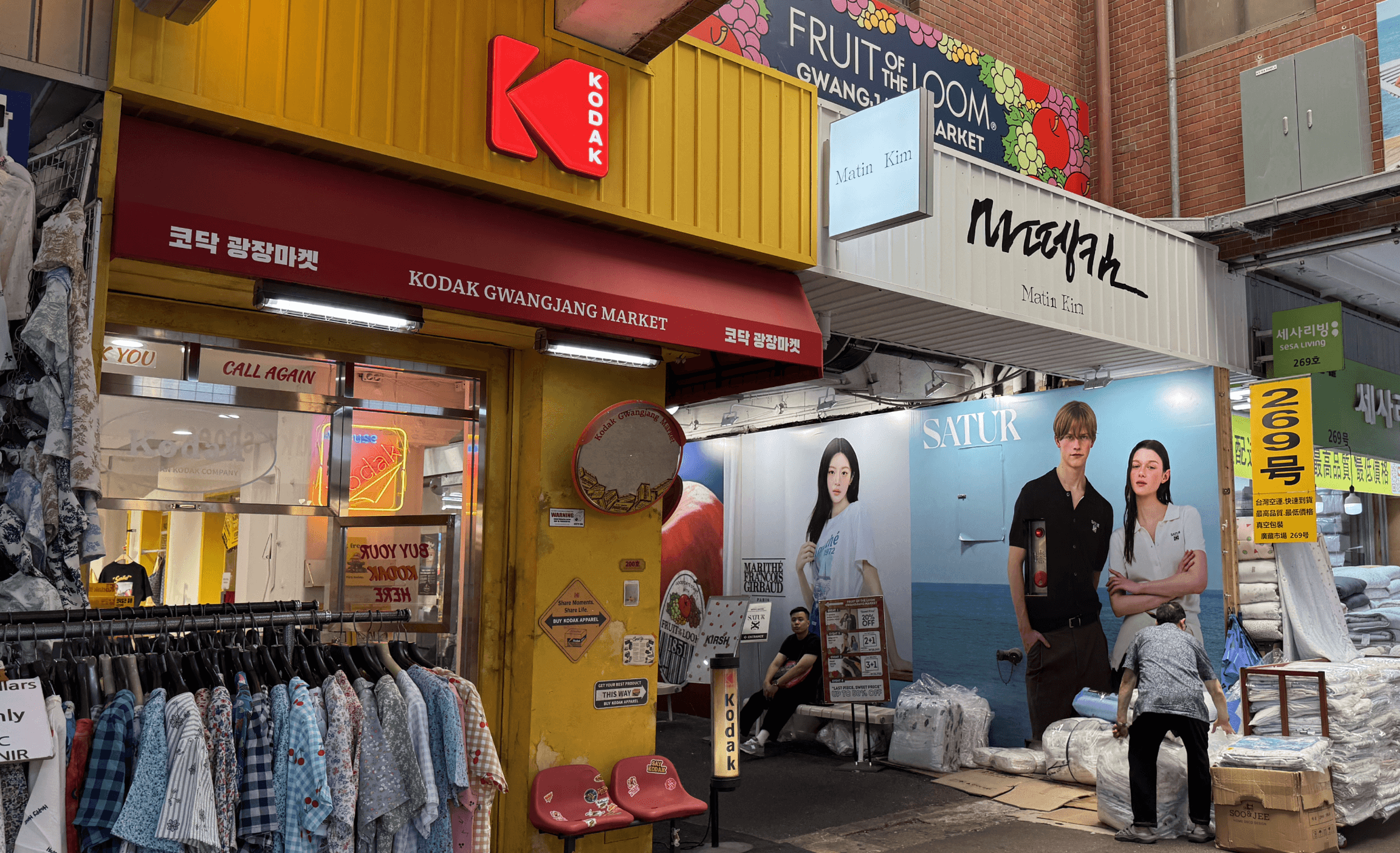
Brands like Kodak, Matin Kim, Setter, and Marithé François Girbaud are clustered together in the western gate area of the market.
The other is fashion and beauty. Since last year, brands like Olive Young, Kodak, Matin Kim, Setter, and Marithé François Girbaud have opened shops one after another in the western gate area, creating a fashion cluster within the market. This has been followed by K-beauty select shops, Starbucks, and eyewear brands. To locals, these are brands that can be found anywhere, but their sales results are formidable. According to a study by CBRE Korea Retail, Kodak and Setter House Gwangjang Market stores saw about 95% of their sales come from foreign customers as of May 2026.
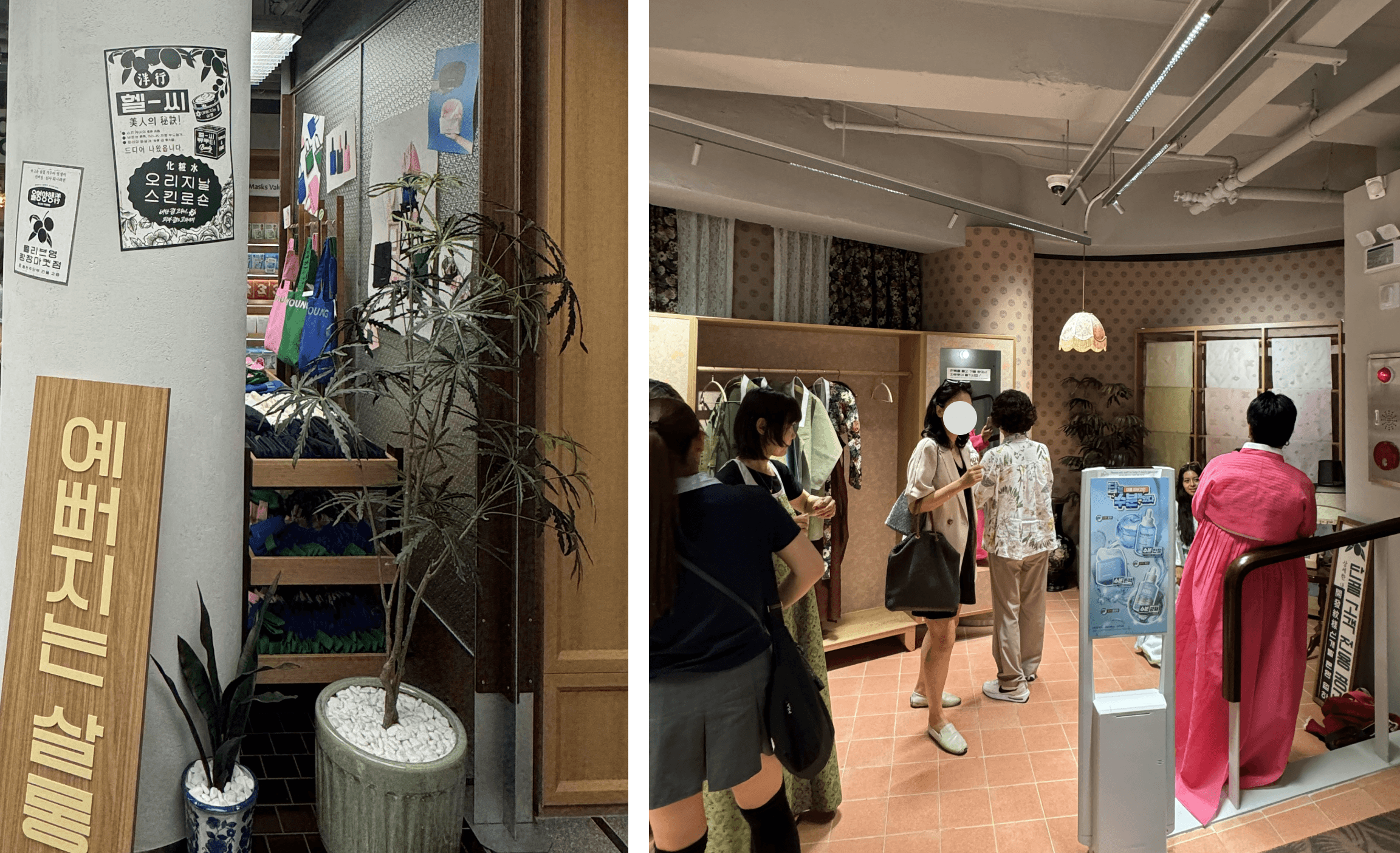
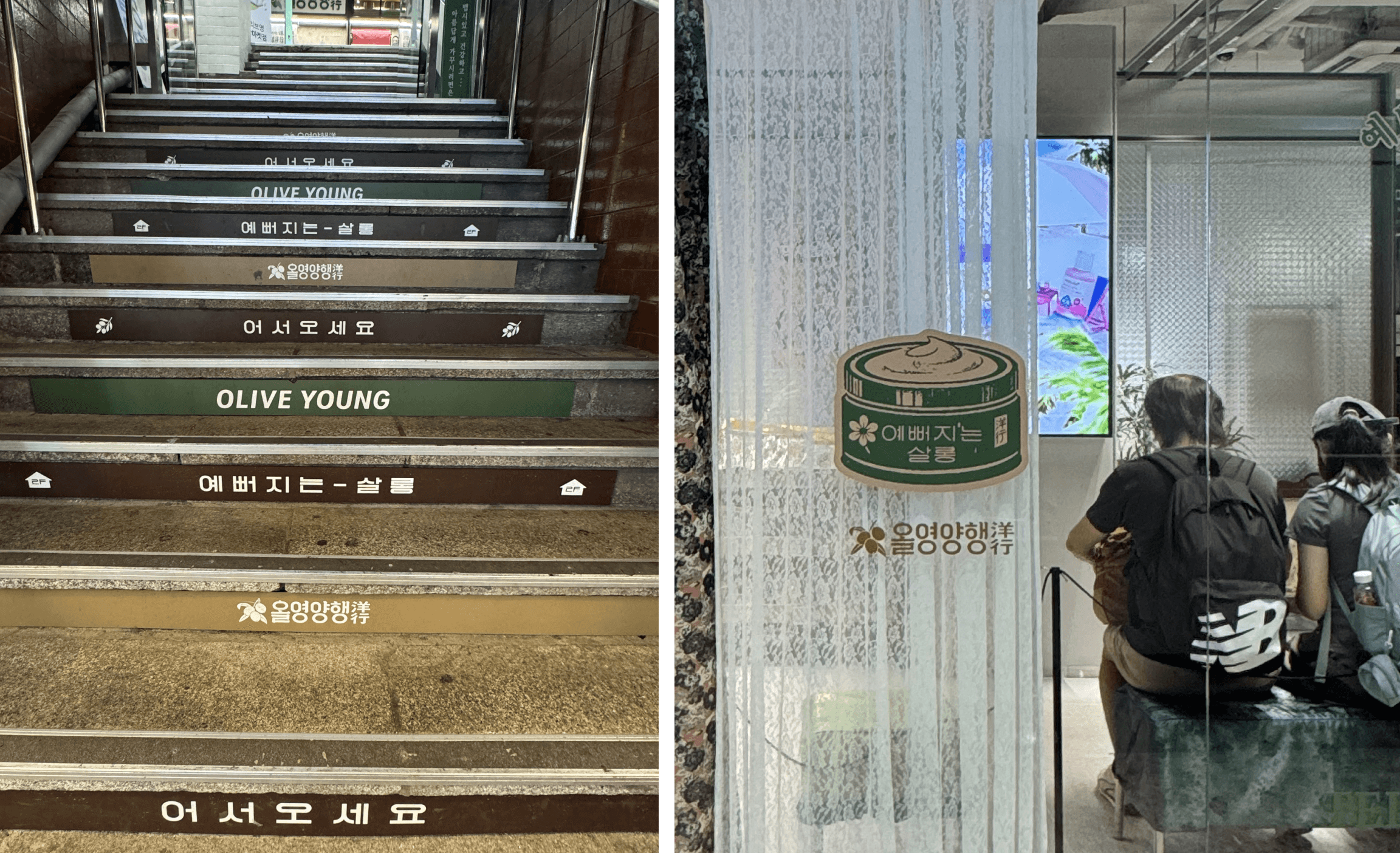
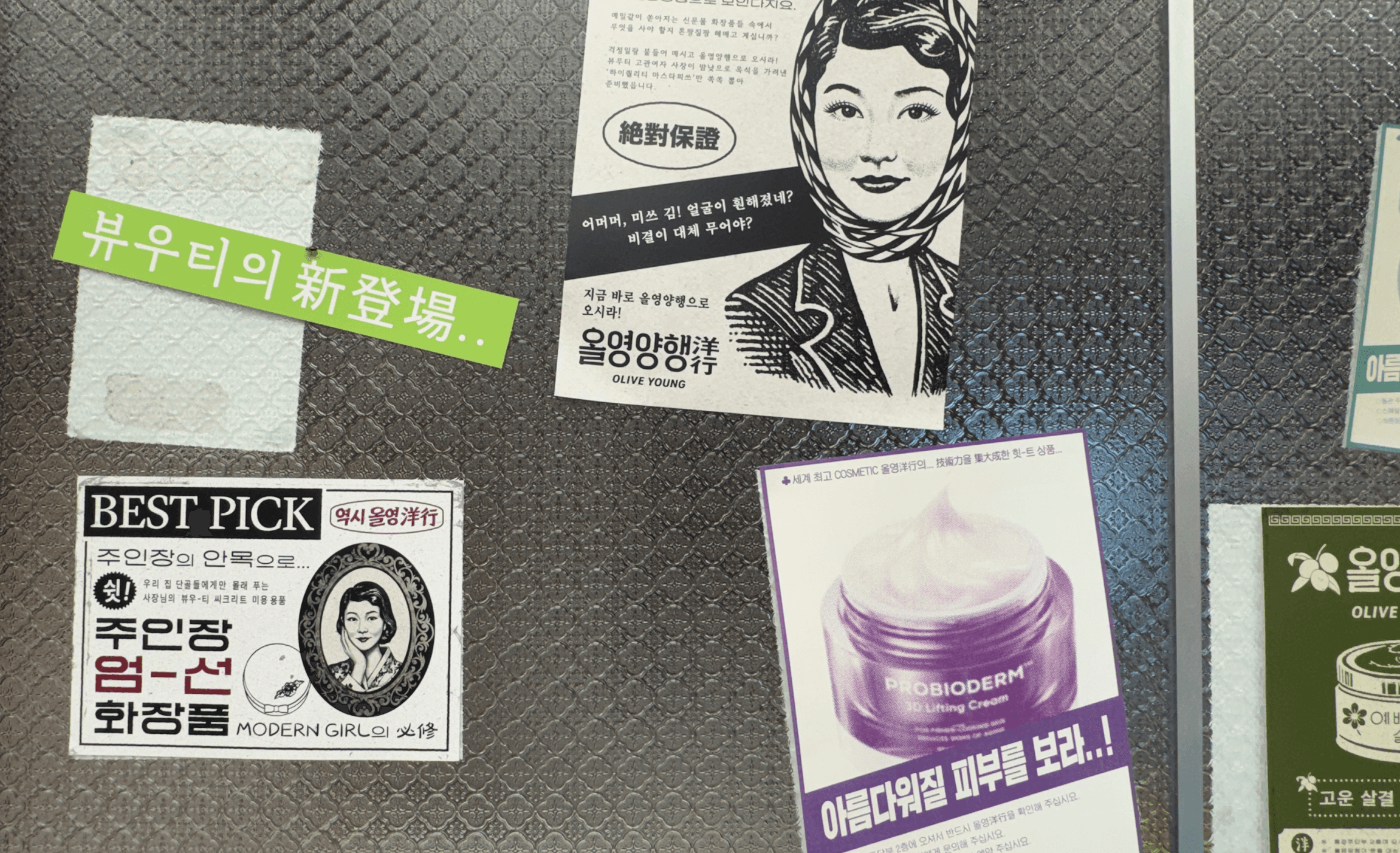
Olive Young opened 'Olyoung-yanghaeng' on the second floor of the fabric market. It features an early modern-themed beauty concept along with hanbok and fabric experience spaces.
The peak of this transformation is Olive Young, which opened on the second floor of the fabric market in April this year. The 800-square-meter store sports a sign reading 'Olyoung-yanghaeng' and features an early-modern hanbok photo zone and a personal color analysis corner using traditional fabrics. According to data, in May, over 80% of Olyoung-yanghaeng's sales came from foreigners, reaching a level comparable to Olive Young's major downtown stores. Daiso is also reportedly reviewing plans to open a store in Gwangjang Market.
Examining business units individually shows that dependence on foreign shoppers varies dramatically depending on the industry and the store. While newly introduced fashion and beauty brands drew 80% to 95% of their sales from foreigners as of May 2026, bedding remains a tight contest between locals and foreigners. Furthermore, pharmacies and F&B still see slightly higher sales from locals, excluding a few shops that have gone viral overseas. For instance, among pharmacies in the same Jongno area, some have foreign customer ratios exceeding 40%, whereas many others see nine out of ten customers being domestic. Jjang Game Center, which opened around the same time, generates about 88% of its sales from locals. The commercial retail development of Gwangjang Market is not a simple picture of the entire market shifting over to foreigners. It is more of a spectrum where the weight of foreign versus domestic demand varies from store to store.
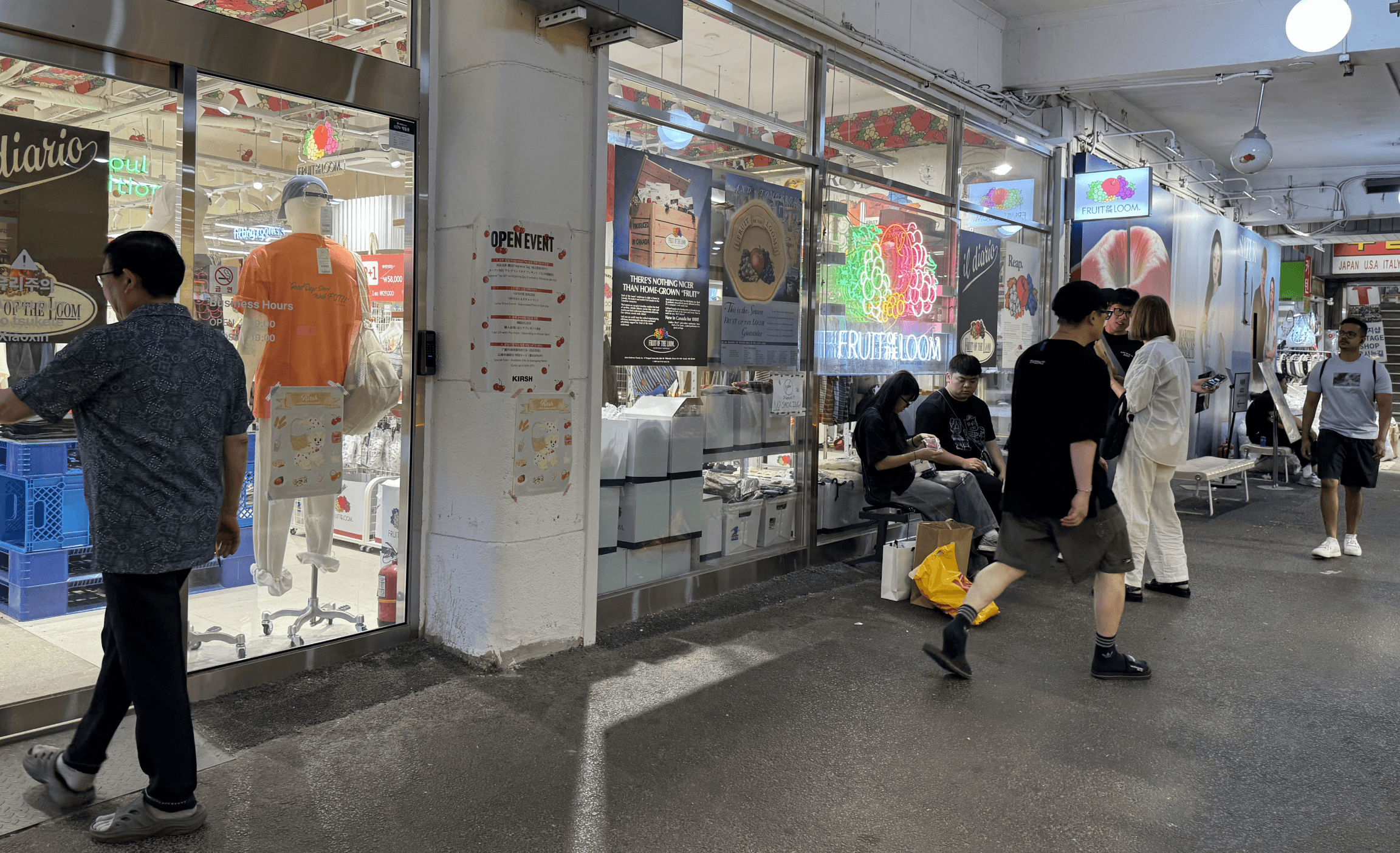
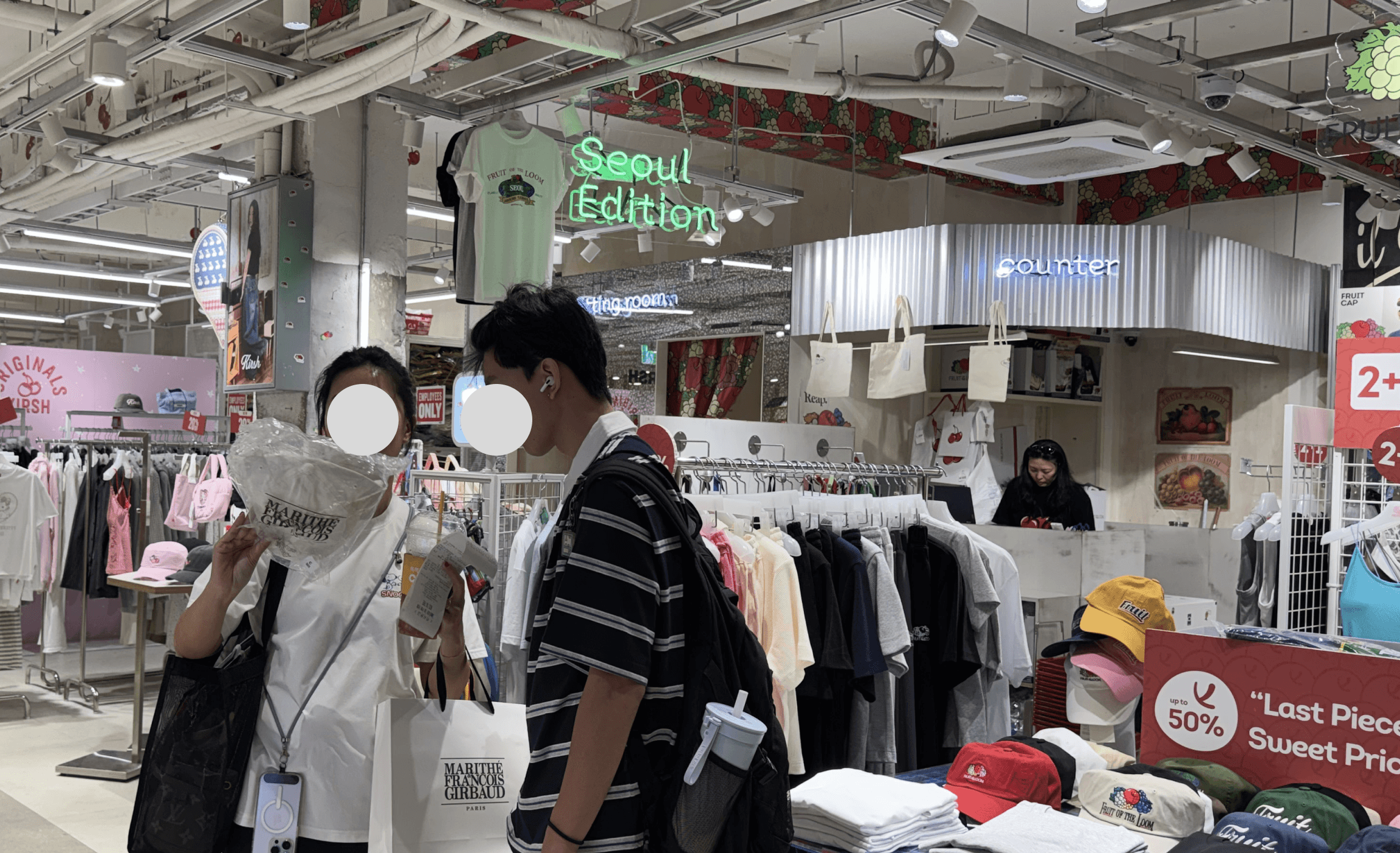
Fashion brands that have occupied spaces once filled by fabric shops. Though familiar to locals, they offer foreigners the experience of buying 'brands inside a market.'
This trend did not emerge overnight. Individual brands that recognized the market's unique character started moving in one by one starting over a decade ago. On top of that foundation, the new variable of incoming foreigners post-pandemic created the current momentum. What brands are buying in Gwangjang Market is not retail space, but context and heritage. Meanwhile, asking rents in the market have soared, creating a waiting list of brands trying to get in. Because lease terms are not standardized, some say that landlords can essentially ask for whatever price they want.
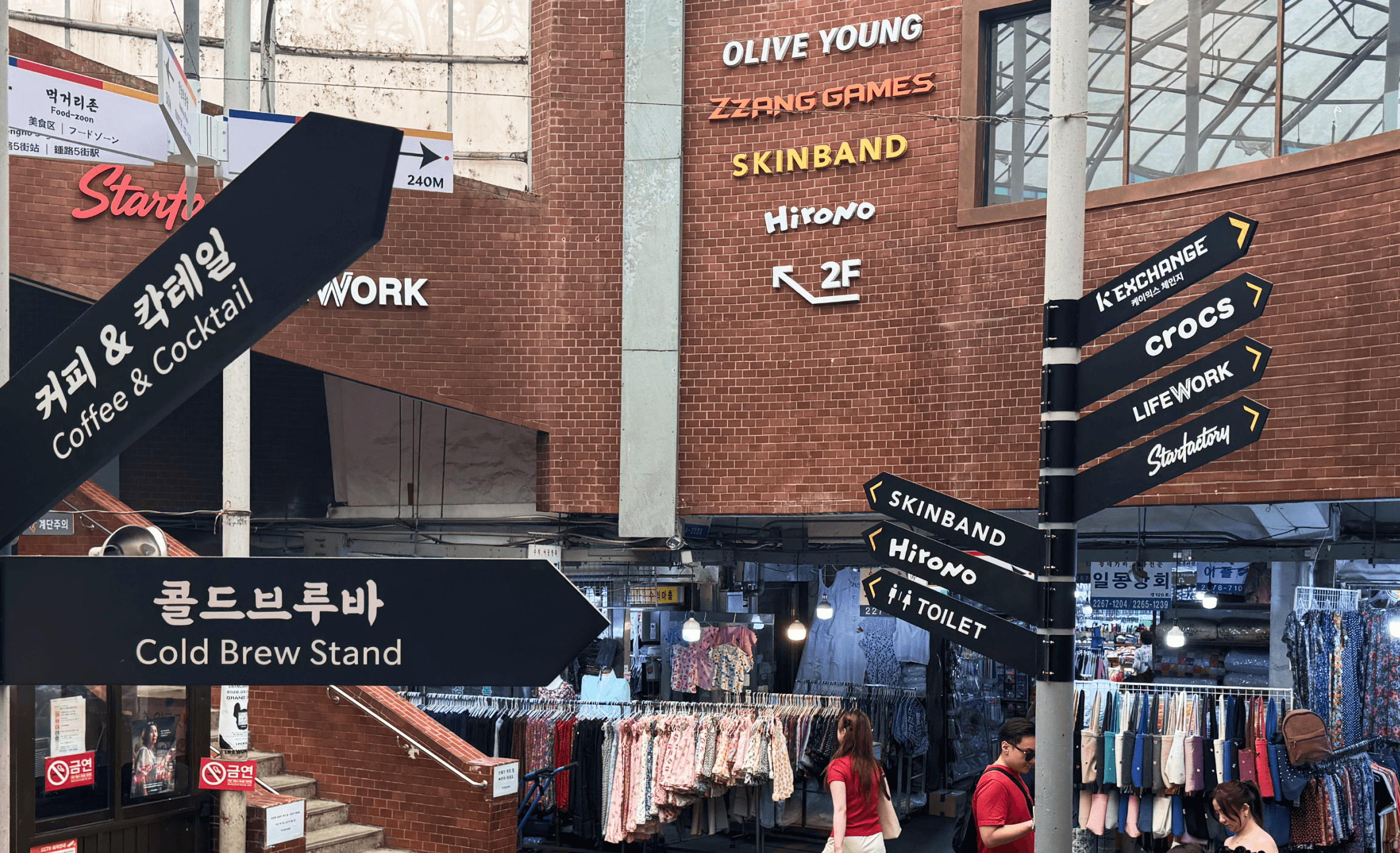
A signboard pointing to the street food zone alongside Olive Young, Jjang Game Center, and cafes. It highlights how the industry map of the market is being redrawn.
Namdaemun: The customers have changed, but what they sell remains the same

When entering the alleys of Namdaemun Market on a weekday morning, there is a noticeable increase in young customers.
Namdaemun Market, located right next to Sungnyemun (Namdaemun), which was the main gate of Joseon-era Seoul, is one of the largest and oldest traditional markets in South Korea. Positioned near Myeongdong and Seoul Station, it has long been famous as a wholesale hub for clothing, children's wear, eyewear, kitchenware, and imported general merchandise. The change in Namdaemun has a somewhat different character than Gwangjang Market. The clearest metric is the growth rate of foreign consumption. Based on CBRE Korea Retail's analysis, foreign revenue in the area jumped 60% in May this year compared to May last year.
What is strongly felt on-site is the prominent presence of Western visitors. The scenery created by old alleys, vintage street stalls, and half-century-old commercial buildings is a destination in itself for them. According to the data, the United States ranks first in foreign revenue, with Australia and Canada also high on the list. Even considering that these figures include hotel lodging transactions nearby, it is a distinctly different composition from Gwangjang Market, which is driven by Japan and Taiwan. Their style of consumption is also different. Rather than spending large amounts at brand-name stores, they prefer to wander the alleys and buy small, vintage items.
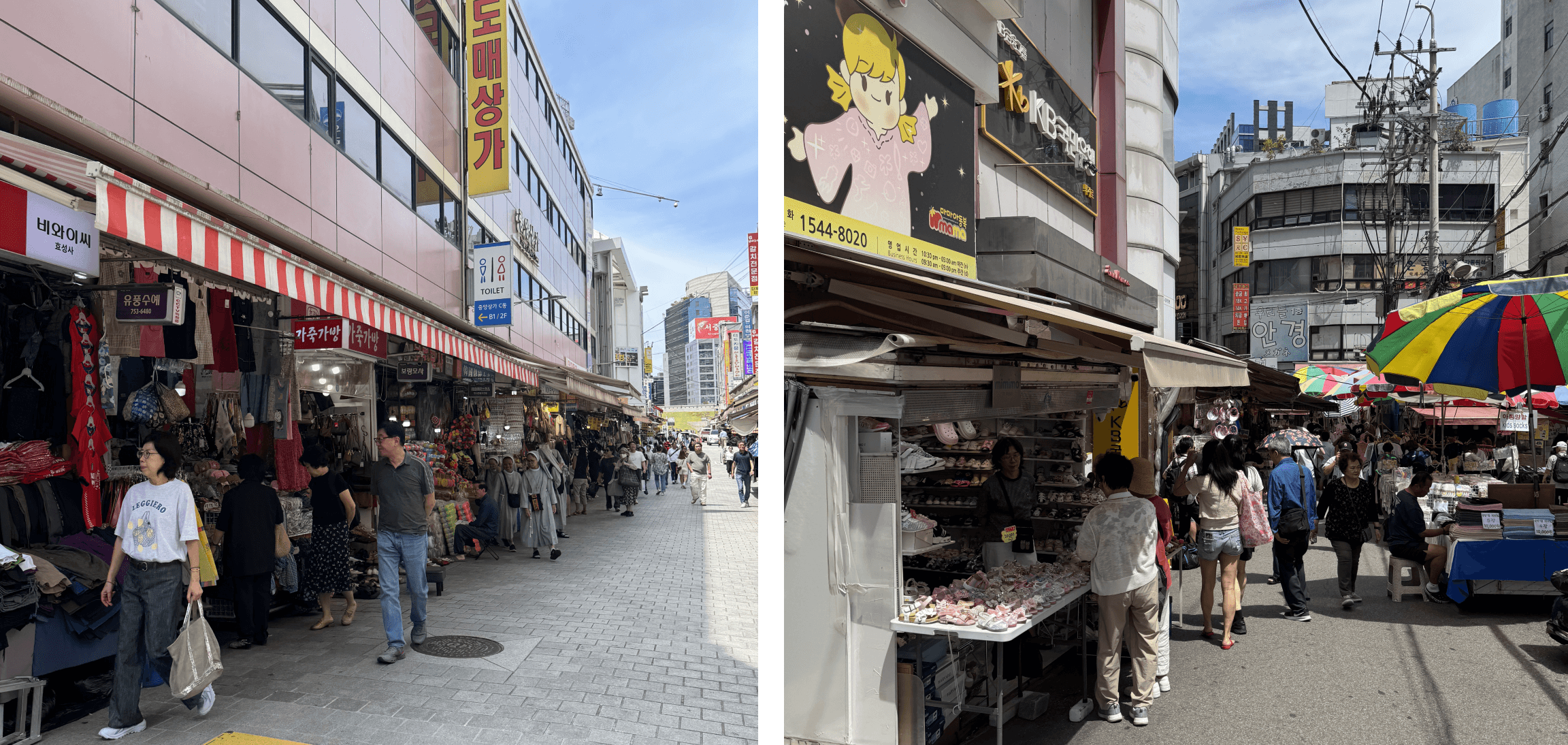
The general merchandise wholesale building (left) and children's clothing alley (right). The streets of wholesale are transforming into stages of retail.
As a result, the pillars of Namdaemun retail remain old, practical industries. Healthcare sales in the area, driven by pharmacies, grew nearly 20% in a year, and nearly ten pharmacies are listed among the top sales locations in the district. Eyewear is similar. Namdaemun's eyewear alley, where glasses can be made in a single day, has long been a famous course among foreigners. The transaction amounts per ticket at optical shops in the alley range from 150,000 won to as high as 800,000 won. The transaction amount per ticket at bedding stores also exceeds 490,000 won, showing that the bedding consumption observed in Gwangjang Market is happening in Namdaemun as well.
Supporting this pillar is the unique rhythm of Namdaemun. Whether in Gwangjang or Namdaemun, the busiest day is Saturday, and both markets become quiet on Sundays. However, Namdaemun's weekday sales are as solid as its holiday sales. The old foundational strength of early-morning wholesale operations and weekday merchant transactions is still alive, and weekend tourist consumption is simply another layer added on top of it.
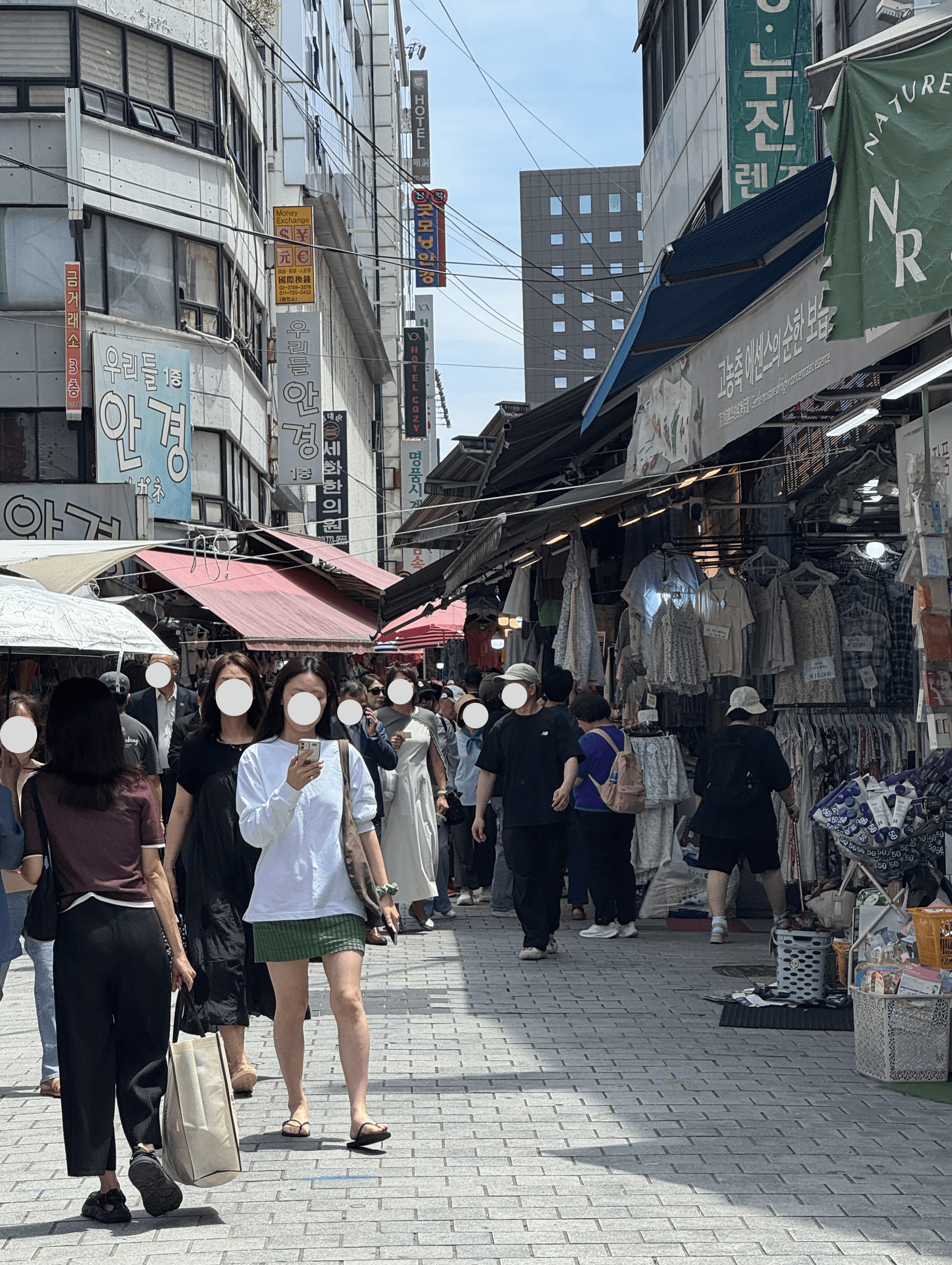
An alley in Namdaemun Market crowded with domestic visitors of various age groups, unlike Gwangjang Market.
On top of this solid foundation, customers of a completely different character are arriving. Namdaemun's children's clothing market is a prime example. The wholesale street, where nationwide retailers used to source their inventory, is now opening up as a retail stage where individuals come to pick out and buy one or two pieces of clothing directly. In fact, four merchants in the building confirmed they have all seen a sharp rise in individual shoppers lately. While wholesale remains the base, foreign tourists pour in from energy-filled morning hours through lunchtime to purchase items directly. After that peak period passes around 3 PM, the alley becomes quiet once again. Another axis of individual customers consists of young parents in their 20s and 30s. According to an Edaily report, 'practical digging consumption'—where parents directly weigh fabric, design, and price in Namdaemun's alleys instead of buying luxury brand children's wear at department stores—is spreading among millennial and Gen Z parents. It aligns with modern consumption habits that avoid wasting any money while refusing to compromise on taste. The numbers point in the same direction. According to Euromonitor, the domestic infant and children's clothing market grew from 1.9146 trillion won in 2019 to 2.6295 trillion won last year, while the luxury children's clothing market saw its growth stall, going from 397.4 billion won in 2023 to 394.7 billion won the following year. Footsteps leaving luxury halls are flowing into Namdaemun alleys.
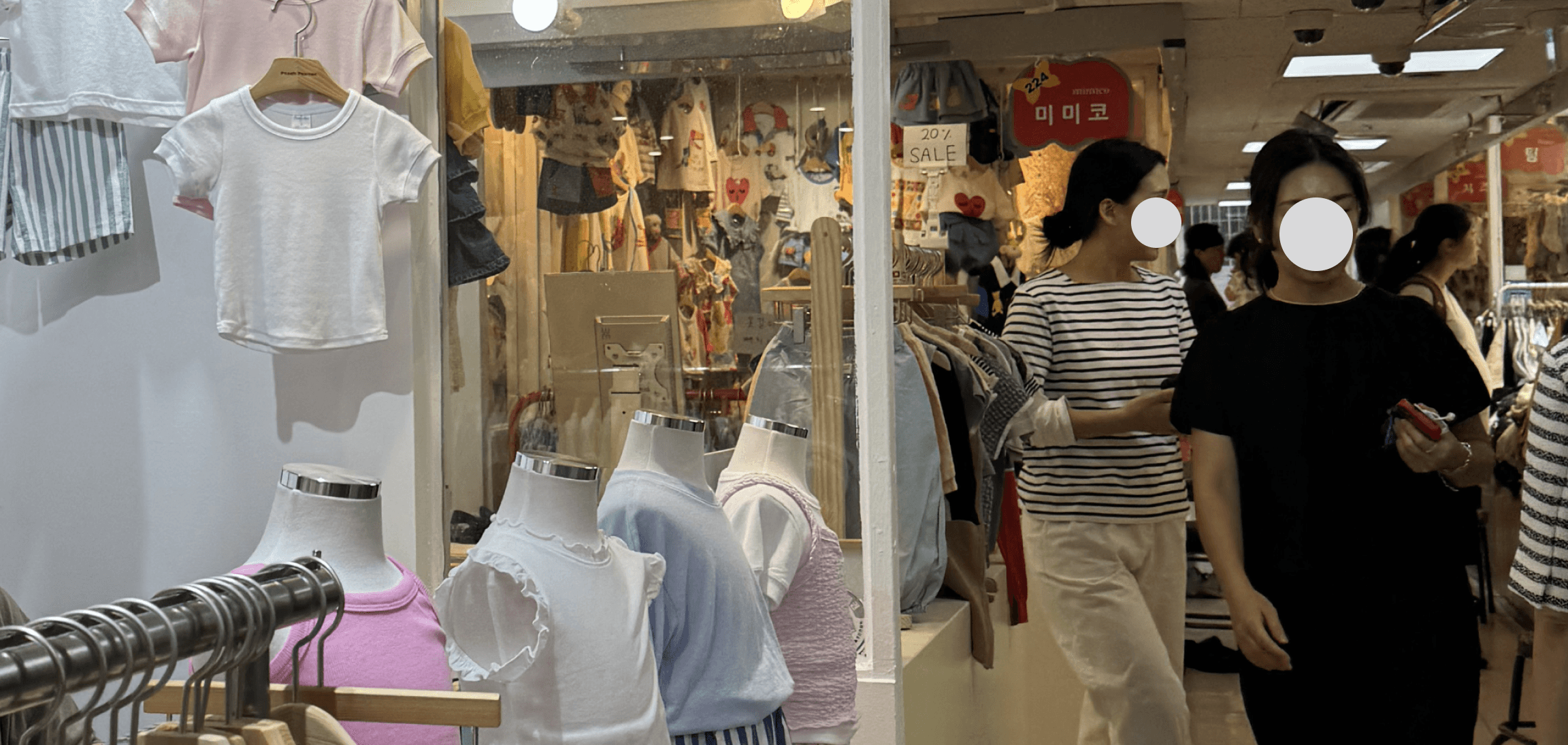
Parents in their 20s and 30s, choosing fabrics and designs directly here instead of opting for department store luxury brands, have entered the Namdaemun children's clothing market as new customers.
The asset known as 'market-likeness' (market authenticity)
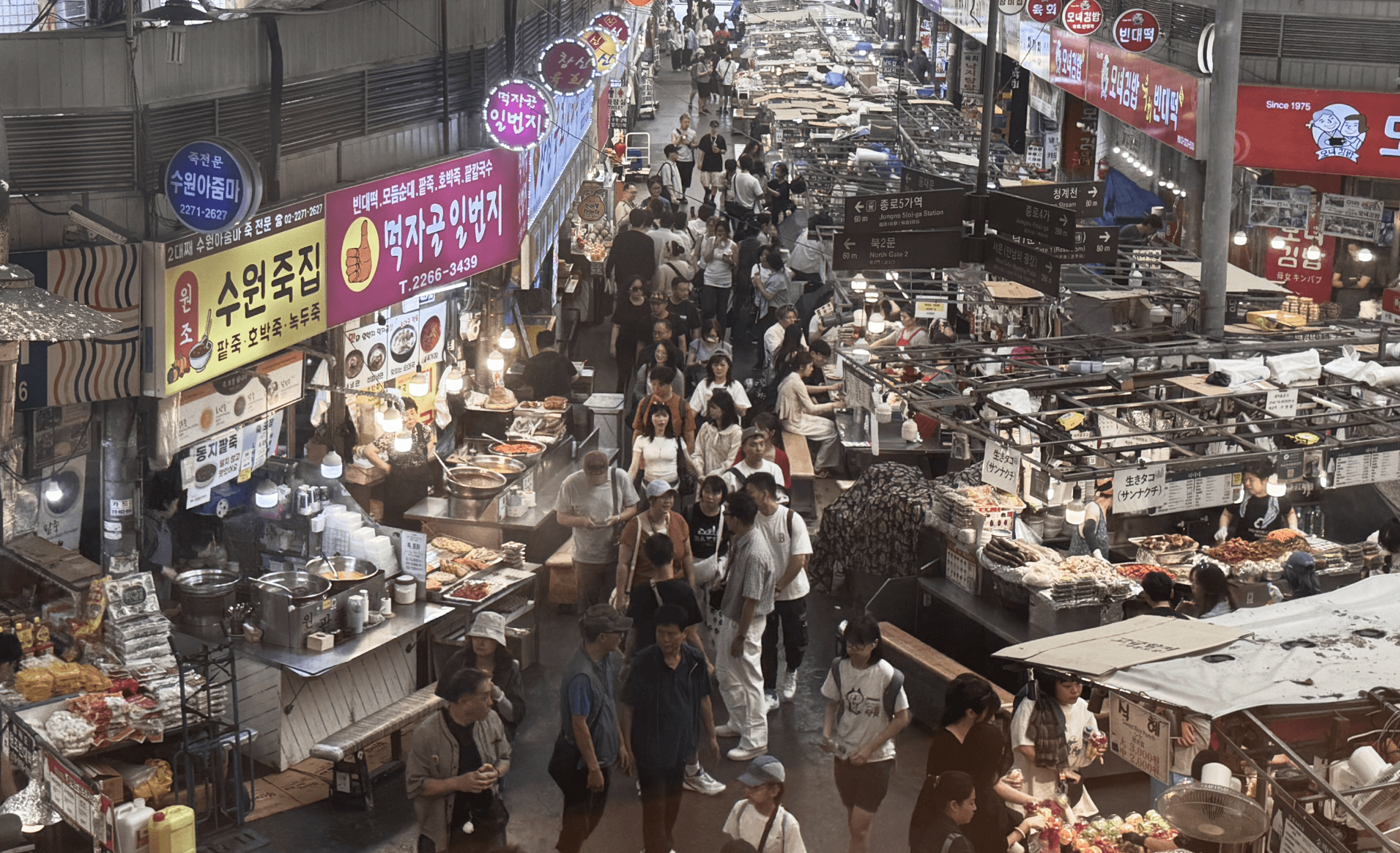
The food alley of Gwangjang Market. It is packed with tourists even on a weekday morning.
However, this shift is not entirely welcomed in the market. As Gwangjang Market has shifted its focus heavily toward tourists, its original function of supplying ingredients and daily necessities to local residents has weakened. Side-dish shops, vegetable stalls, and meat counters are disappearing one by one, and merchants whisper that it is hard to find Korean customers on weekdays. Paradoxically, reactions are also appearing among tourists. Feedback has emerged that it is difficult to feel authentic 'Koreanness' in markets that have been too polished and renovated for foreigners.
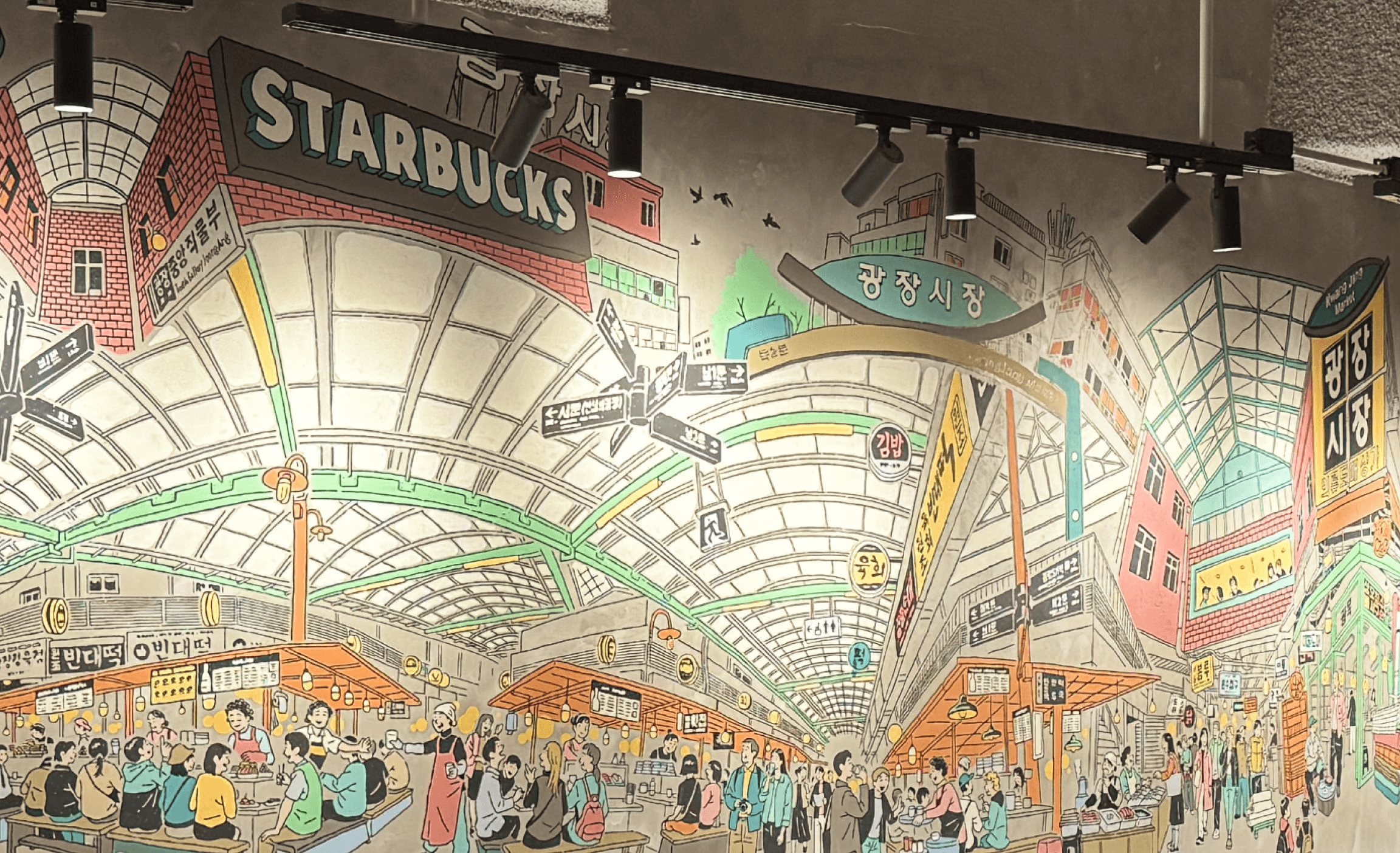
Starbucks opened in Gwangjang Market. It has translated the market scenery into a mural.
Therefore, what makes it worth watching is the attitude of the newly entering brands. Some brands have provided matching uniforms for nearby vendors upon opening or developed collaborative menu items with adjacent stalls. Other brands deliberately avoid offering items that overlap with existing market food. These are attempts to integrate with the market rather than just consume its atmosphere. The sustainability of commercial development in traditional markets ultimately depends on this. If what brands borrow is not just space but the authenticity of the market itself, preserving that authenticity becomes the very way to protect sales.
So, how does a traditional market become retail once again?
The answer lies not in what new things the market brings in, but in how what it originally possessed is valued. The century-old passage of time in the alleys, the worn touch of long-standing shops, and the bustling noise of bargaining—when this irreplicable 'stacked history' becomes a product, the market emerges as a brand new form of retail.
Gwangjang and Namdaemun are two cases of selling that sensibility. In Gwangjang Market, brands buy the heritage accumulated over generations rather than just retail counters. Although stores can be opened in Myeongdong or Seongsu, the experience of encountering a brand in a hundred-year-old market alley is only sold here. In Namdaemun, conversely, traditional industries gain new customers thanks to that very sensibility. Legacy items like glasses, medicine, bedding, and children's clothes greet both foreign tourists looking for the old charm of Seoul and young parents searching for practical choices. While they appear to diverge on the surface between brand influx and customer expansion, the core assets these two markets sell are ultimately one and the same.
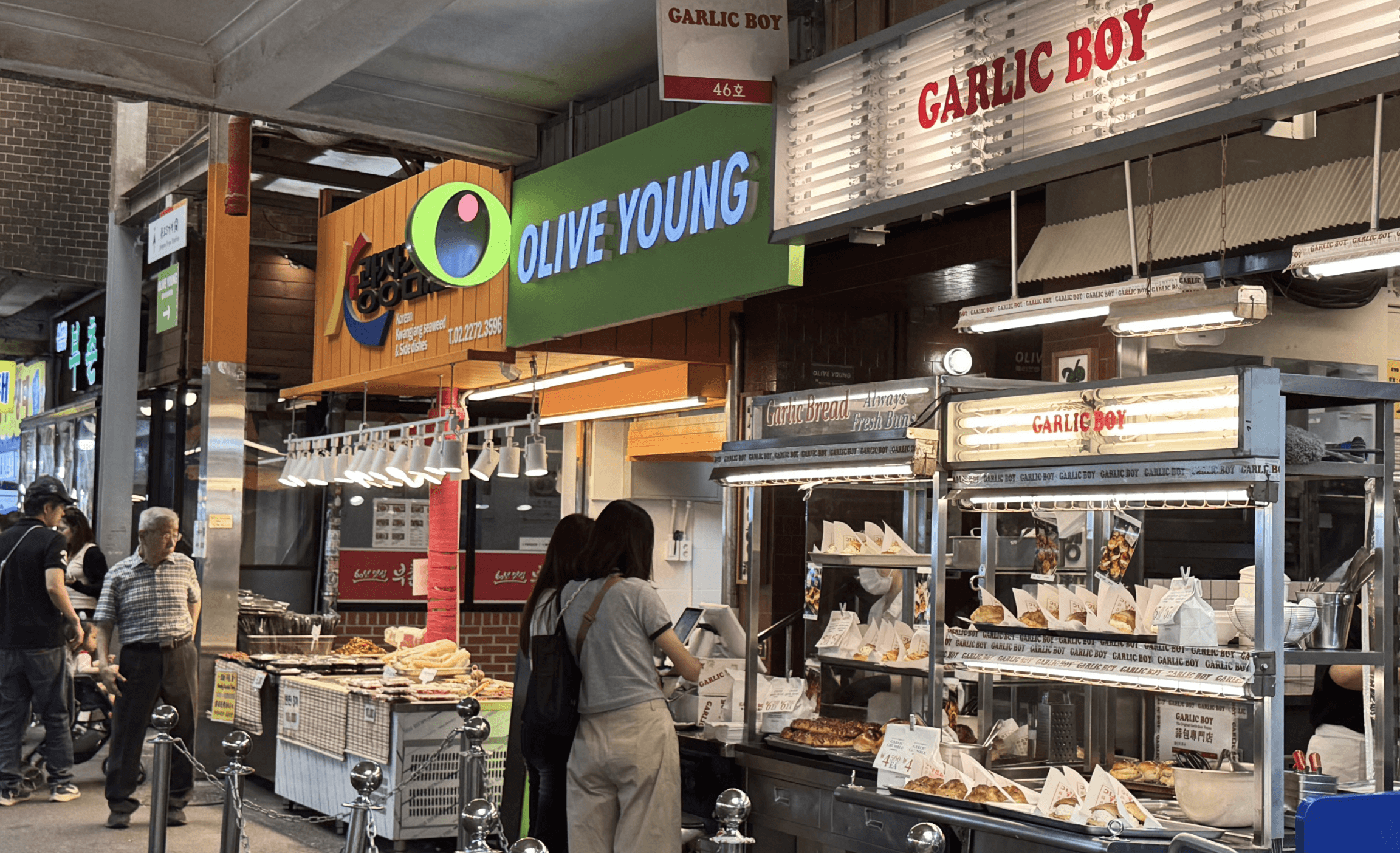
The current state of Gwangjang Market, where newly entered brands (Olive Young) stand side-by-side with food stalls like Garlic Boy.
And this shift does not end with just one market. While Gwangjang draws brands inside, and Namdaemun prepares for its next turn by building traffic first, mainstream retail in nearby Dongdaemun has begun replicating the traditional market itself as a retail format. Hyundai Outlets Dongdaemun Branch is undergoing its first renovation in ten years to introduce about 60 new brands, centered around its second basement food hall. An entire floor of 4,595 square meters will be designed under the concept of an 'alley market' modeled after a traditional Korean market. This attempt targets incoming foreigners; in fact, foreign sales at Hyundai Outlets Dongdaemun Branch from January to May this year jumped 122% year-on-year, and the share of foreign sales reached 23.7%. According to the Korea Tourism Organization's Data Lab, the number of foreign visitors to Euljiro-dong in April was 318,304, up 16.8% compared to the previous year (Herald Economy, Money Today, E-Today, July 2, 2026). This indicates that beyond traditional markets becoming stages for retail, traditional markets have become a format that modern retail seeks to replicate.
The catch is that this core asset can wear out. The more a market is polished and standardized for tourists, the more the scent of history that they actually came to buy fades away. Therefore, the success of traditional market commercialization depends not on rents or revenue, but on how well the authenticity of the market is preserved while it is being commercialized. This is also why new brands leave out items that overlap with market food and make minimal changes to spaces.
What Gwangjang, Namdaemun, and Dongdaemun show together is that traditional markets can become an entirely different hybrid retail model from typical high streets. However, the question remains: while selling the oldest things, can they avoid losing that very age-old charm? In that answer, the final destination of traditional market retail will be divided not by decline, but by evolution.
© Copyright 2026. All rights reserved.
This publication has been prepared in good faith, based on CBRE Korea's current anecdotal and evidence based views of the commercial real estate market. Although CBRE Korea believes its views reflect market conditions on the date of this presentation, they are subject to significant uncertainties and contingencies, many of which are beyond CBRE Korea’s control. In addition, many of CBRE Korea’s views are opinion and/or projections based on CBRE Korea’s subjective analyses of current market circumstances. Other firms may have different opinions, projections and analyses, and actual market conditions in the future may cause CBRE Korea’s current views to later be incorrect. CBRE Korea has no obligation to update its views herein if its opinions, projections, analyses or market circumstances later change.
Nothing in this publication should be construed as an indicator of the future performance of CBRE’s securities or of the performance of any other company’s securities. You should not purchase or sell securities-of CBRE or any other company-based on the views herein. CBRE Korea disclaims all liability for securities purchased or sold based on information herein, and by viewing this publication, you waive all claims against CBRE Korea as well as against CBRE Korea’s affiliates, officers, directors, employees, agents, advisers and representatives arising out of the accuracy, completeness, adequacy or your use of the information herein. No part of this publication may be reproduced, quoted, distributed, or disclosed to any third party without the prior written consent of CBRE Korea.

place
Aug 10, 2026
A Department Store Where It Rains Twice: Takanawa Gateway City
Japan's Largest Retail Redevelopment Strategy: Selling 'Dwell Time'

place
Jun 29, 2026
Our Wellness, Unfolded by Mapo Butfit Clubhouse
A place where an entire building is dedicated to a day for people who workout.

place
Jun 15, 2026
63 Building: A Seoul Icon Returns to the Spotlight
The building in everyone's memories has returned as the space they want to visit most right now.
place
Apr 20, 2026
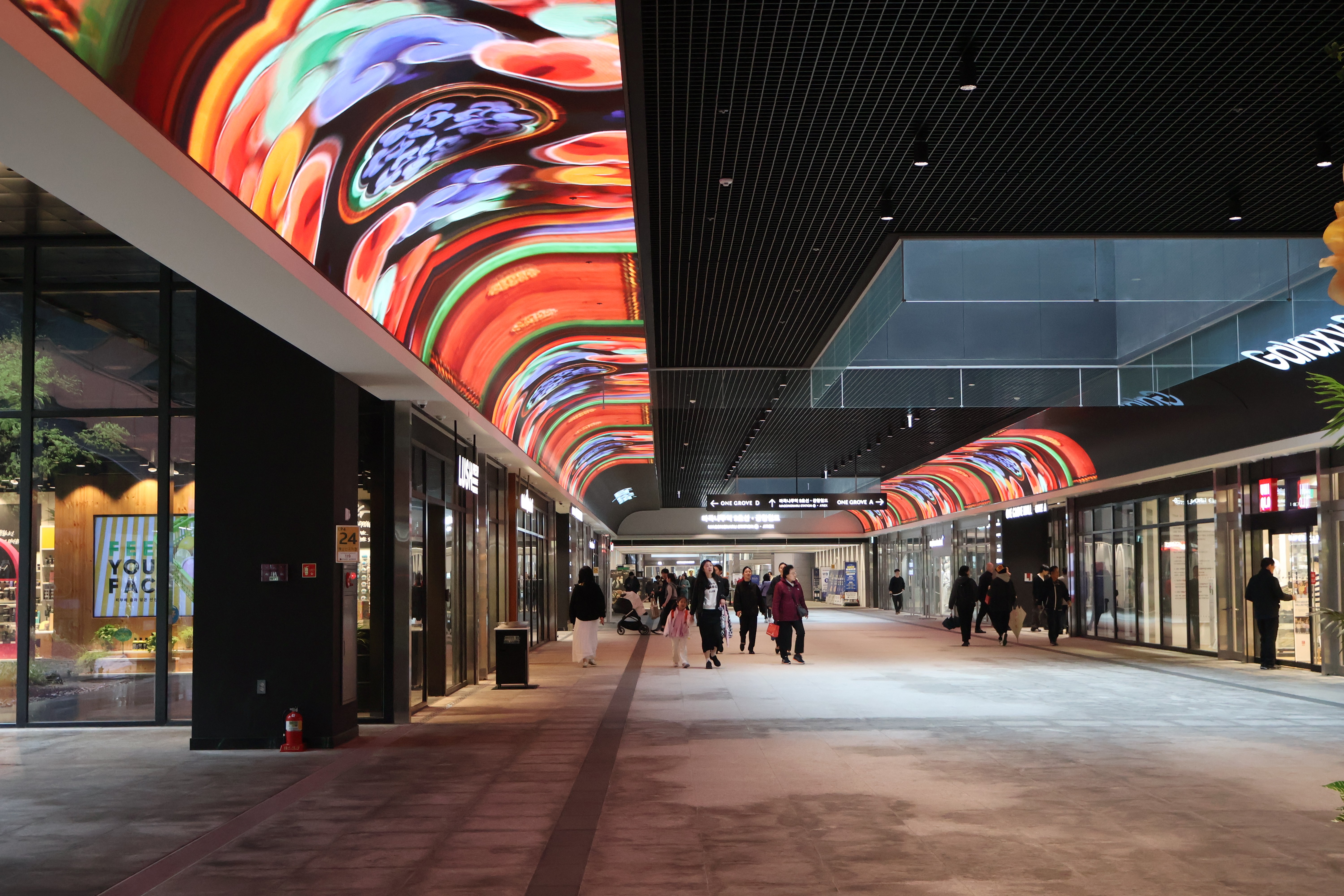
One Grove Magok: The Strategy Behind Filling 460,000 Sq Ft
A bold MD strategy, braving vacancy risks: Details of the 24/7 Hybrid Mall’s 141% Sales Growth
place
Apr 13, 2026
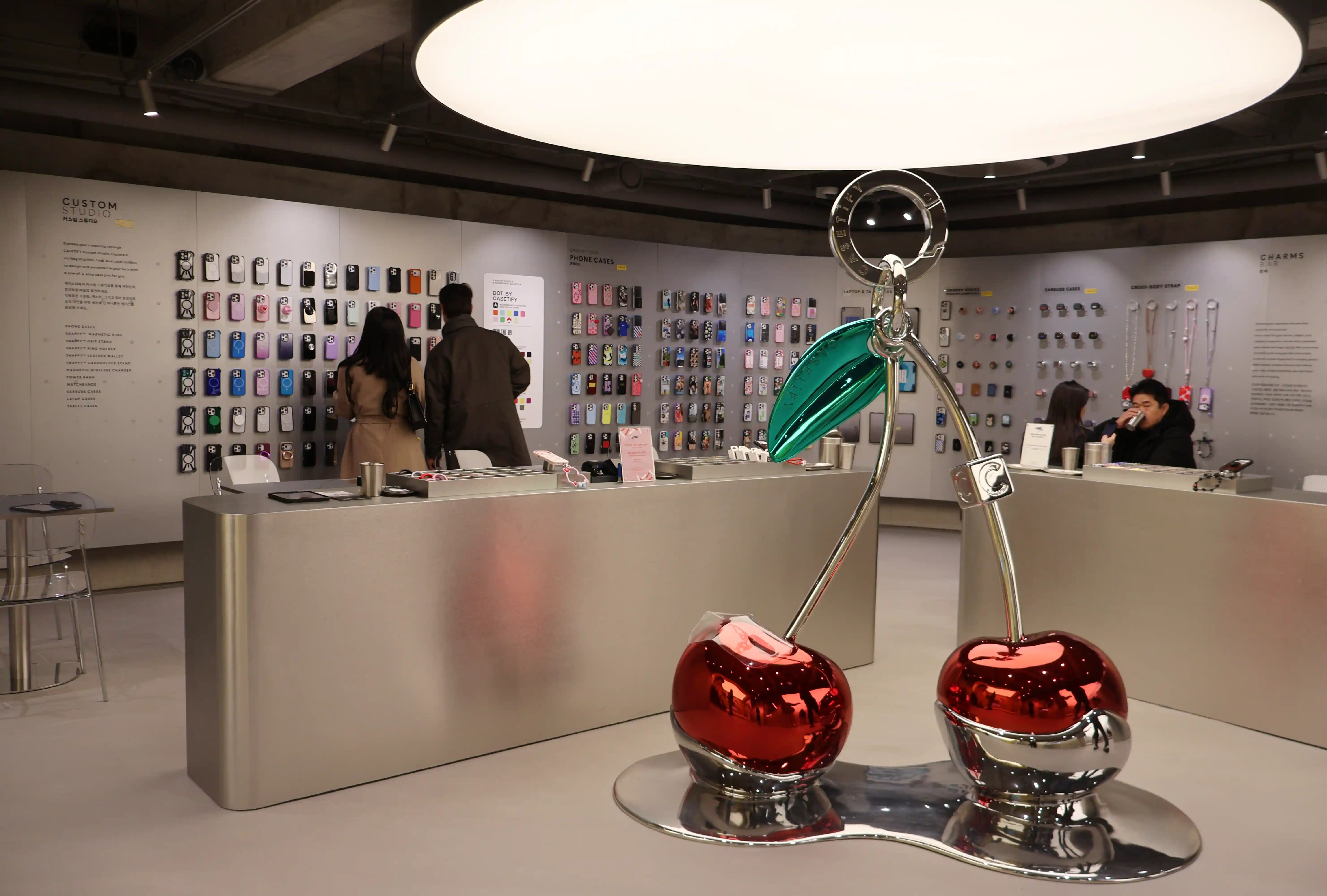
The Language Space Speaks
How spatial narrative drives dwell time, social content, and retail asset value in Seoul
place
Apr 13, 2026
CBD Retail: The Evolution of a 7-Day Asset
D-Tower, KT WEST, Gran Seoul — how Gwanghwamun's office retail moved from lunch-hour dependency to genuine all-day destination