Back
Share
Like

trend
Article Highlights
Kids and Pet Market Size Reaches All-Time High: Rising average transaction value driven by the "Ten Pocket" trend amid low birth rates and the expansion of the "Petconomy" in single-person households
Re-evaluation of Commercial Real Estate Tenant Status: Shifting from a filler MD on upper floors of department stores to anchor tenants that drive customer dwell time and cross-selling in complex malls and street-level shops
Differentiation of Offline Retail Experience Value: Space competition centered on sensibility, expanding to Seongsu-dong kids' showrooms, Namdaemun children's clothing alley exploration-based shopping, and pet hospitality
In the midst of structural changes such as population decline and the rise of single-person households, the standard market logic would dictate a decrease in consumption related to baby products and furniture. However, on the frontlines of offline retail, we observe growing lines waiting at kids' departments, high-priced baby products selling out immediately upon release, and reservation rates for pet-friendly resorts soaring.
In the past, the kids and pet categories were typically placed as functional assortment MDs in large commercial facilities or the fashion industry, mostly filling upper floors or leftover spaces. Recently, however, these two areas are being reevaluated as strategic tenants that extend customer dwell time in commercial real estate and drive coupled consumption. This is the result of a shift in consumption patterns, where a decrease in the absolute number of consumers (Volume) is offset by an increase in individual average transaction value and brand sensibility (Value).
The Youth Population Decline and the Counter-Trend of Market Size
Despite the recent temporary rebound in marriage and birth indicators, it is not enough to reverse the structural decline in the youth population caused by the cumulative effects of low birth rates. In fact, according to Statistics Korea, the youth population aged 0 to 14 has decreased to around 5.7 million in 2024, and estimates suggest it will soon shrink further to the low 5 million range.
However, the market size has grown contrary to this trend. According to Statistics Korea's Online Shopping Survey, the annual transaction value of children's and baby products hit a record high of approximately 5.48 trillion KRW in 2025. Additionally, according to the Korea Federation of Textile Industries' Korea Fashion Market Trend report, the children's clothing market also expanded from 1.8 trillion KRW in 2020 to 2.3 trillion KRW in 2025, posing a stark contrast to the stagnation of the adult clothing market.
The essence of this phenomenon lies in a consumption structure where spending is concentrated on a single child. The 'Ten Pocket' trend, where parents, both sets of grandparents, and relatives all open their wallets, has increased the acceptance of high-priced product groups. The same trend is confirmed in department store industry data and press releases. Based on BC Card analysis, sales of the top high-end luxury kids brands at major department stores increased by approximately 31.9% year-on-year, exceeding 2.5 times the 2020 levels. Shinsegae's children's wear sales from March to June 2025 rose by about 23% (domestic children's wear by about 27%), Hyundai Department Store's kids luxury brands grew by about 24.9% in 2025, and Lotte Department Store's luxury kids sales increased by about 30%.
The Rise of Kids MD as Anchor Tenants in Large Shopping Malls and the Horizontal Shift of Commercial Districts
Recently opened large commercial facilities and hot street districts are redesigning the kids category not as simple retail outlets, but as core anchor tenants that capture the lifestyle routines of the 3040 parent generation.
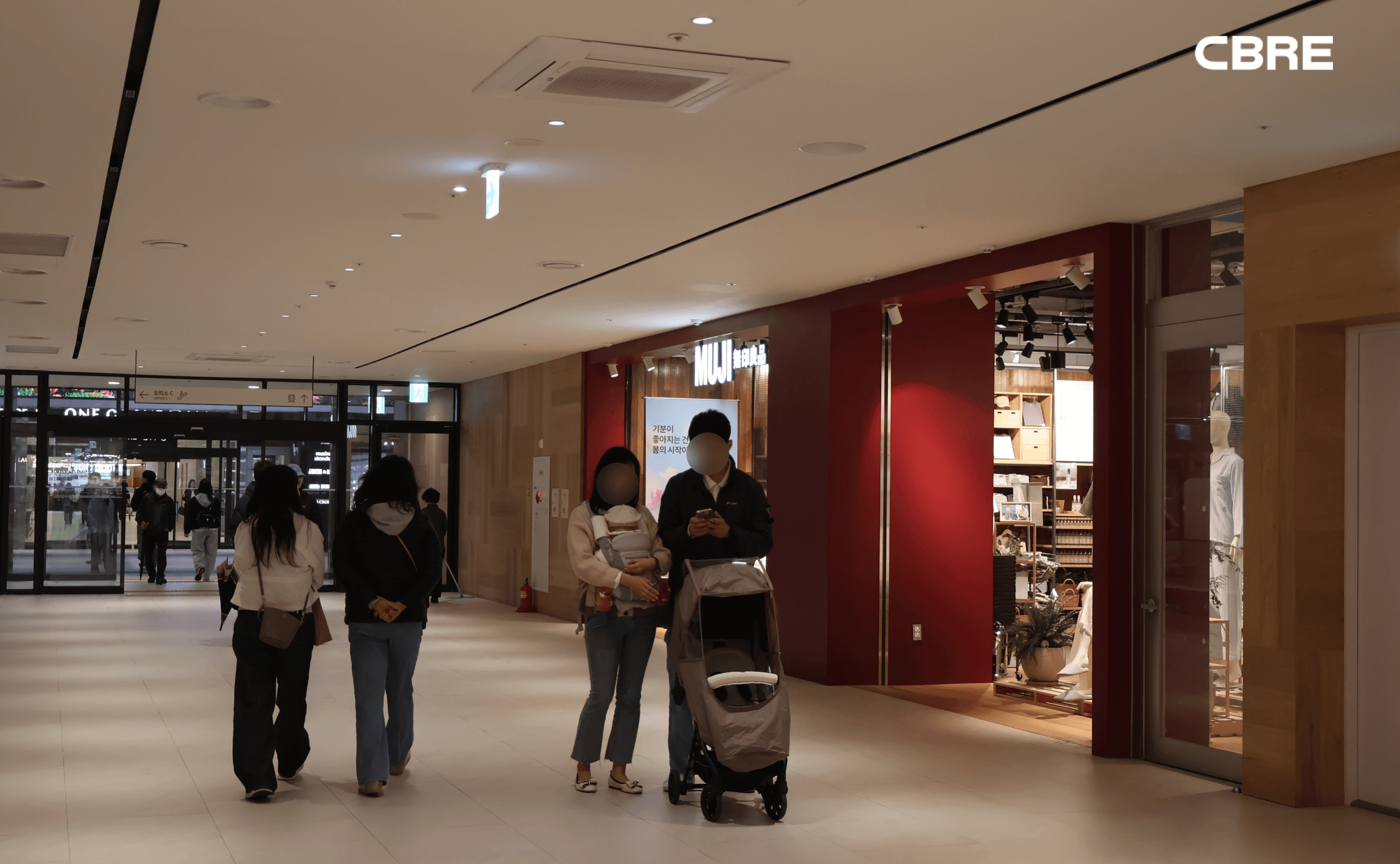
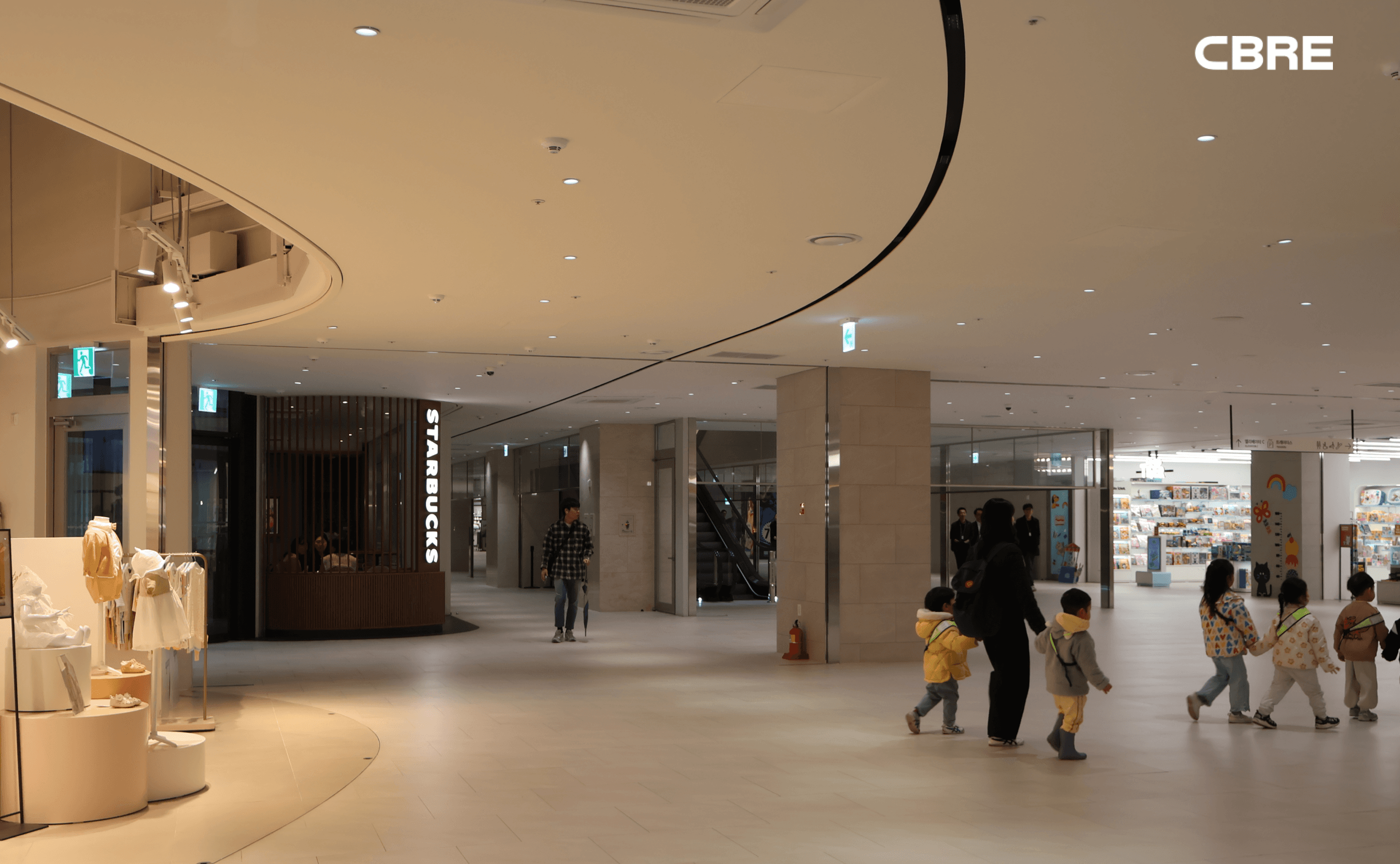
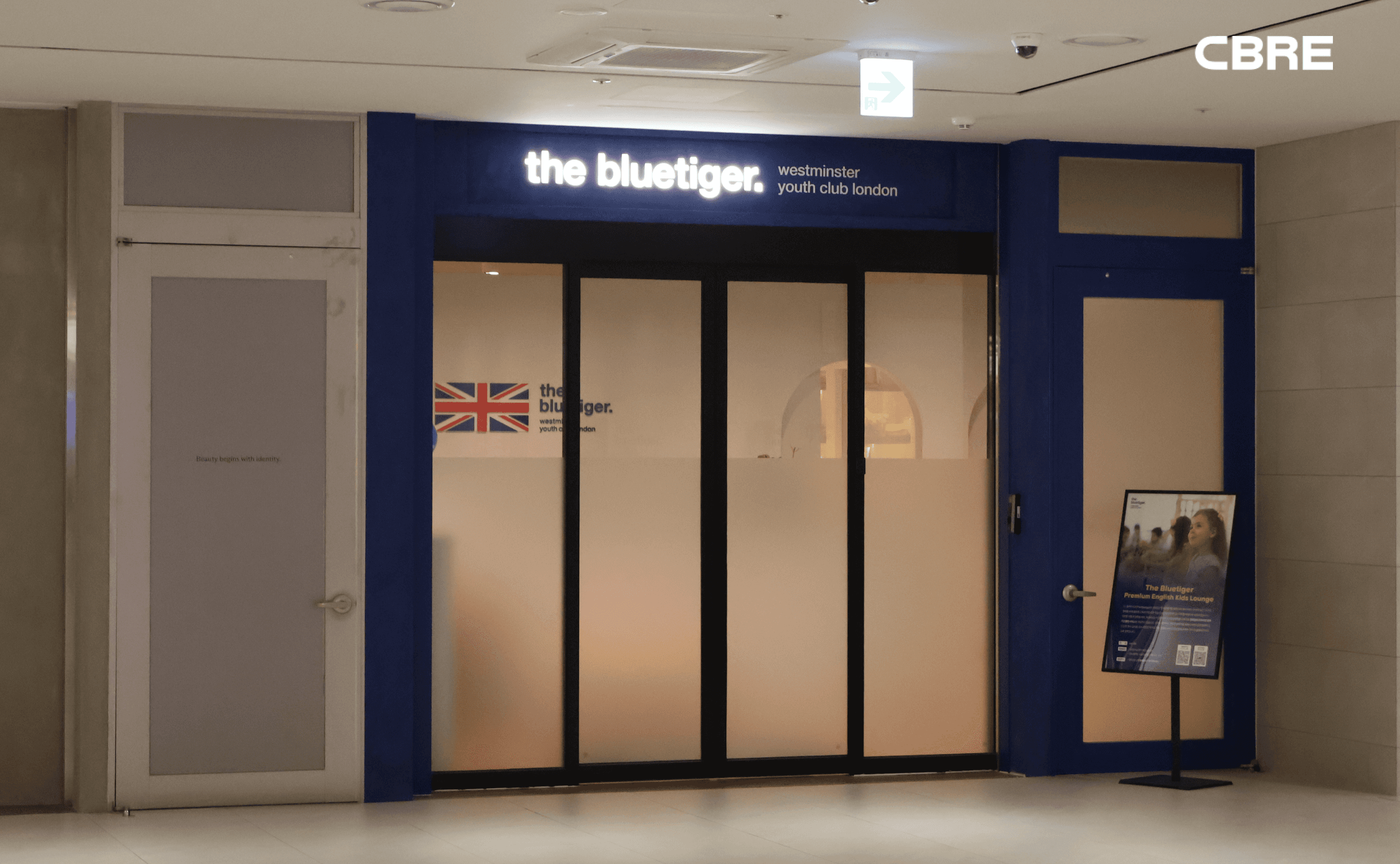
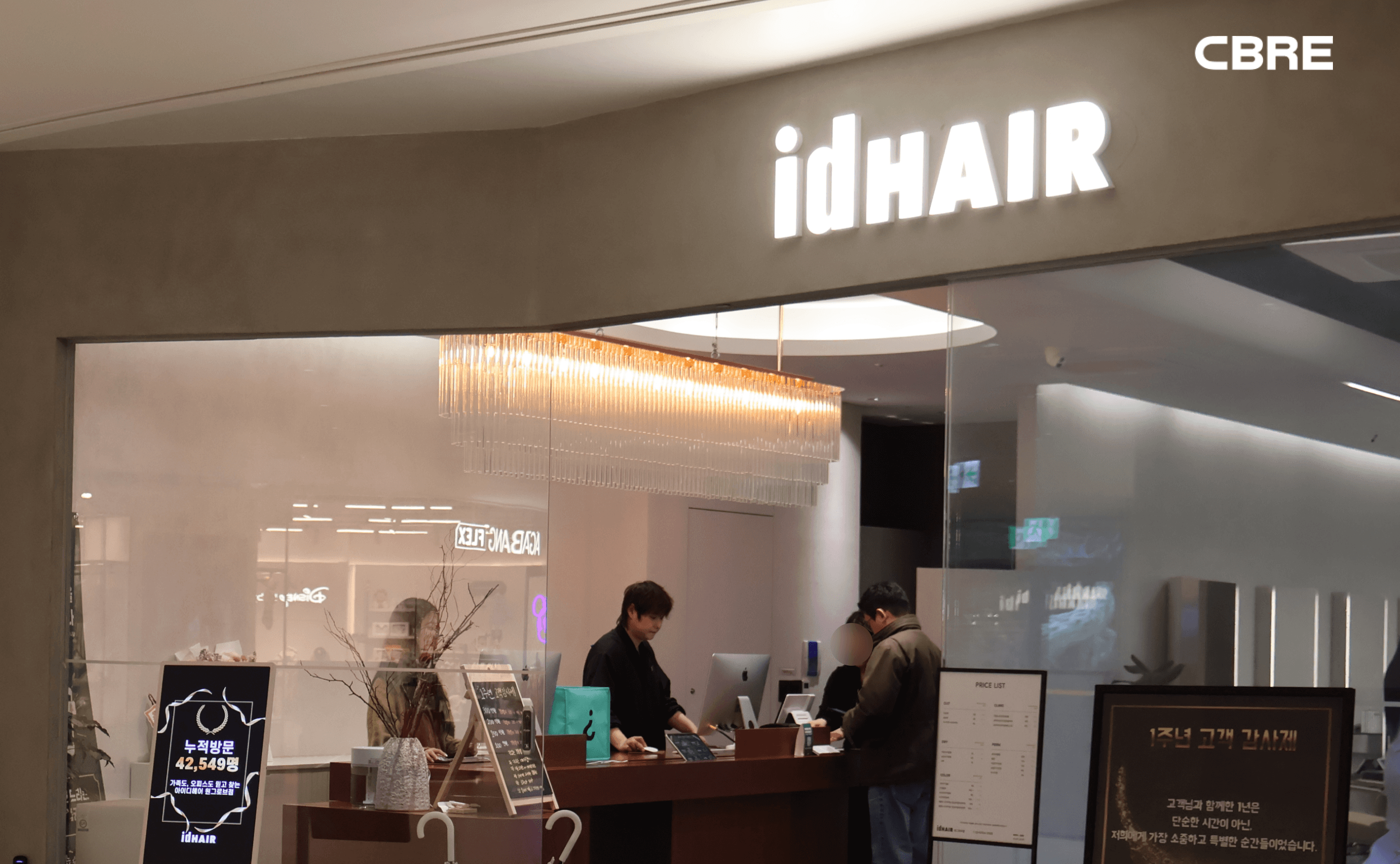
The 'Integrated Dwell-Type Kids Zone' MD Strategy of Complex Malls like Magok One Grove: The kids MD planning of ultra-large complex commercial facilities no longer stops at merely gathering individual children's clothing stores together as in the past. It designs a traffic flow structure that centers on experiential/learning spaces and kids' content zones for children, surrounded by premium hair salons, clinics, F&B, and fashion stores that parents can use after dropping off their kids. This is a strategic leasing model designed to induce 'purposeful visits' from families with infants and children in their 30s and 40s, while simultaneously maximizing dwell time per visit and cross-selling values.
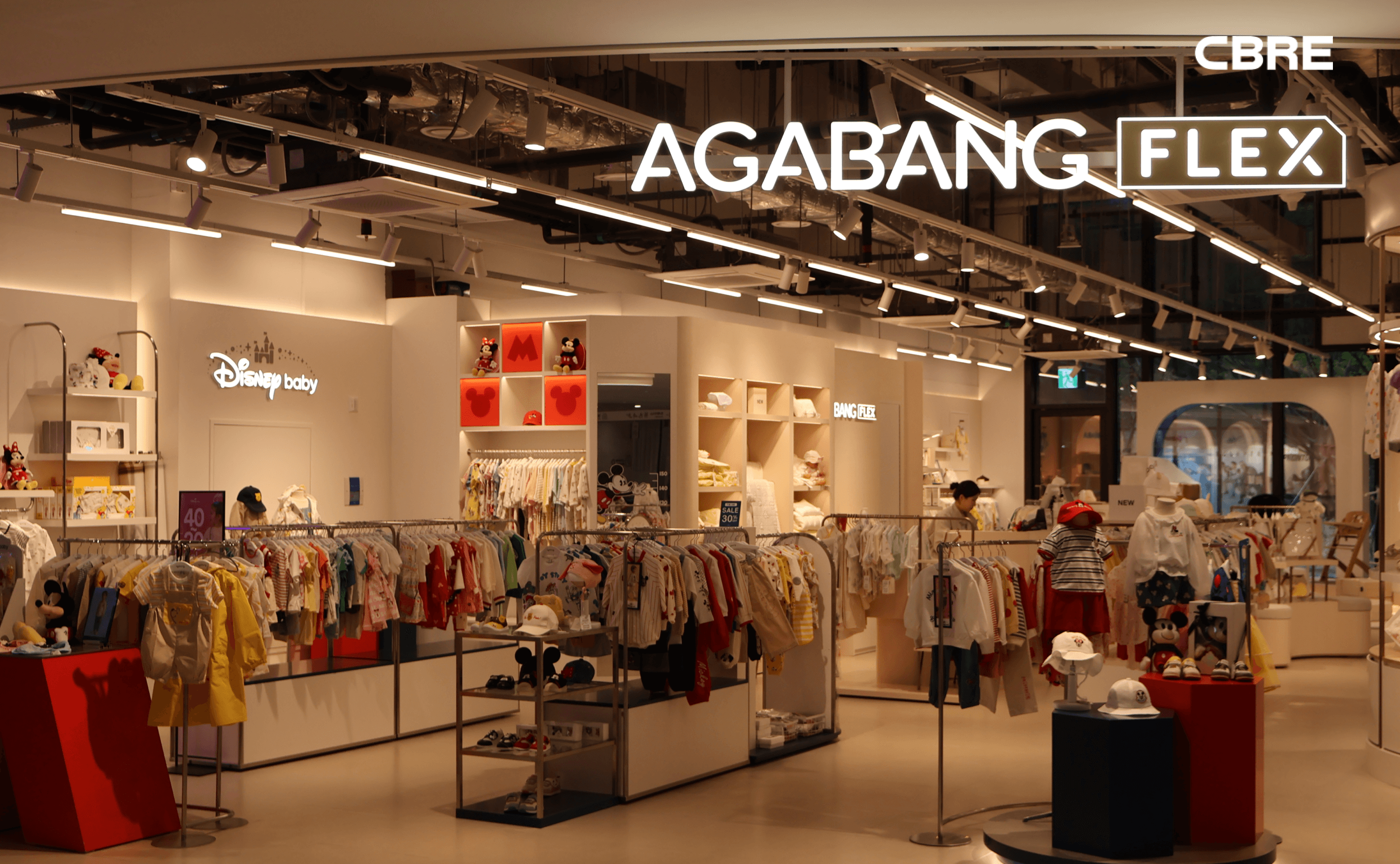
The Shift of Commercial Districts from Department Store Upper Floors to Hot Street Road Shops: In the past, the infants and children category remained on the upper floors of department stores, such as the 8th to 10th floors, where only purposeful buyers would visit. Recently, however, the very landscape of commercial districts is changing. High-sensibility kids brands like '29Kids' by Musinsa 29CM and 'Apricot Studio' are establishing standalone offline flagships and pop-up stores in key street districts such as Seongsu-dong and Seoul Forest. It is a method of increasing touchpoints by horizontally shifting kids brands right into the middle of young parents' weekend date routes.
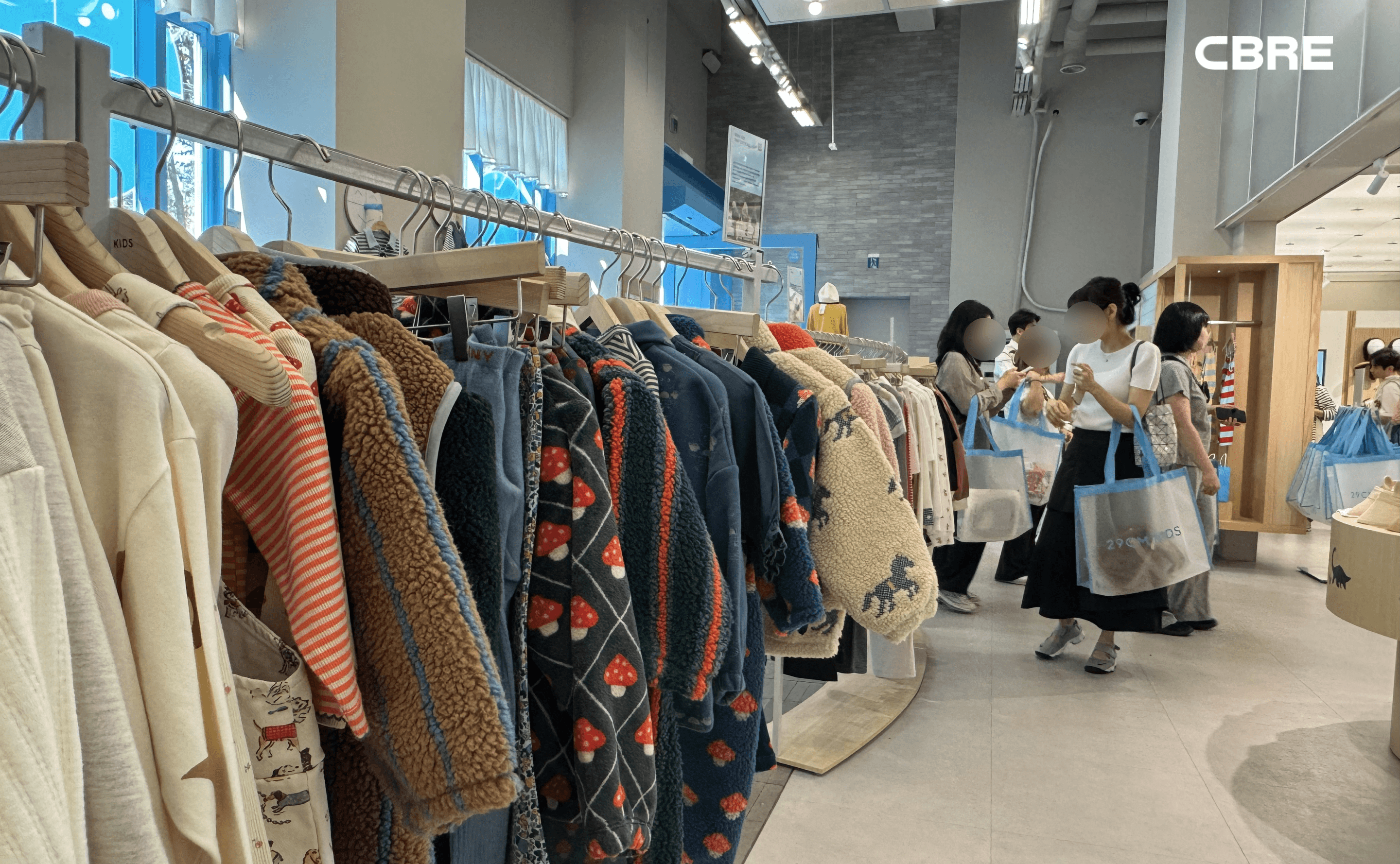
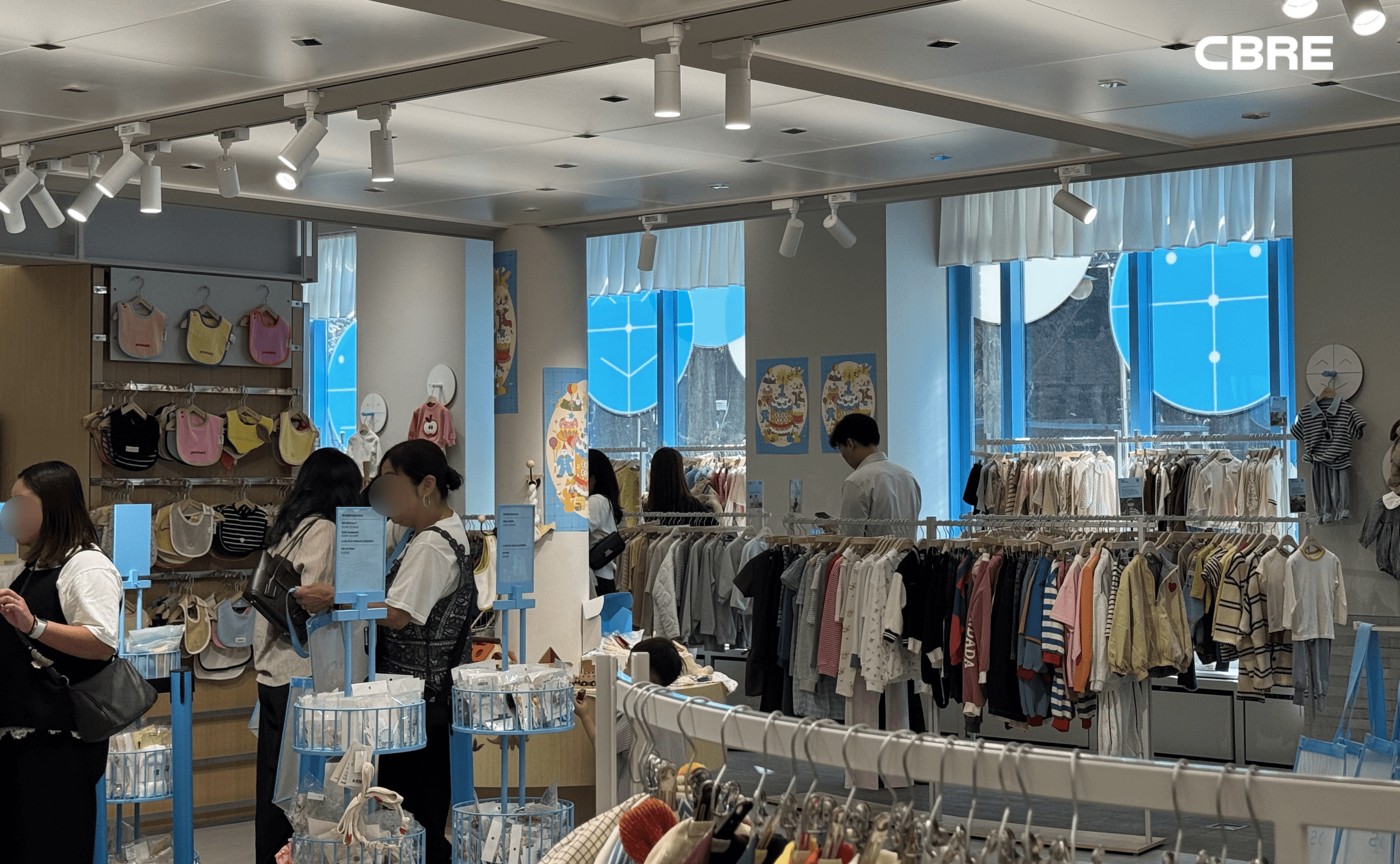
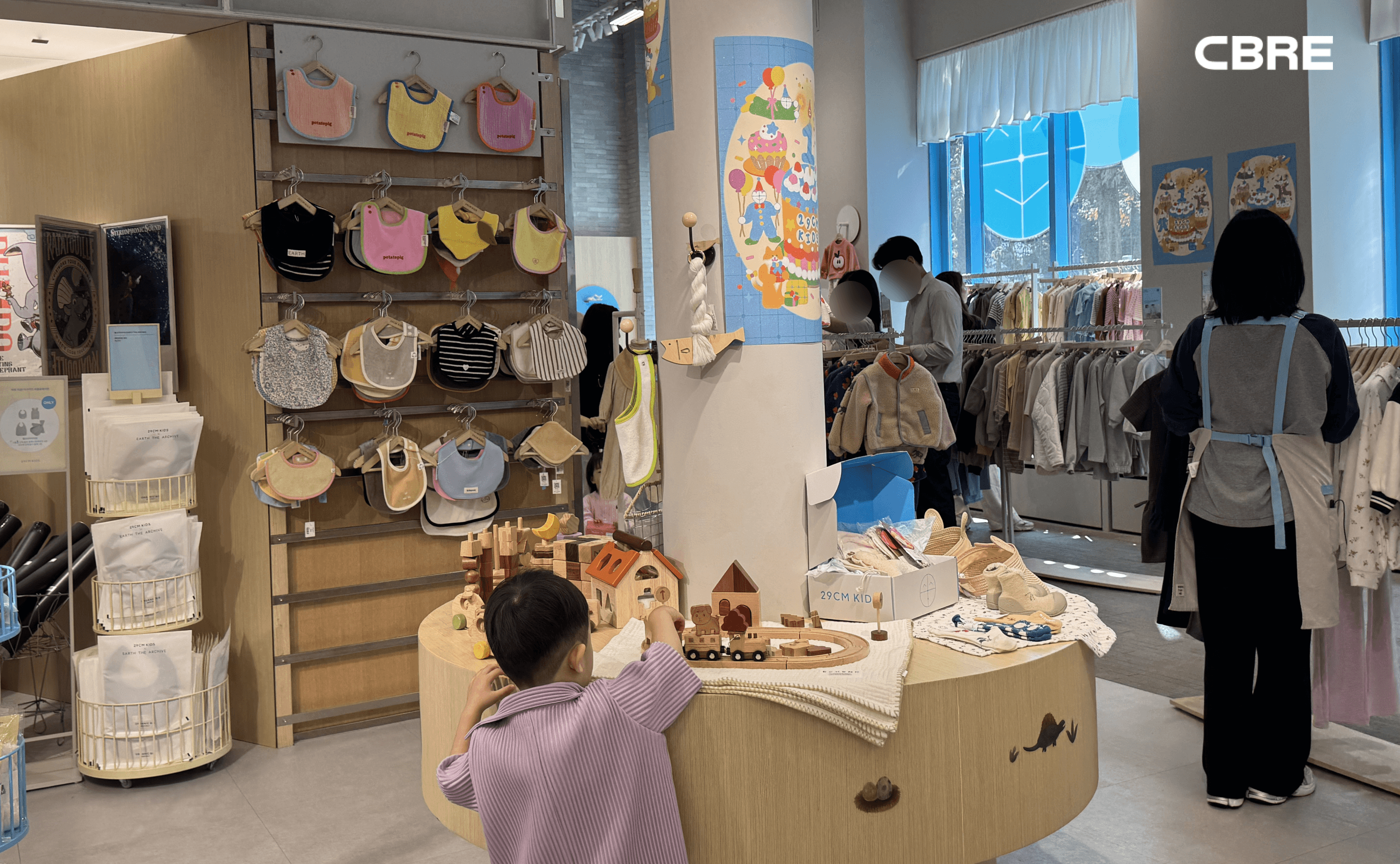
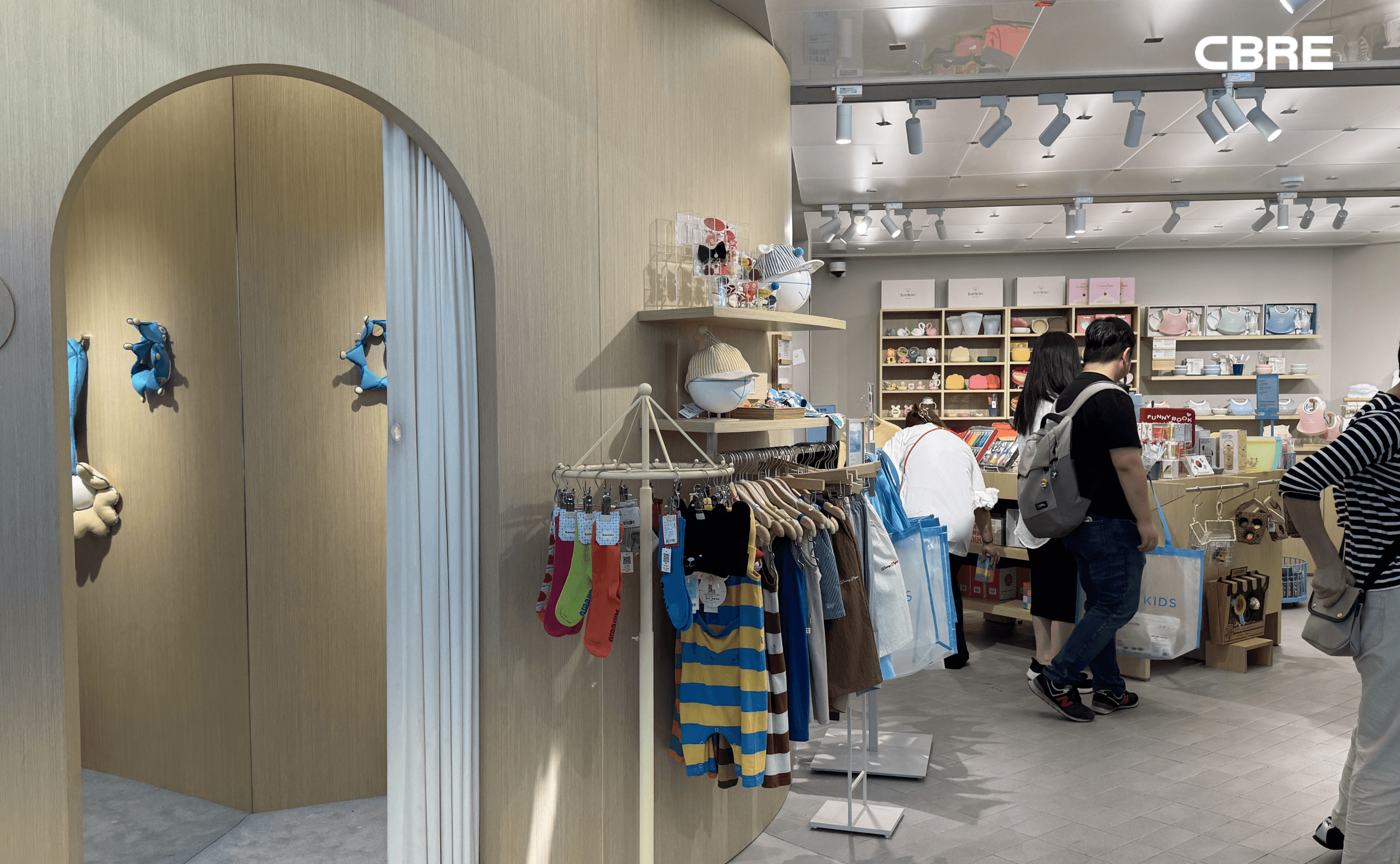
The Pop-Up Store Trend of Large Baby Products: The distribution of large baby products, such as strollers, which was previously centered on baby fairs or purposeful select shops, is also shifting to experiential pop-up store formats. 'Bugaboo' established a brand experience space through a standalone pop-up in the Seongsu-dong area, and 'Stokke' also continues to open large pop-ups on key floors of department stores, driving offline customer influx.
Structural Growth of Premium Basic Goods Brands: Along with the growth of 'Bebedepino', which started as designer children's wear in 2010 and surpassed 100 billion KRW in annual sales for a single brand, and 'Apricot Studio', which successfully launched a pop-up in Isetan Shinjuku in Japan, the first-generation baby underwear brand 'Moonyamoonya (GB Style)' enhanced its operating profit by strengthening its organic and eco-friendly material lineup in line with the expansion of indoor wear demand and the premiumization trend. Its annual sales as a single brand are around 15 billion KRW, demonstrating that luxury consumption has become common even in the basic goods sector.
Improving the 'Pet-Friendly' Nature of Offline Spaces
According to a Ministry of Agriculture, Food and Rural Affairs survey, the proportion of pet-owning households in Korea reached a record high of approximately 29.2% in 2025. According to the Korea Rural Economic Institute (KREI), the size of the domestic pet-related industry market grew from around 2.3 trillion KRW in 2017 to approximately 8 trillion KRW in 2022, and the government has set a goal to foster it into a 15 trillion KRW market by 2027.
Changes in the operation policies of commercial facilities, which used to restrict entry, are a major factor driving the growth of pet retail. Starfield expanded the dwell time of pet-owning families by introducing a space policy that fully allows dogs to enter. Since then, the entry of dogs and the designation of dedicated areas have been accelerating in major discount stores, department stores, and general F&B outlets.
Brand Lifestyle Expansion and Large-Scale Offline Experiences like 'Dangdang Run'
As the consumption base grows, the stage of offline retail is expanding in diverse ways, from product lineup extensions of street fashion brands to large hospitality and participatory events.
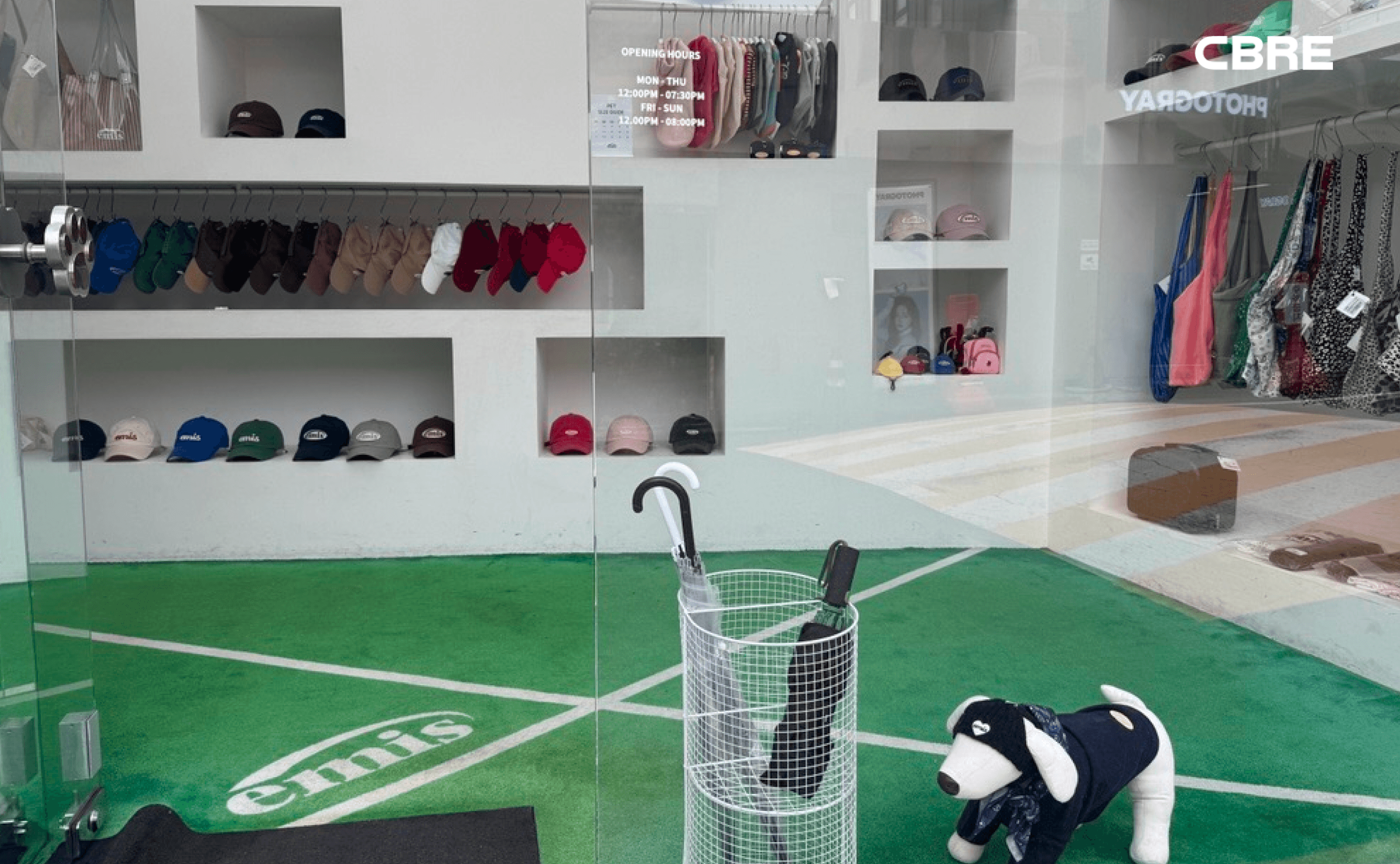
Street Fashion's Pet Line Extension and Space Experience: Fashion brand 'emis' did not rest on the success of its main accessory categories like ball caps and bags, but successfully established pet-exclusive lines, such as dog backpacks, t-shirts, and harnesses, as regular collections. In particular, it implemented an offline space experience considering dog-friendly routes, such as installing pet parking zones at its Hannam flagship store, showing a representative model of how a fashion brand expands its share of customers' daily lives through pet lifestyle goods.
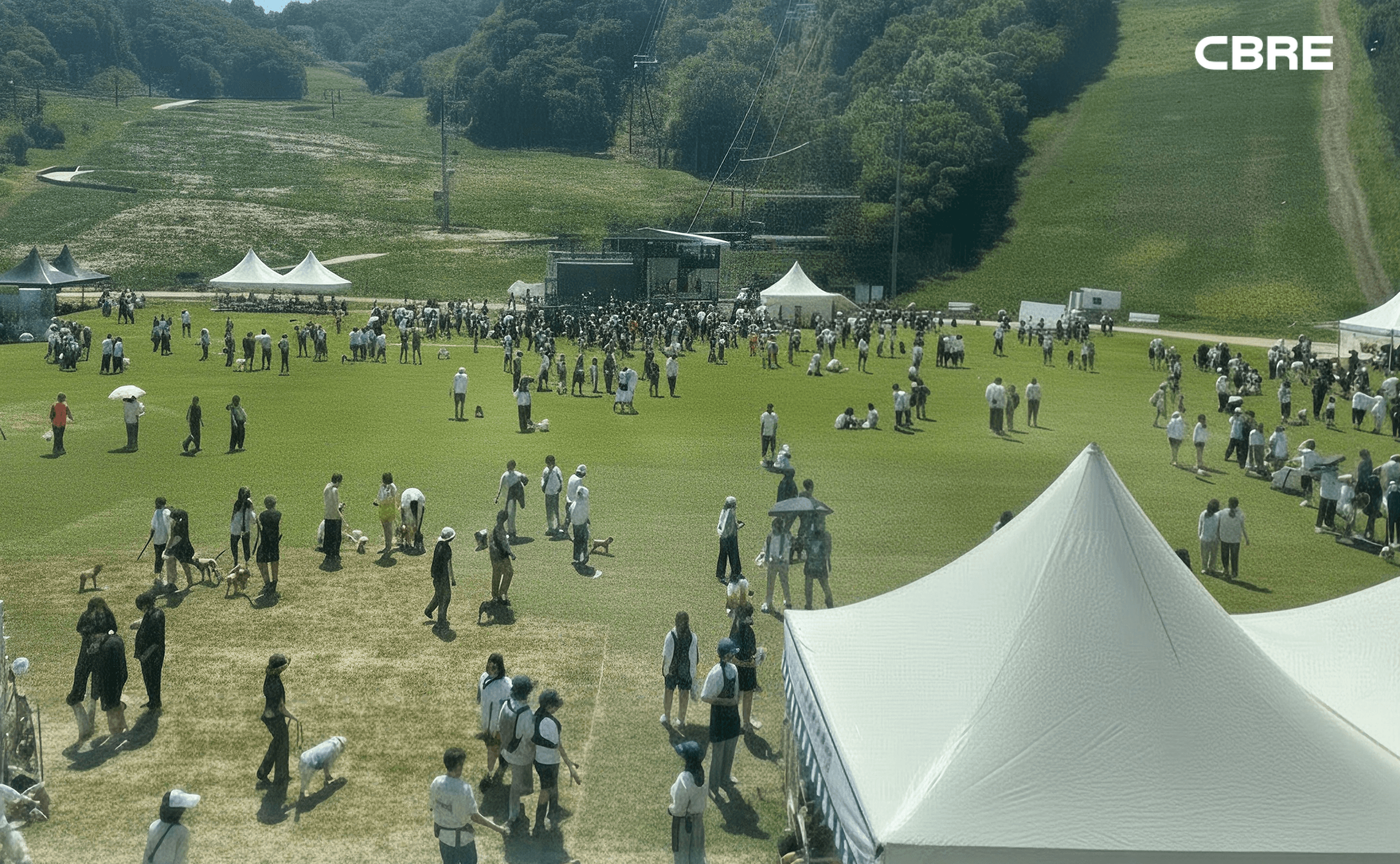
The Scale of Pet Hospitality Proven on Site by Sono Pet and 'Dangdang Run': Sono Pet Vivaldi Park is leading the high-value creation of the space industry by offering 157 pet-specific rooms, exclusive playgrounds, pet cafes, and chef services. In addition, the consecutive sell-outs of large-scale outdoor cultural events, such as 'Dangdang Run' (a representative dog-friendly marathon festival where thousands of owners and dogs run together), demonstrate that pet consumption has fully transitioned beyond mere product purchasing to large space and hospitality experiential consumption where people spare no expense or opportunity cost.
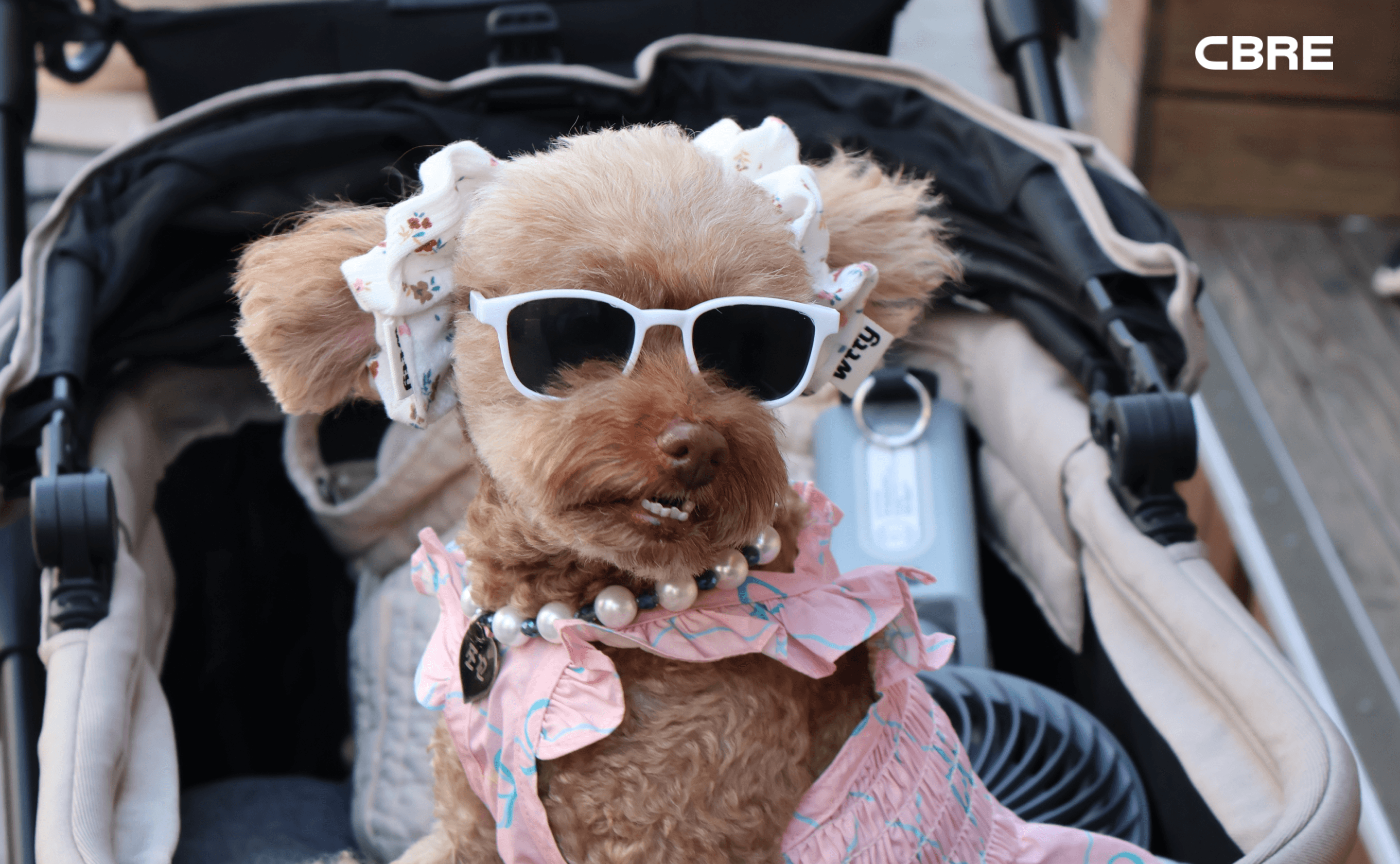
The Surge of 'Dog Strollers' Outpacing Baby Strollers, Premium Transportation Becoming Self-Expression: The premiumization formula of the kids market is being duplicated directly in the pet hardware market. Following the phenomenon where pet stroller sales overtook infant stroller sales in major retail channels, premium product lines priced between 1 million and 2 million KRW have established themselves as the market mainstream. Just as Bugaboo and Stokke became street-level luxury items that showcase parents' sensibilities, high-end pet stroller brands like 'AirBuggy' have become essential items proving the owner's discernment and financial power. Beyond simple mobility aids, consumption patterns have sophisticated into core objects that most visibly project the owner's lifestyle on offline streets.
The Era of Retail That Sells 'Taste and Sensibility' Rather Than Luxury
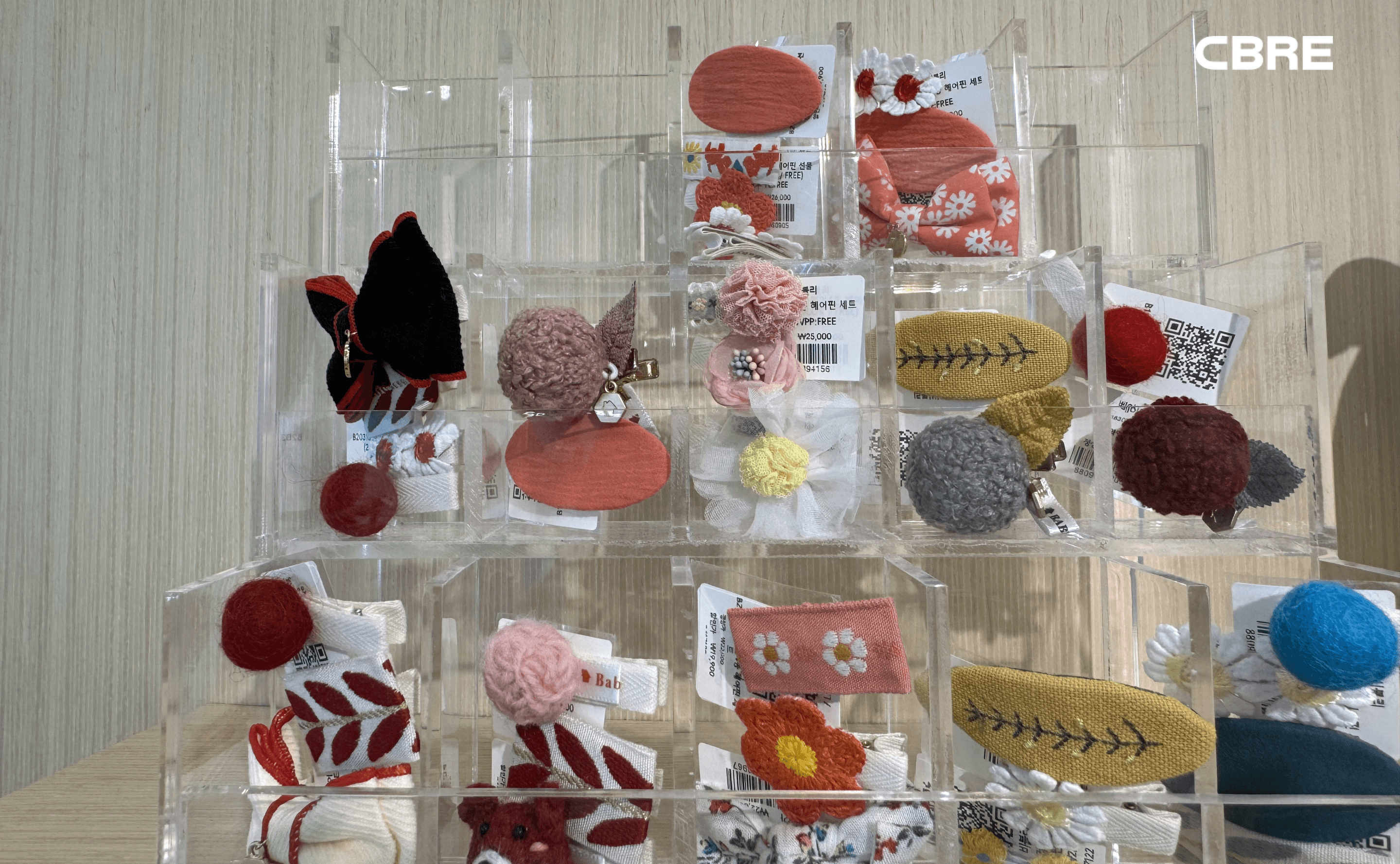
Ultimately, the real reason the kids and pet markets continue to expand is that the scope of consumption is not just limited to buying luxury goods or large items, but is diversifying into all areas that reflect the daily tastes of parents and pet owners.
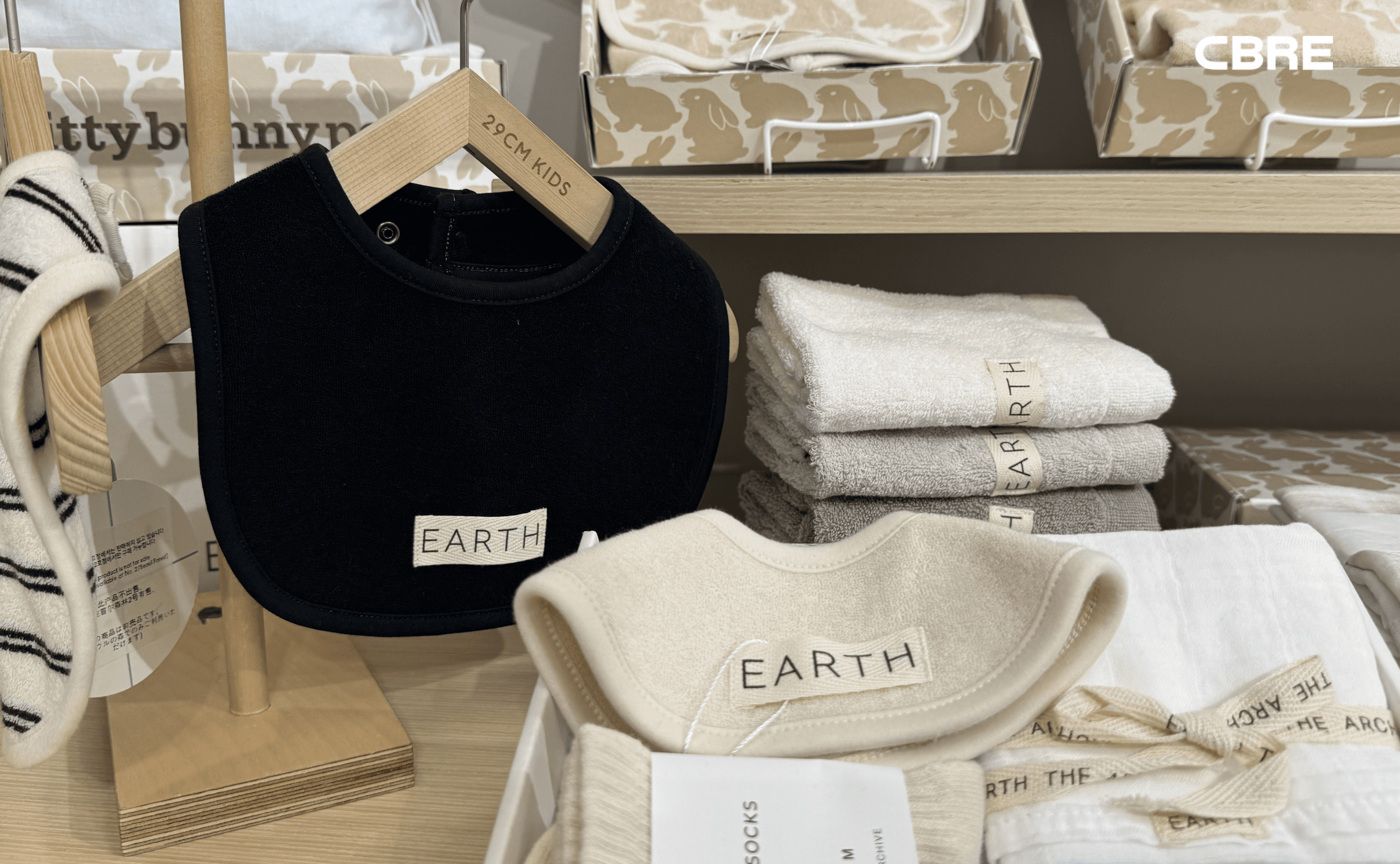
This is in line with the recent phenomenon of the Namdaemun Children's Clothing Alley going explosive and viral again among 3040 parents. The actual prices of Namdaemun children's clothing stores are by no means overwhelmingly cheaper than online low-cost clothing or SPA brands. Nonetheless, the fundamental reason parents take their kids by the hand and head to Namdaemun lies not in 'Price merit' but in 'the experience of exploration and discovery (Value)'. The diversified offline experience itself—finding shops with proprietary designs and trendy sensibilities among numerous wholesale stores, and enjoying treasure-hunt shopping and on-site fittings that cannot be felt in standardized department stores—has become the driving force behind the virality.
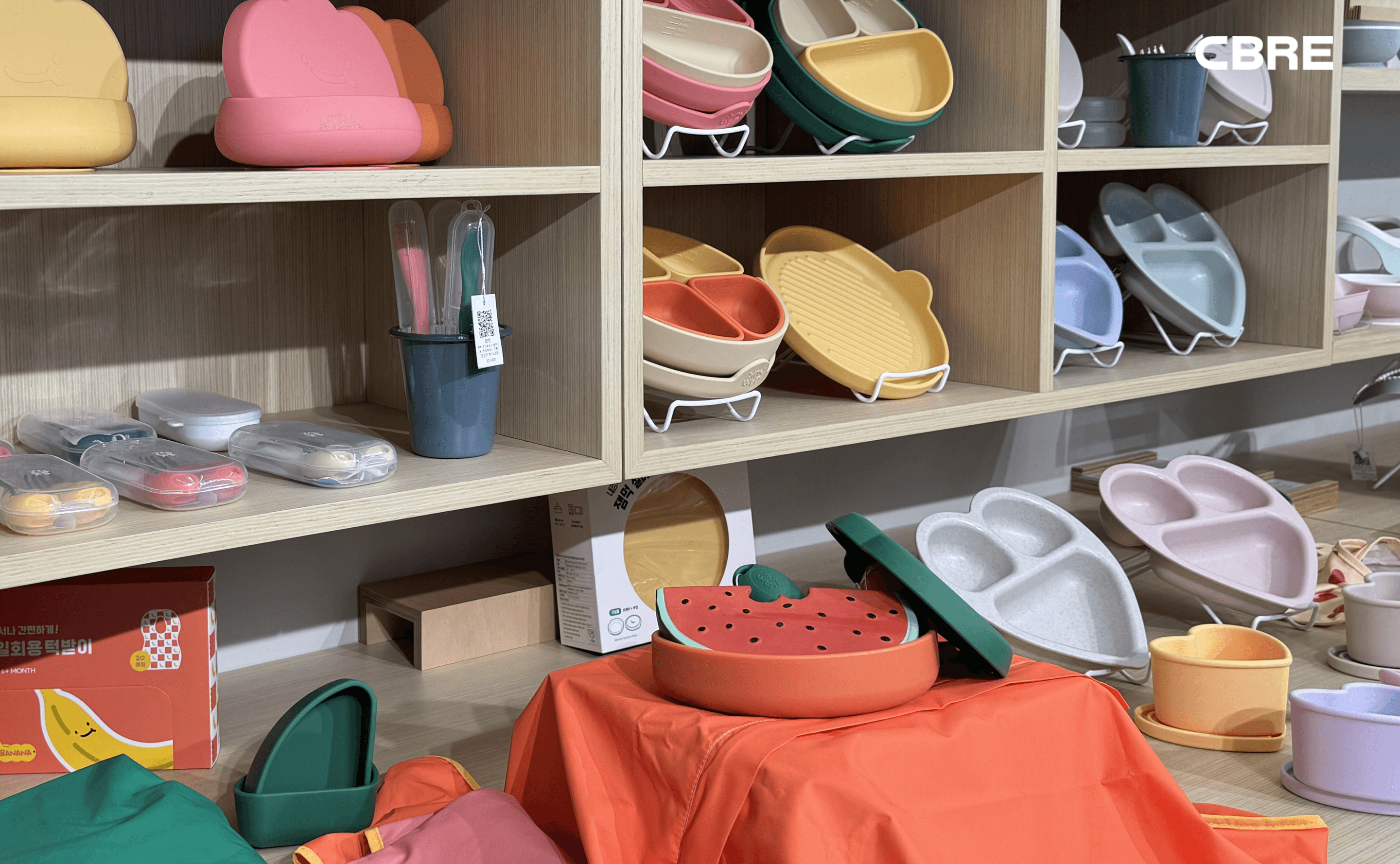
While high-priced imported children's luxury wear or luxury pet lines still maintain solid sales growth, consumers' wallets are now opening in a more segmented manner, down to the material of the child's first indoor wear, the design of the daily bib, and the sensibility of the offline space they visit together on weekends. This is proven by the phenomenon where high-sensibility designer children's wear, road shop brands, and the pet hospitality market record steep growth every year alongside the growth of department store luxury halls.
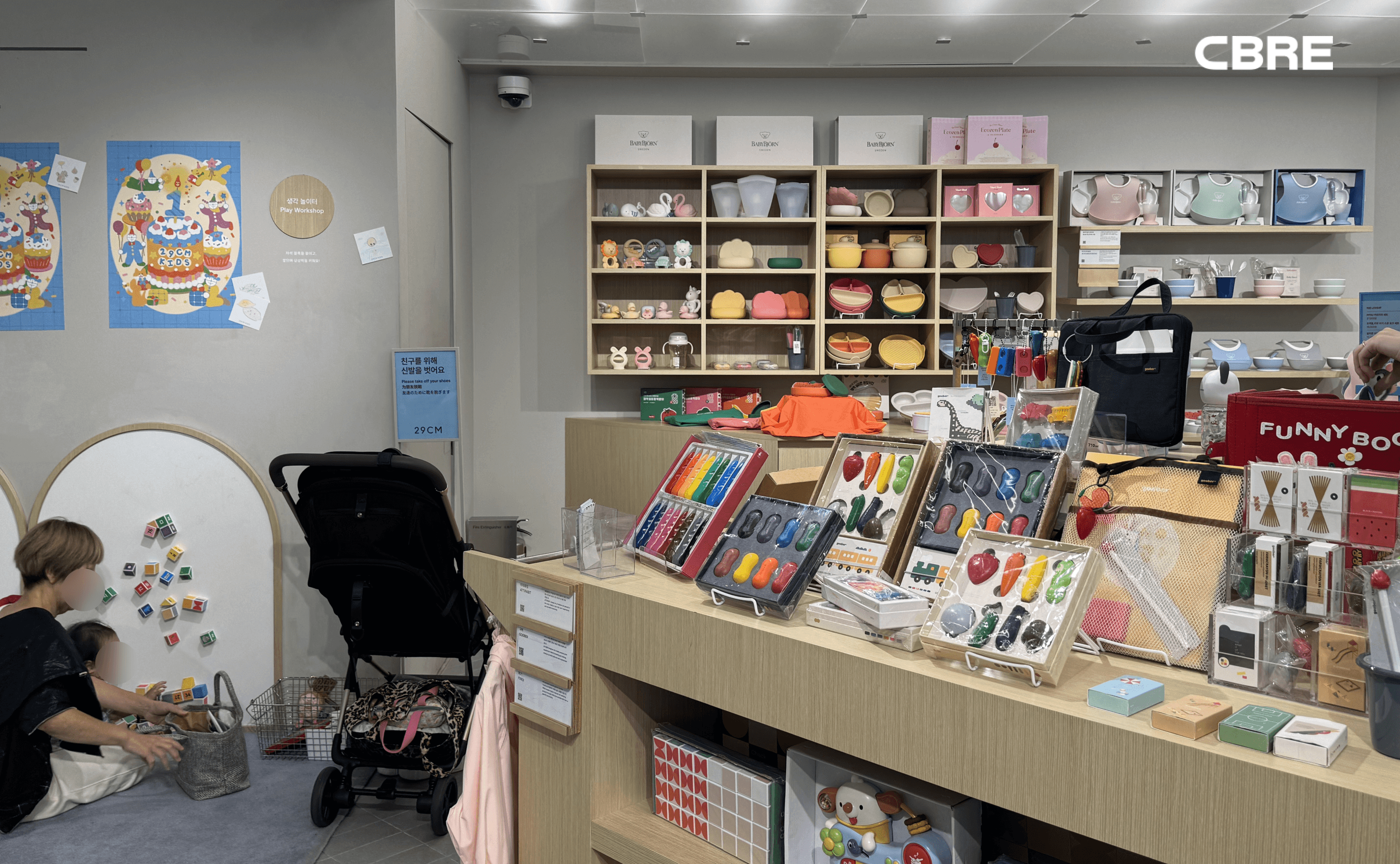
Ultimately, the task that offline commercial districts and retail spaces must solve now is clear. Beyond simply configuring a brand lineup (Volume), it is a battle of how densely they can provide a diversified experience (Value) through which 3040 parents and pet owners can project their own discernment and lifestyle. The reasons why kids departments, once confined to the upper floors of department stores, are coming out to Seongsu, why complex malls are transforming themselves with pet-friendly environments and coupled MD routes, and why long-standing traditional wholesale districts are turning into hip offline playgrounds for parents are all the same.
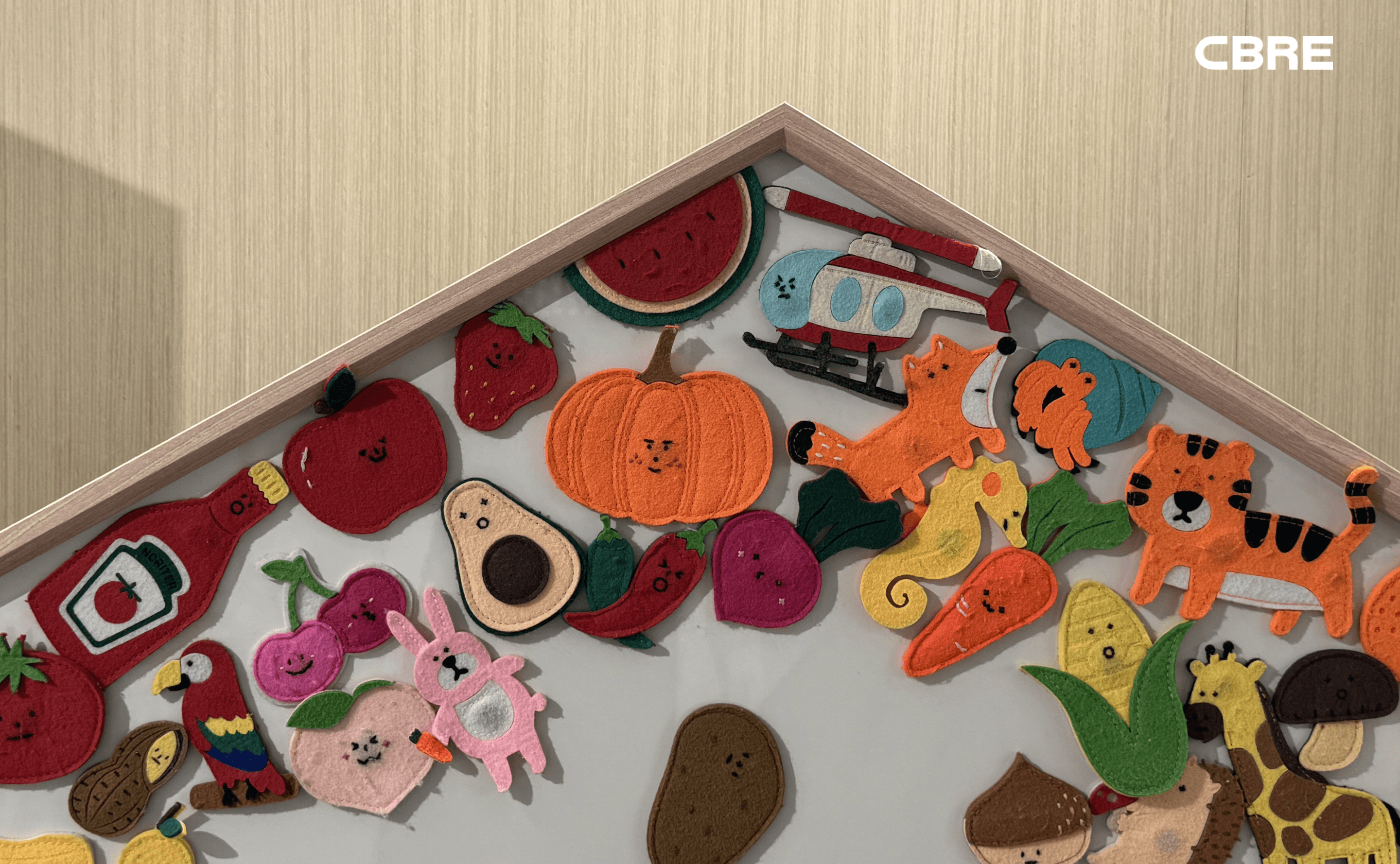
Kids and pets have always occupied a space in commercial areas. However, while they used to be closer to functional assortment product categories filling the upper floors or outer leftover spaces, their utility value is now being reevaluated as high-sensibility content tenants that extend the dwell time of the entire space and drive coupled consumption.
© Copyright 2026. All rights reserved.
This publication has been prepared in good faith, based on CBRE Korea's current anecdotal and evidence based views of the commercial real estate market. Although CBRE Korea believes its views reflect market conditions on the date of this presentation, they are subject to significant uncertainties and contingencies, many of which are beyond CBRE Korea’s control. In addition, many of CBRE Korea’s views are opinion and/or projections based on CBRE Korea’s subjective analyses of current market circumstances. Other firms may have different opinions, projections and analyses, and actual market conditions in the future may cause CBRE Korea’s current views to later be incorrect. CBRE Korea has no obligation to update its views herein if its opinions, projections, analyses or market circumstances later change.
Nothing in this publication should be construed as an indicator of the future performance of CBRE’s securities or of the performance of any other company’s securities. You should not purchase or sell securities-of CBRE or any other company-based on the views herein. CBRE Korea disclaims all liability for securities purchased or sold based on information herein, and by viewing this publication, you waive all claims against CBRE Korea as well as against CBRE Korea’s affiliates, officers, directors, employees, agents, advisers and representatives arising out of the accuracy, completeness, adequacy or your use of the information herein. No part of this publication may be reproduced, quoted, distributed, or disclosed to any third party without the prior written consent of CBRE Korea.

trend
Aug 31, 2026
24,000 Traditional Pubs Disappeared
Lowest Alcohol Consumption in 27 Years and a 46% Plunge in Bars: The Next Formula for Nightlife Economy

trend
Jul 6, 2026
The footsteps of runners change the commercial districts
Runners' Basecamp: SEOUL's second article, commercial districts transformed by runners centering around Seochon and Bukchon
trend
Apr 20, 2026
Then it was bags, now it is jewelry.
"Rather than buying a 14 million won bag..." Consumers start 'Open Runs' at 'this place'
trend
Apr 13, 2026
The Secrets Behind the Success of Eulji Kankan
Appeared in Culinary Class Wars Season 2, Representative Cho Kyung-chan of Eulji KkanKkan—who brought the taste of real, local Vietnam to Korea—talks about his laws of entrepreneurship, space, and expansion.

trend
Apr 13, 2026
Runners' Basecamp: SEOUL
UVU chose Seongsu over London for its world-first store — how Seoul's running scene is redrawing the retail map.
trend
Apr 13, 2026
Pharmacy or Olive Young?
How K-pharmacy became Seoul's most unexpected anchor tenant category.
trend
Apr 13, 2026
2026 Retail Trend: Keep the Taste, Cut the Risk
Frugal and indulgent in the same afternoon — how South Korea's ambivalent spending pattern is reshaping retail strategy in 2026.