Back
Share
Like

trend
Article Highlights
Driving Asset Value with Grocery Anchor Tenants: Commercial properties with a grocery anchor attract approximately three times more visitors than regular shopping centers, serving as powerful foot-traffic hubs that drive adjacent store rents up by 15% to 25%.
Focusing on Target Residential Areas Over Foot Traffic: 89% of Trader Joe's stores are located in areas with a higher concentration of highly educated residents compared to the state average; similarly, Erewhon and Hermès head straight for affluent suburbs and key catchment areas where their target consumers reside, rather than urban centers with merely high foot traffic.
Customer-First Definition Principle in Commercial Real Estate: Even in the domestic market with its distinct retail and delivery landscape, it is essential to proactively analyze the income, age, and lifestyle data of the catchment population—going beyond simple foot-traffic comparisons—to secure property value and leasing competitiveness.
In South Korea, Trader Joe's is better known for its eco-friendly canvas tote bags. They have become popular souvenirs brought back from trips to the United States, and the mini tote bags sell out so quickly whenever they are released that they are even resold at a premium. For many people, Trader Joe's is merely remembered as "that American supermarket famous for tote bags."
However, in the U.S. real estate industry, Trader Joe's carries an entirely different meaning. When a Trader Joe's opens, foot traffic flocks to the commercial center, making it one of the most sought-after tenants that landlords eagerly compete to court. Developers and property owners often modify building designs and lease terms just to bring in this single grocery store. Recently, Erewhon, an upscale grocery store chain in Los Angeles, has been receiving the same treatment.
Of course, retail property structures and grocery shopping habits differ between the United States and Korea. One cannot directly apply Trader Joe's to Korean retail real estate. Even so, there are valuable lessons that both landlords and brands can take away from this case: building a store that attracts people begins with a precise understanding of who those visitors will be.
How These Two Brands Draw People In
Trader Joe's — The Grocery Store You Must Visit in Person to Buy From

Trader Joe's does not offer online ordering, home delivery, or in-store pickup. On its official podcast, "Inside Trader Joe's," the company stated that it does not sell online because the core of the Trader Joe's experience lies in browsing and choosing items directly in the store. While major U.S. supermarkets scrambled to expand delivery and pickup options, Trader Joe's did the opposite, maintaining a structure where "if you want to buy, you have to come in."
Whenever customers visit, there is always something new to buy. Most shelves are filled with proprietary private-label products unavailable elsewhere, and seasonal limited-edition items are introduced regularly. Shoppers return often just to see "what's new this time." The company refers to this experience as a "treasure hunt."
Erewhon — Where Grocery Shopping Became a Lifestyle

Erewhon is a luxury grocery store chain with about ten locations across the Los Angeles area. Even when a celebrity collaboration smoothie costs over $20, lines form outside the store. The idea of buying items that are good for one's health justifies the steep prices, and videos of purchased goods and shopping trips are constantly shared on social media. The stores also serve as community hubs where local residents run into one another after working out.
Erewhon does not expand its footprint rapidly. In 2025, it opened three new stores in the Greater LA area, and in New York, it established its first outpost inside the private members' club Kith Ivy in the West Village instead of opening a standard retail storefront. Because its locations are few and far between, the mere arrival of an Erewhon in an area often signals the high income level of that neighborhood.
The two brands differ in both price points and customer demographics. Yet they share a common thread: they know precisely what their customers want, and they compel those customers to visit their stores in person and frequently. This is precisely why landlords want them.
Why U.S. Landlords Want Trader Joe's
A significant portion of U.S. retail properties consists of suburban shopping centers where people drive in, park in large parking lots, and do all their shopping at once. In these centers, grocery stores serve as the reason residents visit every week. While there for groceries, they grab coffee next door, drop off dry cleaning, get a haircut, and so forth.

This effect is backed by data. According to a U.S. grocery retail report published by CBRE Research in April 2026, retail centers anchored by grocery stores draw about three times more visitors than non-anchored centers. Consequently, landlords can charge 15% to 25% higher rents for other shops within the same center. Foot traffic to fresh food-oriented grocery stores like Trader Joe's grew by about 10% in 2025. The investment market reflects the same sentiment. In the same report, 85% of investors stated they prefer grocery-anchored retail centers, and investment in grocery-anchored centers over the past four quarters reached $12.8 billion, the highest level since 2022.


That is why property owners are willing to accommodate their requirements. Suburban shopping centers often configure parking layouts and traffic circulation specifically to suit the demands of anchor tenants like Trader Joe's. Conversely, in urban centers where parking is less critical, developers preserve Trader Joe's even when overhauling entire buildings. A prime example is 200 Kent Avenue in Williamsburg, Brooklyn, New York. In October 2025, the developer submitted a plan to convert vacant offices and a two-story parking garage (176 stalls) into residential housing with up to 143 units. While parking was reduced to 43 underground spaces, the ground-floor Trader Joe's was kept intact. This shows that even when a building's entire purpose changes, the anchor tenant is preserved.
Erewhon takes center stage in development projects in a similar manner. A representative example is The Shops at Sportsmen's Lodge, a redevelopment of an aging shopping plaza in Studio City, LA. Instead of clothing boutiques that customers visit once a month, the developer wanted a tenant that brings people in daily, securing Erewhon as the anchor. Surrounding spaces were then filled with wellness, beauty, and food and beverage venues. Similarly, a mixed-use development built by CIM Group in Silver Lake, LA, secured Erewhon as its ground-floor anchor.
Looking at Where Customers Live Rather Than Foot Traffic
There is another notable aspect of these brands' site selection strategies: they follow where their target customers live rather than areas that simply have high foot traffic. Trader Joe's clearly defined its customer base right from the start. The target audience chosen by founder Joe Coulombe was well-educated consumers.
Coulombe's choice was influenced by societal shifts in America at the time. After reading an article in Scientific American stating that 60% of people qualified for college actually attended, he determined that this newly expanding highly educated demographic would want something different from existing offerings. He also paid close attention to reports that the Boeing 747, entering service in 1970, would dramatically lower the cost of international travel. In his memoir, Coulombe wrote that "travel, after all, is a form of education." He anticipated that well-educated individuals who had traveled abroad would look for foods not found in conventional supermarkets. Thus, Trader Joe's began selling items hard to find in typical grocery stores, such as imported wines, at affordable prices, and soon became the largest retailer of imported wine in California. This direction paved the way for today's private-label-focused aisles and "treasure hunt" in-store experience.

Stores were also opened in areas where these individuals resided. Coulombe noted that all Trader Joe's locations were situated near centers of learning. Opening the first store in 1967 in Pasadena, home to Caltech (California Institute of Technology), was due to Pasadena being the epitome of a highly educated city.
According to official store directory data, Trader Joe's has 671 locations across 42 states and Washington, D.C. (as of November 2026). California accounts for 211 stores, roughly one out of three, followed by New York (40) and Washington State (32). Coulombe's principle is still visible in today's store footprint. When CBRE Korea Retail analyzed zip codes with stores using U.S. Census Bureau data (ACS 2020–2024), nine out of ten locations (89%) had a higher proportion of college-educated residents than their respective state averages. The median percentage of college graduates in areas with stores was 58%, substantially higher than the U.S. national average (36%). Median household income was also higher than the state average in eight out of ten locations (79%). While zip-code-level averages may differ slightly from the immediate vicinity of a specific storefront, they clearly illustrate where stores tend to cluster.

This trend is even more apparent in Washington State. Of its 32 locations, 18 are in King County, which includes Seattle. King County accounts for approximately 29% of the state's population, yet more than half of all Trader Joe's stores are concentrated there. Among residents aged 25 and older in King County, 57% hold a bachelor's degree or higher, compared to 40% for Washington State overall. Of the 18 stores in King County, seven are located in suburban residential areas east of Seattle—such as Redmond (home to Microsoft headquarters), Bellevue, Kirkland, Issaquah, Sammamish, and Woodinville. Median household incomes in the zip codes of these stores range between $130,000 and $240,000, which is 1.3 to 2.5 times higher than the Washington State average (around $98,000). In contrast, Pierce County (Tacoma), with a population of 930,000, has only one store.
Erewhon has expanded in a comparable manner. Looking at the zip codes of Erewhon's official store directory, locations in Beverly Hills, Pacific Palisades, Manhattan Beach, and Calabasas boast median household incomes in the $180,000–$200,000 range, more than double that of LA County overall (around $90,000). Recently, however, it has also expanded into neighborhoods like Silver Lake, Pasadena, and Downtown LA (upcoming), where incomes are near or slightly below the LA County average. In these neighborhoods, the share of residents aged 20 to 34 ranges between 29% and 40%, higher than the LA County overall average (22%). This contrasts sharply with affluent enclaves like Beverly Hills and Pacific Palisades, where the 20–34 age group accounts for only 8% to 15%. This expansion targets younger consumers who discover Erewhon through social media and visit in person. Rather than focusing solely on income levels, the brand selects locations based on how many prospective Erewhon shoppers actually reside in that neighborhood.
Luxury brands are heading in the same direction. Today, Hermès leverages customer, demographic, and location data to identify areas where new wealth is accumulating, opening boutiques in affluent suburban communities like Short Hills, New Jersey, and Wilmette, Illinois. The Wilmette boutique, which opened in August 2026 as the second store in Illinois following Oak Street in downtown Chicago, is nestled right in the middle of upscale residential areas north of Chicago. Instead of sticking strictly to tourist-heavy high streets, the brand went straight to where its clients live. While the strategic targets vary across brands, the common underlying premise remains: to captivate consumers, one must understand them better than anyone else.
Why This Cannot Be Directly Transposed to South Korea
However, as mentioned earlier, it is difficult to directly copy the U.S. model of grocery-anchored centers into the Korean retail market. Both physical and social conditions are fundamentally different.
First, the physical environment is different. Grocery-anchored retail centers in the U.S. are predominantly suburban shopping plazas designed for vehicle access. In South Korea, large-scale residential communities mostly consist of high-rise apartment complexes, and surrounding commercial properties are neighborhood retail centers visited on foot from inside or just outside the residential complexes. They do not operate on a model where a single anchor with a vast parking lot draws visitors for the entire center.

Grocery shopping habits also differ. With early-morning delivery and same-day delivery becoming part of everyday life in South Korea, the necessity of visiting a physical store merely to buy groceries has diminished significantly. According to the Korea Rural Economic Institute's "2025 Food Consumption Behavior Survey," households that purchase groceries primarily online accounted for 16.4%, up 4.9 percentage points in one year. During the same period, households primarily using hypermarkets and neighborhood supermarkets dropped by 1.7 and 3.9 percentage points, respectively. Consequently, Trader Joe's "must visit the store to buy" approach would struggle to wield the same power in South Korea as it does in the United States.
Ownership structures of retail properties also differ. While a single landlord typically curates the entire tenant mix in a U.S. shopping center, Korean neighborhood commercial properties often feature sectional ownership, where each unit has an individual owner. It is difficult for a single landlord to spearhead a strategy of securing an anchor tenant and surrounding it with complementary retail shops.
Thus, comparing Korean grocery stores or neighborhood centers directly with Trader Joe's is untenable. When reading this case, one should focus not on the format of a grocery anchor, but on why U.S. landlords sought out Trader Joe's and how Trader Joe's chose its locations. Landlords wanted tenants that gave local residents a reason to visit the retail center every week, and Trader Joe's chose locations where its target demographic lived. Even though commercial property structures vary, these two core principles apply just as well in South Korea.
What Landlords and Brands Can Learn
Landlords — First Identify the Demand of the Local Catchment Area
Even if a property is not on a renowned high street, as long as it is backed by the demand of a large-scale residential catchment area, the landlord's first task is to understand those residents. They need to know the prevailing age groups, whether the area has many families with young children or single-to-two-person households, who remains in the neighborhood during weekday daytime hours, and where residents spend their weekends.

Understanding this demand reveals what brands will fit the neighborhood. If many residents enjoy relaxed weekend mornings, brunch spots or specialty cafes that complement those hours can be an excellent match. A tenant that residents visit frequently often contributes more to the overall value of the building than one simply offering to pay the highest rent. In the U.S., grocery-anchored shopping centers can command 15% to 25% higher rents for other units precisely because residents visit the center every week.
Brands — Begin with Understanding the People Who Will Visit the Store
Brands also have much to learn. Opening a store begins with understanding the people who will visit it. Trader Joe's chose areas where highly educated consumers live, Hermès targeted suburbs where new wealth is gathering, and Erewhon focused on neighborhoods with a large young population. All three prioritized "where their specific customers are" over "where foot traffic is simply heavy." In Korea as well, brunch brands like LOWIDE and Tenné, which first gained fame in Seongsu-dong, expanded their presence to Apgujeong, where residents looking to enjoy weekend morning brunch live.
Commercial districts with high pedestrian traffic are conspicuous, but they come with high rents, and the majority of passersby may not belong to the brand's target demographic. Understanding where your customers live, when they spend their time, and what prompts them to leave their homes will open up entirely different site selection possibilities.
Understand the People Before Choosing Store Locations
The reason U.S. landlords go so far as to reconfigure parking lots and architectural layouts to bring in Trader Joe's is clear: a single Trader Joe's drives foot traffic for the entire property. This is possible because the brand moves only after identifying precisely who its customers are and where they live. The target demographic of highly educated consumers established when its first store opened in 1967 remains a consistent expansion formula across its current footprint of over 600 stores.

While criteria for defining customers differ from brand to brand, what matters is that location strategies shift alongside evolving customer demographics. These brands do not simply choose a spot once and move on; they continually track where their target audiences live and where they migrate.
The domestic market operates on the same logic. When a tenant with strong brand equity opens a store in a particular neighborhood, it signals that an underlying demand ready to consume that brand already exists there. If brands sharing similar characteristics begin popping up consecutively in an unfamiliar alleyway, customers are likely already arriving, even if the area is not yet formally categorized as a major commercial district. For landlords, this serves as a benchmark for what to fill the space with next; for brands, it indicates the next outpost to enter.

What Korean travelers bring back from Trader Joe's may merely be private-label goods or tote bags. However, landlords and brands curating commercial spaces should read between the lines: what matters is not the brand's sheer popularity, but the meticulous calculations that established those locations. Moving beyond simple comparisons of foot traffic, a successful site selection strategy begins with verifying the residential density and travel patterns of your core customer base.
© Copyright 2026. All rights reserved.
This publication has been prepared in good faith, based on CBRE Korea's current anecdotal and evidence based views of the commercial real estate market. Although CBRE Korea believes its views reflect market conditions on the date of this presentation, they are subject to significant uncertainties and contingencies, many of which are beyond CBRE Korea’s control. In addition, many of CBRE Korea’s views are opinion and/or projections based on CBRE Korea’s subjective analyses of current market circumstances. Other firms may have different opinions, projections and analyses, and actual market conditions in the future may cause CBRE Korea’s current views to later be incorrect. CBRE Korea has no obligation to update its views herein if its opinions, projections, analyses or market circumstances later change.
Nothing in this publication should be construed as an indicator of the future performance of CBRE’s securities or of the performance of any other company’s securities. You should not purchase or sell securities-of CBRE or any other company-based on the views herein. CBRE Korea disclaims all liability for securities purchased or sold based on information herein, and by viewing this publication, you waive all claims against CBRE Korea as well as against CBRE Korea’s affiliates, officers, directors, employees, agents, advisers and representatives arising out of the accuracy, completeness, adequacy or your use of the information herein. No part of this publication may be reproduced, quoted, distributed, or disclosed to any third party without the prior written consent of CBRE Korea.

trend
Sep 28, 2026
Why the kids and pet retail market is growing despite population decline
A retail of self-expression manifested through children and pet dogs

trend
Aug 31, 2026
24,000 Traditional Pubs Disappeared
Lowest Alcohol Consumption in 27 Years and a 46% Plunge in Bars: The Next Formula for Nightlife Economy

trend
Jul 6, 2026
The footsteps of runners change the commercial districts
Runners' Basecamp: SEOUL's second article, commercial districts transformed by runners centering around Seochon and Bukchon

trend
Apr 20, 2026
Then it was bags, now it is jewelry.
"Rather than buying a 14 million won bag..." Consumers start 'Open Runs' at 'this place'

trend
Apr 13, 2026
The Secrets Behind the Success of Eulji Kankan
Appeared in Culinary Class Wars Season 2, Representative Cho Kyung-chan of Eulji KkanKkan—who brought the taste of real, local Vietnam to Korea—talks about his laws of entrepreneurship, space, and expansion.
trend
Apr 13, 2026
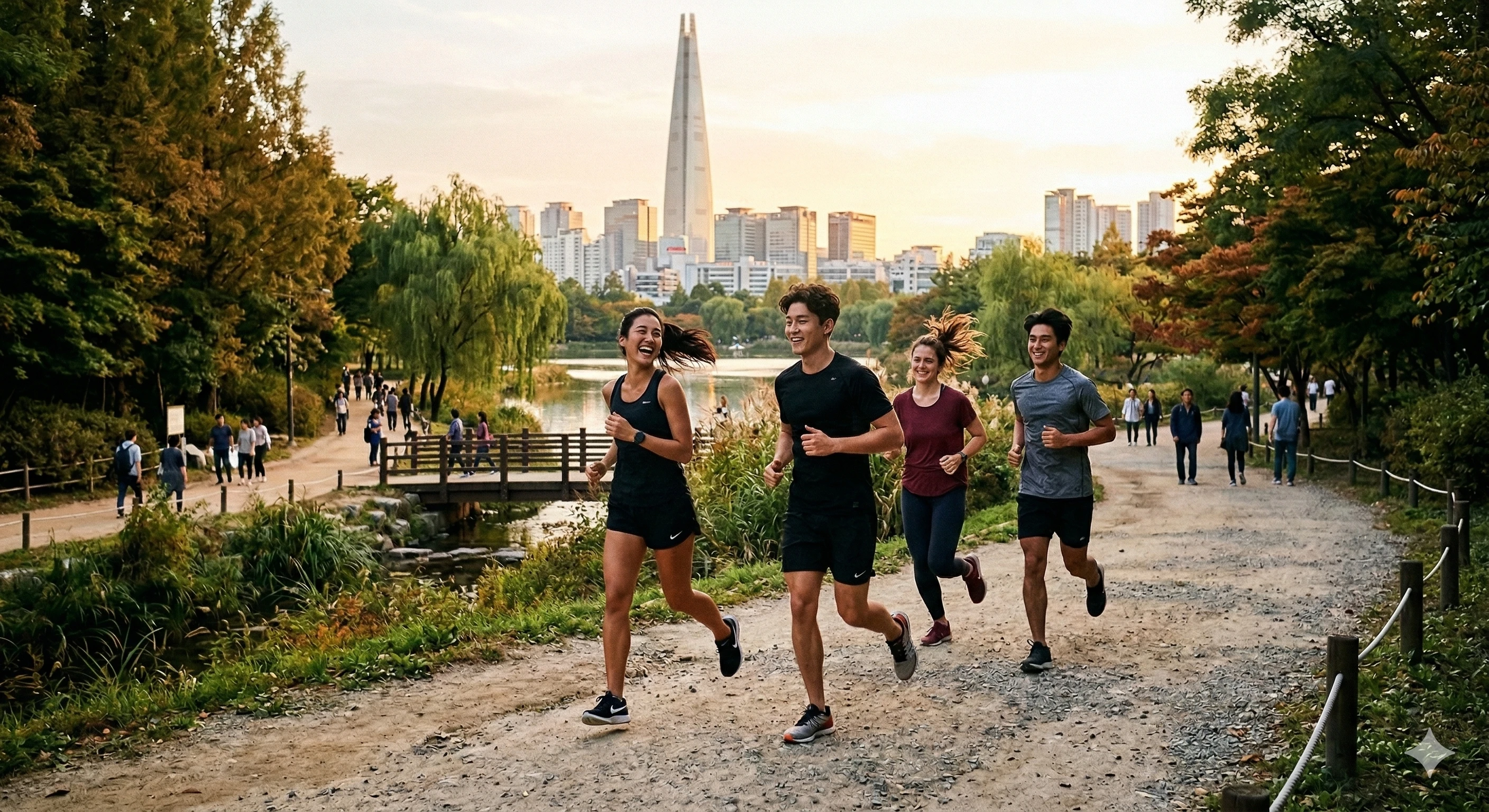
Runners' Basecamp: SEOUL
UVU chose Seongsu over London for its world-first store — how Seoul's running scene is redrawing the retail map.
trend
Apr 13, 2026
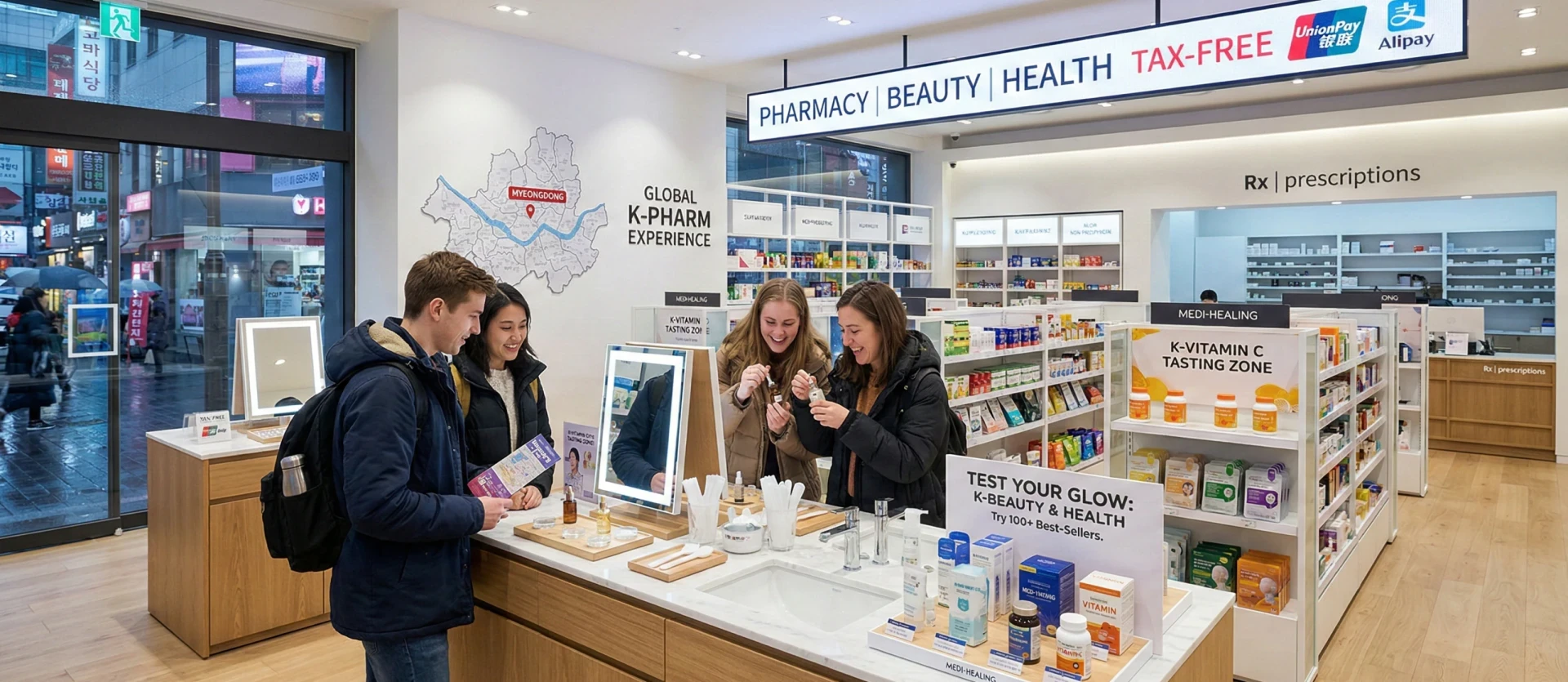
Pharmacy or Olive Young?
How K-pharmacy became Seoul's most unexpected anchor tenant category.
trend
Apr 13, 2026
2026 Retail Trend: Keep the Taste, Cut the Risk
Frugal and indulgent in the same afternoon — how South Korea's ambivalent spending pattern is reshaping retail strategy in 2026.