Back
Share
Like

street
Article Highlights
Currently, Gangnam-daero retail brands have completed contracts with global brands and are preparing for interior design and licensing/permits.
Since the pandemic, global brands have folded their multi-store strategies and started utilizing the lower floors of Gangnam-daero as massive flagship billboards to imprint their brands.
The vertical integration model, where global retail on the lower floors generates foot traffic while medical offices on the upper floors support a stable cash flow, is the key formula for the revival of Gangnam-daero.
Out of the Pandemic Tunnel, Global Brands Queue Up for Gangnam
Just two to three years ago during the pandemic, Gangnam-daero suffered from an unprecedented vacancy crisis. Due to the combination of social distancing and the burden of operating brick-and-mortar stores, large-format stores pulled out one after another. As of 2023, the number of vacant street-level stores along Gangnam-daero soared to 18, reaching an all-time high (CBRE Korea Retail internal research data).
While the vacancy rate in the Gangnam area is reported to have risen sharply starting from the onset of COVID-19, the vacancy rate on the main street-level of Gangnam-daero actually reached its peak late in 2023. This is because of the long-term lease structures of large stores. Small-scale tenants on the upper floors quickly left immediately after the hit. On the other hand, large global retailers on the lower levels had to fulfill their lease terms even while operating at a loss, due to multi-year contracts and security deposit issues. It was only when their contract renewal dates arrived in 2023 that a wave of withdrawals ensued, causing vacancies to surface late.
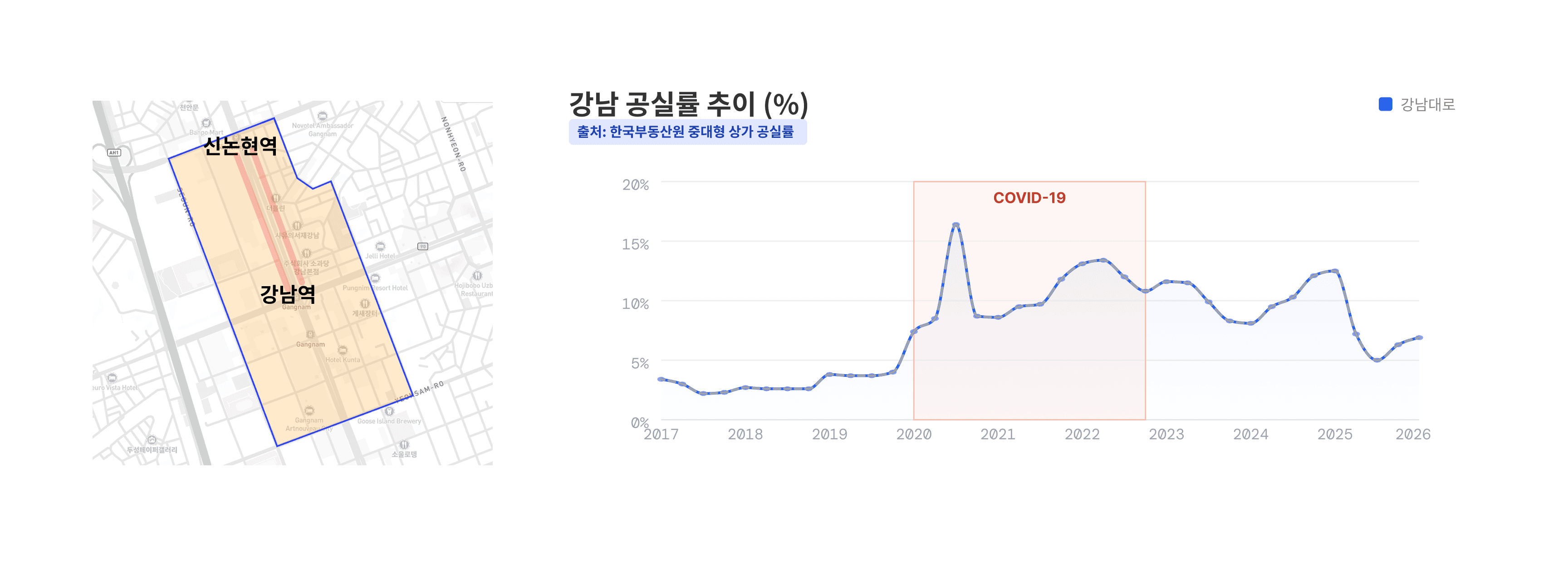
According to the Korea Real Estate Board, the vacancy rate for medium-to-large buildings in the area of Gangnam-daero Station (indicated on the map on the left) rose sharply after entering the COVID-19 period.
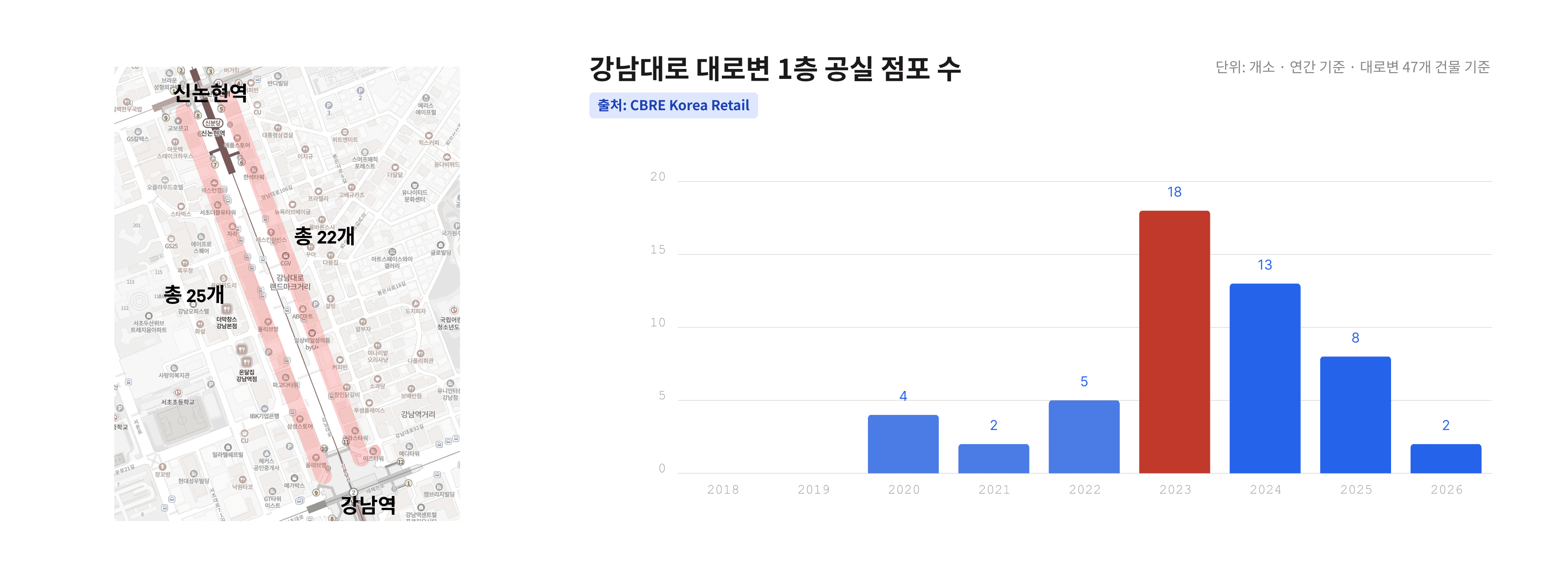
Out of 47 medium-to-large buildings adjacent to Gangnam-daero, vacancies on the lower floors peaked at 18 in 2023, showing the delayed impact of COVID compared to the overall medium-to-large vacancy rate in the Gangnam-daero Station area.
However, today's landscape of Gangnam-daero has completely turned around. Among a total of 47 buildings surveyed along the main street by CBRE Korea Retail, there are only 2 buildings with street-level retail vacancies. It is a complete resurrection, with the entire commercial district approaching a zero vacancy rate.
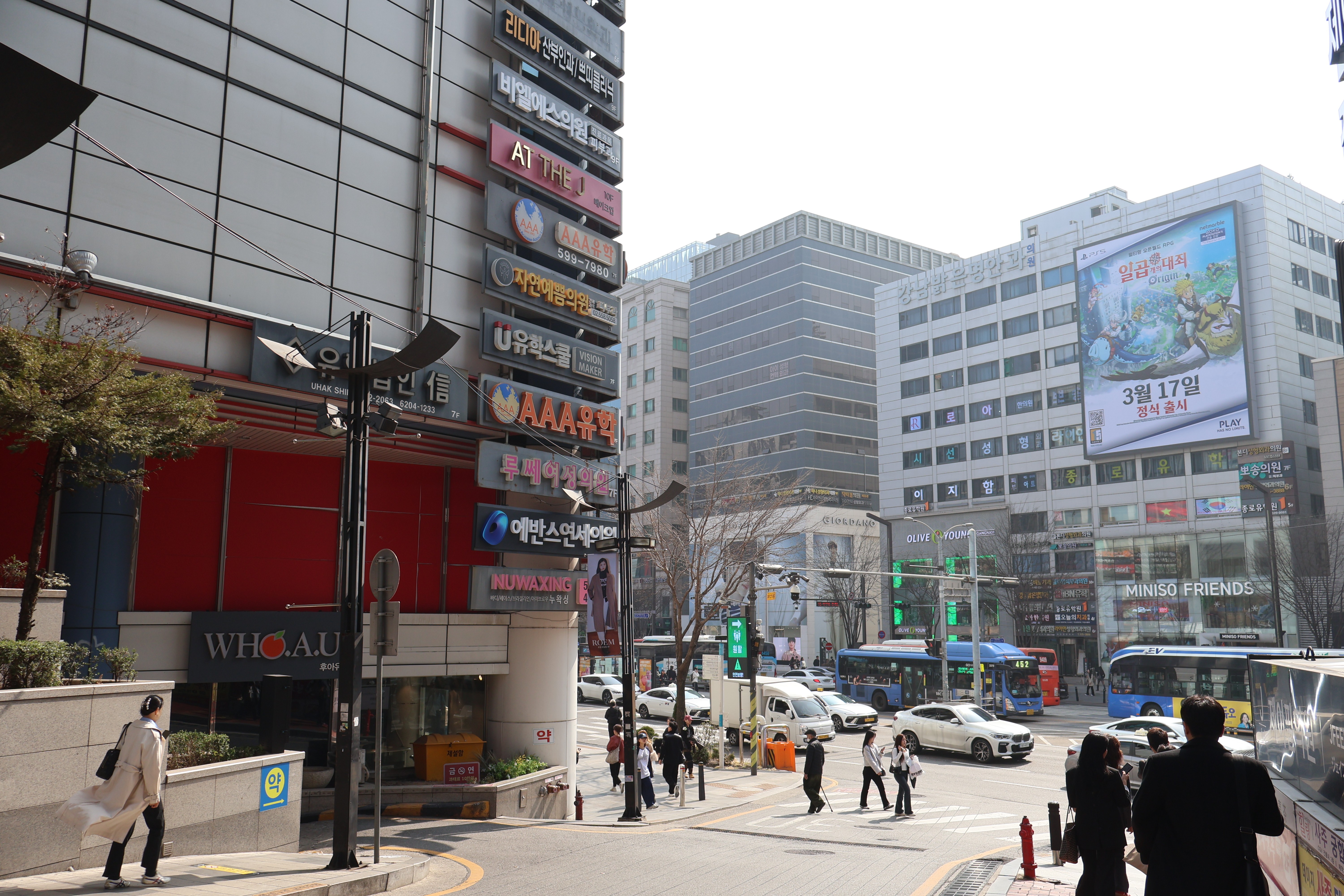
Even now, walking down the street, there are spaces that appear to be vacant, but these are not vacancies due to a failure to find tenants. In the actual leasing market, contracts have already been finalized with global brands. They are "in preparation" vacancies where large-scale interior construction, administrative permits, and launch marketing are being organized to bring the brand identity to life. The spaces that were vacant in 2023 are already running their engines at full throttle after just three years.
Strategic Cohabitation of Lower-floor Retail and Upper-floor Medical
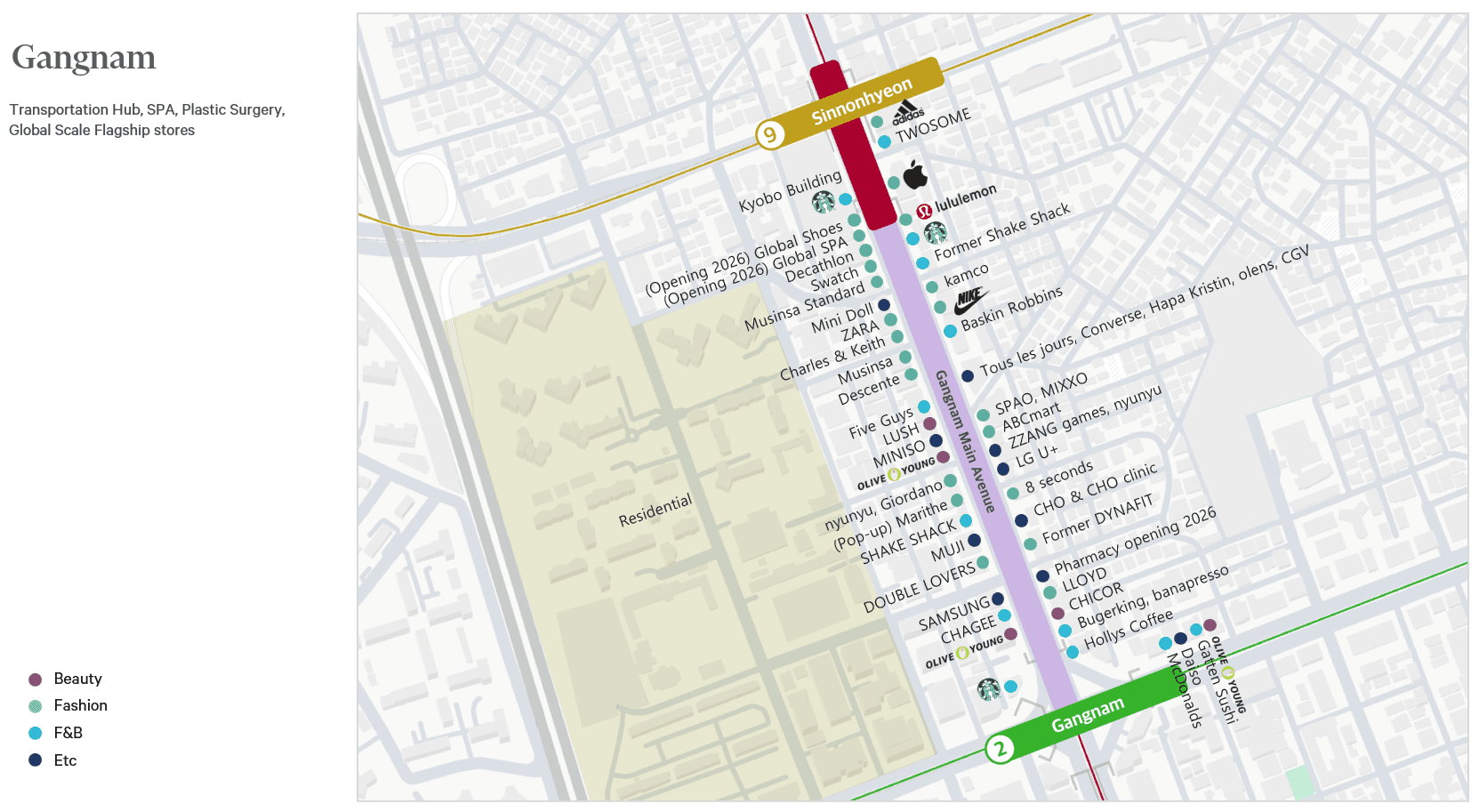
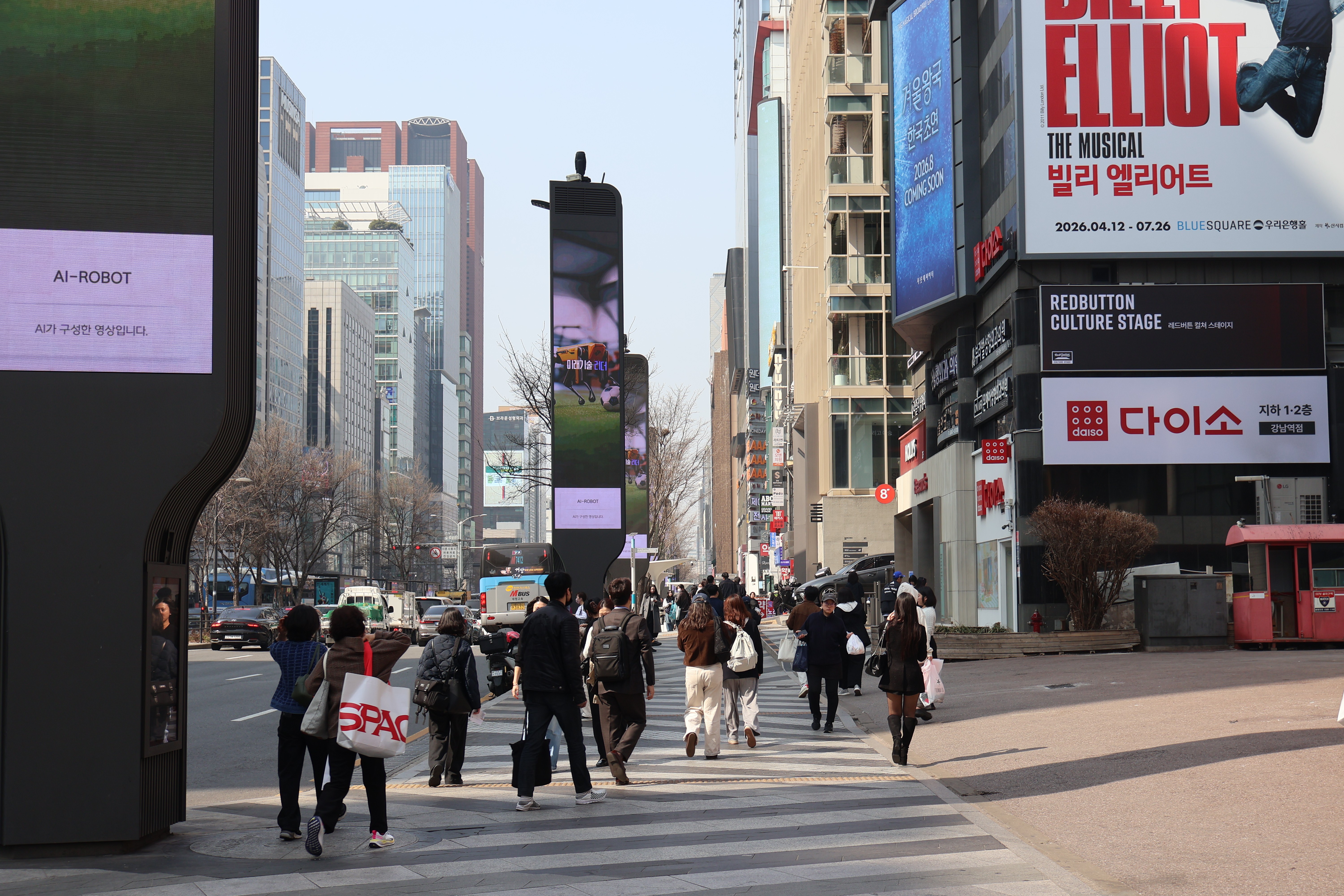
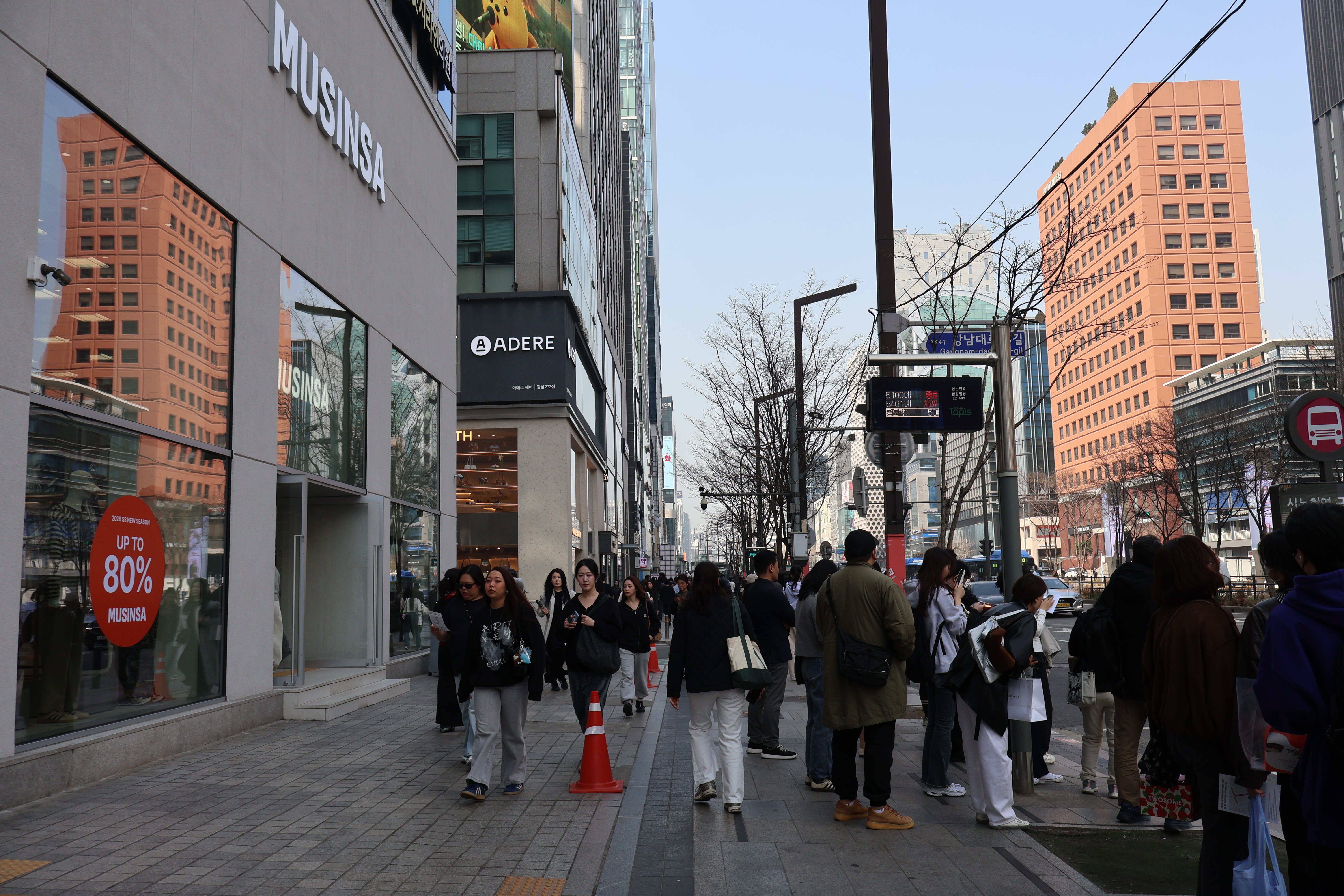
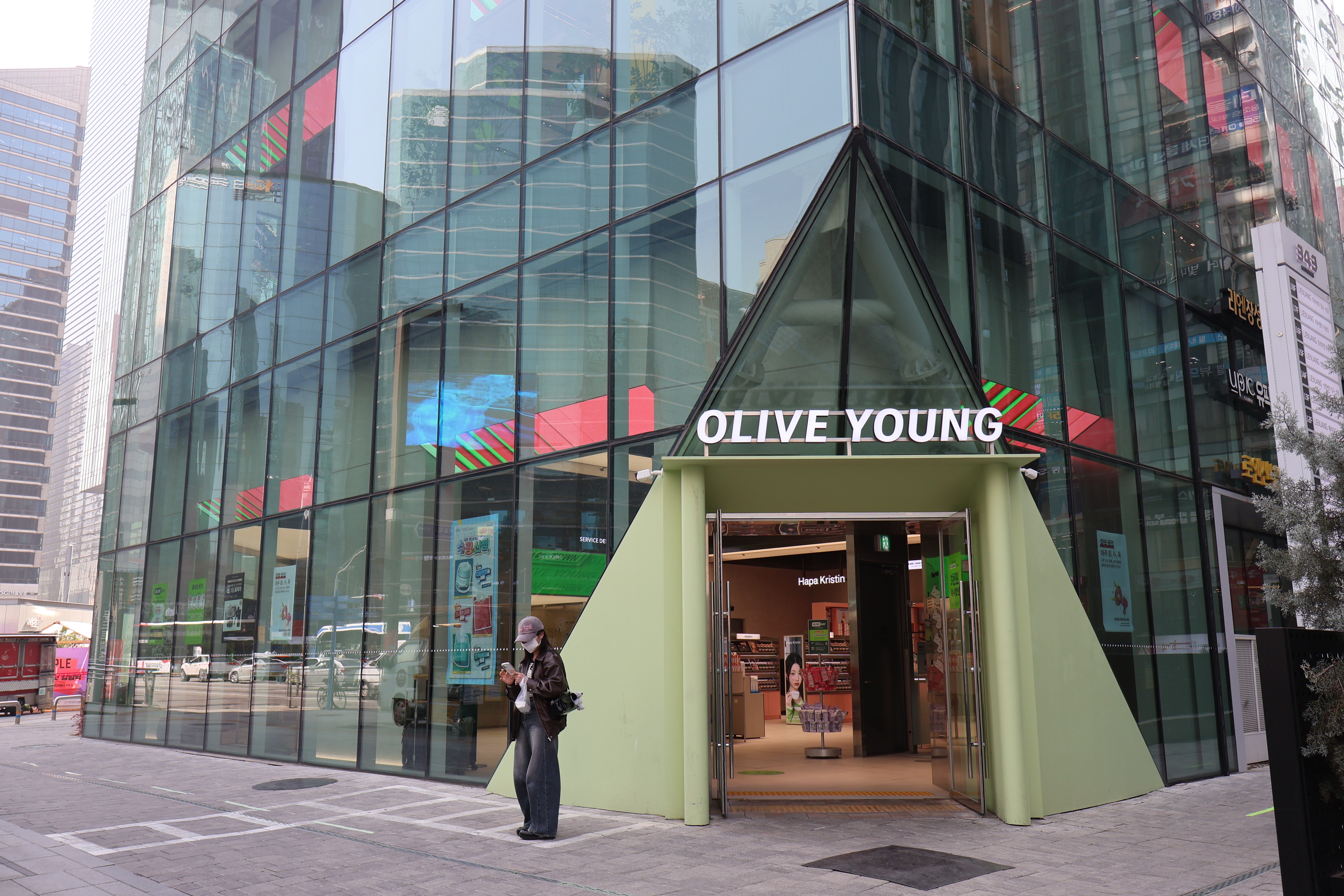
On the lower floors of buildings along Gangnam-daero, a large number of global and domestic brands are positioned, including Apple Store, Lululemon, Olive Young, Chagee, Muji, Musinsa, Zara, Decathlon, and Warhammer.
The key factor that enabled such a rapid recovery was the combination model of "street-level retail + upper-floor medical."
The lower floors of a building are key spaces that determine the visibility and first impression of the asset. Post-pandemic, global brands semi-forcibly abandoned their multi-store expansion strategies. Instead, they shifted to a large-scale flagship store strategy to showcase their brand philosophy by concentrating resources in a single commercial district where prominent symbolism is guaranteed.
Alice Lim, Assistant Manager of Retail at CBRE Korea, shared that Gangnam-daero is one of the few domestic districts capable of accommodating large flagships.
Gangnam-daero aligns with this strategy. This is why Lululemon's first flagship in Korea, Decathlon's second Gangnam store, Chagee, and Warhammer are opening. In particular, Gangnam is an already-proven market for global brands, making it possible to predict stable sales compared to emerging commercial districts and making store-opening decisions much easier.
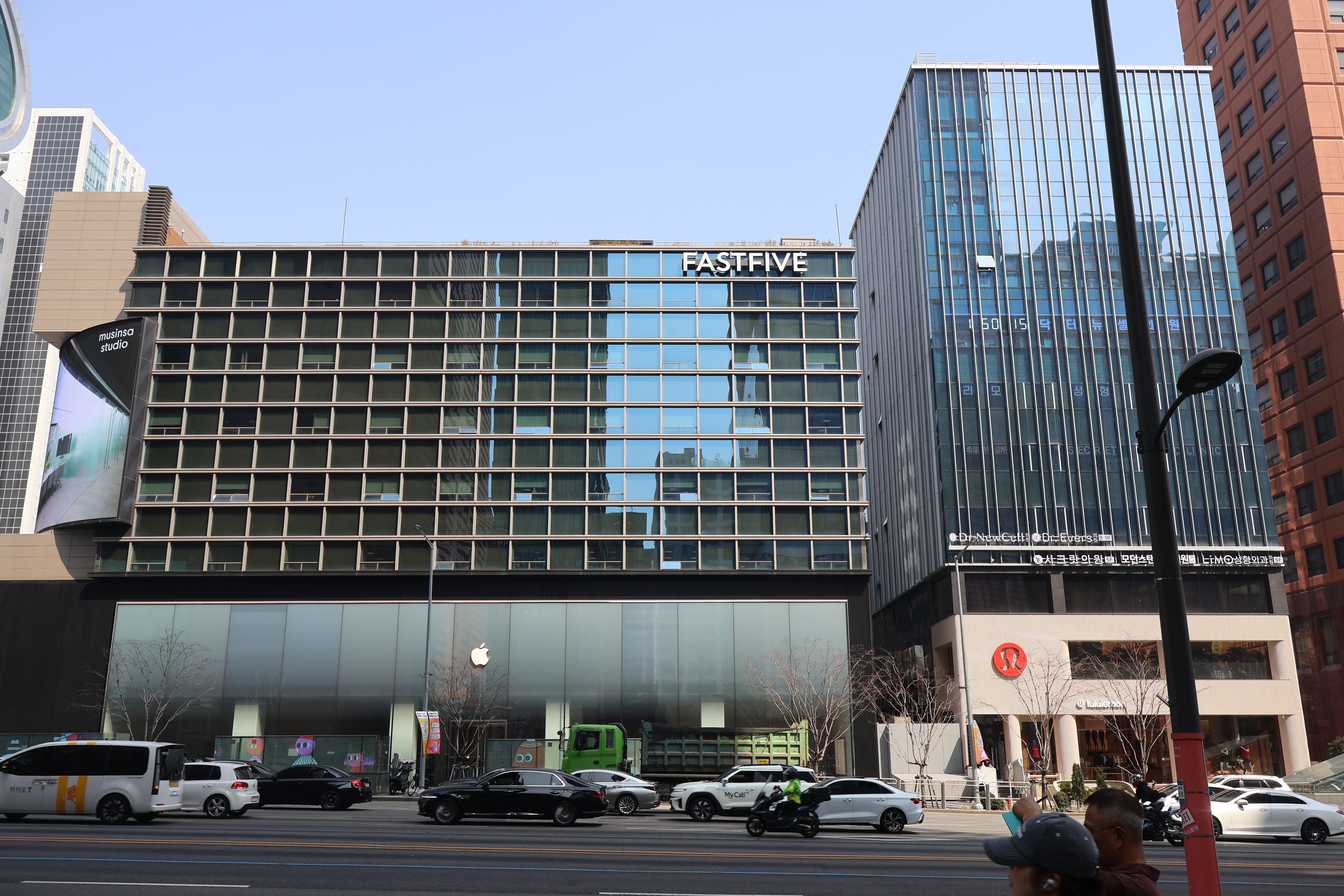

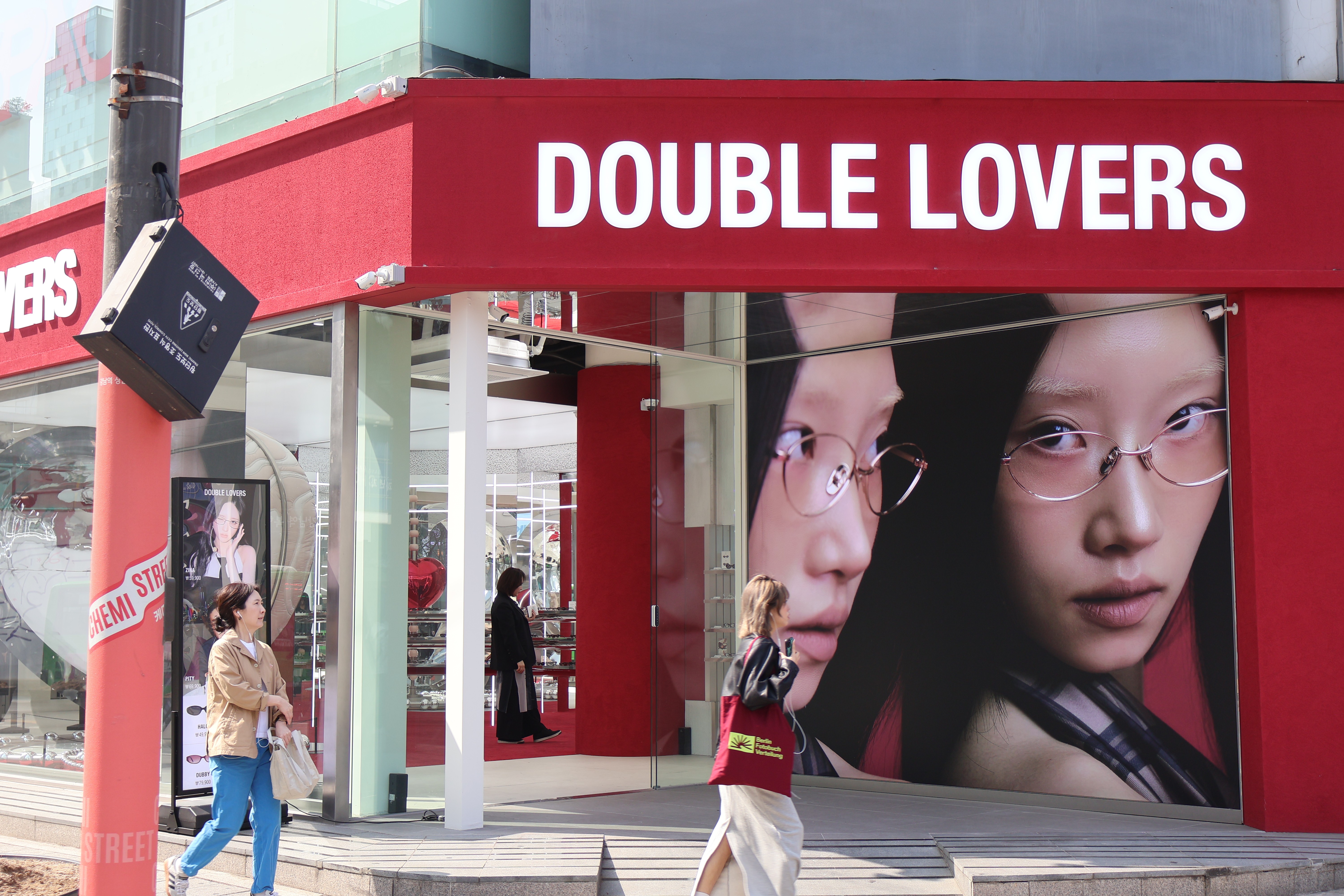
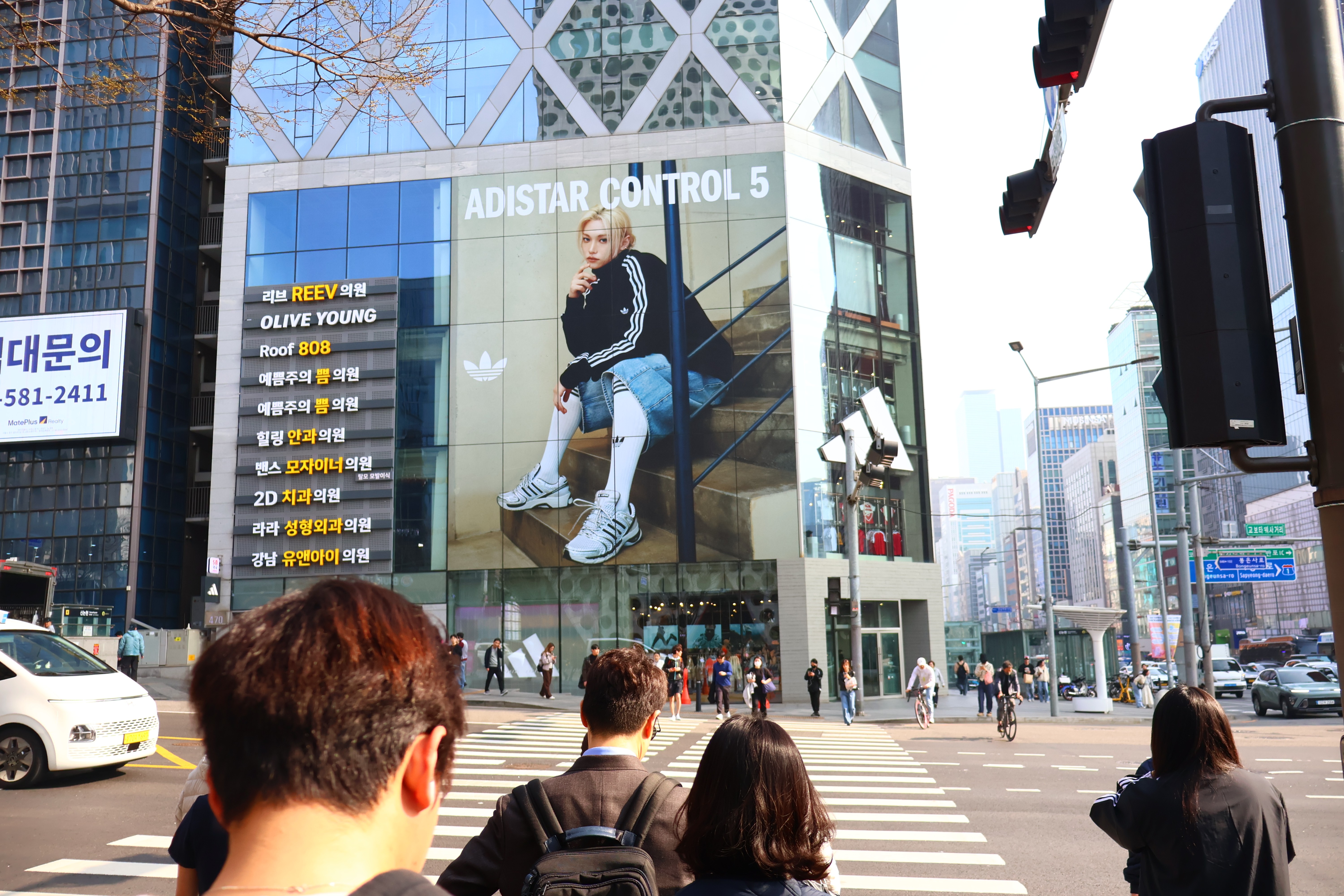
Conversely, the upper floors of the building are filled with medical tenants that rely heavily on destination visits. Consumers directly visit dermatologists, plastic surgeons, and dental clinics for the purpose of treatment or procedures. As long as accessibility is good, they can easily play the role of high-quality tenants on the upper floors.
Mark Do, Senior Director of Retail at CBRE Korea, analyzes the structural changes of the Gangnam commercial district as follows.
"The speed of vacancy resolution on Gangnam-daero strongly proves the recovery of demand from retailers. Now, when evaluating building value in key high-street commercial districts, the era of looking only at lower-floor rent or overall foot traffic is over. On the lower floors, global brands with proven crowd-drawing power are placed to enhance building recognition and create traffic flows. On the upper floors, high-quality medical tenants with a high potential for long-term operation are integrated. Designing vertical industry synergy—where street-level retail boosts the building's value and upper-floor medical supports stable cash flow for the asset—is the key formula for utilization of Gangnam-daero assets in 2026."
Currently, retail on Gangnam-daero operates with the street-level brand experience and the upper-floor medical destination demand interlocking gears precisely. It is at the forefront of a unique asset evolution that combines global capital and destination consumption, going beyond a simple high street.
While the lower floors are a battleground for glamorous retail brands, the upper floors are a massive cash cow accounting for about 75% of the total revenue of the Gangnam commercial district. A medical market monopolizing 39 of the top 50 performing stores. In the next episode, we will look into the surprising data on the truly big global hands driving Gangnam's medical market, especially the offensive led by the Japanese and the unimaginably high spending of customers from Hong Kong and Taiwan.
© Copyright 2026. All rights reserved.
This publication has been prepared in good faith, based on CBRE Korea's current anecdotal and evidence based views of the commercial real estate market. Although CBRE Korea believes its views reflect market conditions on the date of this presentation, they are subject to significant uncertainties and contingencies, many of which are beyond CBRE Korea’s control. In addition, many of CBRE Korea’s views are opinion and/or projections based on CBRE Korea’s subjective analyses of current market circumstances. Other firms may have different opinions, projections and analyses, and actual market conditions in the future may cause CBRE Korea’s current views to later be incorrect. CBRE Korea has no obligation to update its views herein if its opinions, projections, analyses or market circumstances later change.
Nothing in this publication should be construed as an indicator of the future performance of CBRE’s securities or of the performance of any other company’s securities. You should not purchase or sell securities-of CBRE or any other company-based on the views herein. CBRE Korea disclaims all liability for securities purchased or sold based on information herein, and by viewing this publication, you waive all claims against CBRE Korea as well as against CBRE Korea’s affiliates, officers, directors, employees, agents, advisers and representatives arising out of the accuracy, completeness, adequacy or your use of the information herein. No part of this publication may be reproduced, quoted, distributed, or disclosed to any third party without the prior written consent of CBRE Korea.

street
Sep 21, 2026
The Seongsu-dong Alley Chosen by Supreme | The Rise of 'Between-the-Alleys Commercial Districts' Noted by CBRE
Seongsu-iro 7-gil, chosen by Supreme and New Era

street
Sep 3, 2026
Why Global Brands Are Heading Back to Myeong-dong
The Generational Shift and Retail Analysis of a 100-Year-Old Prime Shopping District

Street
Jul 27, 2026
Dosan Park Commercial District Analysis | The Alley Where Brand Drives Land Value
Comparing Seongsu with Dosan: the opposite growth formulas of two Seoul hotspots

street
Jul 13, 2026
Gangnam ② - Medical Accounts for 75% of Gangnam-daero Sales
A place where hospitals fill the upper floors emptied by the pandemic, and attracting spending from international visitors.

street
May 26, 2026
Bangkok Retail 101 ②
Bangkok shopping malls want K-brands. The question is how to get in.
street
May 26, 2026
Bangkok Retail 101 ①
The Developer's Playground: What Sets Bangkok's Retail Evolution Apart from Seoul
street
Apr 13, 2026
Cheongdam: The Art of Elegant Detachment
High jewelry chases the light. Fashion houses build walls. A structural analysis of how capital occupies Cheongdam — and why this street operates by rules that apply nowhere else in Seoul.

street
Apr 13, 2026
Hannam-dong, Seoul's private club. ②
Zero vacancy. Key money reaching 1.3 billion Korean won. Inside Hannam-dong's brand selection market, where who you are matters more than what you offer to pay.
street
Apr 13, 2026
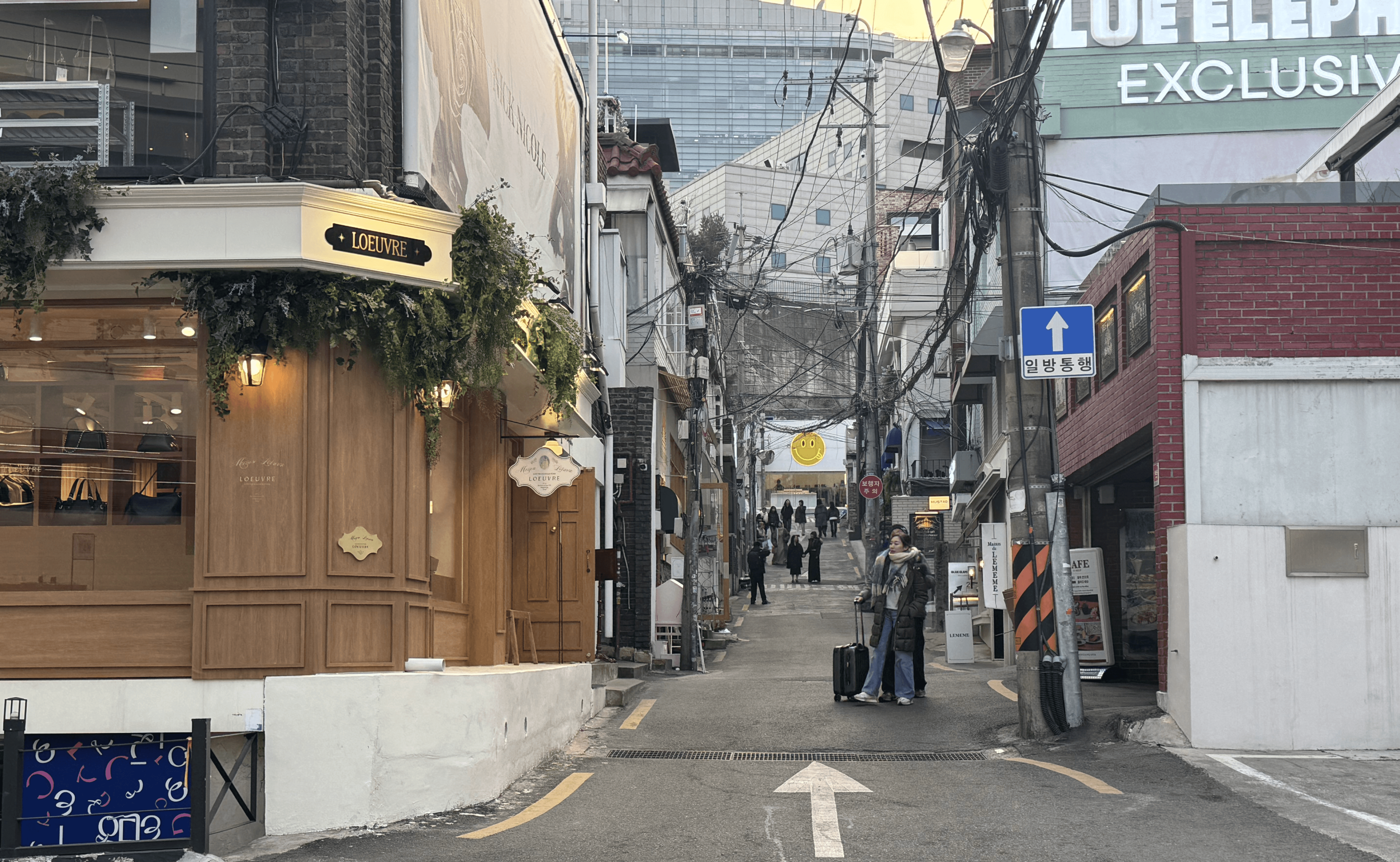
Hannam-dong, a private club in Seoul. ①
Between Seongsu's raw energy and Dosan's polish — how Hannam-dong became Asia's most credible ground for testing a global brand's Korea positioning.
street
Apr 13, 2026
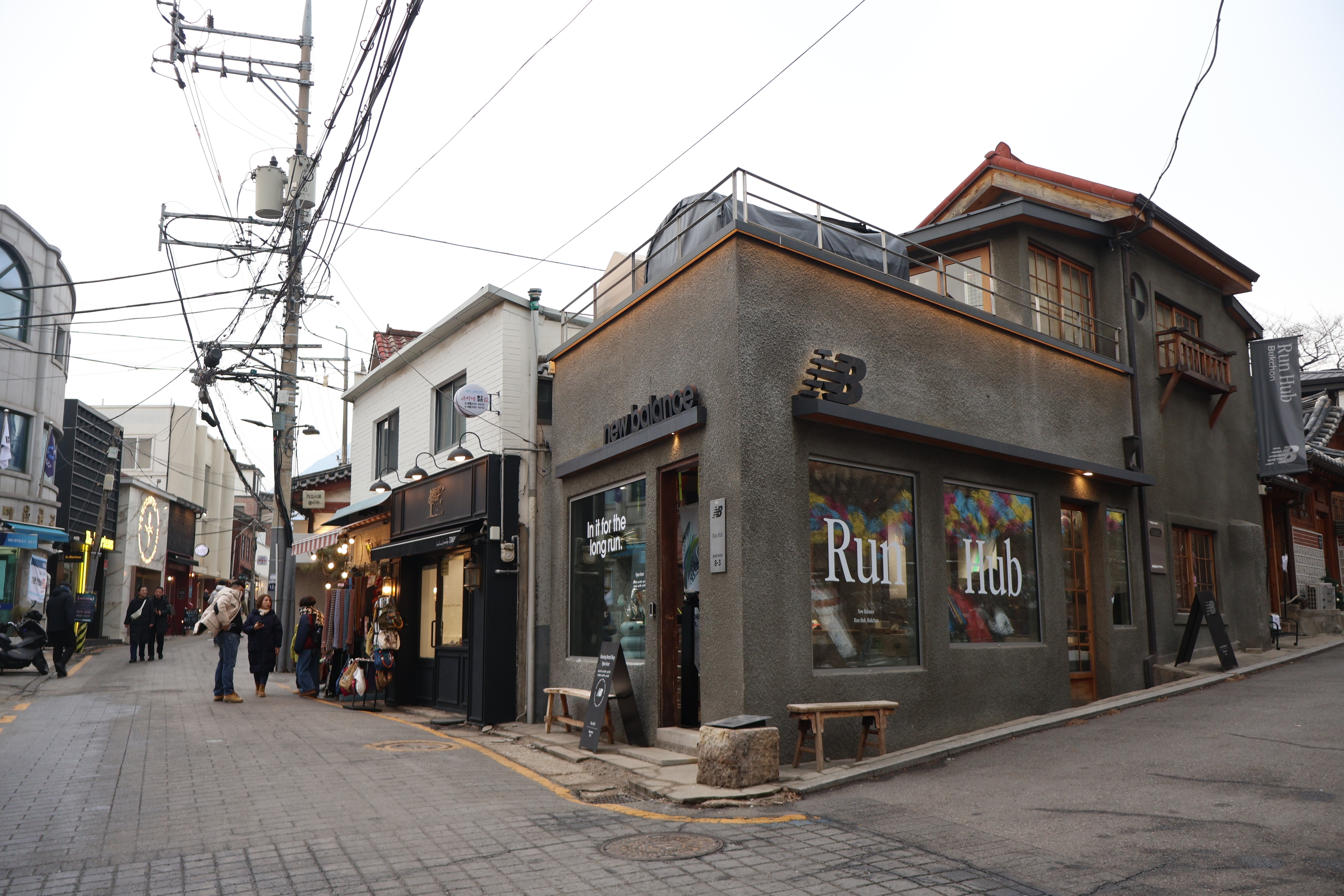
Same Bukchon, Different Strategy ③
Blue Bottle, New Balance, Adidas, Le Labo — how Hwadong and Sogyeokdong became the global flagship core of Seoul's Bukchon retail market.

street
Apr 13, 2026
Same Bukchon, Different Strategy ②
Why Amorepacific spent 30 billion won acquiring a hanok compound in Gahoe-dong — and how Bukchon-ro 5-gil became Seoul's fastest-growing K-brand retail cluster.
street
Apr 13, 2026
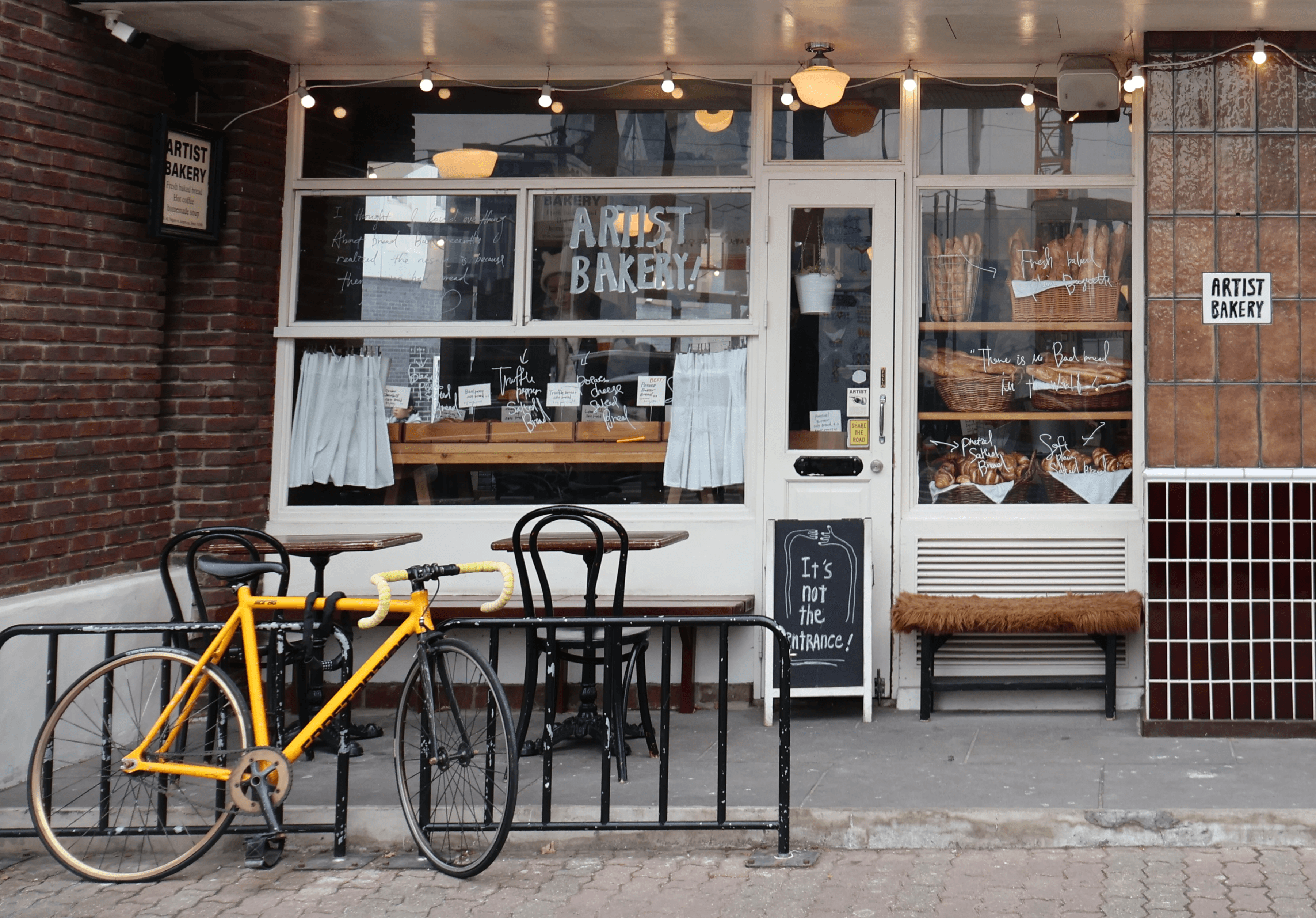
Same Bukchon, Different Strategy ①
Anguk Station and Gye-dong-gil: The entrance to Bukchon, focusing on the flagship near Anguk Station and the concentration of F&B on Gye-dong-gil.