Back
Share
Like
street
Article Highlights
Bangkok retail is driven by developers rather than commercial districts.
Mega projects like One Bangkok function as self-contained cities within the city.
Competition has shifted from brand count to dwell time and experiential retail.
The Present Status of Bangkok Retail: Cities Created by Developers
In recent years, Bangkok has been one of the fastest-growing retail cities in terms of its presence in Asia. The recovery rate of tourists after COVID-19 was fast, and its role as a consumption hub in Southeast Asia has been further strengthened. It is not just a tourist shopping city. Its weight is shifting towards being a core retail market in Asia where global brands and consumption content are concentrated.
The most important keyword to understand when studying Bangkok retail is "developer-centric structure." In Seoul, commercial districts form first, such as in Seongsu, Hannam, and Dosan, and then brands follow. Bangkok is different. Large-scale developers design the flow of the city itself. They integrate the BTS/MRT transportation network, offices, hotels, housing, tourism content, and shopping malls into a single project to create new consumer pathways directly.
Representative players include Siam Piwat, Central Pattana (CPN), and The Mall Group. Rather than being simple shopping mall operators, they are creating Bangkok's consumption experience itself in their own ways.
Siam Piwat is evaluated as the most sensible developer in Bangkok. Operating Siam Paragon, Siam Center, and ICONSIAM, it absorbs tourists and young consumer groups simultaneously. Its strength lies in creating "experience-centered spaces" rather than simple brand accumulation. Its strategy of actively utilizing JV structures with global and local conglomerates for each project to attract public interest and completeness in design is also representative.
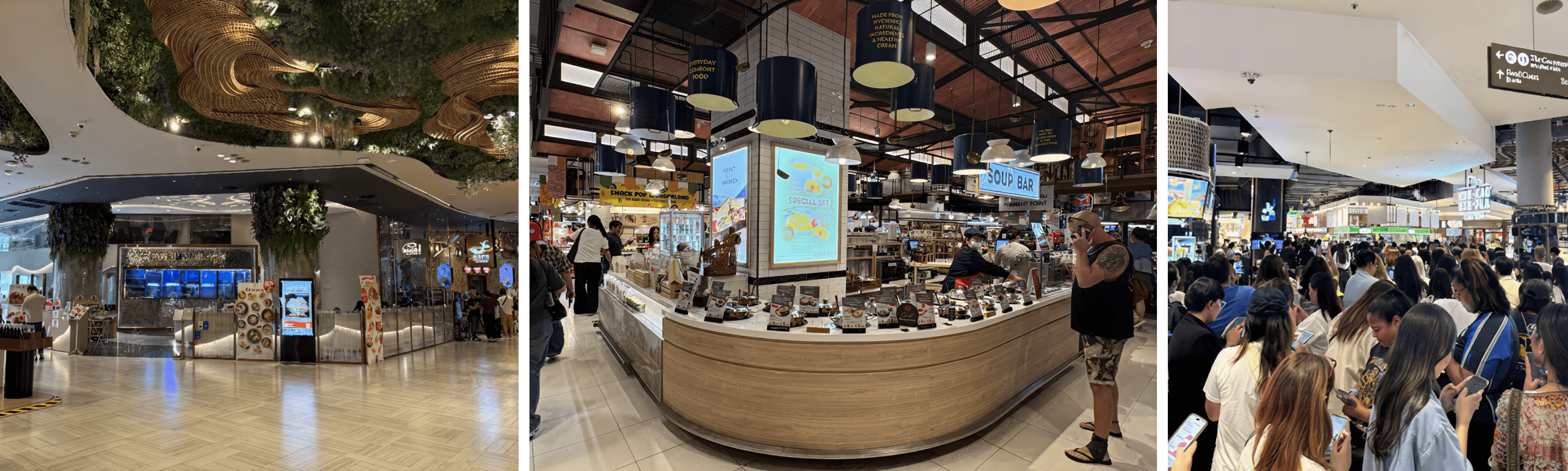
Siam Paragon attracts the largest amount of traffic in Bangkok
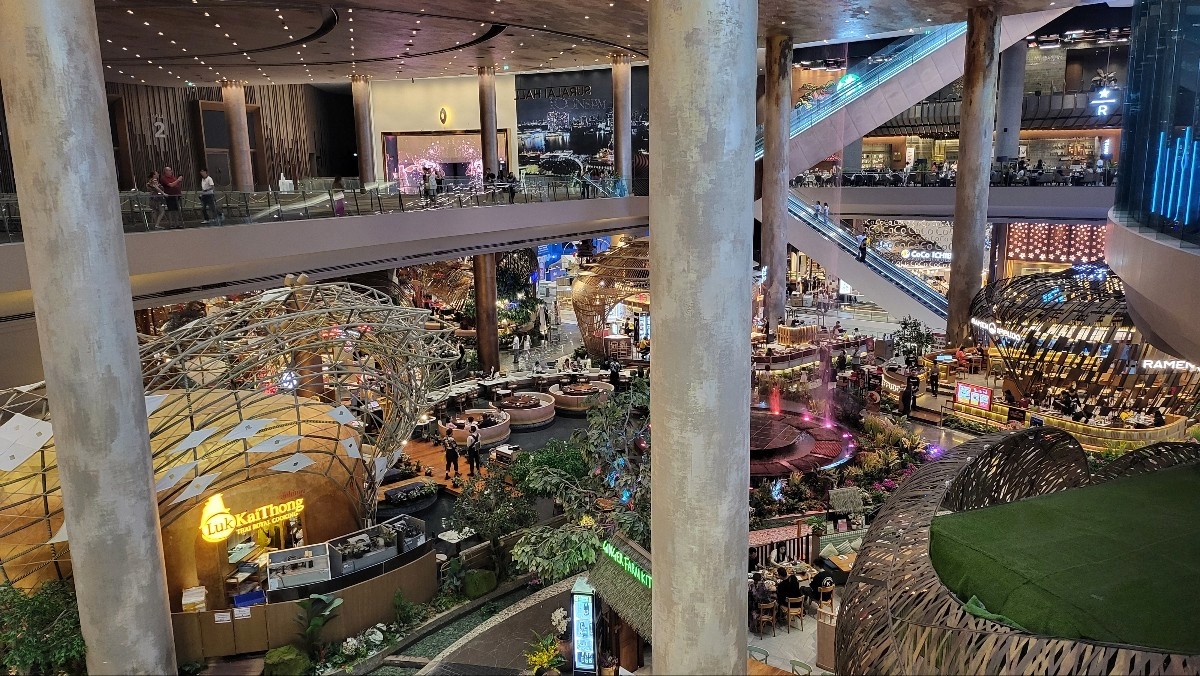
Siam Center puts Thai local designer brands and experimental content at the forefront. Siam Paragon plays a role in stably absorbing luxury and tourist consumption. ICONSIAM is a project where Siam Piwat's direction is represented most dramatically. Developed in collaboration with affiliates of the CP Group, this space combines Thai traditional culture, waterfront tourism, luxury, and entertainment to create "a destination that condenses Bangkok itself."
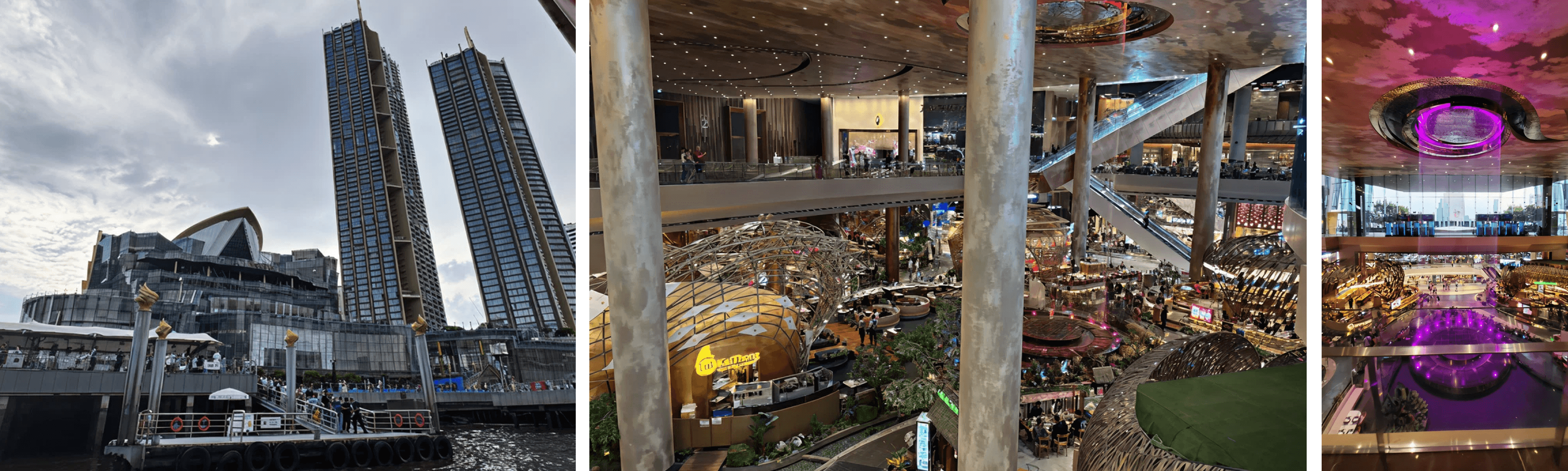
A panoramic view of ICONSIAM situated on the riverbank and its open interior, now established as a must-visit course for tourists.
Central Pattana (CPN) is more stable and popular. It has built a strong shopping mall network throughout Thailand, and its core competitiveness lies in its dominance of the local consumption market. CentralWorld serves as an everyday mall for Bangkok citizens as well as tourists. Recently, it has been actively investing in premium mixed-use developments to expand its portfolio.
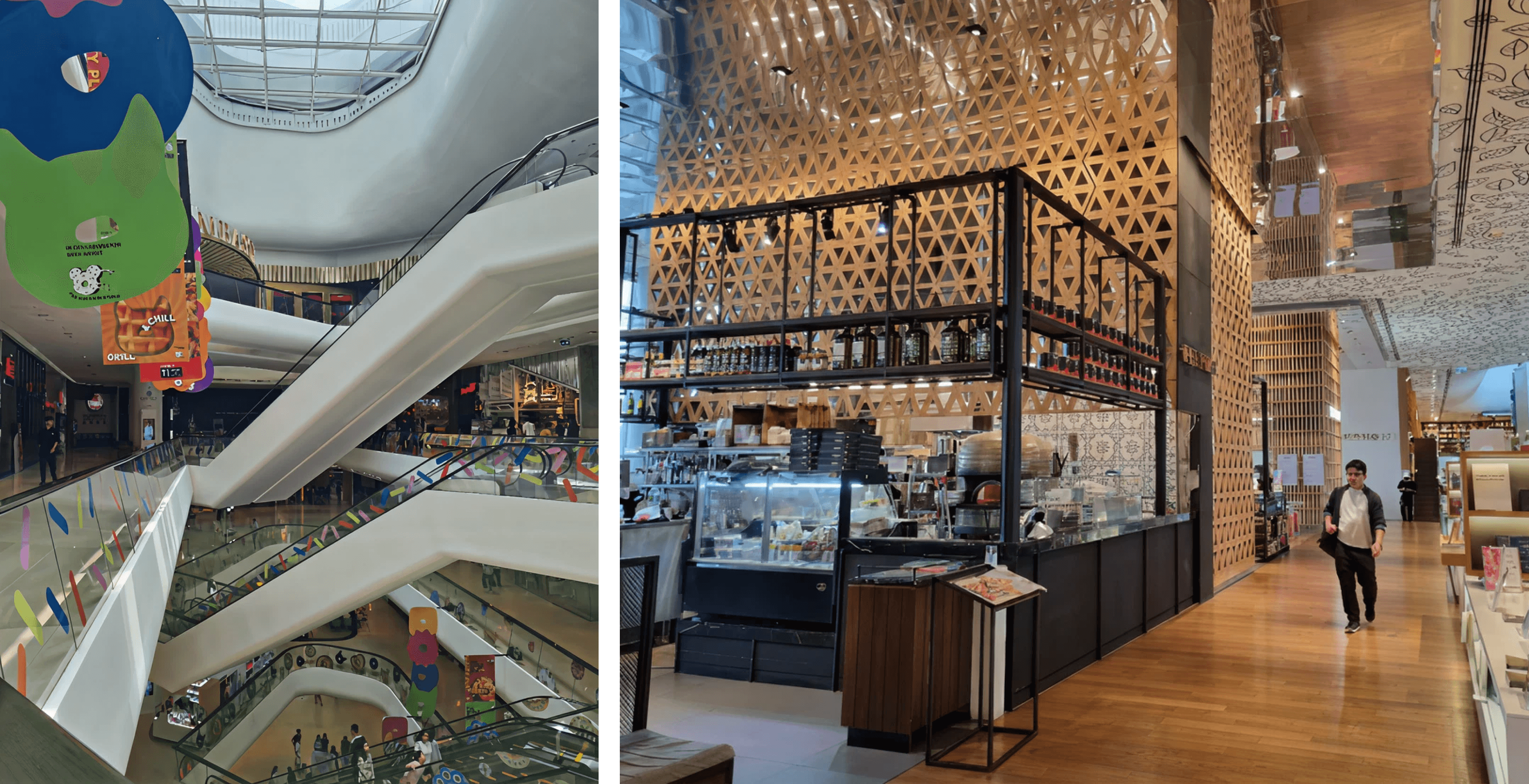
Left: Inside Central Embassy / Right: "Open House," the lifestyle + F&B corner on the 6th floor
The Mall Group is most aggressive in entertainment and dwell-time oriented content. Its flagship project, the EM District (Emporium, EmQuartier, EMSPHERE), has established itself as a huge lifestyle cluster representing the Sukhumvit area. Emporium functions as a traditional luxury department store, while EmQuartier differentiates itself with an open structure and SNS-friendly space layout. The recently opened EMSPHERE has expanded its presence once again, centering on large-scale F&B and youthful content.
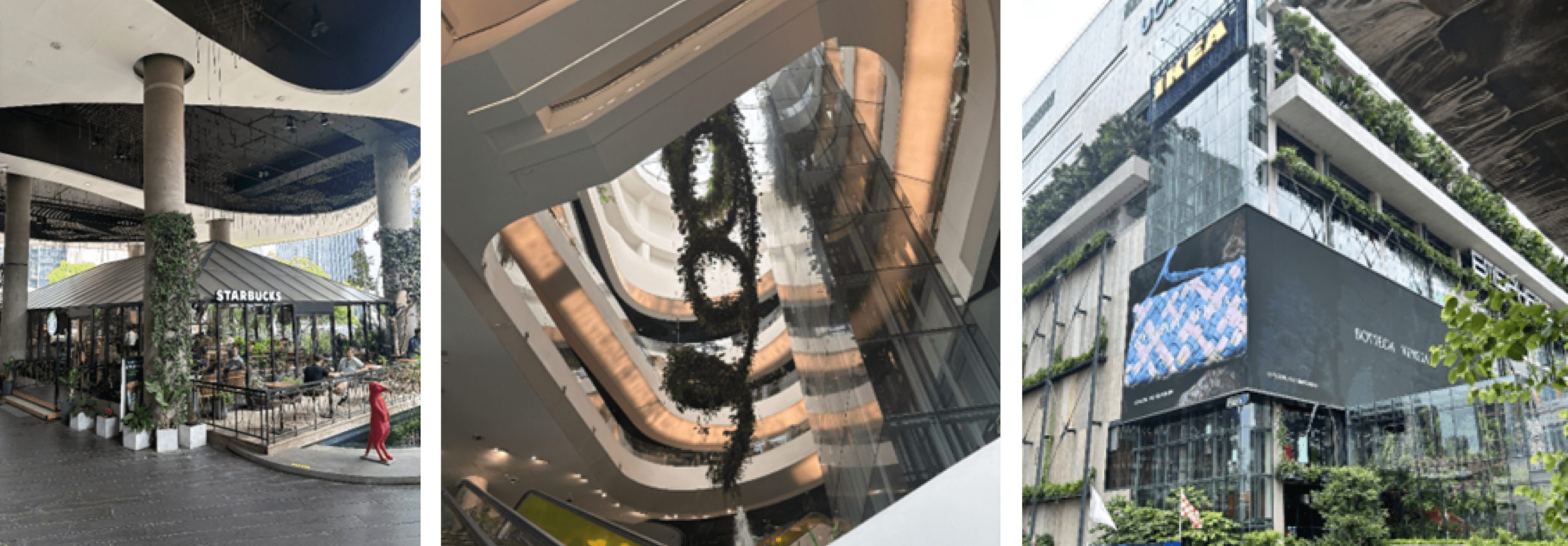
From left to right: EmQuartier Starbucks / Inside of EmQuartier / View of EMSPHERE
Recently, the competition method in Bangkok's retail market has changed. It is moving away from "how many brands to attract" toward "how long to keep people staying." Latest projects focus much more on F&B, events, exhibitions, and dwell-time oriented content than shopping. As online shopping becomes common, the reason for offline existence has shifted. It is now an experience space rather than a purchase space.
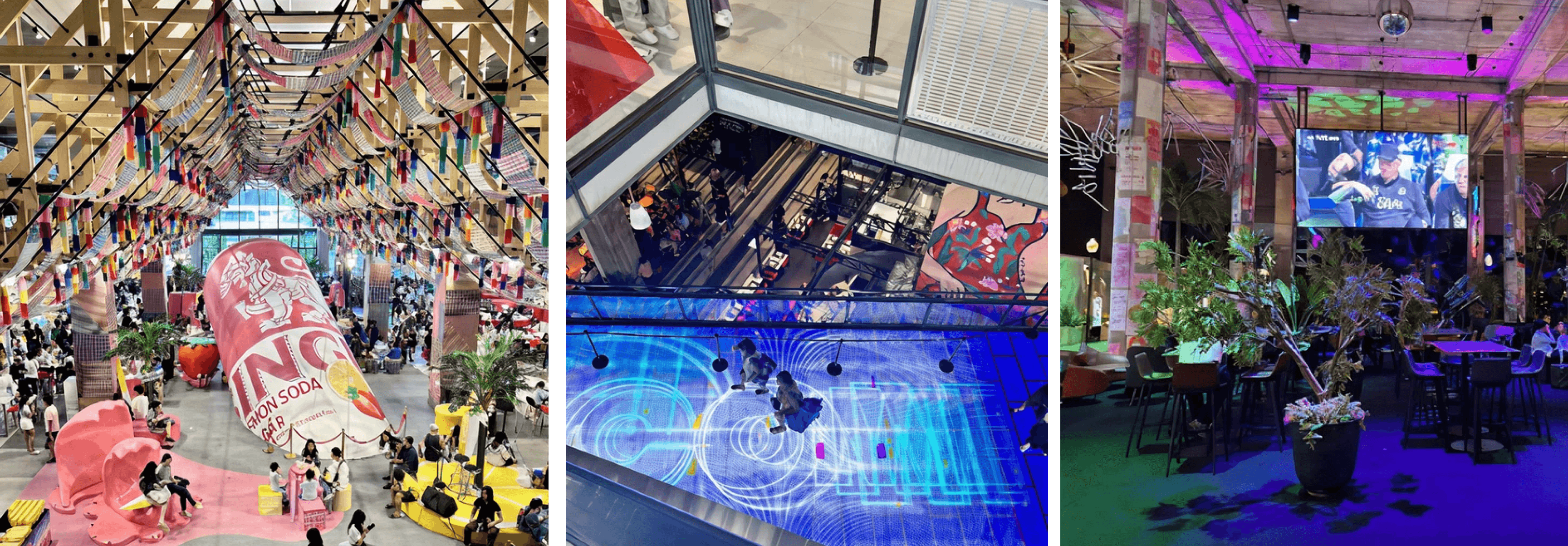
EMSPHERE filled with various pop-up stores and experiential elements
The Era of Mega-Projects
Currently, the most iconic projects in Bangkok are One Bangkok and Dusit Central Park.
One Bangkok is a massive mixed-use development project jointly developed by TCC Group and Frasers Property. With an aggregate GFA of approximately 1.83 million square meters, office space, hotels, retail facilities, and cultural venues form a single CBD. The retail experience is also different in nature from existing shopping malls. 'Parade' emphasizes a street-style retail structure, while 'The Storeys' puts experience-centered content at the forefront. Directly connected to MRT Lumpini Station, it is emerging as a new central axis of Bangkok.
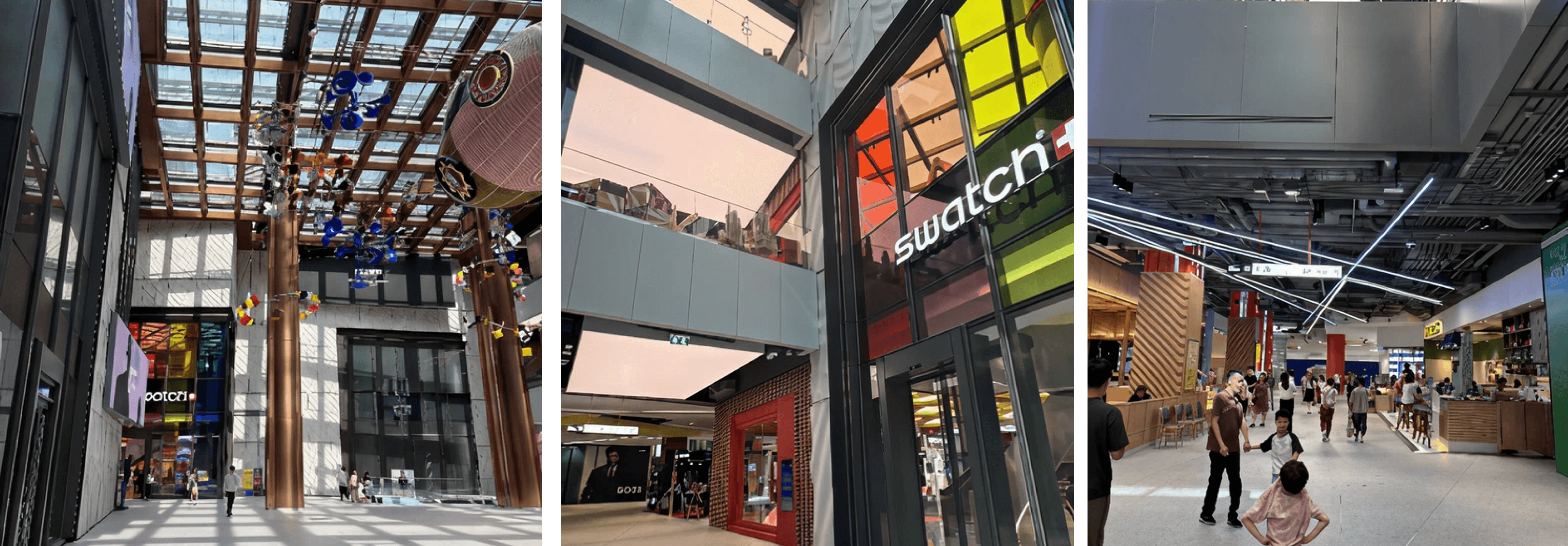
Inside of One Bangkok where various attempts have been made
Dusit Central Park is a joint-venture project between Dusit International and Central Pattana. Utilizing its location directly adjacent to Lumpini Park, it has enhanced park-view dining options, rooftop spaces, and wellness content. Major spaces such as the dining zones at the upper levels and 'Dusit Arun' aim for a stay experience closer to a resort than a shopping mall.
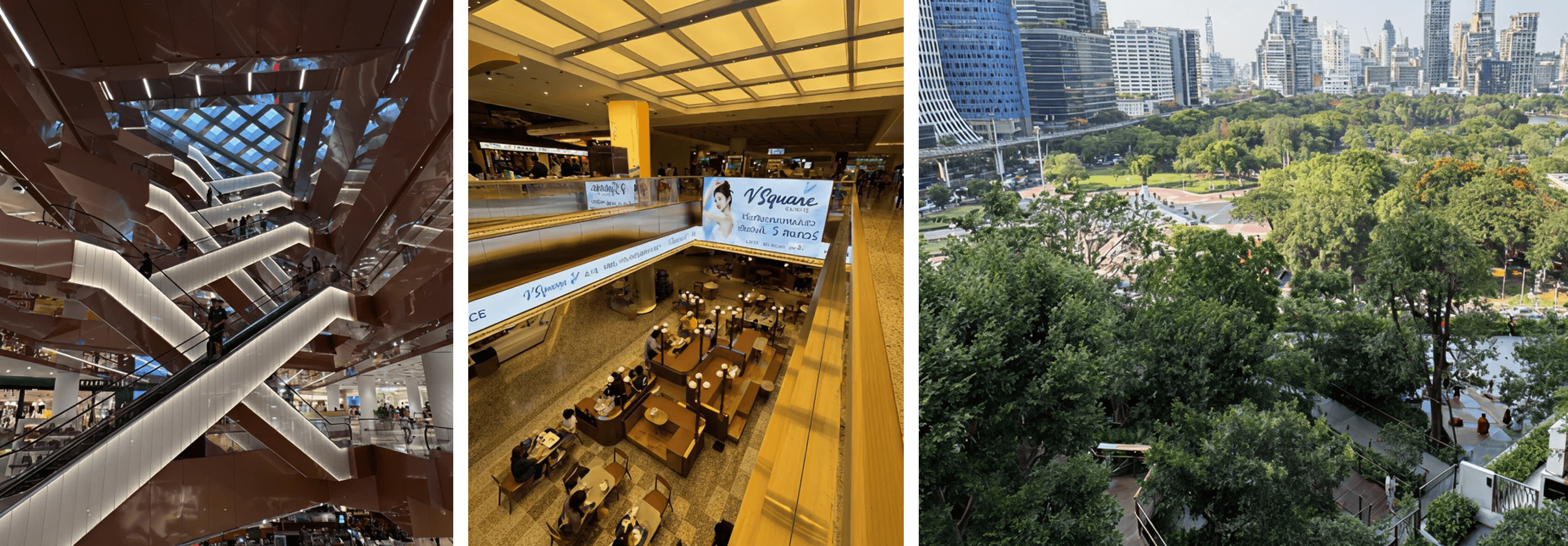
The interior of Dusit Central, full of photo spots, and a panoramic view of the rooftop garden
Bangkok Mall is also a project to watch. Being developed by The Mall Group in the Bang Na area, this project combines shopping and entertainment. Since it also includes plans for a large-scale arena, it is setting its course to become a multi-entertainment facility that expands beyond simple retail.
High Streets, What Malls Cannot Create
The charm of Bangkok cannot be explained by shopping malls alone. What makes the city richer is its high street commercial districts.
Ari is the fastest-growing lifestyle commercial district in recent years. High-sensitivity cafes and local brands are gathering there, absorbing creative demand. Thonglor and Ekkamai are more mature high-end commercial districts. They have a high portion of expatriate residents and high-income earners, with a high-standard restaurant and bar culture firmly established.
Recently, Banthat Thong and Song Wat Road have been rapidly drawing attention. In Song Wat, new cafes and local brands are flowing in on the foundation of an old Chinese-dominated commercial district, rapidly shifting the atmosphere. However, the speed of change in high streets is fast. It is not uncommon for a specific area to surge in popularity in a short period of time, only for the trend to move elsewhere.
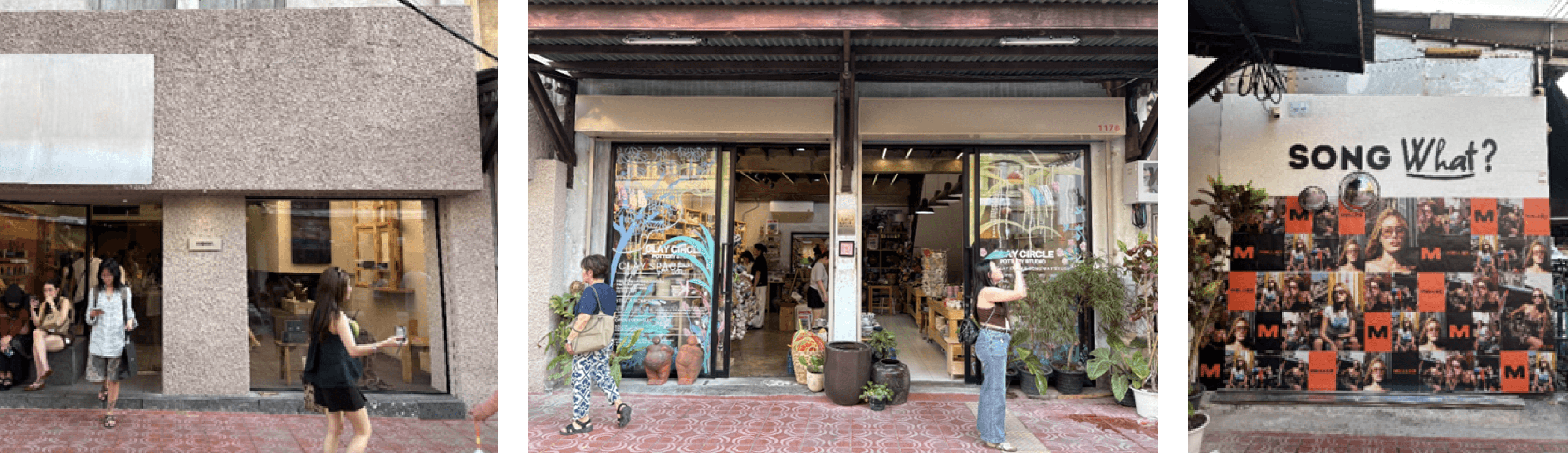
Unique shops along Song Wat Road, which is currently the hottest high street commercial area
In the end, the core competitiveness of Bangkok’s retail market today is that two sectors are growing simultaneously: mega-projects centered on major developers, and high-sensitivity high streets. These two structures are making Bangkok the most interesting retail city in Asia today. Then, how should South Korean brands navigate this structure? In Part 2, we will look into the strategies of K-brands entering Bangkok and actual case studies.
© Copyright 2026. All rights reserved.
This publication has been prepared in good faith, based on CBRE Korea's current anecdotal and evidence based views of the commercial real estate market. Although CBRE Korea believes its views reflect market conditions on the date of this presentation, they are subject to significant uncertainties and contingencies, many of which are beyond CBRE Korea’s control. In addition, many of CBRE Korea’s views are opinion and/or projections based on CBRE Korea’s subjective analyses of current market circumstances. Other firms may have different opinions, projections and analyses, and actual market conditions in the future may cause CBRE Korea’s current views to later be incorrect. CBRE Korea has no obligation to update its views herein if its opinions, projections, analyses or market circumstances later change.
Nothing in this publication should be construed as an indicator of the future performance of CBRE’s securities or of the performance of any other company’s securities. You should not purchase or sell securities-of CBRE or any other company-based on the views herein. CBRE Korea disclaims all liability for securities purchased or sold based on information herein, and by viewing this publication, you waive all claims against CBRE Korea as well as against CBRE Korea’s affiliates, officers, directors, employees, agents, advisers and representatives arising out of the accuracy, completeness, adequacy or your use of the information herein. No part of this publication may be reproduced, quoted, distributed, or disclosed to any third party without the prior written consent of CBRE Korea.

street
Sep 3, 2026
Why Global Brands Are Heading Back to Myeong-dong
The Generational Shift and Retail Analysis of a 100-Year-Old Prime Shopping District

Street
Jul 27, 2026
Dosan Park Commercial District Analysis | The Alley Where Brand Drives Land Value
Comparing Seongsu with Dosan: the opposite growth formulas of two Seoul hotspots

street
Jul 13, 2026
Gangnam ② - 75% of Gangnam-daero is Medical
A place where hospitals fill the upper floors emptied by the pandemic, and the wallets of foreigners crowd.

street
Jun 22, 2026
Gangnam ① - Gangnam-daero Retail, Chosen by Global Brands
From 18 vacancies three years ago to just two. The real reason why low-floor retail along Gangnam-daero has made a complete comeback.

street
May 26, 2026
Bangkok Retail 101 ②
Bangkok shopping malls want K-brands. The question is how to get in.
street
Apr 13, 2026
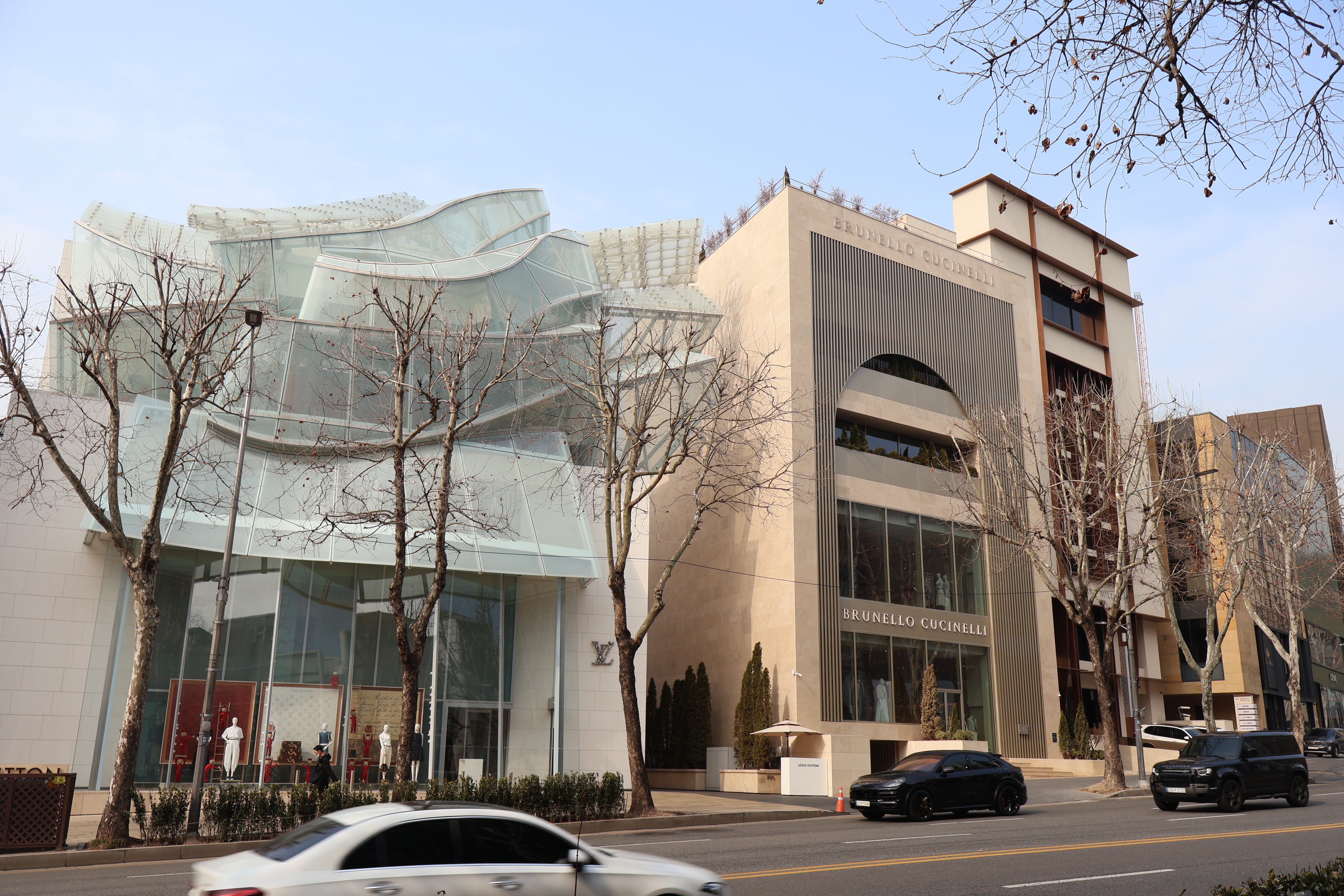
Cheongdam: The Art of Elegant Detachment
High jewelry chases the light. Fashion houses build walls. A structural analysis of how capital occupies Cheongdam — and why this street operates by rules that apply nowhere else in Seoul.

street
Apr 13, 2026
Hannam-dong, Seoul's private club. ②
Zero vacancy. Key money reaching 1.3 billion Korean won. Inside Hannam-dong's brand selection market, where who you are matters more than what you offer to pay.
street
Apr 13, 2026
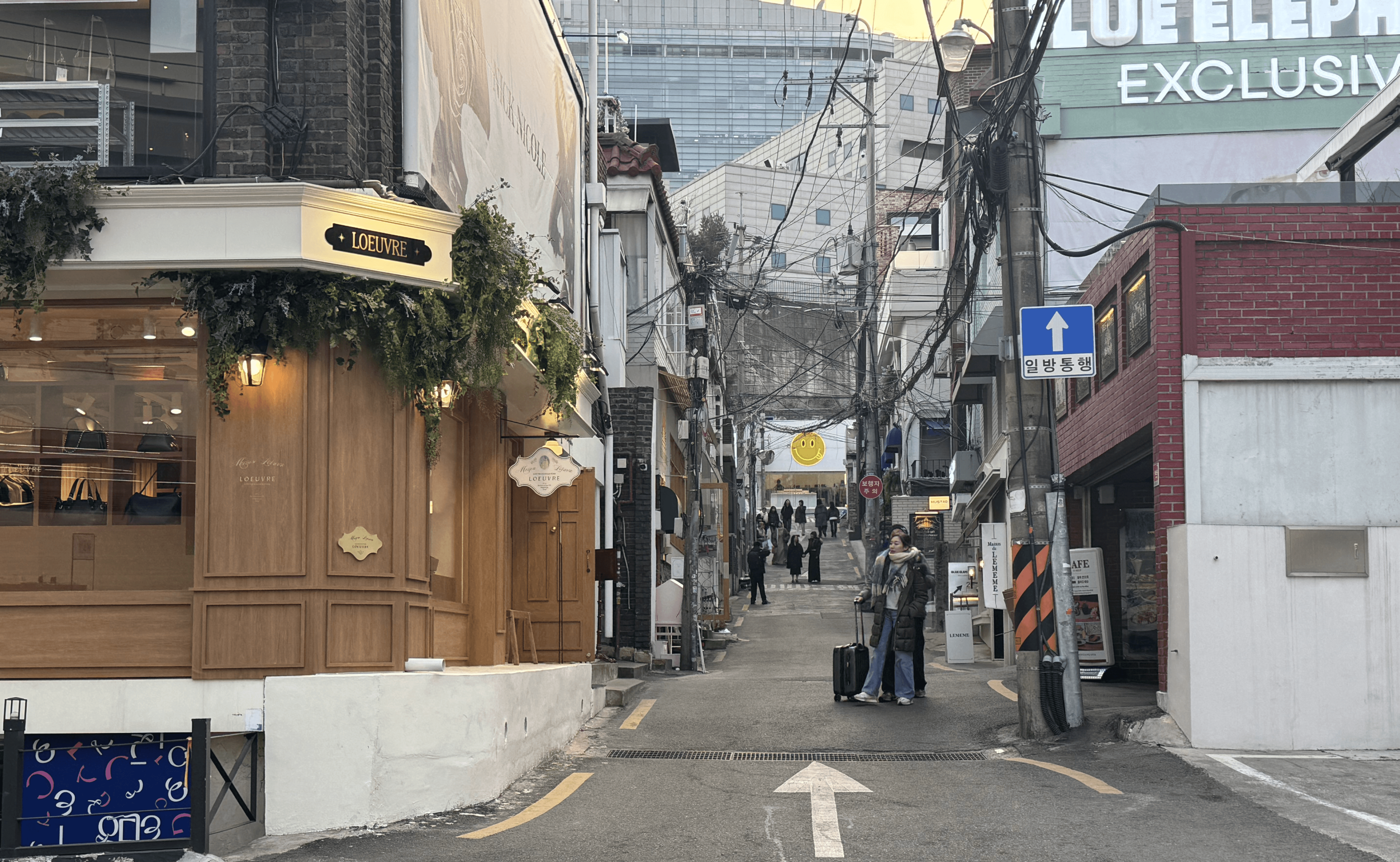
Hannam-dong, a private club in Seoul. ①
Between Seongsu's raw energy and Dosan's polish — how Hannam-dong became Asia's most credible ground for testing a global brand's Korea positioning.
street
Apr 13, 2026
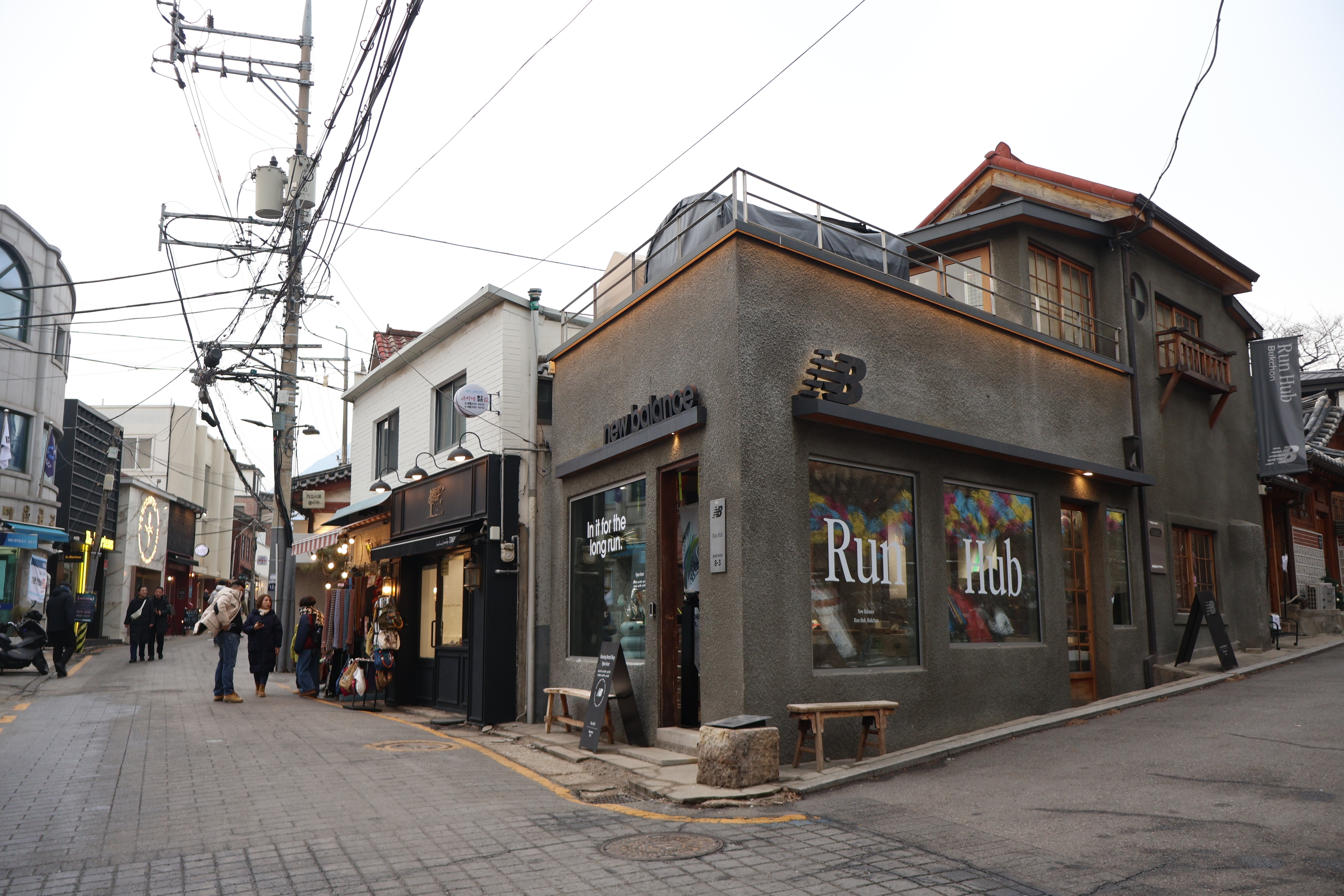
Same Bukchon, Different Strategy ③
Blue Bottle, New Balance, Adidas, Le Labo — how Hwadong and Sogyeokdong became the global flagship core of Seoul's Bukchon retail market.

street
Apr 13, 2026
Same Bukchon, Different Strategy ②
Why Amorepacific spent 30 billion won acquiring a hanok compound in Gahoe-dong — and how Bukchon-ro 5-gil became Seoul's fastest-growing K-brand retail cluster.
street
Apr 13, 2026
Same Bukchon, Different Strategy ①
Anguk Station and Gye-dong-gil: The entrance to Bukchon, focusing on the flagship near Anguk Station and the concentration of F&B on Gye-dong-gil.