Back
Share
Like

Street
Article Highlights
Dosan vs. Seongsu: Seongsu grows on transaction volume, Dosan on unit price. Fewer transactions, higher spend per visit, a mature district that holds value through price.
In Dosan, property value is set by the brand next door, not foot traffic. Each time an anchor like Alo or Gentle Monster moves in, Dosan land prices jump a step.
Dosan isn't one district but three lines, block by block: luxury (Hermès, Alo, Sulwhasoo), hype (Louis Vuitton, Supreme, CASETiFY), and contemporary (Birkenstock, On, Bape).
Between 2017 and 2019, land prices around Dosan Park ranged from 100 million to 130 million KRW per pyeong (approx. 3.3 square meters). Today, they fluctuate between 350 million and 400 million KRW per pyeong. Although this price level does not make sense mathematically based on rental yield, transactions continue continuously. This is because in this alley, the value of a building is determined not by the rent, but by which brand moves in. Indeed, looking closely at credit card sales in this area, Dosan is not a commercial district growing because it has more customers, but rather because the amount spent per person is increasing. And it is the brand that determines that unit price. We took a closer look at how that formula works around Dosan Park.
Three Different Lines in Each Alley
Dosan Park is not just a single commercial area. Even across just one alley, the rental prices and the nature of incoming capital differ significantly.

Centered on the south side of Dosan Park, the Hermès Maison is followed by Alo, Sulwhasoo, Perrotin Gallery, and Maison Baccarat. The buildings along this line are closer to hosting a brand rather than merely serving as places to sell products. Turnover is slow, and ownership changes are rare. With galleries and high-end fashion keeping their spots, they serve as a baseline preventing local land prices from dropping.
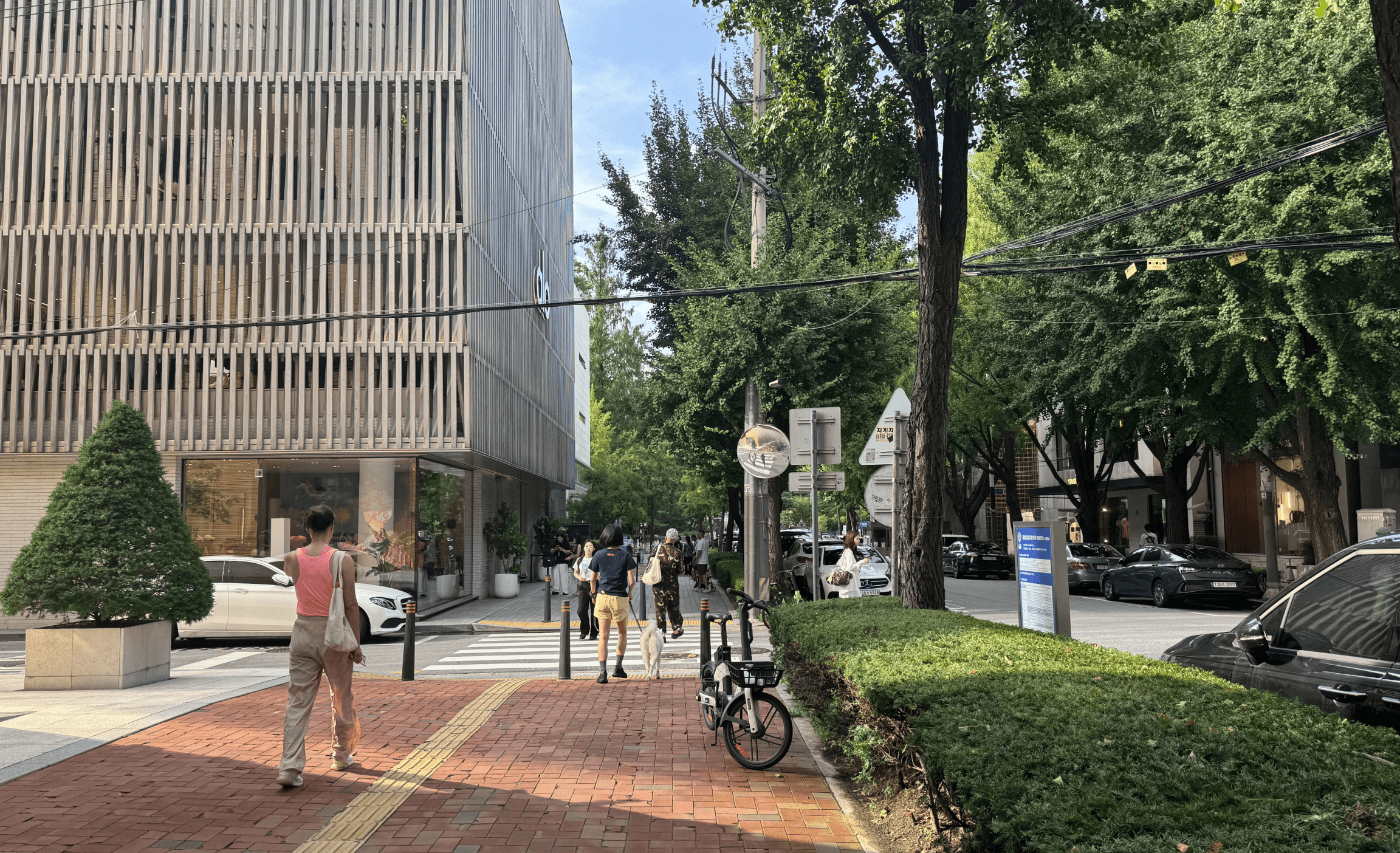
The Garosu street featuring Hermès, Alo, and Sulwhasoo
If you turn into the back road on the east side of Dosan Park, you will find Supreme, Stüssy, Gentle Monster, CASETiFY, and Perfumer H. Even in an alley barely wide enough for one car to pass, foreign tourists line up in front of the stores. This is the first alley global rising brands review when looking for their first location in Korea, which is why some properties here command higher rents than those on the main boulevard.
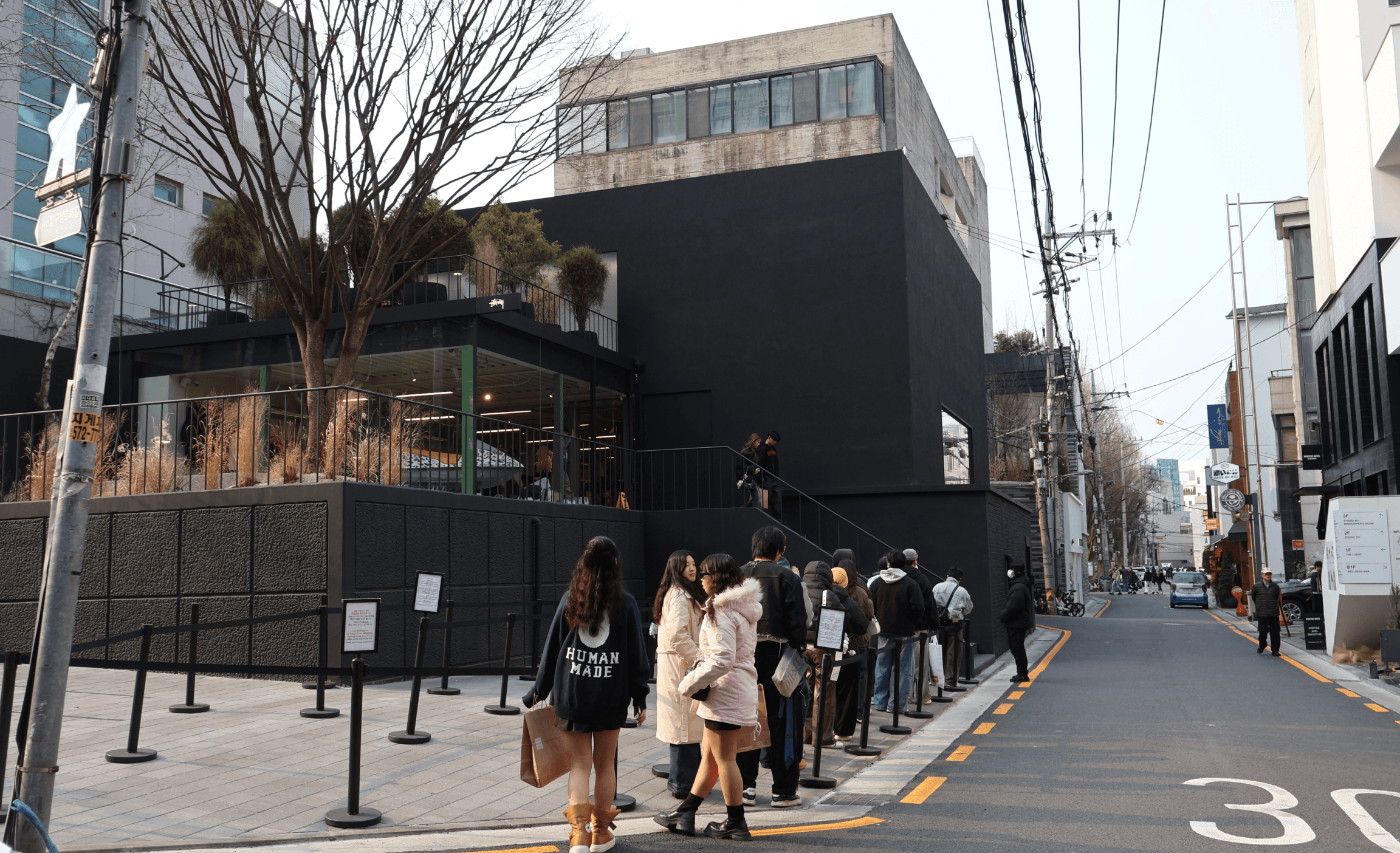
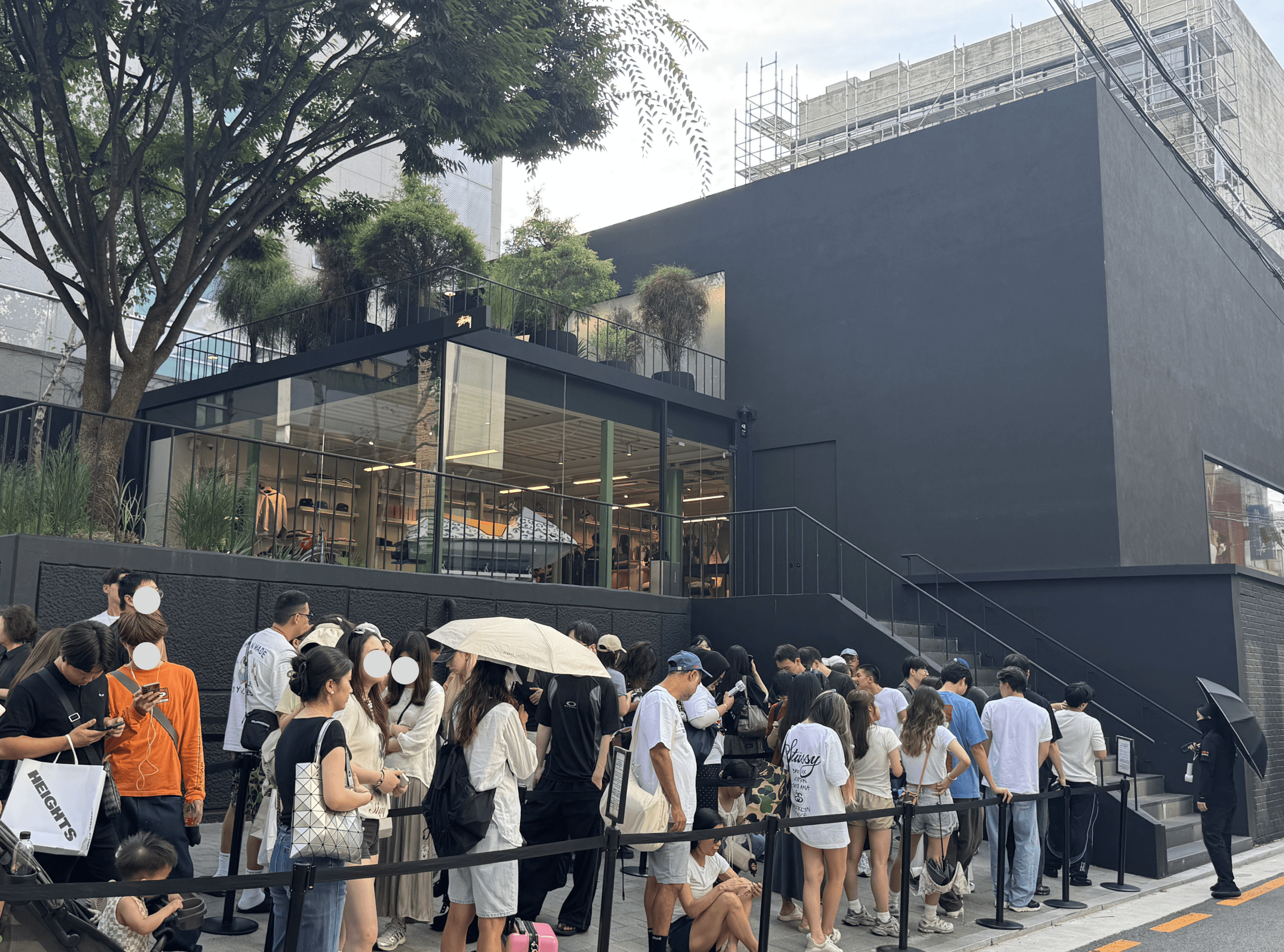
A comparison of photos taken in front of the Stüssy store in mid-March and mid-July. It is crowded with people regardless of the season.
Going one block further reveals contemporary lines such as Elborn, Bape, Kream, Numbering, Satur, and ON, all of which signed contracts or opened in the past year. There are also London Bagel Museum and Nature Do Salt Bread, with an old kalguksu (hand-cut noodle) restaurant and a butcher's shop right next to them. This line keeps people lingering in the alley. Foot traffic concentrates around buildings occupied by various brands, and that traffic is reflected in the rents and sales prices of neighboring buildings.
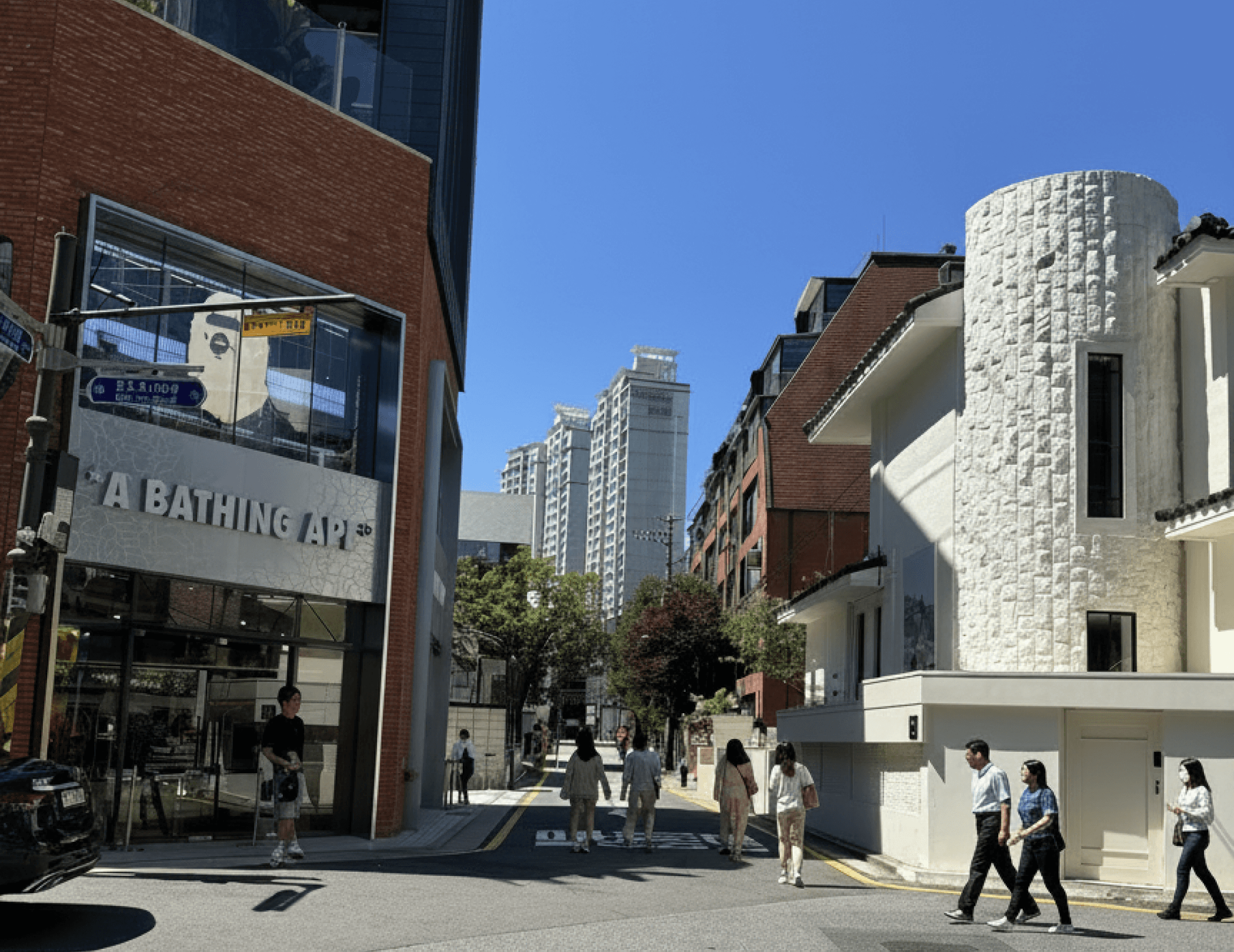
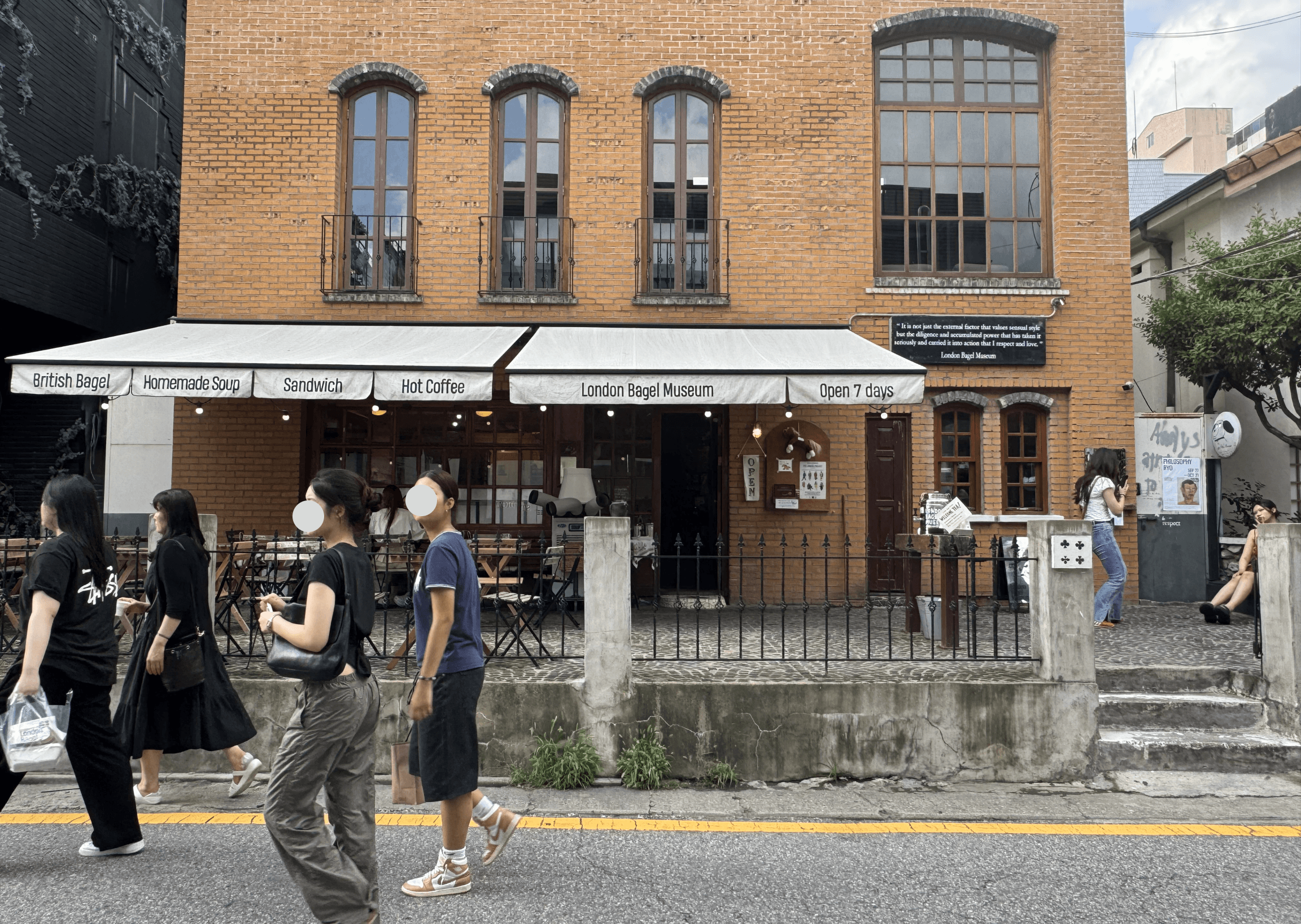
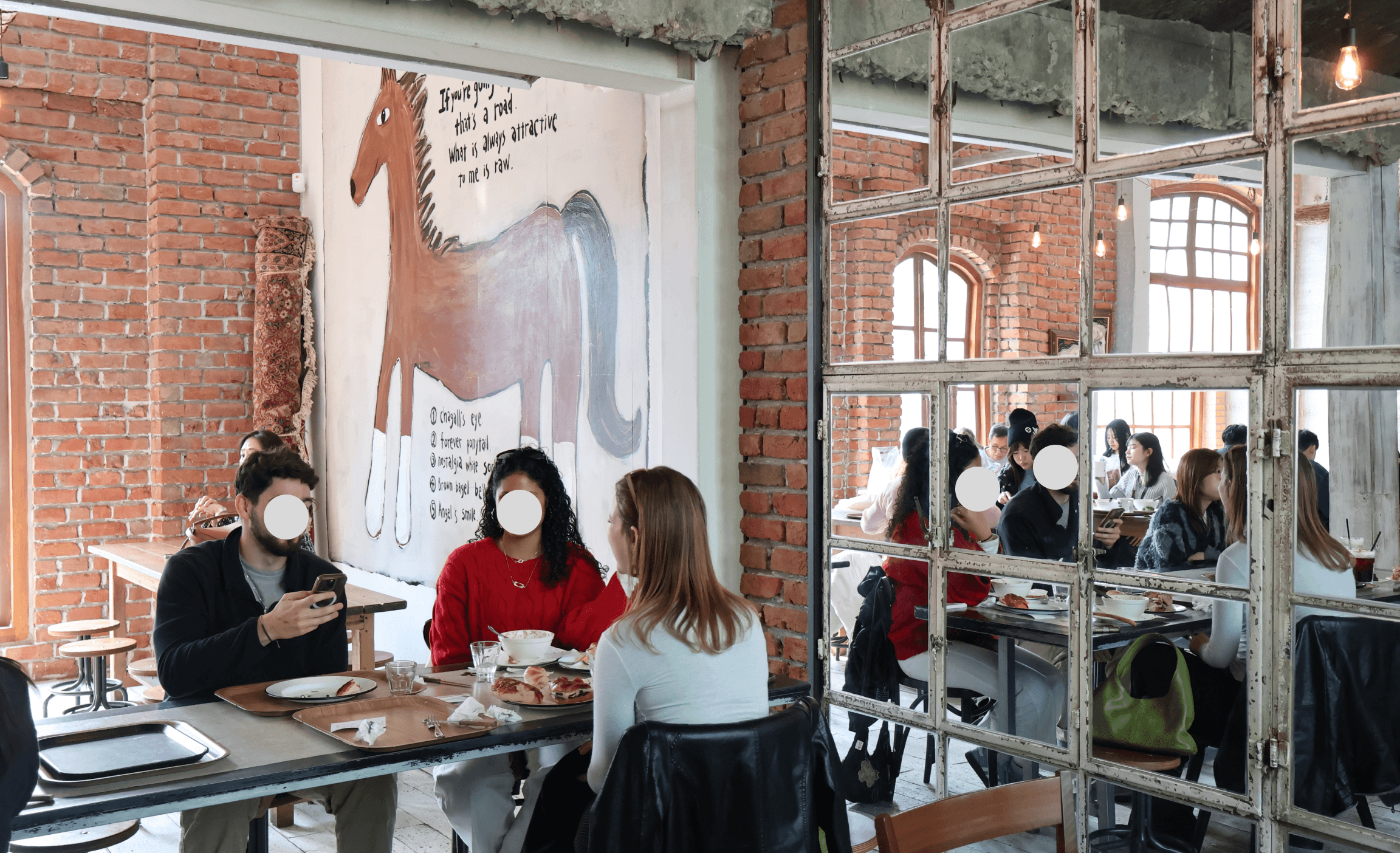
The contemporary line packed with diverse brands and F&B options
Which line a building is located on determines which brands can move in, and those brands in turn determine the building's value.
Different Brands Look for Different Buildings
The criteria that brands use to select a building vary by industry.
Luxury brands prioritize ceiling height and interior configuration over external exposure. Alo's first Asian flagship, which opened in July of last year right in front of the main gate of Dosan Park, is located between Hermès Dosan and Maison Southcape. It occupies the entire building from the basement first floor to the sixth floor, and its exterior, wrapped in wooden louvers, hides the inside from view. Once inside, the ceiling is airy, and the upper floors feature a rooftop terrace, a garden, and a private space for VIPs. The layout is closed to the outside but opens up inside, which is a method generally used by high-end stores on the Dosan main gate line.
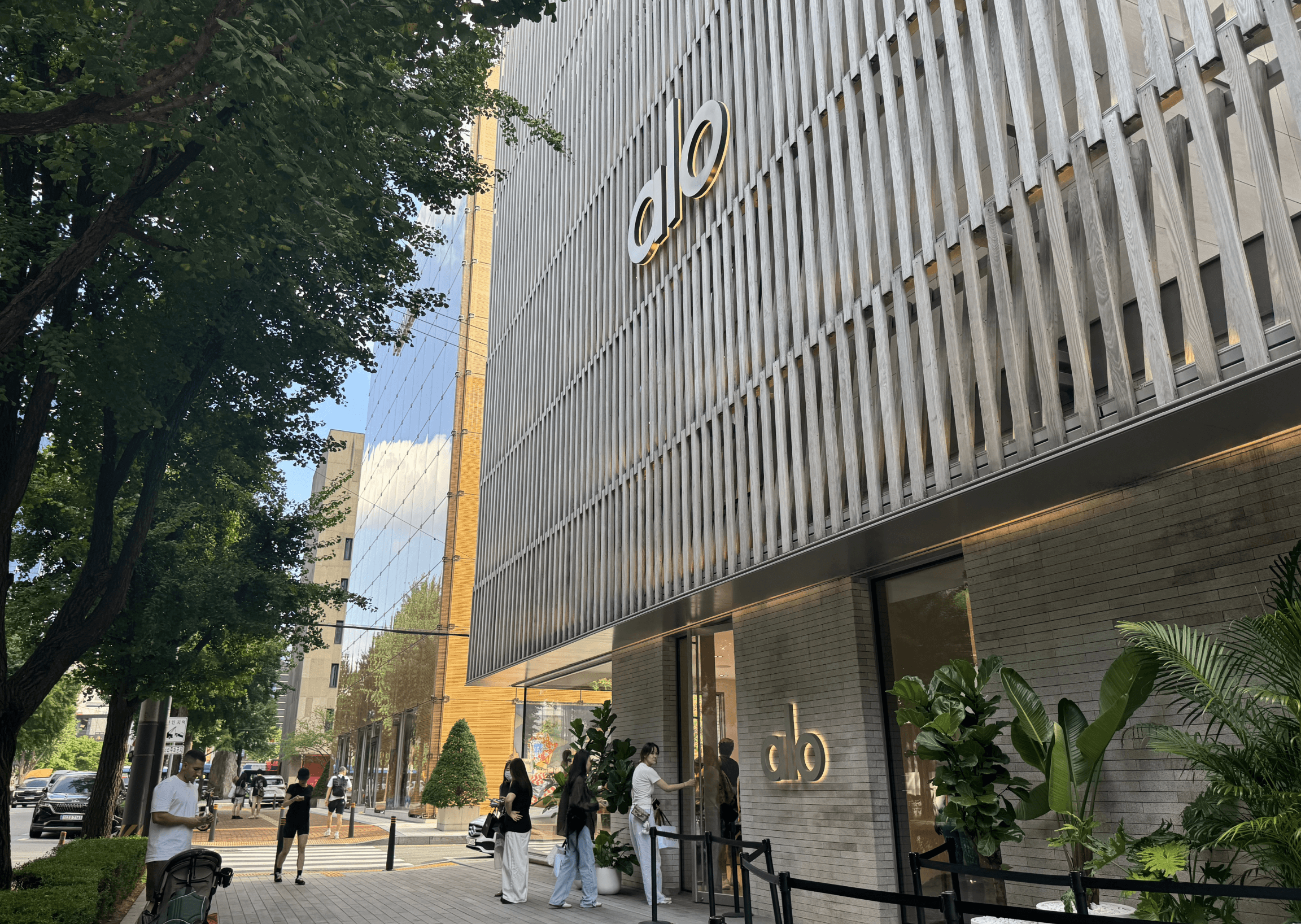
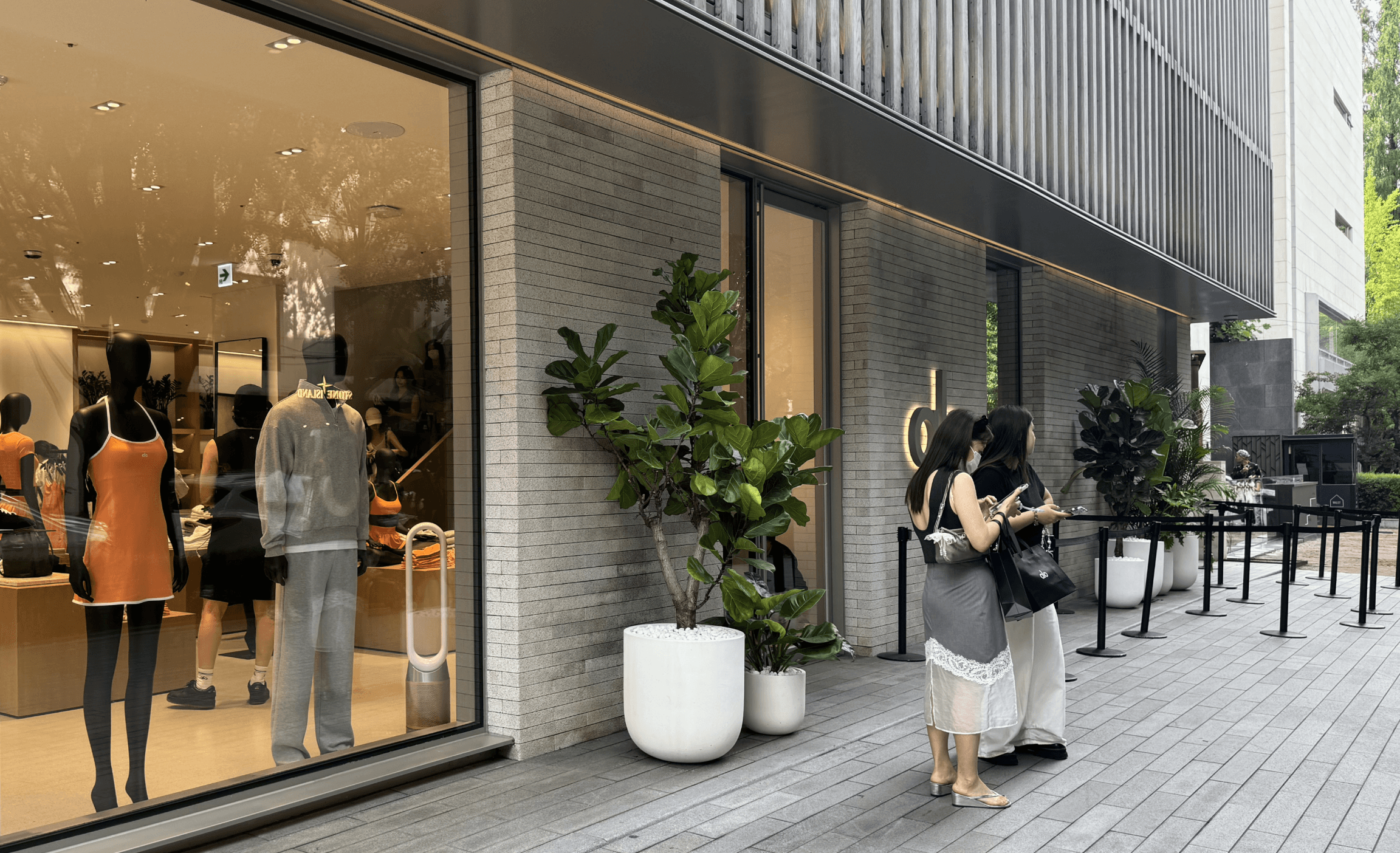
Similar to Hermès, Alo's exterior does not offer a hint of its interior layout.
Buildings sought after by fashion flagships are different. They prefer highly adaptable, easy-to-customize buildings where the outer walls can be painted entirely in brand colors or overlaid with other materials. Since their store is both a sales space and an image broadcasted on social media at the same time, the ability to modify the exterior of the building becomes just as important as the lease terms.
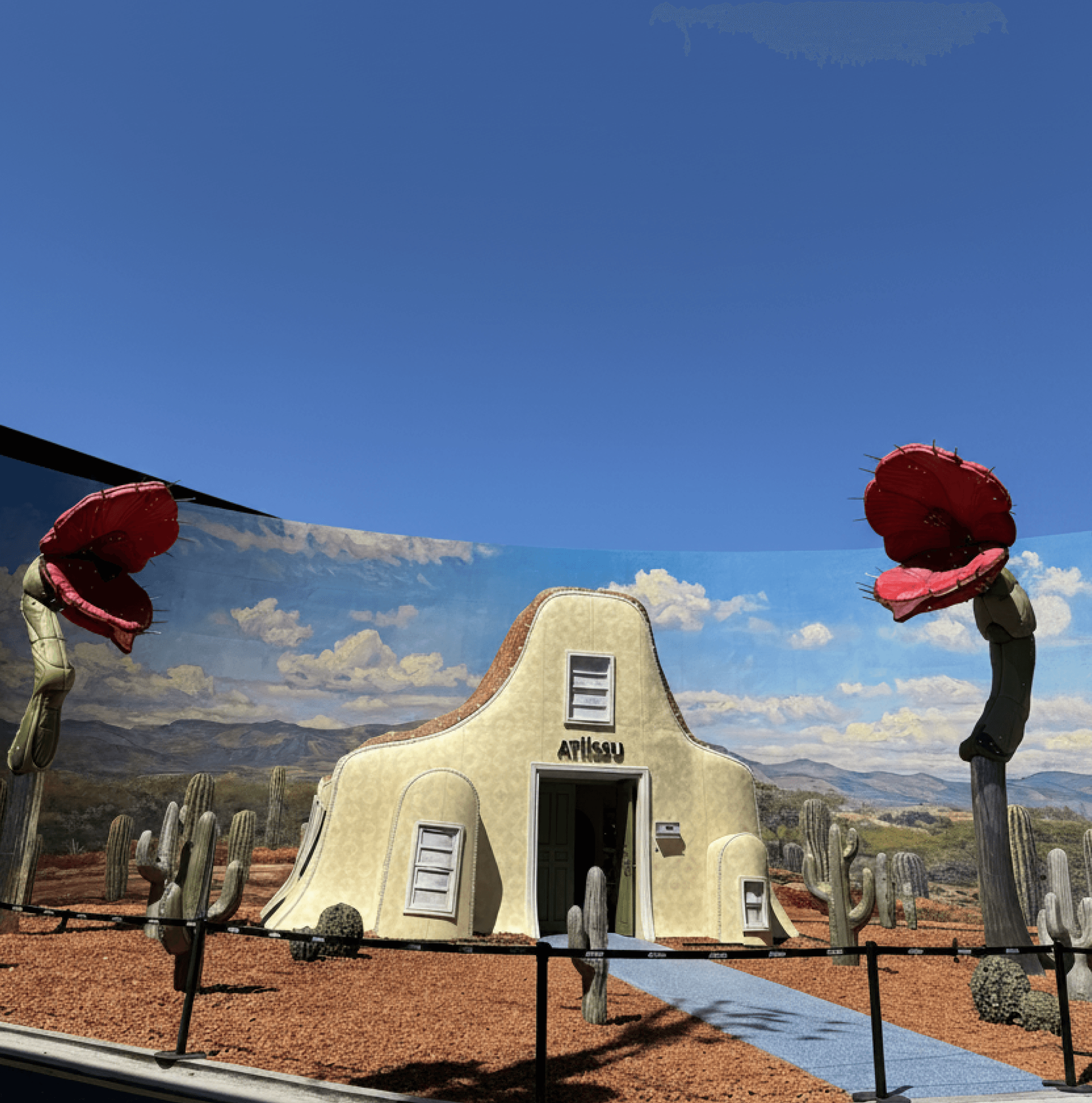
A pop-up being held by headwear specialty brand ATiSSU
F&B brands look for empty space. Tenants know that the reason people visit Dosan is more about the space itself than just eating. Demand is higher for buildings where a yard or private courtyard can be created, or those with terraces and rooftops, rather than buildings that pack the entire ground floor. The longer customers stay, the more photos of the space accumulate, which in turn leads to repeat visits.
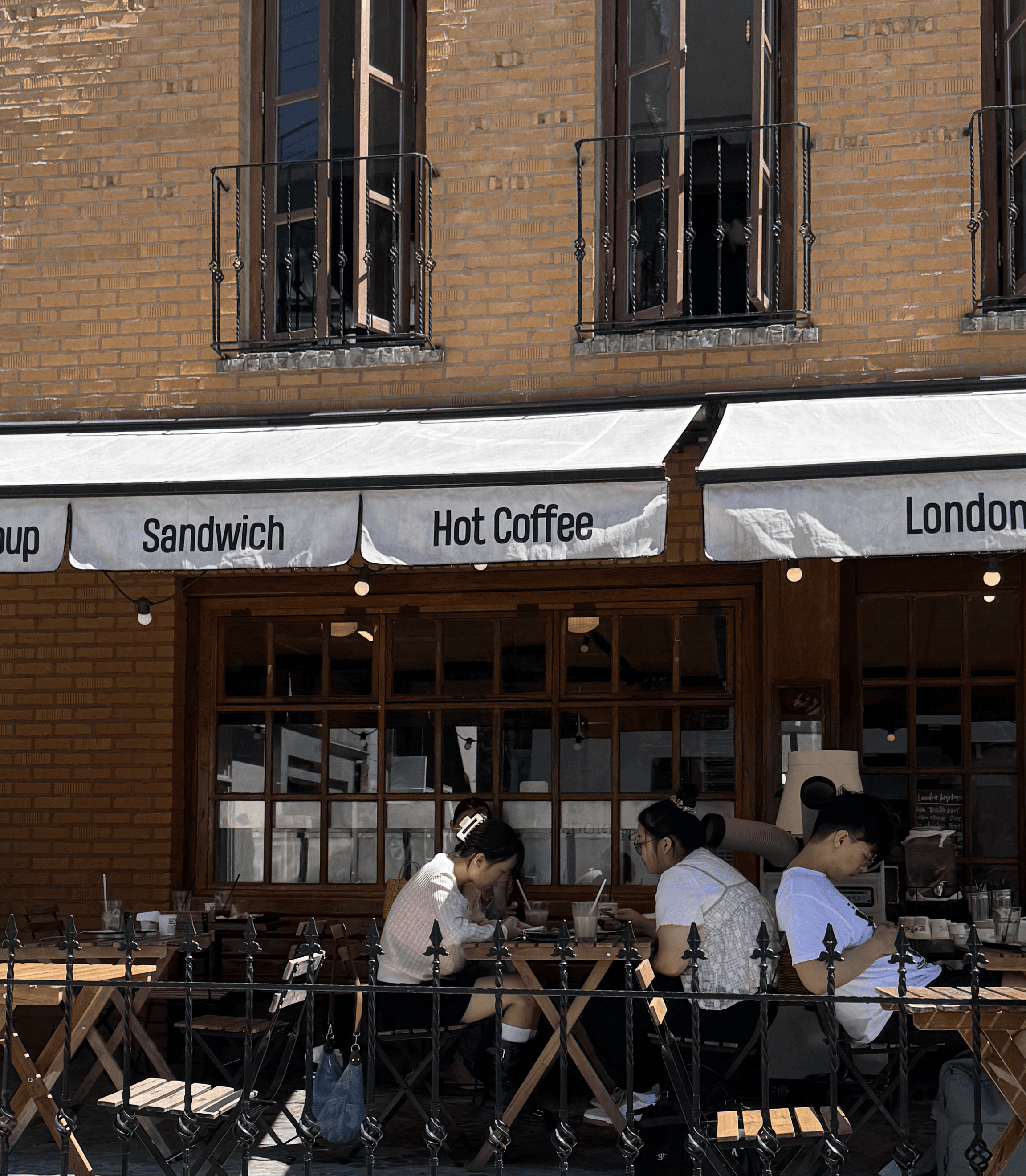
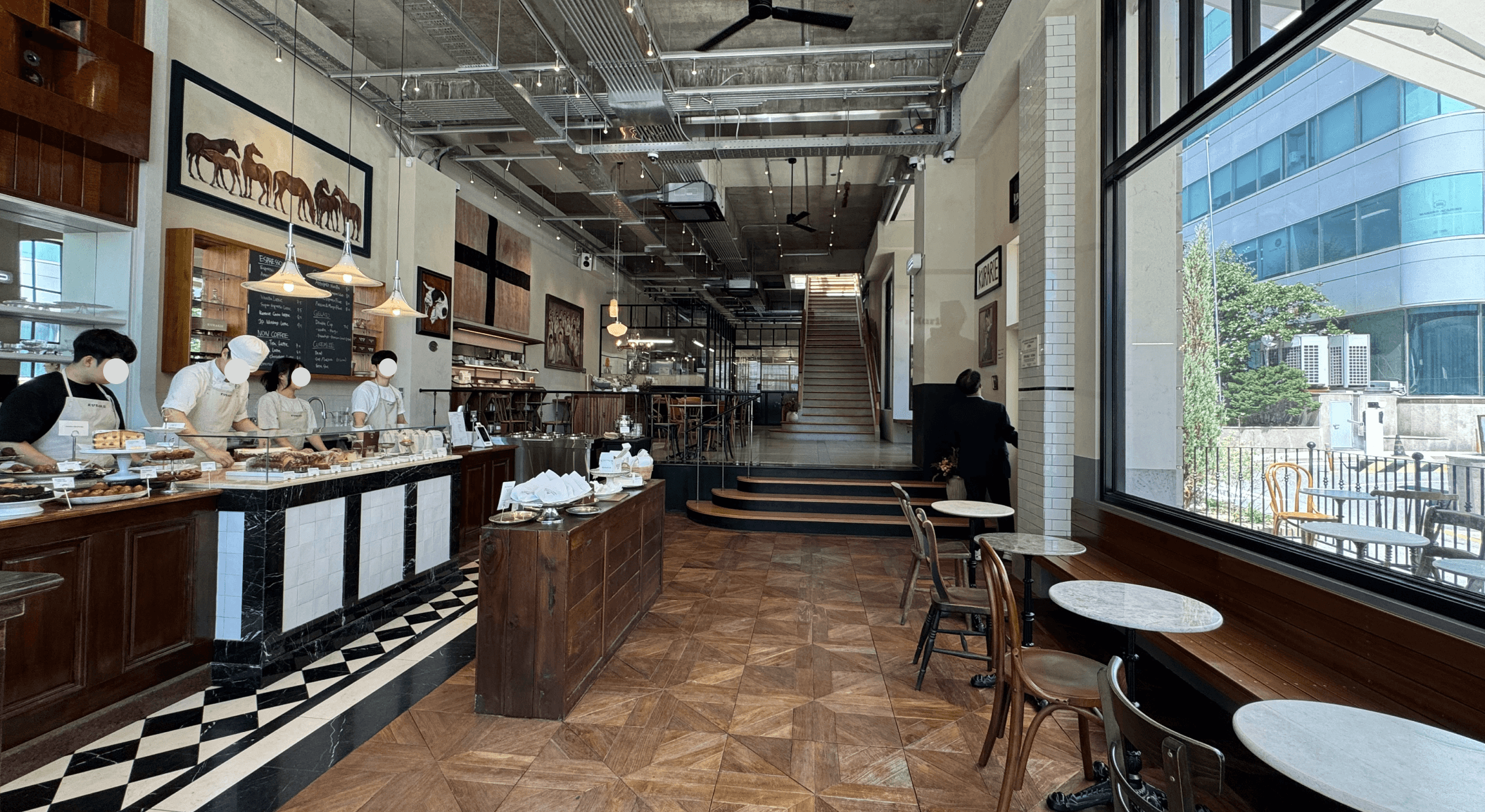
The photo above shows London Bagel, and below is the recently opened dessert cafe KOURARIER (following the inner stairs of the cafe leads to the Dr. Martens flagship store on the second floor).
And as the last pillar, there is healthcare. Dermatology and plastic surgery clinics in the Dosan-Cheongdam line generated about 276 billion KRW in credit card sales over the past year (July 2025 to June 2026) in the Dosan zone alone. This scale is comparable to retail (about 278 billion KRW) and has increased by more than 34 billion KRW within a single year. It is a structure where retail, including luxury brands, builds the floor of land prices, while high-unit-price medical services boost the average transaction value on top of it.
The First Criterion for Opening a Store: The Neighbors
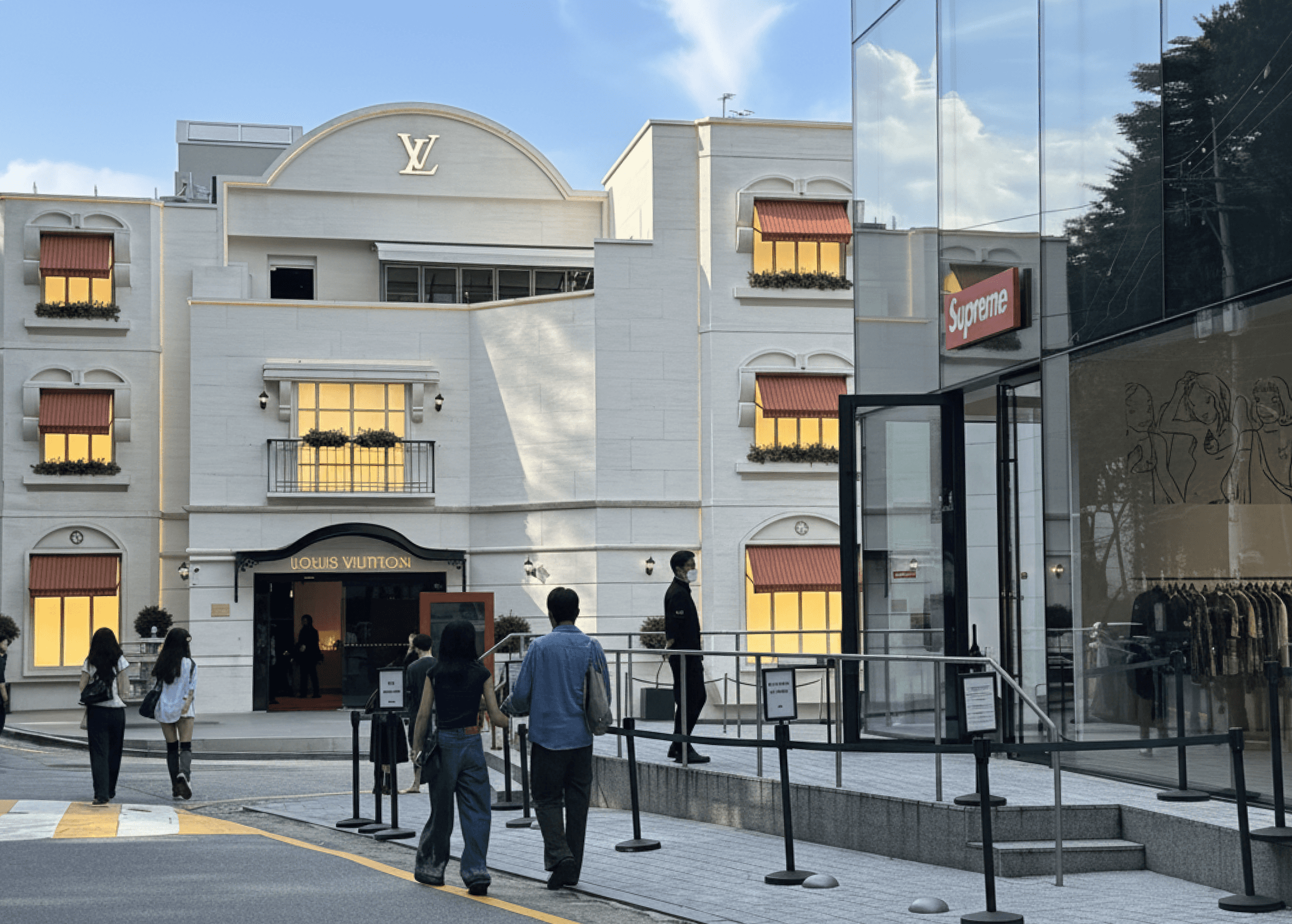
Louis Vuitton Dosan, which renewed its branch this year to mark the 130th anniversary of its Monogram, and Supreme Dosan, Korea's first official store facing right opposite, raise the aesthetic vibe of Dosan to the next level.
When overseas headquarters review potential locations, the most critical factor is not foot traffic, but neighboring brands. Even with great locations and lease terms, contracts often fall through if the surrounding stores do not match the brand's image. Conversely, when a premium brand moves into an adjacent building, the value of the neighboring property rises without the owner having done anything. This is why landlords go to great lengths to attract specific brands.
According to the experience of CBRE Korea Retail, brands demand meticulous details that must align with their standards, down to the finish of exposed ceilings and the material and location of valet booths. Tenants moving into Dosan recently spend anywhere from several billion KRW to over 10 billion KRW on interior design. Rather than just renting a building, they treat the facade and interior as media channels for their brand, and for landlords, being able to meet these expectations becomes a key lease condition.
Tenants Have Become Landlords
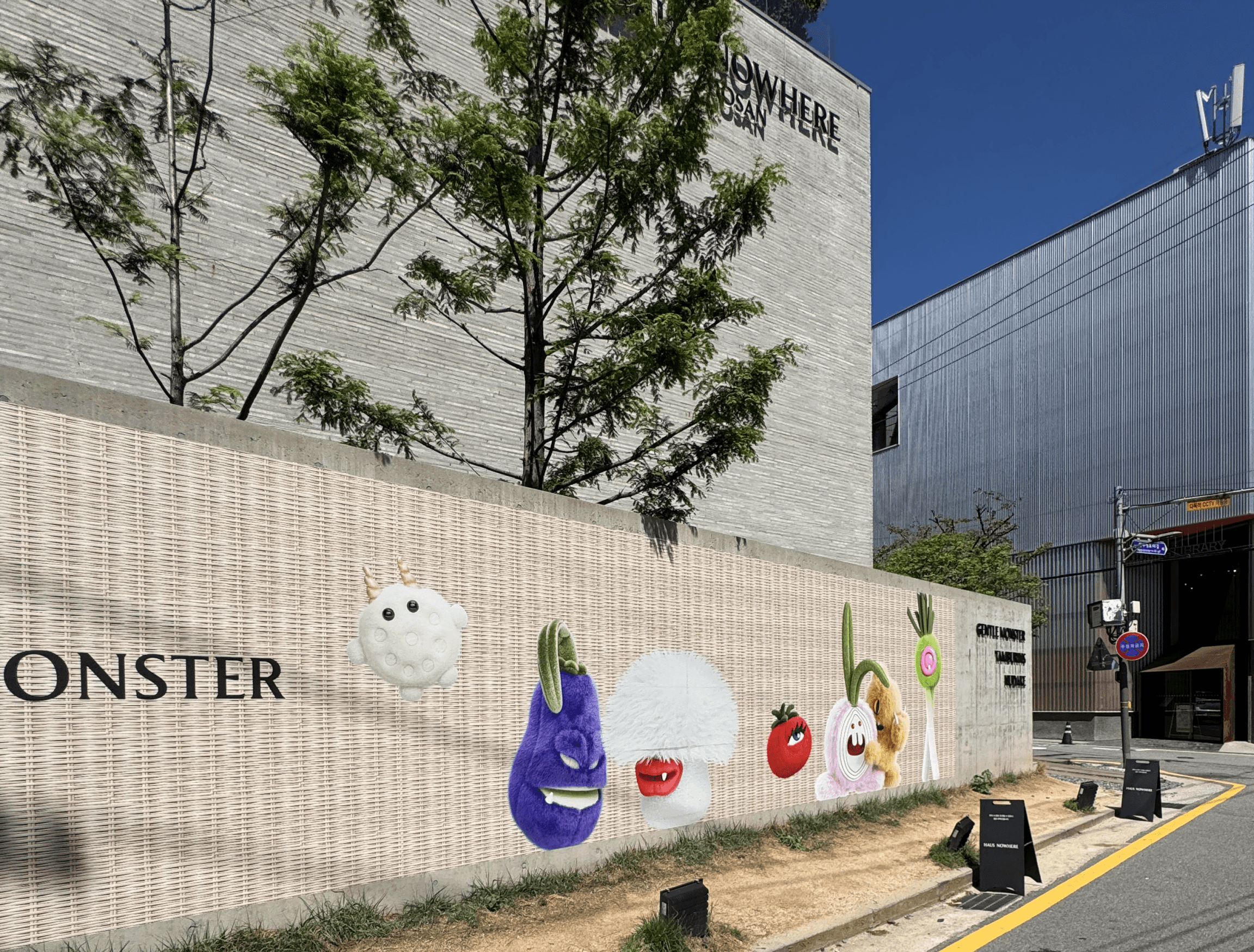
HAUS NOWHERE Dosan, which has been used as a brand complex by IICOMBINED since 2021. It is one of the stores that pioneered today's Dosan commercial district.
The best example illustrating this structure is IICOMBINED, the operator of Gentle Monster. The company acquired two buildings around Dosan Park in November 2023 and March 2024. In October 2024, they purchased the building at 649-8 Sinsa-dong, where their flagship 'HAUS DOSAN' was renting, for 68.6 billion KRW. With a site area of 195 pyeong, this calculated to 350 million KRW per pyeong. It was an unprecedented price for an alleyway building, setting a record high per pyeong around Dosan Park. In just over a year, they had purchased more than 100 billion KRW worth of real estate in this area alone.
They are securing entire sections of a block rather than individual buildings. When a brand controls multiple plots in an alley, it can directly design the tenant mix and atmosphere of the area, preventing land prices from falling easily. This strategy where brands own the commercial area can also be seen in Ginza, Tokyo, which is lined with luxury brands, as well as in Seongsu-dong close by.
When an anchor moves, the boundaries of the commercial district move with it. Foot traffic that used to cluster around main paths spills over into the surroundings, and new stores open up in alleys once referred to as side streets. As latecomer brands, unable to handle the rents of the main street, move into these secondary alleys, the density of the district continues to rise. It is no coincidence that recent investment demand has focused on old houses in back alleys. In Dosan Park, where newly buildable plots are virtually nonexistent, buying old houses and remodeling them to match a brand's needs is practically the only supply method.
The Math on the Seller's and Buyer's Sides
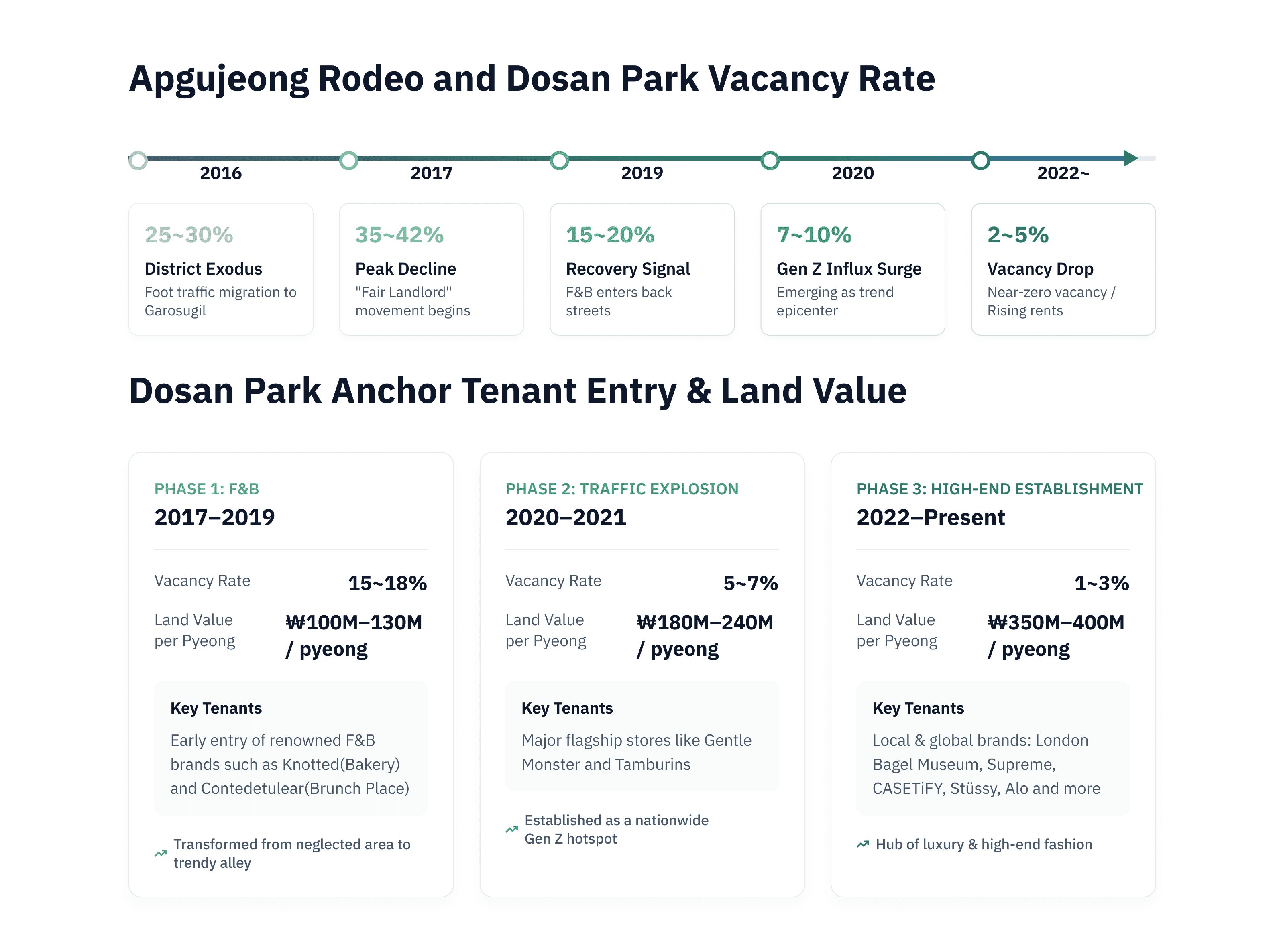
The numbers prove this logic. Between 2017 and 2019, when F&B paved the way, the vacancy rate in this district was 15–18%, with land prices at around 100 million to 130 million KRW per pyeong. This was when famous F&B spots like Knotted and Cont de Tulear moved in, transforming a run-down district into hip alleys. In 2020–2021, when large-scale flagships like Gentle Monster and Tamburins generated massive traffic, the vacancy rate plummeted to 5–7%, with prices per pyeong jumping to 180 million to 240 million KRW. Since 2022, with the settlement of local and global brands such as London Bagel Museum and Supreme, the vacancy rate has stayed at 1–3%, while prices per pyeong have reached 350 million to 400 million KRW. The steps in land value correlate exactly with the replacement of anchor brands. At each phase, a new tier of brands arrived, raising the price per pyeong by another step each time.
Seongsu vs. Dosan: Same Heat, Different Rules
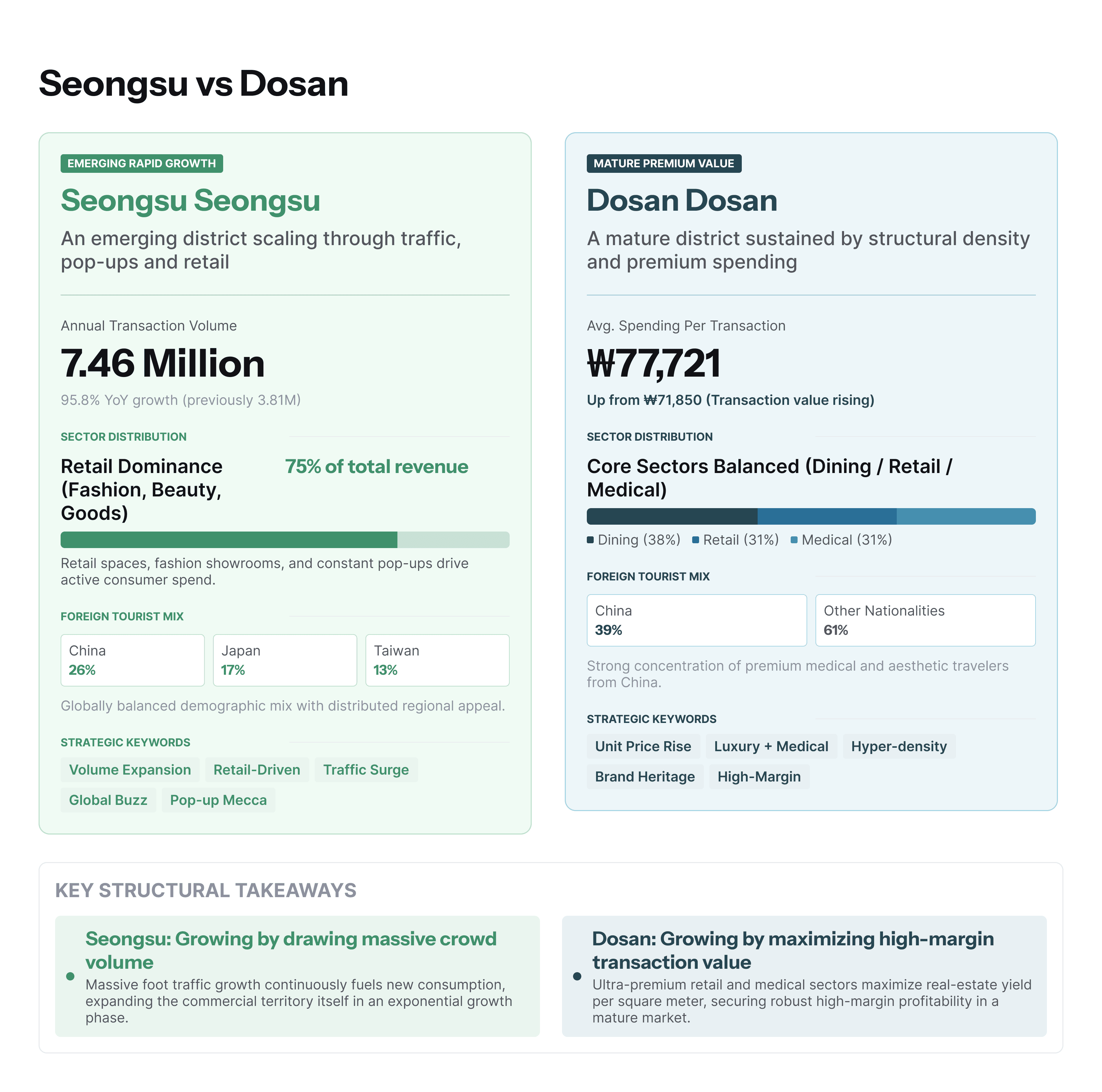
Placing Seoul's two hottest commercial districts side by side makes Dosan's identity even clearer. While Seongsu and Dosan share a similar level of popularity, the rules driving their value up are entirely different.
Seongsu is about expansion. Over the past year (June 2025 to May 2026), card sales in the Seongsu district reached approximately 497.1 billion KRW, doubling from the previous year's 242.9 billion KRW. Transaction volume also doubled from 3.81 million to 7.46 million. Retail accounted for three-quarters of the total with 374.8 billion KRW, and retail sales alone grew by over 190 billion KRW in just one year. With people flocking in and transactions exploding, it is a rapid expansion of physical scale.
Dosan is different. Over the past year (July 2025 to June 2026), sales in the Dosan district were 1.0162 trillion KRW, almost identical to 977.7 billion KRW from a year ago, and transaction volume actually dropped from 13.61 million to 13.07 million. Instead, the payment amount per transaction rose from 71,850 KRW to 77,721 KRW. While Seongsu is a rising star growing explosively, Dosan is a mature district whose physical expansion has paused, but whose prices are sustained by high unit spend.
Looking at scale on a per-building level highlights Dosan's density. Seongsu produces roughly 500 billion KRW from 1,679 buildings, whereas Dosan generates 1 trillion KRW from just 493 buildings. The sales generated per building in Dosan are about seven times higher than in Seongsu. Unlike Seongsu, which expands broadly, Dosan concentrates high-unit-price spending in tight, narrow alleys.
The items on sale differ as well. In Seongsu, retail drives the area (75% of the total). In Dosan, dining (340.2 billion KRW), retail (277.6 billion KRW), and medical services (276.1 billion KRW) split the market in equal parts, with medical services practically matching retail. Aside from Gangnam Boulevard, the Dosan-Cheongdam line is virtually the only place in Seoul where dermatology and plastic surgery sales rival retail. High-value consumption from luxury and medical services overlapping in the same alleys is the reality that supports the unit prices of Dosan and Apgujeong.
The nationalities of the visitors also differ. Foreign spending in Dosan is heavily skewed toward China at 39%, displaying even higher concentration than the previous year (35.7%). Seongsu is evenly distributed among China (26%), Japan (17%), and Taiwan (13%). Any brand wishing to open in Dosan must pay attention to whose wallets are financing this alley.
In summary, Seongsu is a rapidly growing district expanding its scale through traffic and retail, while Dosan is a mature district that sustains its value through density per building and high-value spending (luxury and medical) rather than growth rate. What drives building values up in Dosan is not the sheer number of visitors, but the high unit price of consumption tolerated by those alleys, which is in turn determined by the brands.
Fast-Changing Alleys and Untouched Alleys
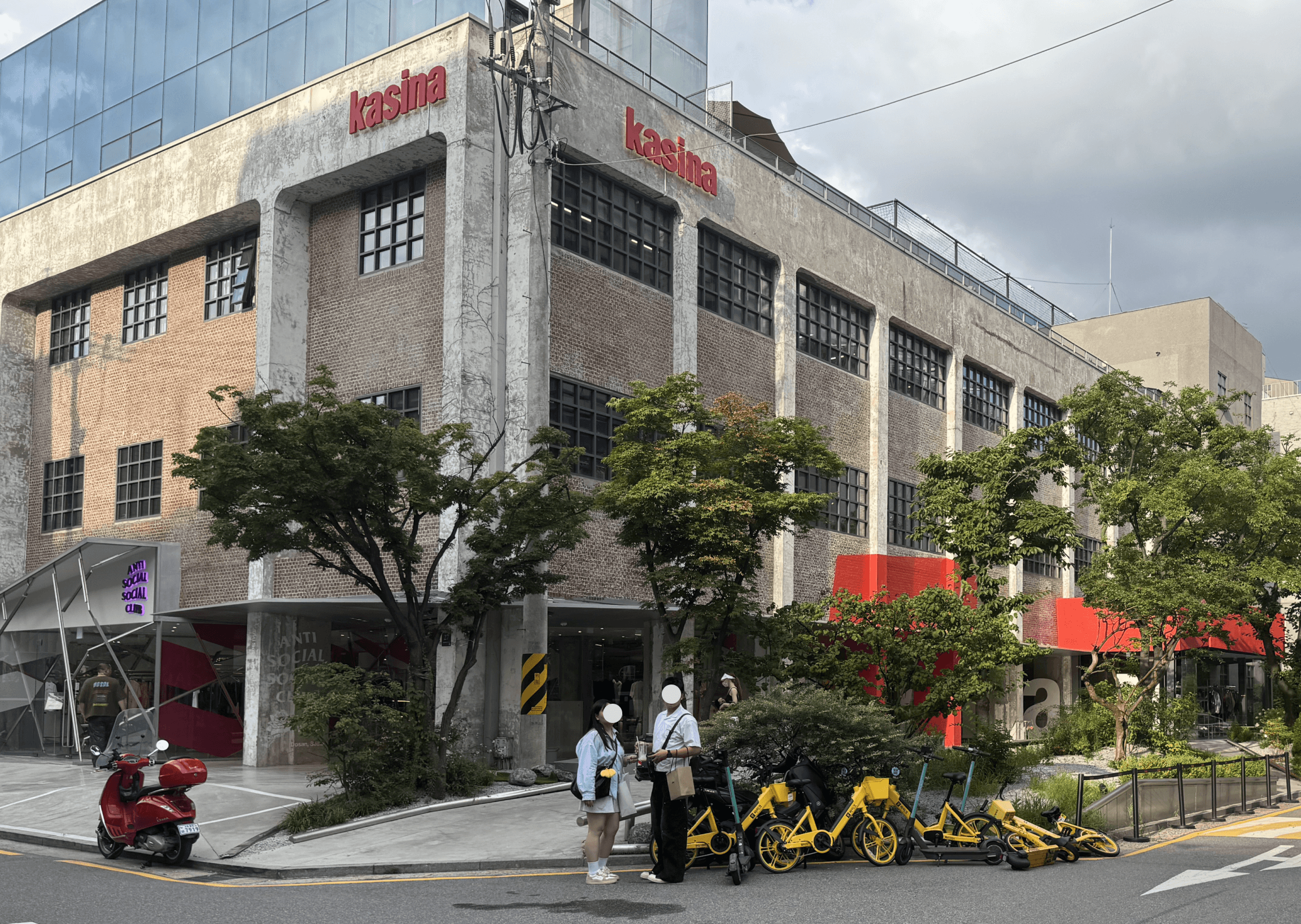
The massive flagship store of Kasina, which opened in 2025
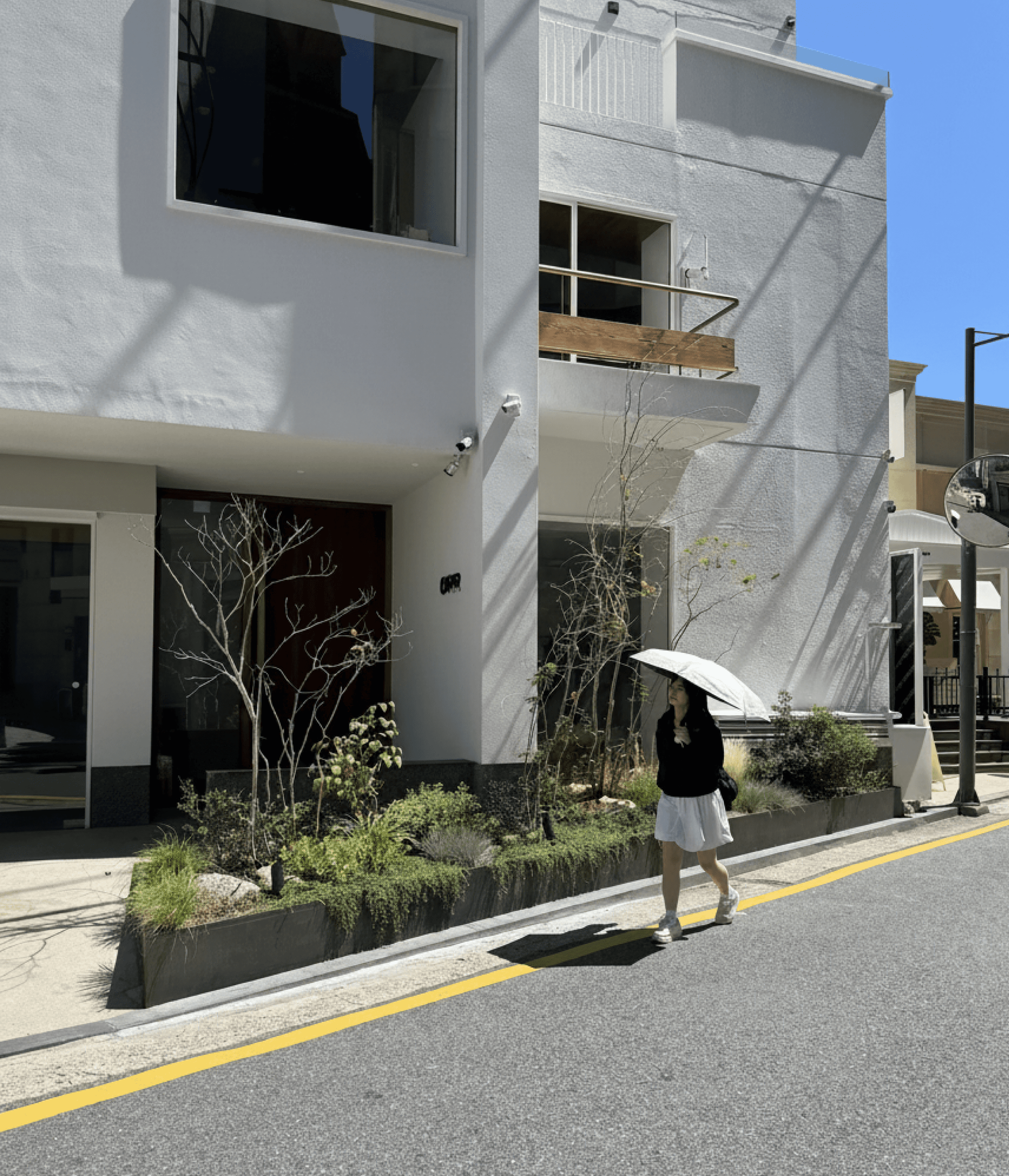
In front of the ORR store, which opened in February 2026

Aesop Dosan, which recently opened its store on the ground floor of the building once used as the Aesop Korea office
Dosan Park is one of the districts with the quickest turnover in Seoul. Since there are few restrictions on changing exteriors, the streetscapes of three or six years ago are vastly different from today's. Yet, right next to them, legacy shops that have operated in the same spots for over a decade are still standing strong. Plots where global brands completely overhaul their facades sit on the same alley as unchanging local stores. Visitors might arrive to buy bagels, walk past Hermès on their way back, or browse through Alo before stopping by a famous carrot cake spot for tea time.
This combination is extending the lifespan of the Dosan Park commercial district. While brands continue to change, the identity of the alleys is preserved, allowing land values to climb higher steps. While Seongsu has driven its prices up through transaction volume, Dosan has consistently elevated its value through unit prices, and the next step is bound to depend on which tier of brands manages to settle into which alley.
© Copyright 2026. All rights reserved.
This publication has been prepared in good faith, based on CBRE Korea's current anecdotal and evidence based views of the commercial real estate market. Although CBRE Korea believes its views reflect market conditions on the date of this presentation, they are subject to significant uncertainties and contingencies, many of which are beyond CBRE Korea’s control. In addition, many of CBRE Korea’s views are opinion and/or projections based on CBRE Korea’s subjective analyses of current market circumstances. Other firms may have different opinions, projections and analyses, and actual market conditions in the future may cause CBRE Korea’s current views to later be incorrect. CBRE Korea has no obligation to update its views herein if its opinions, projections, analyses or market circumstances later change.
Nothing in this publication should be construed as an indicator of the future performance of CBRE’s securities or of the performance of any other company’s securities. You should not purchase or sell securities-of CBRE or any other company-based on the views herein. CBRE Korea disclaims all liability for securities purchased or sold based on information herein, and by viewing this publication, you waive all claims against CBRE Korea as well as against CBRE Korea’s affiliates, officers, directors, employees, agents, advisers and representatives arising out of the accuracy, completeness, adequacy or your use of the information herein. No part of this publication may be reproduced, quoted, distributed, or disclosed to any third party without the prior written consent of CBRE Korea.

street
Sep 3, 2026
Why Global Brands Are Heading Back to Myeong-dong
The Generational Shift and Retail Analysis of a 100-Year-Old Prime Shopping District

street
Jul 13, 2026
Gangnam ② - 75% of Gangnam-daero is Medical
A place where hospitals fill the upper floors emptied by the pandemic, and the wallets of foreigners crowd.

street
Jun 22, 2026
Gangnam ① - Gangnam-daero Retail, Chosen by Global Brands
From 18 vacancies three years ago to just two. The real reason why low-floor retail along Gangnam-daero has made a complete comeback.

street
May 26, 2026
Bangkok Retail 101 ②
Bangkok shopping malls want K-brands. The question is how to get in.
street
May 26, 2026
Bangkok Retail 101 ①
The Developer's Playground: What Sets Bangkok's Retail Evolution Apart from Seoul
street
Apr 13, 2026
Cheongdam: The Art of Elegant Detachment
High jewelry chases the light. Fashion houses build walls. A structural analysis of how capital occupies Cheongdam — and why this street operates by rules that apply nowhere else in Seoul.

street
Apr 13, 2026
Hannam-dong, Seoul's private club. ②
Zero vacancy. Key money reaching 1.3 billion Korean won. Inside Hannam-dong's brand selection market, where who you are matters more than what you offer to pay.
street
Apr 13, 2026
Hannam-dong, a private club in Seoul. ①
Between Seongsu's raw energy and Dosan's polish — how Hannam-dong became Asia's most credible ground for testing a global brand's Korea positioning.
street
Apr 13, 2026
Same Bukchon, Different Strategy ③
Blue Bottle, New Balance, Adidas, Le Labo — how Hwadong and Sogyeokdong became the global flagship core of Seoul's Bukchon retail market.

street
Apr 13, 2026
Same Bukchon, Different Strategy ②
Why Amorepacific spent 30 billion won acquiring a hanok compound in Gahoe-dong — and how Bukchon-ro 5-gil became Seoul's fastest-growing K-brand retail cluster.
street
Apr 13, 2026
Same Bukchon, Different Strategy ①
Anguk Station and Gye-dong-gil: The entrance to Bukchon, focusing on the flagship near Anguk Station and the concentration of F&B on Gye-dong-gil.