Back
Share
Like

street
Article Highlights
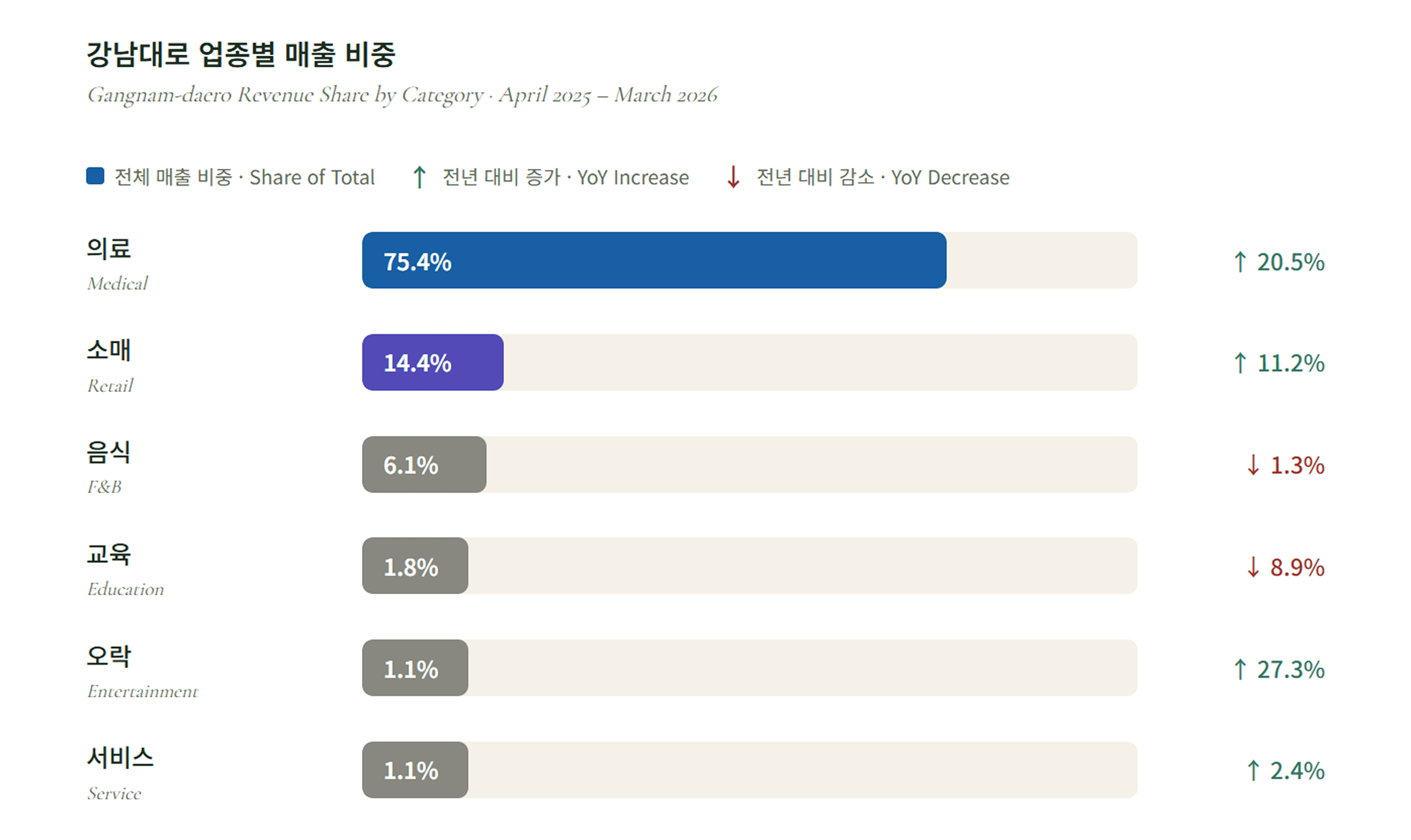
In the Gangnam-daero commercial district, 75.4% of sales come from the medical industry. The real anchor is not the first-floor retail, but the dermatology and plastic surgery clinics on the upper floors, with 39 of the top 50 sales locations (78%) being medical.
The medical industry, backed by the purchasing power of foreign medical tourists, has filled the upper-floor spaces left vacant by the pandemic.
Foreign consumption has two engines: 'frequent and light' from Japan and China, and 'rare and big' from Hong Kong and Taiwan.
The Quiet Ruler of Gangnam-daero
Walking along the commercial district of Gangnam-daero, flagship stores of global retail brands line the sidewalks. Regardless of whether it is a weekday or the weekend, numerous Koreans frequent these stores. Judging by the exterior alone, the main players driving the Gangnam commercial district clearly seem to be fashion, beauty, and F&B brands.
However, looking closer at the actual sales structure, the truth is entirely different. The real rulers of the Gangnam-daero commercial district are not the flashy stores on the first floor, but the medical sector that densely fills the upper floors of the buildings. Among them, the sales of dermatology and plastic surgery clinics are overwhelmingly dominant.
According to recent data (My Biz Map Commercial Area Analysis System), of the total estimated sales of about 50 medium-to-large buildings along Gangnam-daero, the medical sector accounts for 75.4%. This figure overwhelmingly supersedes retail (14.4%) and food (6.1%). In the case of other high streets, Myeongdong is around 10% and Hongdae is about 28%, but for Gangnam-daero, the portion is an overwhelming 75% or so. While the upward trend of medical is visible in all high street zones, in the case of Gangnam-daero, except for the first floor along the street, it is safe to view it essentially as a collection of massive vertical medical buildings.
In particular, the year-on-year sales growth rate of the medical sector along Gangnam-daero is approximately 20%, which is far greater than the changes in all other sectors combined.
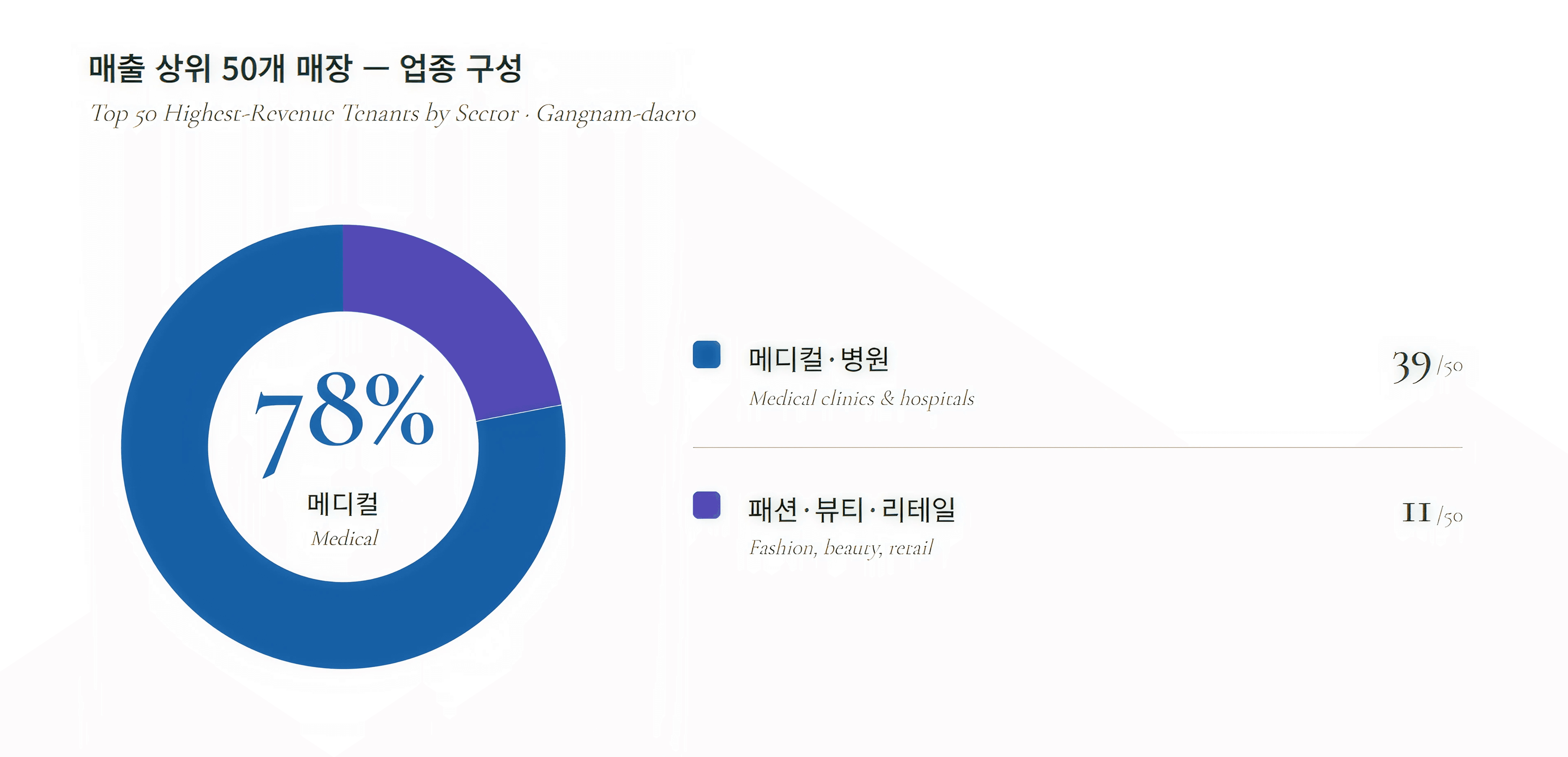
39 of the Top 50 in Sales are Medical
Among the top 50 businesses in sales in the Gangnam-daero commercial district, 39 (78%) are medical institutions. Despite the row of flagship stores with the highest crowd-drawing power in Korea, such as Olive Young, Musinsa Standard, Nike, Adidas, and Zara, the top sales rankings are practically a stage soloed by the medical sector.
The numbers are even more shocking. The 1st place Clinic A recorded annual sales of 49.1 billion KRW, 2nd place Plastic Surgery Clinic B recorded 46.7 billion KRW, 3rd place Clinic C recorded 46.2 billion KRW, and 4th place Plastic Surgery Clinic D recorded 39.2 billion KRW. On a single floor of a single building on Gangnam-daero, medical clinics that easily exceed the annual sales of decent major SPA brands are stacked vertically.
It was the Clinics That Filled the Empty Spaces

Buildings on Gangnam-daero operate as two separate markets. The lower floors, including the first floor, are a league of retail aimed at floating population and brand exposure, while the upper floors are a separate rental market unrelated to that. For retail brands, the lower floors are the only option to catch the eyes of passersby as well as purposeful customers. Then, why is it that dermatologists and plastic surgeons have completely occupied the upper floors that used to be filled with offices, academies, and general businesses?
The medical sector didn't push them out. Those spaces became vacant on their own as they passed the pandemic. During the COVID-19 period, the commercial area of Gangnam-daero shook regardless of industry, and long-term vacancies that were hard to fill piled up in the spaces left by old tenants. [Vacancy Rate Trend Figures for Gangnam-daero — e.g., 2019: 3.8% → 2023: 11.6%]. The upper floors of Gangnam-daero were not pushed out, but were empty for a while.

The only sector that filled that void was the medical sector. This is because clinics were practically the only ones left with the capability to handle the high rent of Gangnam-daero. The source of this power is the medical tourism boom for foreigners. Backed by high treatment margins and high-unit-price spending by foreigners, clinics were able to offer rents that other sectors could not handle.
There is another reason why medical filled the upper floors. This is because beauty treatments are purpose-driven consumption. Since customers choose a clinic in advance using apps like Gangnam Unni, they do not need the exposure effect of high-priced lower floors. From the clinic's perspective, there is no reason to target the lower floors, and the relatively inexpensive upper floors are sufficient. The interests of the vacant upper floors and the medical sector, which did not need the lower floors, matched perfectly.
As a result, the rental structure of Gangnam-daero was organized as follows: the lower floors are billboards for attracting crowds and branding, while the actual cash flow of the building comes from the upper floors, the medical sector. If retail is the face, medical is the heart. Moreover, because clinics move in after investing hundreds of millions of KRW in interiors, high-priced medical equipment, and licensing, they do not easily leave once they settle, and unlike retail, which is replaced every season, they eliminate the vacancy risk of the upper floors itself with long-term contracts and low turnover. This is the real reason why medical, which refilled Gangnam-daero vacated by the pandemic and even added stability on top of it, is called Gangnam's super anchor.
Foreigner Consumption in Gangnam, Who is Opening Their Wallets?
To make a point once again, the share of the medical sector in foreign credit card payments in the Gangnam area is 75.4%. It is far ahead of retail (14.4%) and food (6.1%). This means that it is practically the medical sector that opens the wallets of foreigners visiting Gangnam. Therefore, reading consumption data by nationality is not much different from reading who the customers of the Gangnam medical commercial district are.
Looking at the numbers alone, the answer seems clear. From March 2025 to April 2026, Japan ranked first, accounting for 29.1% of estimated foreigner sales in the Gangnam area. When combined with China in 2nd place (19.8%), the two countries account for nearly half of the total.
In particular, Japan's presence is prominent in the number of payments: 630,000 cases. This is more than four times that of China (140,000 cases), showing an overwhelming frequency of visits that cannot be compared to any other country. Japanese consumers fill the streets of Gangnam and keep the commercial district running day after day.
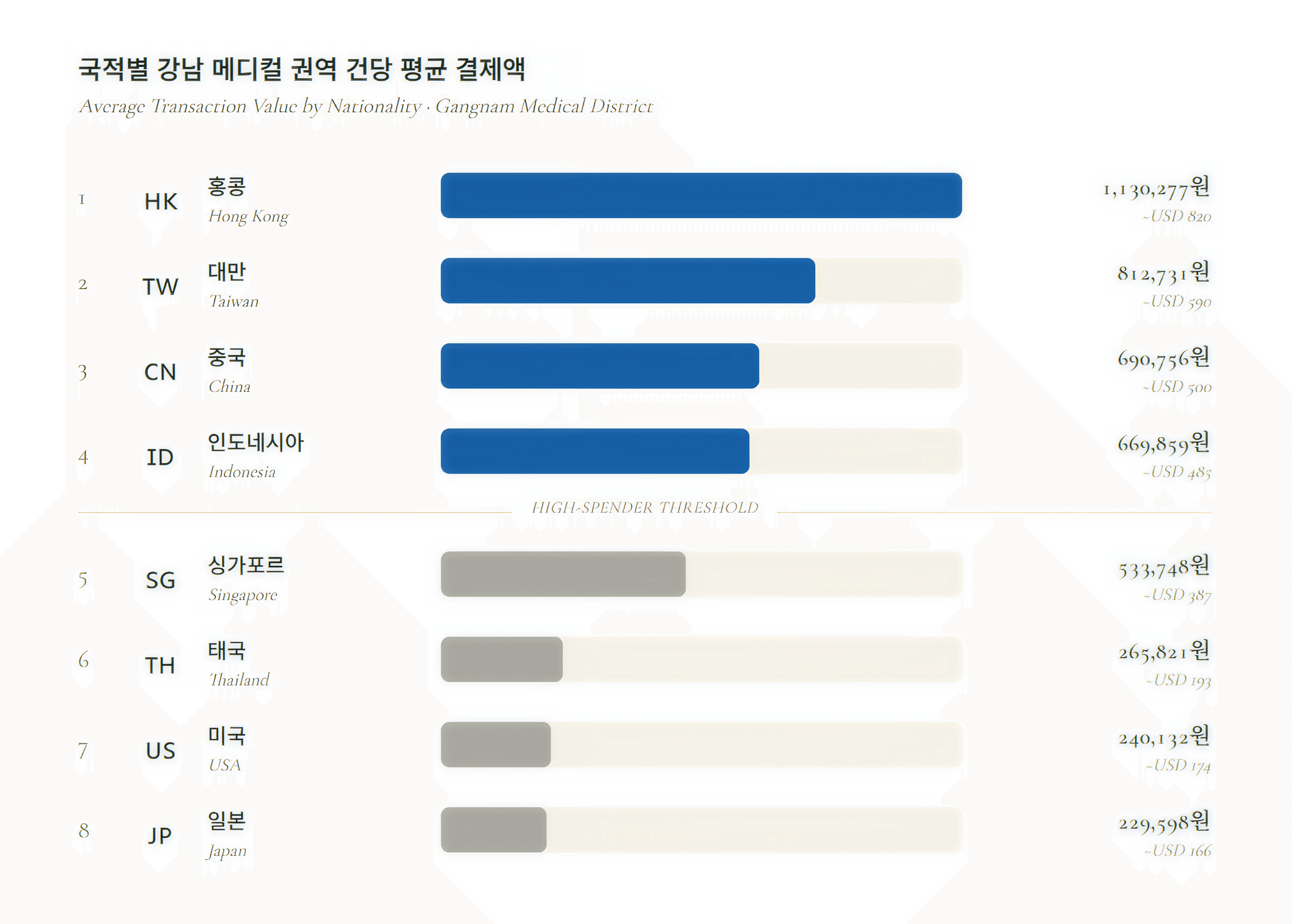
However, looking at the payment amount per transaction, the story completely flips. The average payment amount for Japanese is about 230,000 KRW. On the other hand, Hong Kong is about 1,130,000 KRW, nearly five times that of Japan, followed by Taiwan at 810,000 KRW, and Indonesia at 670,000 KRW. Japan, which ranks first in sales, is at the very bottom in transaction value per customer. While Hong Kong's number of payments is only around 14,000, accounting for just 3.3% of total sales, the amount spent per transaction is greater than any other country.
Here, the two engines driving the Gangnam commercial district are revealed. One is 'frequently and lightly.' Japanese and Chinese consumers visit Gangnam with high frequency, supporting the daily sales of the commercial district. The other is consumption by those who visit rarely but spend big. While consumers from Hong Kong, Taiwan, and Indonesia have low visit frequencies, they serve as substantial big spenders in the high-unit-price treatment market.
And Taiwan is the only market that has both of these engines. Ranking 3rd with an 11.8% share of sales, its customer transaction value also records in the 810,000 KRW range. This means they have secured both volume and unit price simultaneously.
Characteristics of a Purpose-Driven Commercial Area Proven by Data
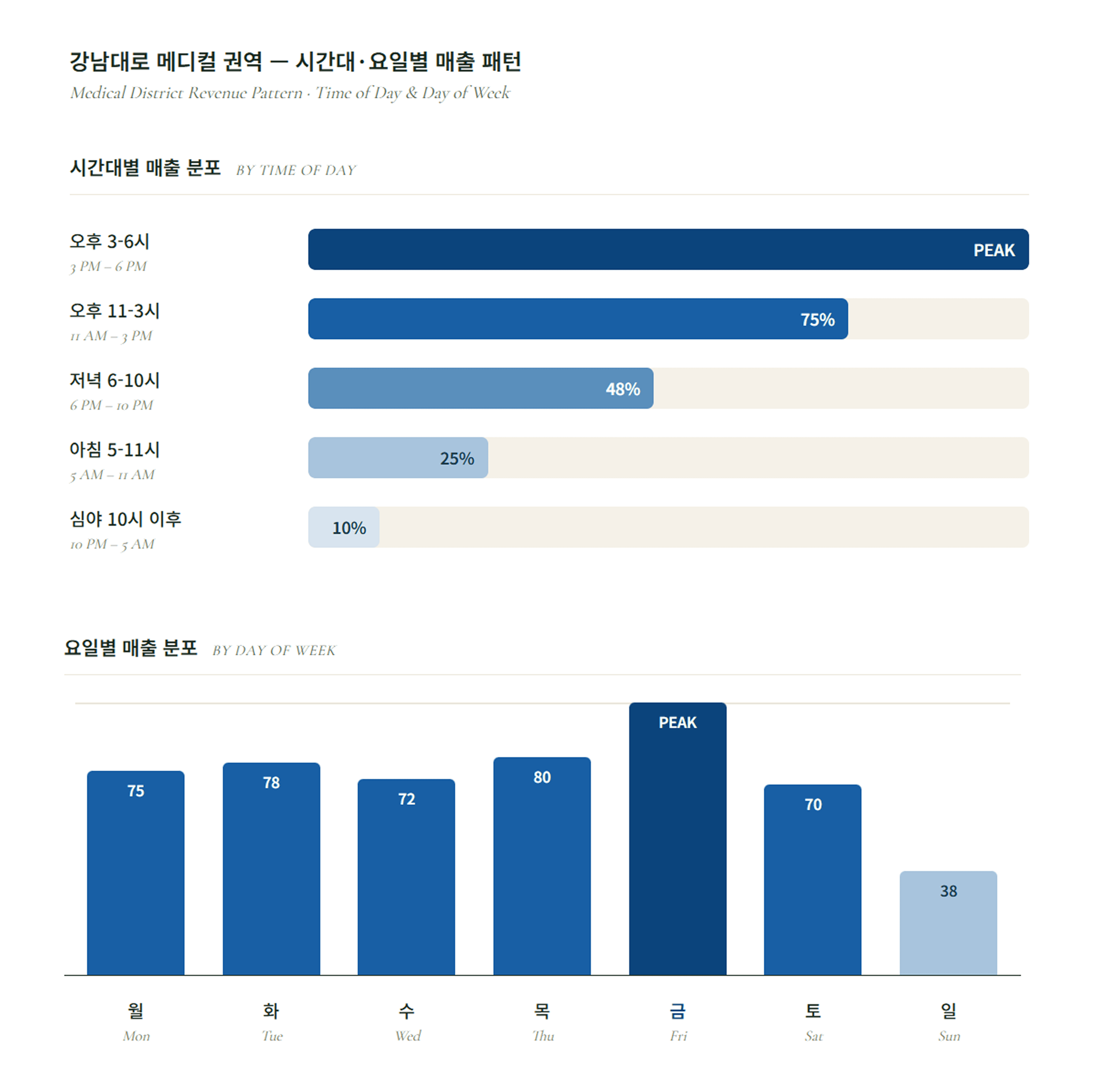
This purpose-driven medical consumption is also reflected in the sales trends by time of day and day of the week. This is a completely different dynamic from general nightlife commercial districts centered around nights or weekends. Looking at hourly sales, an overwhelming peak occurs between 3 PM and 6 PM. By day of the week, the average sales are highest on Fridays, rather than on weekends. This completely aligns with the movement patterns of medical tourists—not only domestic residents but also foreigners—who take vacation or annual leave to enter the country, get treatments, and return after recovering over the weekend.
The Rosy Shadow and the Reason It is Still Safe
Of course, this market does not expand indefinitely. Behind the dazzling sales, Gangnam-daero medical carries significant risks.
First is saturation and competition. High sales represent a high incentive for new entries. Multiple dermatologists and plastic surgeons compete even within a single building, and marketing costs to secure customers are becoming heavier every year. Behind the brilliant figures of top sales, new openings that fail to break even coexist. In other words, the Gangnam-daero medical market is no longer a market where anyone who enters makes money, but has turned into a market where winners and losers are starkly divided.
Second is external variables. Since foreigners are the core driving force of this commercial district, sales cannot be explained by domestic factors alone. Over one external variable such as exchange rates, flight/visa environments, or changes in relations with specific countries, the number of visits and customer transaction values can fluctuate wildy. The absolute reversal of China's decline and the rise of Hong Kong and Taiwan, as discussed earlier, is itself evidence of how sensitively this market reacts to the external environment.
Nevertheless, from the landlord's perspective, the reason Gangnam-daero medical remains the safest asset is clear. Individual clinics may rise and fall, but the demand itself for getting treatments on Gangnam-daero does not disappear. When one clinic leaves, another clinic eyes the spot. Fierce competition means that there is a thick waiting demand for that space, which returns to the landlord as bargaining power and vacancy defense power. The structure where individual tenant risks are offset by the stability of the entire commercial district is the reason why Gangnam-daero is evaluated as a prime asset.
How to Re-read Gangnam-daero
The real competition of Gangnam-daero takes place inside the buildings, not on the streets. For landlords, medical tenants are the stable fundamental of the assets; for global retailers, the lower floors are billboards; and for medical operators, redefining the target market depending on the difference in foreign customer transaction value is key. With the spillover ecosystem from the medical sector added on top, Gangnam-daero is rapidly evolving beyond a simple commercial district into a global hub for K-Medical and K-Beauty.
© Copyright 2026. All rights reserved.
This publication has been prepared in good faith, based on CBRE Korea's current anecdotal and evidence based views of the commercial real estate market. Although CBRE Korea believes its views reflect market conditions on the date of this presentation, they are subject to significant uncertainties and contingencies, many of which are beyond CBRE Korea’s control. In addition, many of CBRE Korea’s views are opinion and/or projections based on CBRE Korea’s subjective analyses of current market circumstances. Other firms may have different opinions, projections and analyses, and actual market conditions in the future may cause CBRE Korea’s current views to later be incorrect. CBRE Korea has no obligation to update its views herein if its opinions, projections, analyses or market circumstances later change.
Nothing in this publication should be construed as an indicator of the future performance of CBRE’s securities or of the performance of any other company’s securities. You should not purchase or sell securities-of CBRE or any other company-based on the views herein. CBRE Korea disclaims all liability for securities purchased or sold based on information herein, and by viewing this publication, you waive all claims against CBRE Korea as well as against CBRE Korea’s affiliates, officers, directors, employees, agents, advisers and representatives arising out of the accuracy, completeness, adequacy or your use of the information herein. No part of this publication may be reproduced, quoted, distributed, or disclosed to any third party without the prior written consent of CBRE Korea.

street
Sep 3, 2026
Why Global Brands Are Heading Back to Myeong-dong
The Generational Shift and Retail Analysis of a 100-Year-Old Prime Shopping District

Street
Jul 27, 2026
Dosan Park Commercial District Analysis | The Alley Where Brand Drives Land Value
Comparing Seongsu with Dosan: the opposite growth formulas of two Seoul hotspots

street
Jun 22, 2026
Gangnam ① - Gangnam-daero Retail, Chosen by Global Brands
From 18 vacancies three years ago to just two. The real reason why low-floor retail along Gangnam-daero has made a complete comeback.

street
May 26, 2026
Bangkok Retail 101 ②
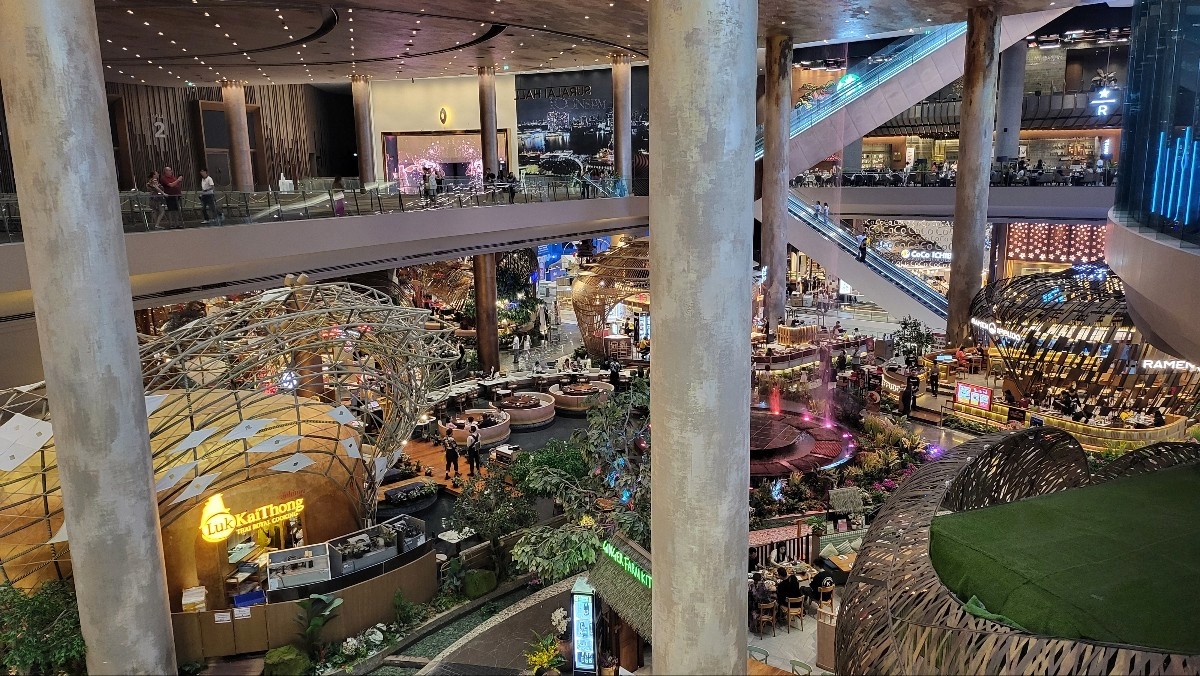
Bangkok shopping malls want K-brands. The question is how to get in.
street
May 26, 2026
Bangkok Retail 101 ①
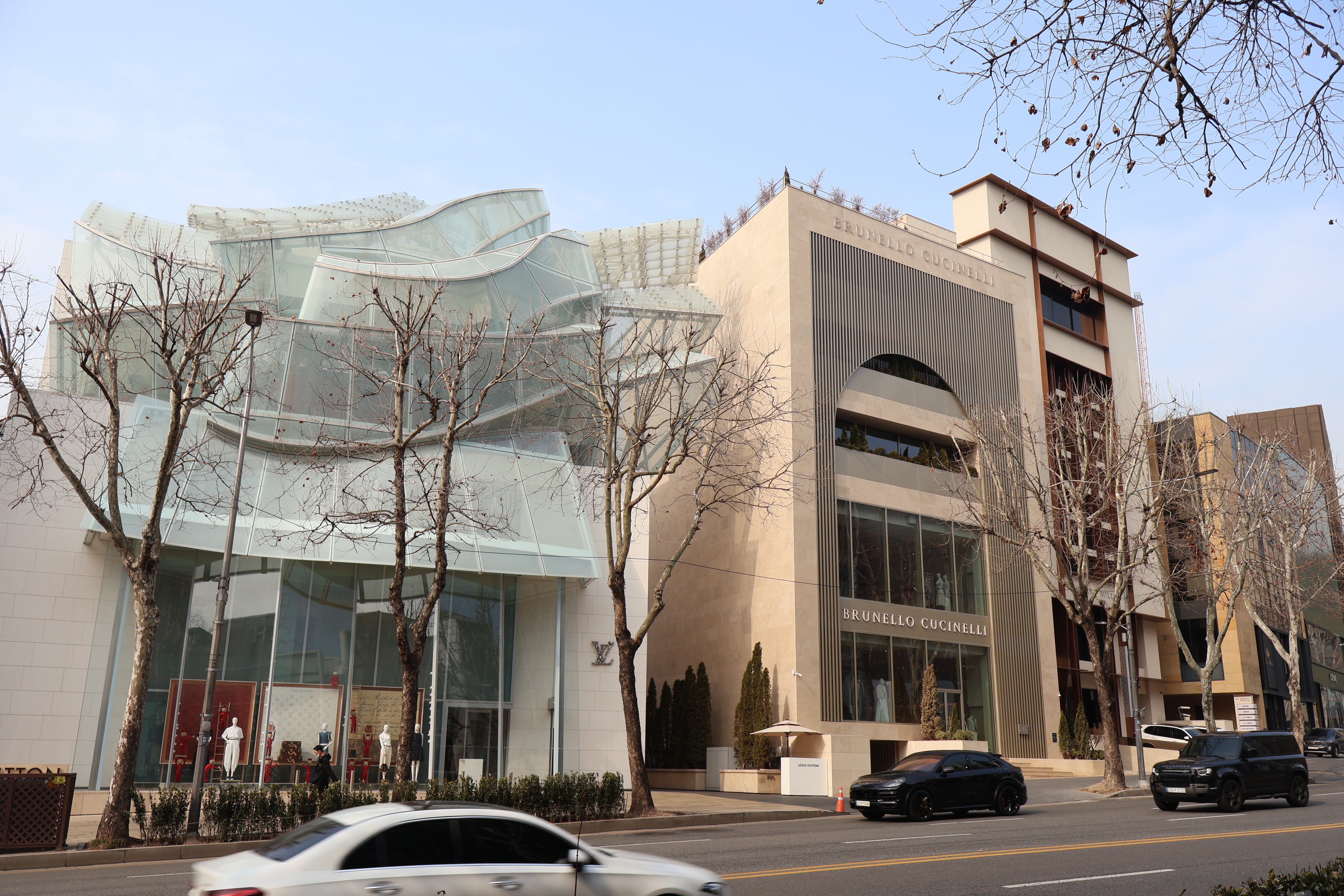
The Developer's Playground: What Sets Bangkok's Retail Evolution Apart from Seoul
street
Apr 13, 2026
Cheongdam: The Art of Elegant Detachment
High jewelry chases the light. Fashion houses build walls. A structural analysis of how capital occupies Cheongdam — and why this street operates by rules that apply nowhere else in Seoul.

street
Apr 13, 2026
Hannam-dong, Seoul's private club. ②
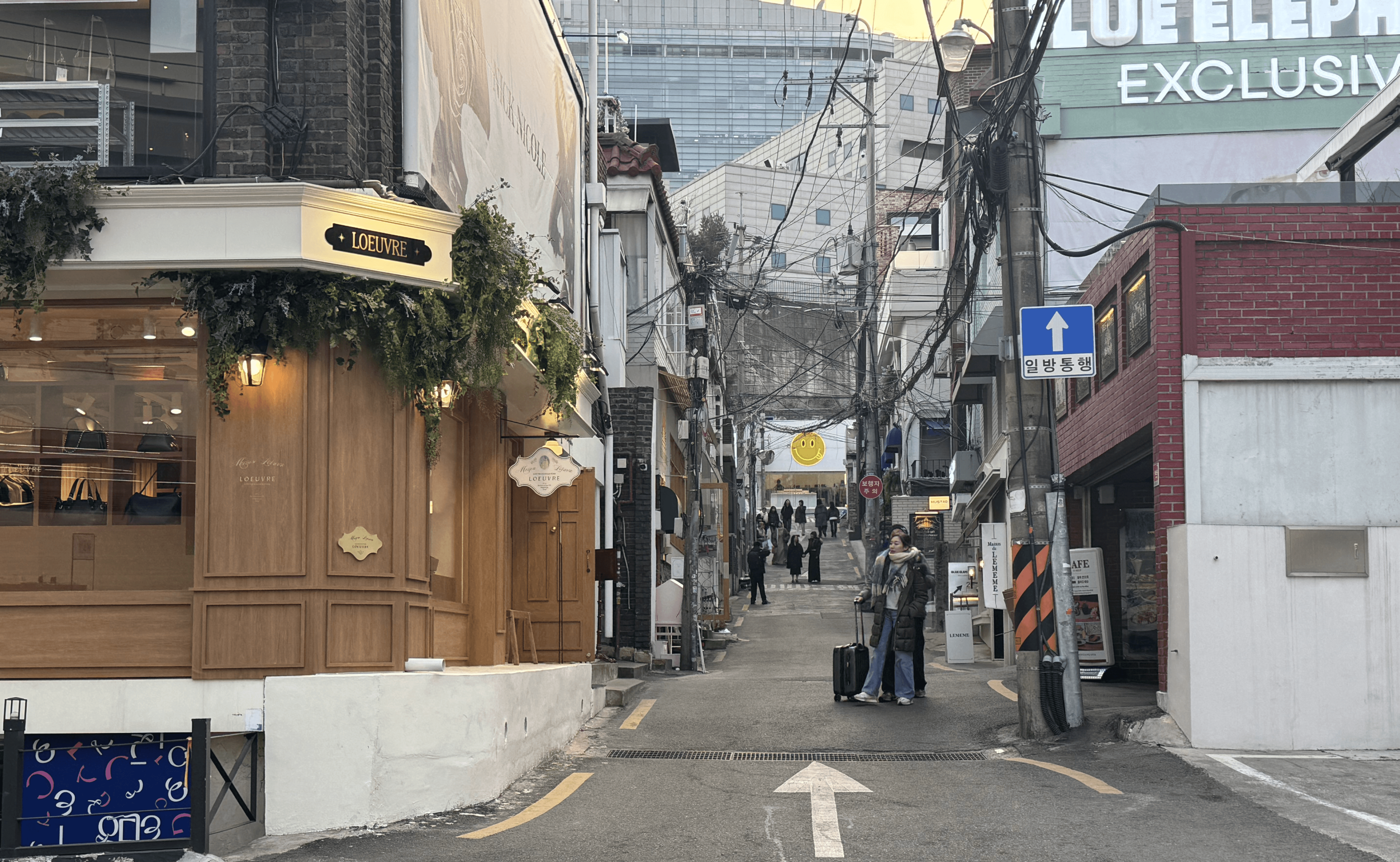
Zero vacancy. Key money reaching 1.3 billion Korean won. Inside Hannam-dong's brand selection market, where who you are matters more than what you offer to pay.
street
Apr 13, 2026
Hannam-dong, a private club in Seoul. ①
Between Seongsu's raw energy and Dosan's polish — how Hannam-dong became Asia's most credible ground for testing a global brand's Korea positioning.
street
Apr 13, 2026
Same Bukchon, Different Strategy ③
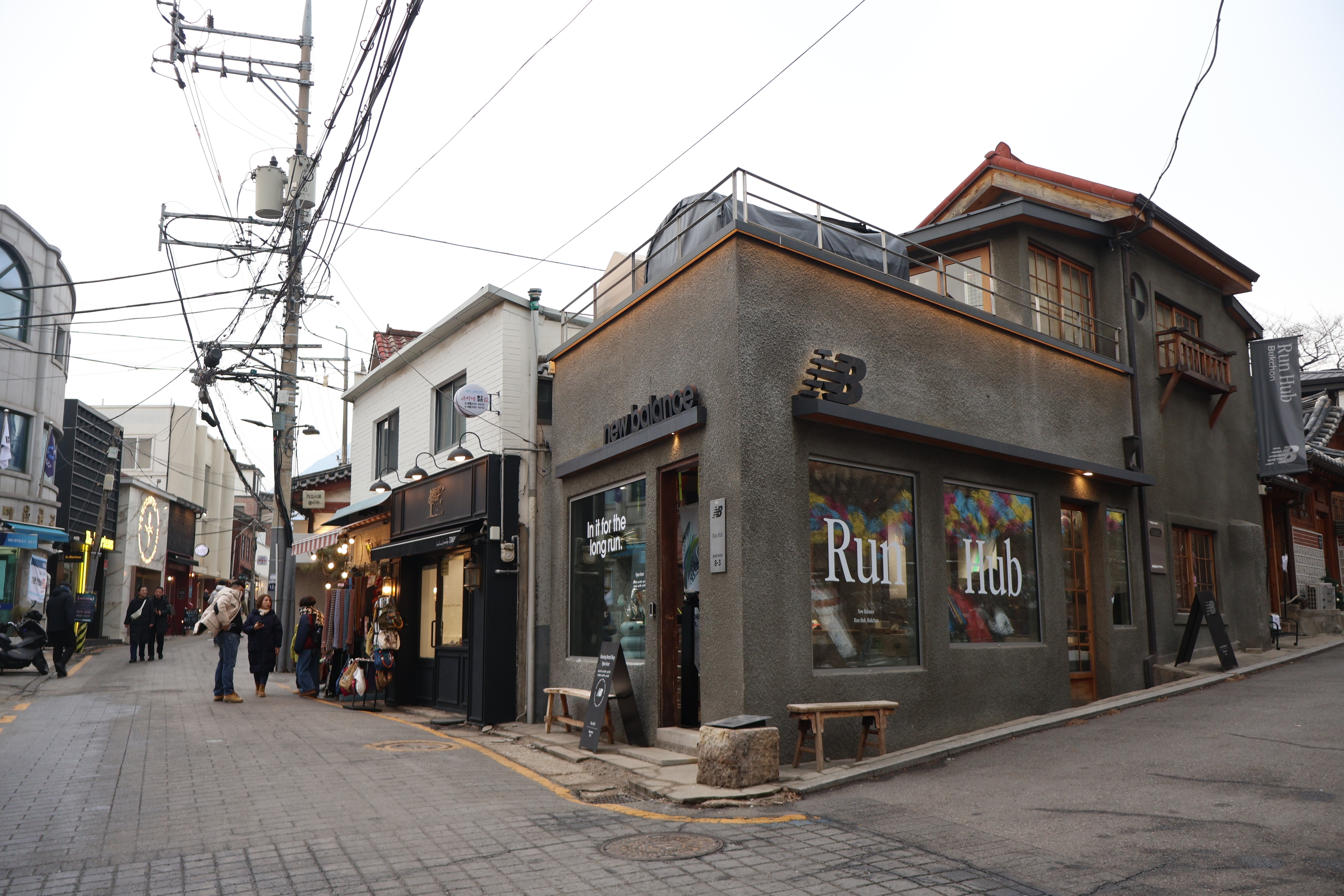
Blue Bottle, New Balance, Adidas, Le Labo — how Hwadong and Sogyeokdong became the global flagship core of Seoul's Bukchon retail market.

street
Apr 13, 2026
Same Bukchon, Different Strategy ②
Why Amorepacific spent 30 billion won acquiring a hanok compound in Gahoe-dong — and how Bukchon-ro 5-gil became Seoul's fastest-growing K-brand retail cluster.
street
Apr 13, 2026
Same Bukchon, Different Strategy ①
Anguk Station and Gye-dong-gil: The entrance to Bukchon, focusing on the flagship near Anguk Station and the concentration of F&B on Gye-dong-gil.