Back
Share
Like

street
Article Highlights
Bangkok retail is driven by developer intervention in MD, marketing, and events.
Shopping malls utilize K-brands as content clusters, making developer positioning more critical than standalone brand competitiveness.
Given high-street risks, entering via large shopping malls is the safest initial strategy.
The Future of Bangkok Retail and Opportunities for K-Brands
The most noticeable recent change in Bangkok retail is the expanding presence of K-content. While it used to center around Korean restaurants and K-beauty, it is now expanding across overall categories, including fashion, lifestyle, desserts, and cafes. Major shopping mall developers in Thailand are also increasingly active in trying to attract Korean brands.
However, Bangkok is a structurally complex market to approach solely based on the "popularity of Hallyu." Brands that have successfully established themselves locally share one commonality: rather than brands that merely chased trendy commercial districts, those that understood the retail structure of Bangkok itself have achieved better long-term performance.
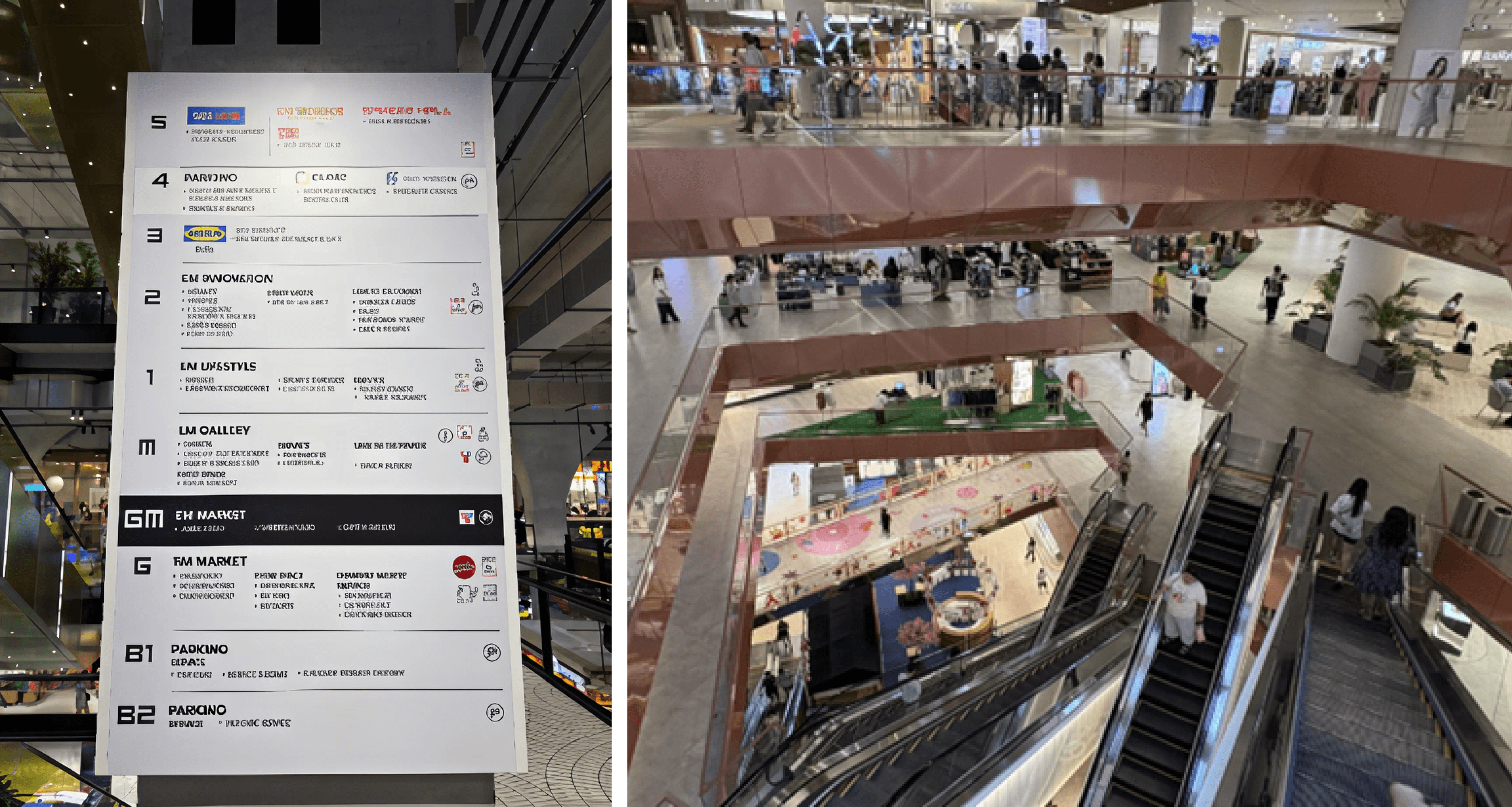
Emsphere Floor Plan on the left, Dusit Central view on the right
Not "Which District," but "Which Developer"
The most important factor in Bangkok is its developer-centric structure. Shopping mall developers in Bangkok are not just simple landlords. They directly intervene in merchandising (MD) plans, brand mixes, event operations, and marketing directions. This is why "which developer to cooperate with" is far more important than "which commercial district to enter."
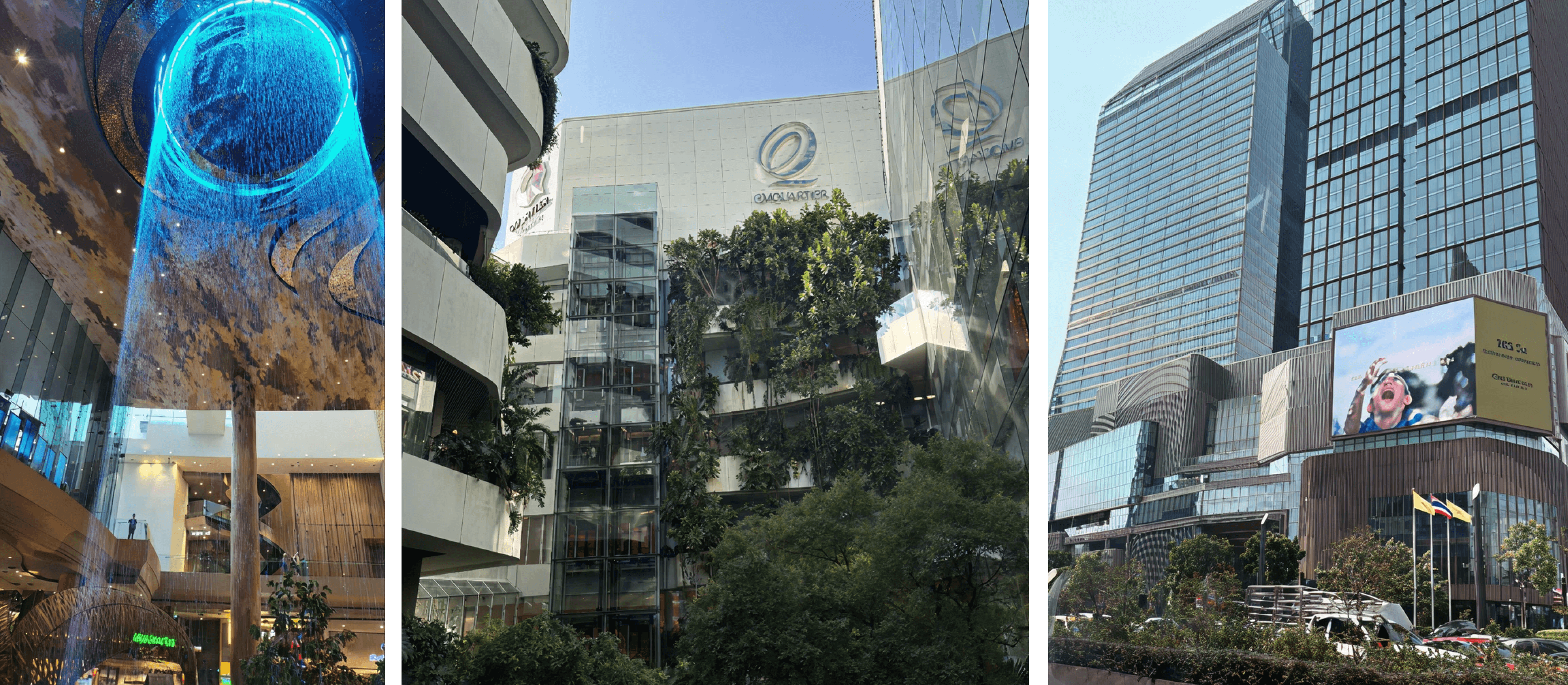
From left: Iconsiam, EmQuartier, One Bangkok
Recently, Thai shopping malls have begun to recognize Korean F&B as a key category. New project MDs often feature Korean BBQ, chicken, street food (bunsik), hot stone pot rice (sotbap), and dessert brands together. It has evolved from a past focus mainly on Samgyeopsal (pork belly) into a much more specialized form.
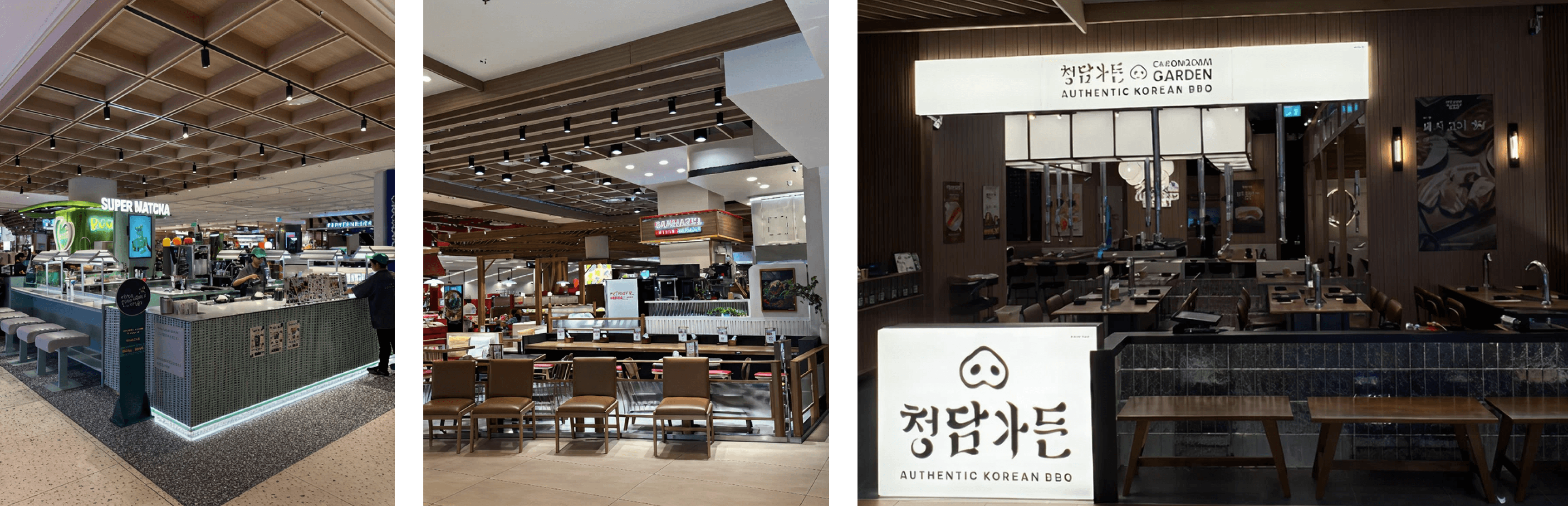
From left: Super Matcha, Saemaeul Sikdang, and Cheongdam Garden located at Dusit Central
Entry Model: Licensing vs. Direct Operation
One representative example is Solsot. It entered the market through a licensing agreement with local partner Mission Group. Operating under a structure where the local partner handles shopping mall negotiations, licensing, and human resources management, while the Korean brand provides recipes and operational know-how, this is one of the most common ways to enter the Bangkok market.
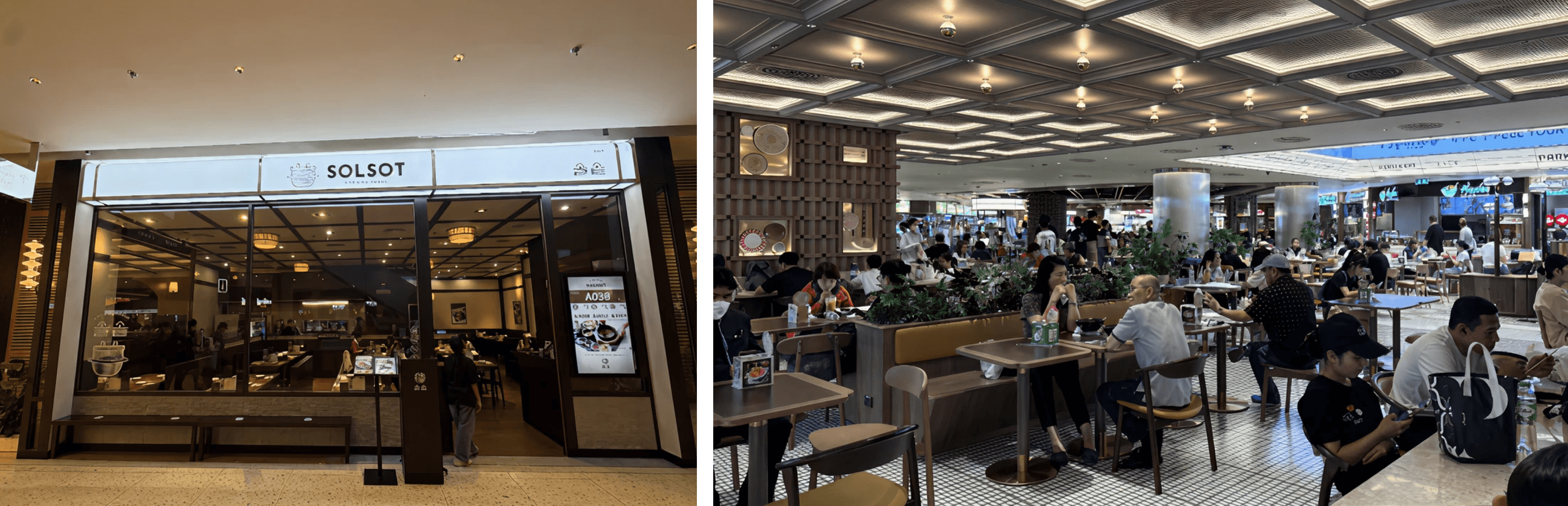
Solsot located in the main food court area of Dusit Central
On the other hand, Onigiri entered CentralWorld by CPN through a direct operation model. While the initial burden is high, it offers greater control over the brand. This is significant because it allows the menu and spatial experience to be more precisely localized. In fact, in the Thai market, localization has progressed by strengthening intuitive K-food elements, such as Buldak (fire chicken) and K-BBQ.
The 'Seoul Lifestyle Brand Global Experiential Space Entry Project' run by the Seoul Business Agency (SBA) is also an noteworthy case. It is an approach of first testing local response through pop-ups and test-oriented spaces rather than opening permanent stores. The effectiveness of this approach is increasingly rising in the Bangkok market.
Not K-Brand, but K-Content
There is another reason why Bangkok shopping malls are interesting lately. They do not view K-brands simply as "Korean brands." They utilize them as content. Some shopping malls cluster Korean F&B into a K-Food zone to turn the zone itself into foot-traffic-generating content. This generates a much stronger customer attraction effect than individual brand listings.
K-beauty follows the same context. The Shinsegae Hyper Ground Pop-up held at CentralWorld focused on experiential content rather than product sales. By combining K-beauty brands, makeup events, K-desserts, and social media events, they increased the dwell time of visitors. This aligns precisely with the trend of Bangkok shopping malls strengthening experiential content.
The 'Seoul Lifestyle Brand Global Experiential Space Entry Project' run by the Seoul Business Agency (SBA) is also a noteworthy case. It is an approach of first testing local response through pop-ups and test-oriented spaces rather than opening permanent stores. The effectiveness of this approach is increasingly rising in the Bangkok market.
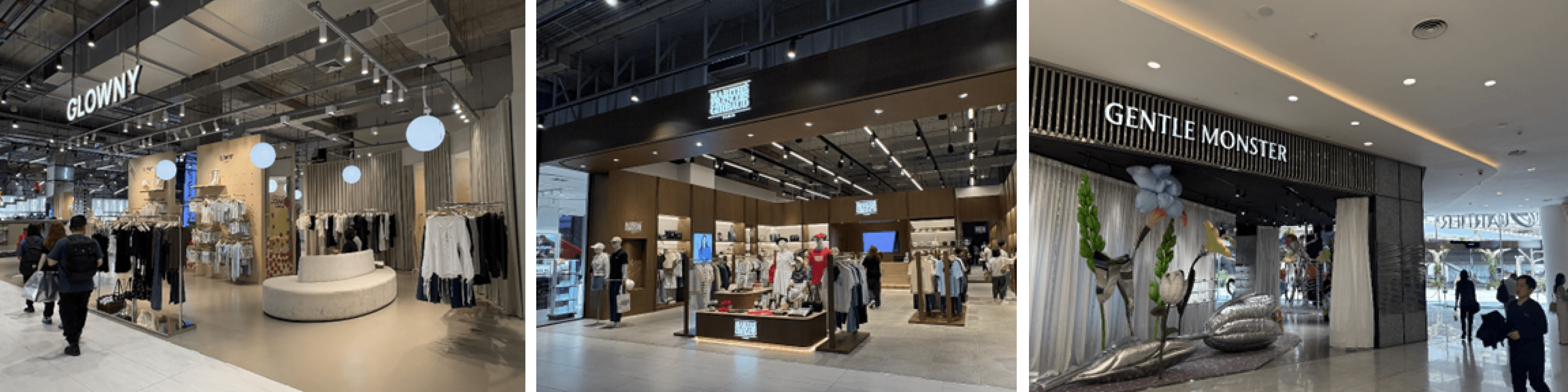
From left: Glowny and Marithé at Emsphere, and Gentle Monster at Emporium
Why High Street Entry Calls for Caution
Entering Bangkok's high street requires a much more cautious approach than entering shopping malls. While Ari, Thonglor, and Song Wat are drawing attention, the pace of change is just as rapid. Some core areas feature many lands based on royal assets, and lease structures are complex. Approaching solely based on the reason that it is a "hot neighborhood" increases risk.
Song Wat Road is also quickly gaining attention, but whether its current vibe will be sustained long-term remains unproven. In the initial entry phase, a shopping mall-centered approach is relatively stable.
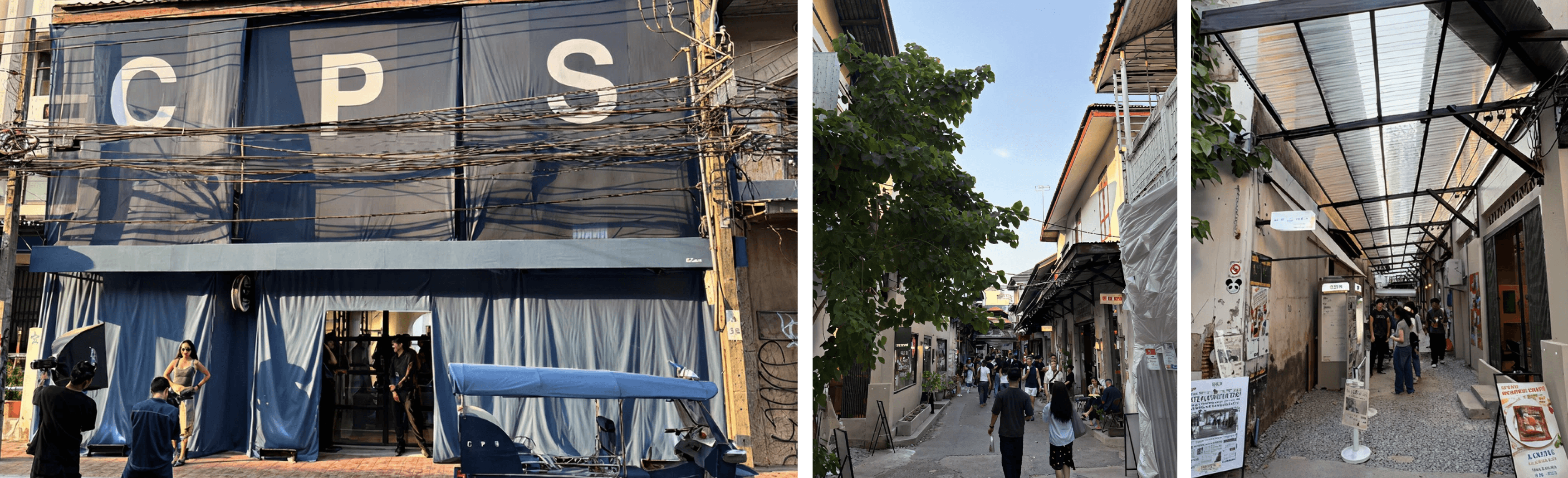
Song Wat Road showcasing various pop-up attempts
Bangkok is no longer just a Southeast Asian market. It is an international retail market where global tourists, local consumers, and global brands compete simultaneously. The fact that major developers are actively creating new consumer experiences gives Bangkok a distinct charm compared to Seoul. In this flow, the question that K-brands must ask has also changed. It is no longer "How will we enter as a Korean brand?" but "What kind of experience will we create within the city of Bangkok?"
© Copyright 2026. All rights reserved.
This publication has been prepared in good faith, based on CBRE Korea's current anecdotal and evidence based views of the commercial real estate market. Although CBRE Korea believes its views reflect market conditions on the date of this presentation, they are subject to significant uncertainties and contingencies, many of which are beyond CBRE Korea’s control. In addition, many of CBRE Korea’s views are opinion and/or projections based on CBRE Korea’s subjective analyses of current market circumstances. Other firms may have different opinions, projections and analyses, and actual market conditions in the future may cause CBRE Korea’s current views to later be incorrect. CBRE Korea has no obligation to update its views herein if its opinions, projections, analyses or market circumstances later change.
Nothing in this publication should be construed as an indicator of the future performance of CBRE’s securities or of the performance of any other company’s securities. You should not purchase or sell securities-of CBRE or any other company-based on the views herein. CBRE Korea disclaims all liability for securities purchased or sold based on information herein, and by viewing this publication, you waive all claims against CBRE Korea as well as against CBRE Korea’s affiliates, officers, directors, employees, agents, advisers and representatives arising out of the accuracy, completeness, adequacy or your use of the information herein. No part of this publication may be reproduced, quoted, distributed, or disclosed to any third party without the prior written consent of CBRE Korea.

street
Sep 3, 2026
Why Global Brands Are Heading Back to Myeong-dong
The Generational Shift and Retail Analysis of a 100-Year-Old Prime Shopping District

Street
Jul 27, 2026
Dosan Park Commercial District Analysis | The Alley Where Brand Drives Land Value
Comparing Seongsu with Dosan: the opposite growth formulas of two Seoul hotspots

street
Jul 13, 2026
Gangnam ② - 75% of Gangnam-daero is Medical
A place where hospitals fill the upper floors emptied by the pandemic, and the wallets of foreigners crowd.

street
Jun 22, 2026
Gangnam ① - Gangnam-daero Retail, Chosen by Global Brands
From 18 vacancies three years ago to just two. The real reason why low-floor retail along Gangnam-daero has made a complete comeback.
street
May 26, 2026
Bangkok Retail 101 ①
The Developer's Playground: What Sets Bangkok's Retail Evolution Apart from Seoul
street
Apr 13, 2026
Cheongdam: The Art of Elegant Detachment
High jewelry chases the light. Fashion houses build walls. A structural analysis of how capital occupies Cheongdam — and why this street operates by rules that apply nowhere else in Seoul.

street
Apr 13, 2026
Hannam-dong, Seoul's private club. ②
Zero vacancy. Key money reaching 1.3 billion Korean won. Inside Hannam-dong's brand selection market, where who you are matters more than what you offer to pay.
street
Apr 13, 2026
Hannam-dong, a private club in Seoul. ①
Between Seongsu's raw energy and Dosan's polish — how Hannam-dong became Asia's most credible ground for testing a global brand's Korea positioning.
street
Apr 13, 2026
Same Bukchon, Different Strategy ③
Blue Bottle, New Balance, Adidas, Le Labo — how Hwadong and Sogyeokdong became the global flagship core of Seoul's Bukchon retail market.

street
Apr 13, 2026
Same Bukchon, Different Strategy ②
Why Amorepacific spent 30 billion won acquiring a hanok compound in Gahoe-dong — and how Bukchon-ro 5-gil became Seoul's fastest-growing K-brand retail cluster.
street
Apr 13, 2026
Same Bukchon, Different Strategy ①
Anguk Station and Gye-dong-gil: The entrance to Bukchon, focusing on the flagship near Anguk Station and the concentration of F&B on Gye-dong-gil.