Back
Share
Like

trend
Article Highlights
Bangkok is a market centered around mega malls. Understanding how malls fill their categories within their annual plans can be a starting point.
Securing a spot in a mall is closer to a relationship than a one-time contract. In the early stages of entry, who you work with and under what terms you sign that first contract can have a long-lasting impact.
Locally, Korean food seems to have entered a stage of segmentation. Rather than simply replicating a Korean store as is, a concept redesigned to fit local tastes and preferences may be necessary.
In Part 1, we highlighted the three realistic barriers (reliable local partners, securing safe spaces within institutional frameworks, and early positioning during the development planning stage) faced by brands seeking to cross borders with authentic Korean culinary culture beyond chicken and bakery items.
In Part 2, we share the voice of a brand that took the first step on the ground. We hear about how Onkijung in Bangkok opened its first store and established itself in Southeast Asia's key retail market, along with the CEO's firsthand experiences and insights.
The featured entrepreneur is CEO Bae Jin-kyu, who started with the Thai-style brand 'Pan Asia' in Daegu, opened the Korean restaurant 'Onkijung' at CentralWorld in Bangkok, and expanded it to three locations within three years. After first knocking on doors through a local agency and building relationships with major malls, we asked him about the tenant entry process in Bangkok's mega malls and the atmosphere of Thai retail.
It is no longer news that Korean food resonates overseas. What people are truly curious about is what comes next.
From Fusion to Authentic: Reading Local Expectations
Q. We heard that Onkijung was not an authentic Korean restaurant from the beginning.
Yes, at first, we opened as a fusion concept combining Japanese home-style cooking with Korean touches. But once we opened, we found that Thai customers knew Korean food much better than expected. The atmosphere was one of expecting truly authentic Korean food rather than compromised dishes. So, just three months after opening, we pivoted to authentic Korean cuisine, and the response improved noticeably after that.
Q. Bangkok is a market centered around mega malls rather than street-level retail. By what criteria do local malls seem to evaluate Korean brands?
From what I've experienced, the merchandising (MD) direction of major malls like Central Pattana, Siam Piwat, and The Mall seems to be the most critical criterion. Since malls fill spaces by category, multiple brands are often evaluated together for a single spot. This is especially true for high-interest categories like Korean barbecue. In those cases, rather than simply looking for a delicious restaurant, malls seem to seek brands that can add a fresh narrative to their space.

Onkijung Bangkok CentralWorld
Q. The way you build relationships with local mall operators also seems different from Korea.
Malls tend to establish annual plans and share them with key tenant brand stakeholders. However, it is not easy for a brand entering the market for the first time to tap into that flow without an agency. I also initially knocked on doors through a local agency, and through that process, I realized that who you work with is truly important. Rather than being settled by a single contract, getting into a mall is much closer to building a relationship over time.
Q. What are some common misconceptions Korean brands have when entering the Thai market?
There are cases where people assume Thailand is a market trailing behind Korea, but in my experience, it was actually a much more globalized market. Korean brands often find themselves competing against well-established Japanese brands and other global brands rather than local ones. The leasing environment is also different. Safeguards like legally guaranteed long-term renewals, as found in Korea, are relatively weaker, so the initial contract terms can impact store operations for a long time.
A Different Grammar of Space and Design


Onkijung Bangkok CentralWorld
Q. Do local malls have specific criteria regarding space or interior design?
Thailand has relatively few interior design regulations, so as long as you meet standard specifications, they are quite open to interior designs. That leaves significant room for brands to clearly express their concepts. Because of this, brands considered safe and well-balanced in Korea might end up looking less distinctive locally. Looking at Japanese brands, rather than bringing their domestic stores over as-is, they often refine their concepts to a higher degree when entering Bangkok. Redesigning your brand narrative to fit the local market could be a viable approach.
The Current State of K-Food, and What's Next
Q. How has the perceived status of Korean food locally changed compared to the past?
The change was felt in the malls' MD composition even before the consumers. Just five years ago, Korean food was often bundled under a single broad umbrella of 'Korean food,' but now the categories are becoming increasingly segmented. Personally, I think Korean cafes or desserts might be the next to gain attention.
Q. Do you also feel the localization of Korean food in day-to-day store operations?
The average spending per customer at Onkijung in Bangkok is higher than at our Korean stores. Korean food seems to be establishing itself as a distinct category, segmenting into fine dining, casual, and delivery. Roughly 70% of our customers are local Thai people. I get the sense that it is embraced as everyday dining out rather than just tourist demand. Many customers know Korean food well enough to share feedback directly on the flavor of the kimchi or side dish refills.
Q. Please share your outlook on K-Food's overseas expansion and your next plans.
Thanks to K-content, favorable sentiment toward Korean food is already very high, making this an excellent time to consider overseas expansion. Korean food is still undergoing segmentation, so there seems to be room for greater specialization and diversity. Following Bangkok, I am also looking into Singapore, Vietnam, Indonesia, the Philippines, and Middle Eastern markets, reviewing both direct entry and master franchise models. We are currently preparing to open stores in Vietnam.
Onkijung's past three years clearly illustrate how the way Korean food is consumed in Bangkok has evolved. A store that opened as a fusion concept read the local customers' desire for 'authentic Korean food' and made a bold pivot after just three months, now taking root as an everyday dining spot where seven out of ten guests are locals.
However, an even more noteworthy aspect of CEO Bae Jin-kyu's experience is the way Bangkok retail operates. In a market where mega malls formulate their MD according to annual plans, crossing the threshold purely on menu competitiveness or brand recognition is difficult. This is where the decisive role of the first barrier addressed in Part 1—a 'reliable local partner'—comes into play. In an unfamiliar environment involving new languages, lease systems, and mall dynamics, working in sync with a partner well-versed in local conditions is essential to tap into the mall's annual planning and secure an advantageous position in the initial contract. To minimize trial and error in overseas expansion, finding a partner who can read the market and coordinate negotiations is just as important as having great recipes.
Next week, we head to Singapore. We will follow up with the real-world experience of 'Cheongiwatown' as it faced unfamiliar laws and procedures during its actual launch process, securing a space in a market thoroughly dominated by landlords.
© Copyright 2026. All rights reserved.
This publication has been prepared in good faith, based on CBRE Korea's current anecdotal and evidence based views of the commercial real estate market. Although CBRE Korea believes its views reflect market conditions on the date of this presentation, they are subject to significant uncertainties and contingencies, many of which are beyond CBRE Korea’s control. In addition, many of CBRE Korea’s views are opinion and/or projections based on CBRE Korea’s subjective analyses of current market circumstances. Other firms may have different opinions, projections and analyses, and actual market conditions in the future may cause CBRE Korea’s current views to later be incorrect. CBRE Korea has no obligation to update its views herein if its opinions, projections, analyses or market circumstances later change.
Nothing in this publication should be construed as an indicator of the future performance of CBRE’s securities or of the performance of any other company’s securities. You should not purchase or sell securities-of CBRE or any other company-based on the views herein. CBRE Korea disclaims all liability for securities purchased or sold based on information herein, and by viewing this publication, you waive all claims against CBRE Korea as well as against CBRE Korea’s affiliates, officers, directors, employees, agents, advisers and representatives arising out of the accuracy, completeness, adequacy or your use of the information herein. No part of this publication may be reproduced, quoted, distributed, or disclosed to any third party without the prior written consent of CBRE Korea.

trend
Nov 9, 2026
Why U.S. Landlords Are Eager to Bring in Trader Joe's
The Meticulous Data Behind the Tote Bag: How US Retail Anchors Choose Their Locations

trend
Sep 28, 2026
Why the kids and pet retail market is growing despite population decline
A retail of self-expression manifested through children and pet dogs

trend
Aug 31, 2026
24,000 Traditional Pubs Disappeared
Lowest Alcohol Consumption in 27 Years and a 46% Plunge in Bars: The Next Formula for Nightlife Economy

trend
Jul 6, 2026
The footsteps of runners change the commercial districts
Runners' Basecamp: SEOUL's second article, commercial districts transformed by runners centering around Seochon and Bukchon

trend
Apr 20, 2026
Then it was bags, now it is jewelry.
"Rather than buying a 14 million won bag..." Consumers start 'Open Runs' at 'this place'
trend
Apr 13, 2026
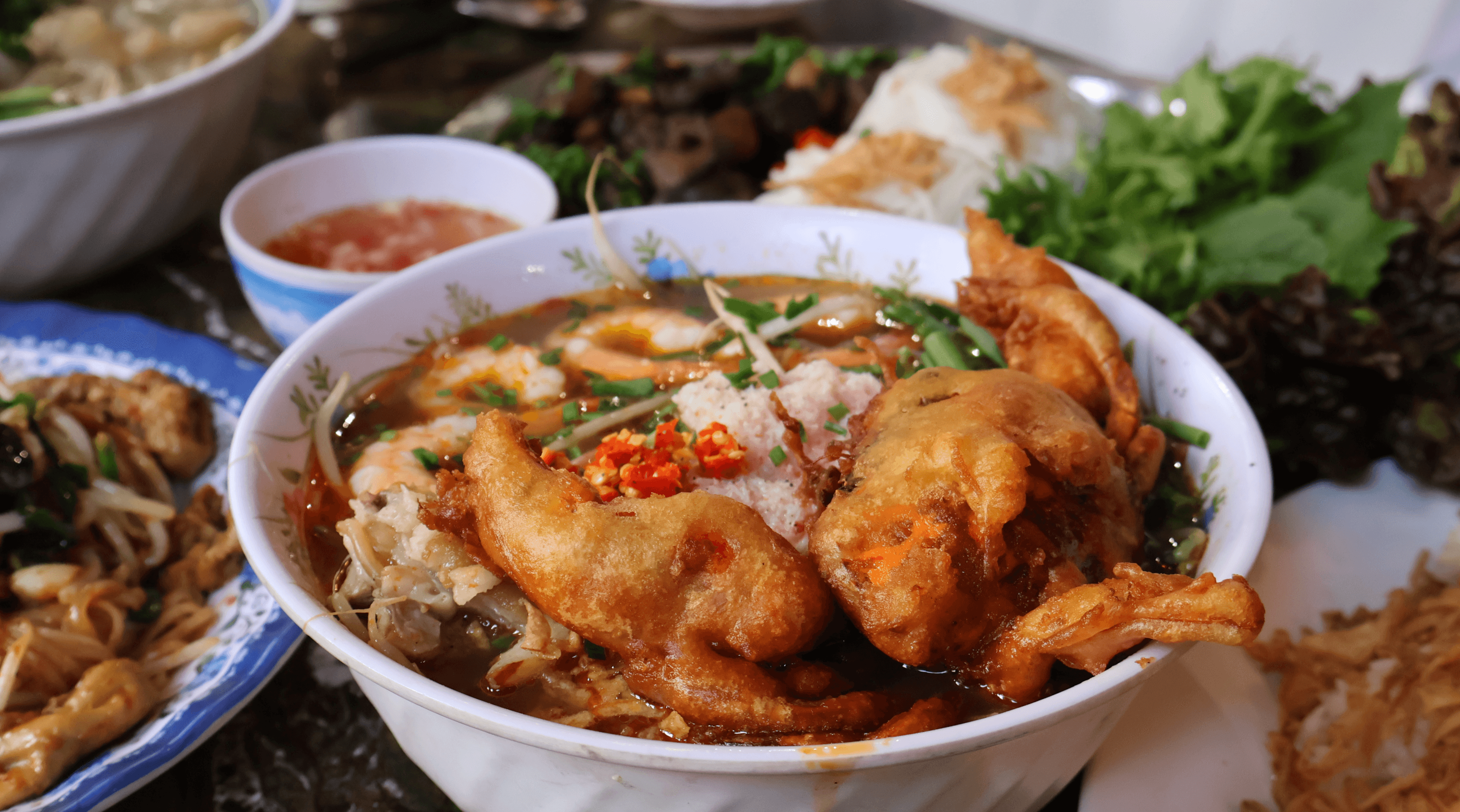
The Secrets Behind the Success of Eulji Kankan
Appeared in Culinary Class Wars Season 2, Representative Cho Kyung-chan of Eulji KkanKkan—who brought the taste of real, local Vietnam to Korea—talks about his laws of entrepreneurship, space, and expansion.

trend
Apr 13, 2026
Runners' Basecamp: SEOUL
UVU chose Seongsu over London for its world-first store — how Seoul's running scene is redrawing the retail map.
trend
Apr 13, 2026
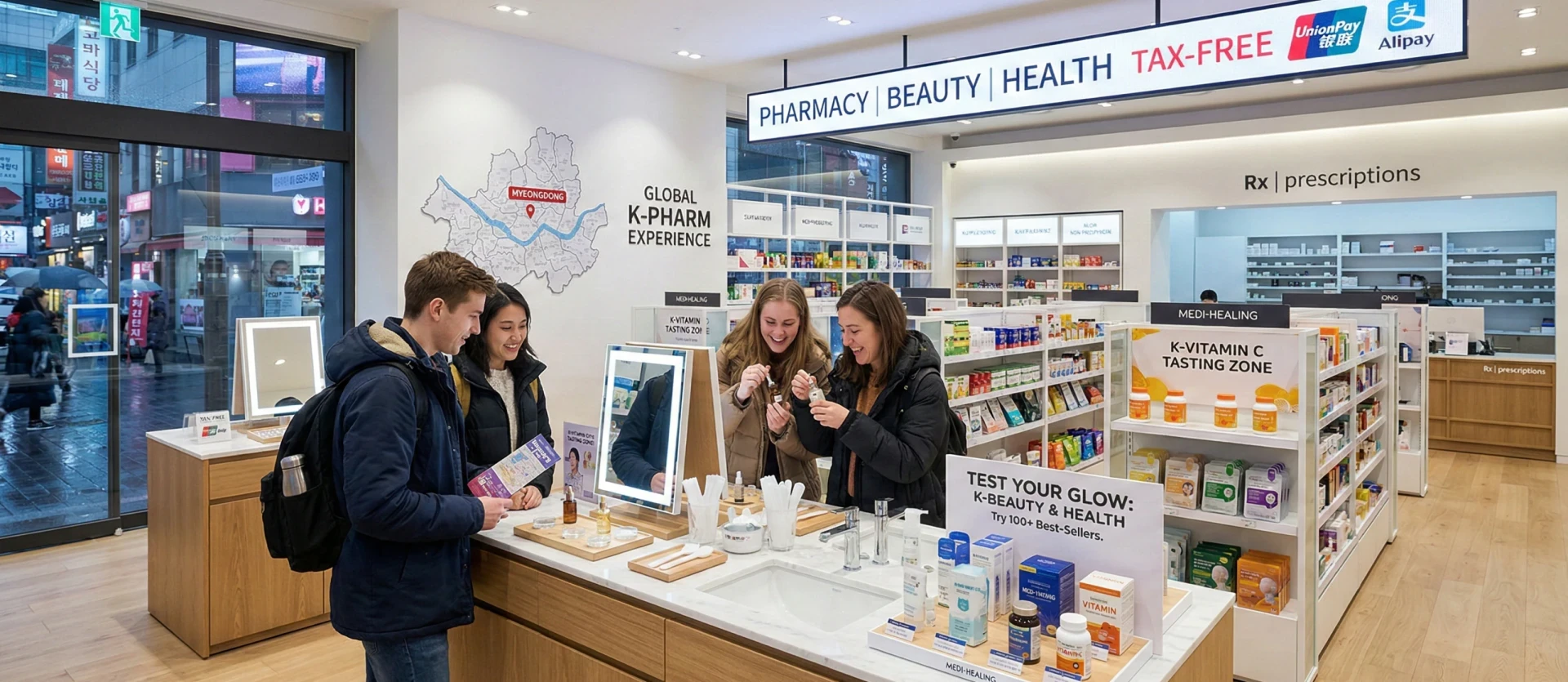
Pharmacy or Olive Young?
How K-pharmacy became Seoul's most unexpected anchor tenant category.
trend
Apr 13, 2026
2026 Retail Trend: Keep the Taste, Cut the Risk
Frugal and indulgent in the same afternoon — how South Korea's ambivalent spending pattern is reshaping retail strategy in 2026.