Back
Share
Like
market
Article Highlights
Selecting sites before due diligence causes costly rent on legally unopenable spaces.
Historic zones often ban facade changes, and Korean drawings require time-consuming local conversion.
International project management must budget for standard logistical and mechanical failures.
For Korean brands dreaming of entering the global retail market, the biggest barriers are unfamiliar local regulations and unpredictable construction risks. CBRE efficiently addresses these challenges by providing a one-stop connection from the Retail team’s strategic site selection to T&T(PJM Korea)’s sophisticated construction oversight. In particular, bridging the gap between the speed Korean brands are known for and strict local permitting systems is the key to global expansion. CBRE Integrated Management aims to assess construction risks in advance from the site-selection stage and organically integrate the entire design and construction process to perfectly realize brand value in physical space. Through an interview with T&T Proj Mgmt Principal Brandon Yoo, we hear how the T&T professionally takes responsibility for brands’ overseas expansion.
Sophisticated Construction Management Involved from the Design Stage
Q. More brands are expanding overseas from Korea. What areas does the T&T team handle?
[From the very beginning till the end]
The role of T&T team goes beyond simply managing construction sites. Once the leasing team secures a suitable site, we are brought in from the design phase and oversee the entire process through project completion. I have helped open numerous stores in major U.S. hubs such as Orange County, Las Vegas, Houston, and New Jersey. Our core strength is not just creating the exterior, but also conducting technical collaboration from the early design stage so that each brand’s unique complex objects or robotic art can operate smoothly within local regulations.
On-Site Responsiveness: From Cargo Accidents to Emergency Repairs One Hour Before Opening
Q. There must be many unexpected variables when carrying out construction overseas. Is there a memorable case?
[The Master of Schedule Management]
In overseas retail sites, unpredictable variables arise frequently. There was a case where major cargo headed to New York was mistakenly delivered to a Virginia naval port; we urgently arranged seven trucks and recovered the shipment within 12 hours to keep the schedule on track. There was also an episode where, to restore damaged products right before opening, 20 workers pulled an overnight shift and successfully opened with just one hour to spare, showing how intense retail PM can be. From the brand’s perspective, even a one-day delay in opening directly translates into lost sales, so completing the set schedule under any circumstances is our top priority.

Strategic Localization That Secures Both Cost Efficiency and Quality
Q. I’ve heard construction costs overseas are quite high. Is there know-how for managing budgets efficiently while maintaining brand quality?
[Smart Localization and Cost Control]
Construction costs and labor expenses in the U.S. and other overseas markets are significantly higher than in Korea. To manage budgets efficiently, the most important thing is to focus on the design stage. That is because the more complete the design is upfront, the better you can prevent budget overruns later. Our top priority is reviewing whether the design is actually buildable locally and whether permits can be obtained.
A recent large-scale retail landmark project in Seoul's Seongsu stands as a case study in what happens when Korean execution speed meets structured project oversight. The timeline was tight. The scope was complex. T&T joined the project to manage the full construction process — cost control, schedule, and quality — across a large mixed-use commercial space. The project delivered on budget and opened on time.
The collaboration data built from that project now serves as a working reference for overseas expansion. When a brand enters markets with strict permitting environments and unfamiliar construction standards — North America in particular — having a documented benchmark from a successfully executed flagship reduces the variables significantly. What worked in Seoul becomes the baseline for what to plan around elsewhere. That's how domestic project experience becomes a global standard. And why the partnership has continued to grow.
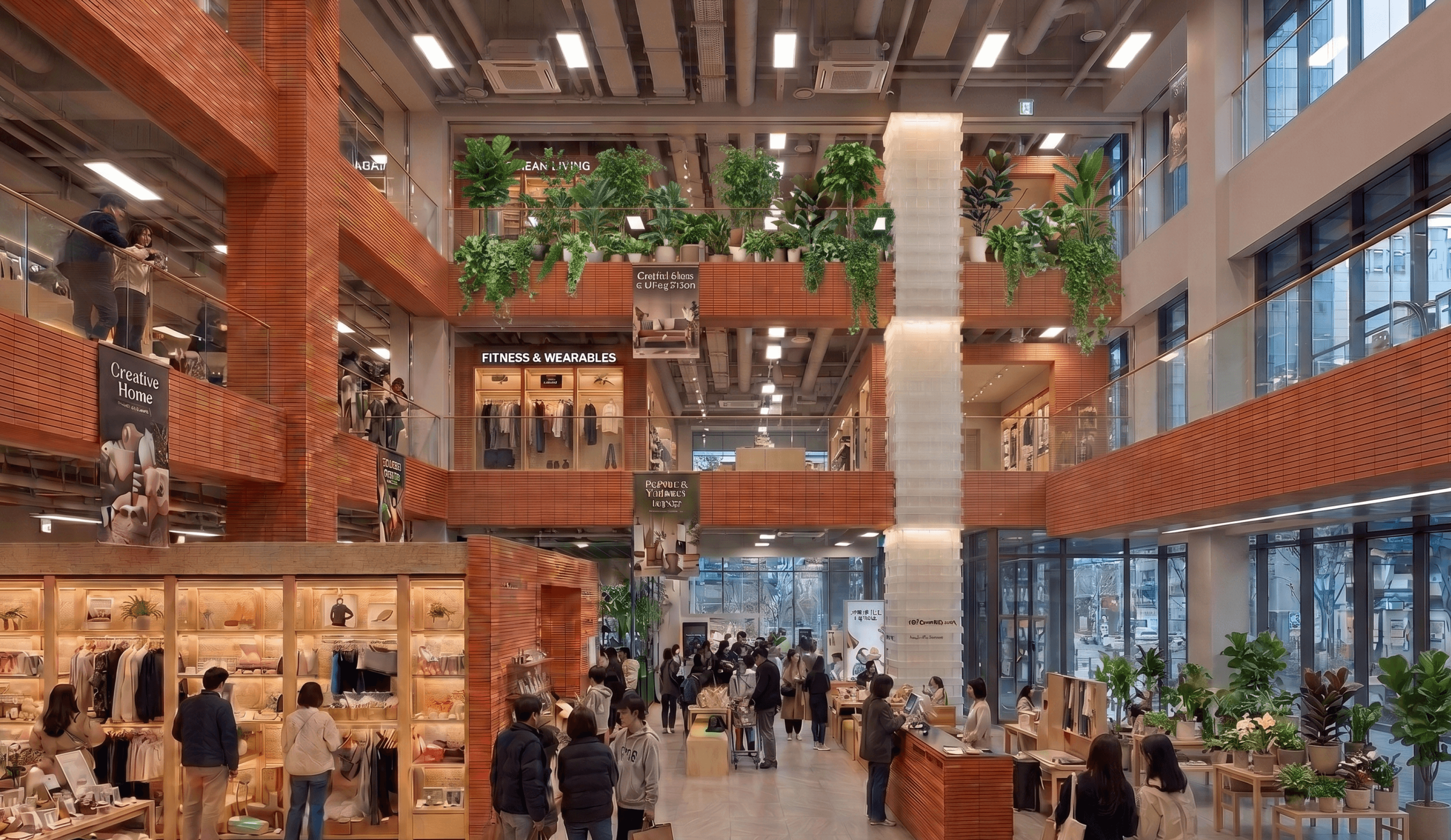
사진 출처: AI generated
The Skill of Coordination and Communication That Bridges Cultural Gaps
Q. When collaborating with local vendors, are there difficulties due to cultural differences from Korea?
[Bridge of Communication]
I believe how you manage partnerships with local vendors determines the success or failure of completion. Sometimes people accustomed to Korea’s less horizontal directive culture push U.S. vendors too hard, and then awkward situations can occur where the local vendor says, “I won’t do it even if I don’t get paid,” and simply leaves the site. That is because U.S. vendors value horizontal relationships. Between these cultural gaps, we play the role of persuading them in ways they can accept, finding the best alternatives possible within local regulations, and coordinating trust between the brand and the contractor.
The Shortest Path to Fewer Trial and Errors: Retail-T&T One-Stop Solution
Q. Lastly, what advice would you give to brands considering overseas expansion?
[One-Stop Global Solution]
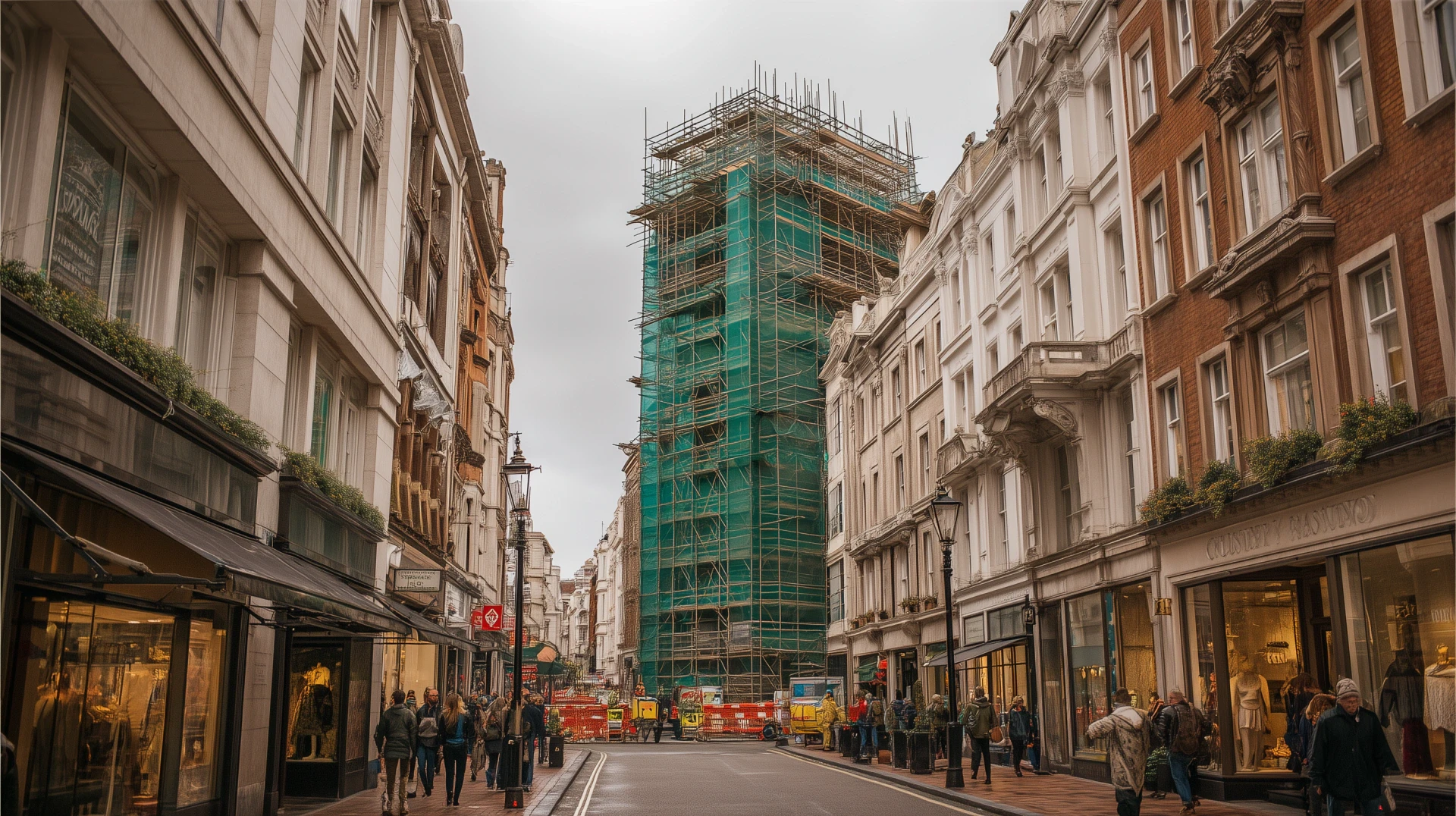
In the field, we see many companies that hastily select sites without thorough preparation and then struggle for years paying only rent due to permitting issues. In a real case, there are Korean brands in New York that have been struggling for two to three years because they could not secure permits. These cases usually happen when companies do not understand the process well and start too early. In historically sensitive areas like Pasadena, restrictions on the building itself are extremely strict, such as not allowing exterior changes at all.
That is why we step in from the initial stage when the Retail team is scouting sites, and carefully check in advance whether a building is actually buildable and whether there are permitting risks. Not only in the U.S., but also when expanding into Europe, such as Spain, you can receive services linked with local teams through CBRE’s global network, making it the most efficient shortcut to reducing trial and error.
The success of global expansion depends not on how fast you move, but on how precisely you prepare. The speed that defines Korean brands is a genuine asset — but charging ahead without a clear read on local permitting processes and construction culture doesn't save time. It burns it. When retail strategy and construction delivery are handled as one connected process by people who understand both ends, a brand's first step overseas is taken on the firmest possible ground.
© Copyright 2026. All rights reserved.
This publication has been prepared in good faith, based on CBRE Korea's current anecdotal and evidence based views of the commercial real estate market. Although CBRE Korea believes its views reflect market conditions on the date of this presentation, they are subject to significant uncertainties and contingencies, many of which are beyond CBRE Korea’s control. In addition, many of CBRE Korea’s views are opinion and/or projections based on CBRE Korea’s subjective analyses of current market circumstances. Other firms may have different opinions, projections and analyses, and actual market conditions in the future may cause CBRE Korea’s current views to later be incorrect. CBRE Korea has no obligation to update its views herein if its opinions, projections, analyses or market circumstances later change.
Nothing in this publication should be construed as an indicator of the future performance of CBRE’s securities or of the performance of any other company’s securities. You should not purchase or sell securities-of CBRE or any other company-based on the views herein. CBRE Korea disclaims all liability for securities purchased or sold based on information herein, and by viewing this publication, you waive all claims against CBRE Korea as well as against CBRE Korea’s affiliates, officers, directors, employees, agents, advisers and representatives arising out of the accuracy, completeness, adequacy or your use of the information herein. No part of this publication may be reproduced, quoted, distributed, or disclosed to any third party without the prior written consent of CBRE Korea.
market
Aug 24, 2026
Retail Ownership: The Era of Brands Becoming Landlords
From Leasing to Buying: The Ultimate Playbook for Space Strategy

market
Aug 18, 2026
K-Brand US Market Entry Strategy
NY vs. LA Commercial District Comparison and Retail Success Formula

market
Aug 3, 2026
The Busan Commercial District Transformed by Foreigners
The shifting consumer landscape shaped by a wave of 3.64 million people
market
May 26, 2026
2026 Retail Market Insights from the Head of CBRE Korea Retail
From Seoul to the globe, the variable determining the success or failure of retail spaces is shifting from 'where' to 'how'.

market
Apr 13, 2026
It starts with data and is completed in the field
The Essence of the 2026 Retail Market, According to CBRE's Head of Research
market
Apr 13, 2026
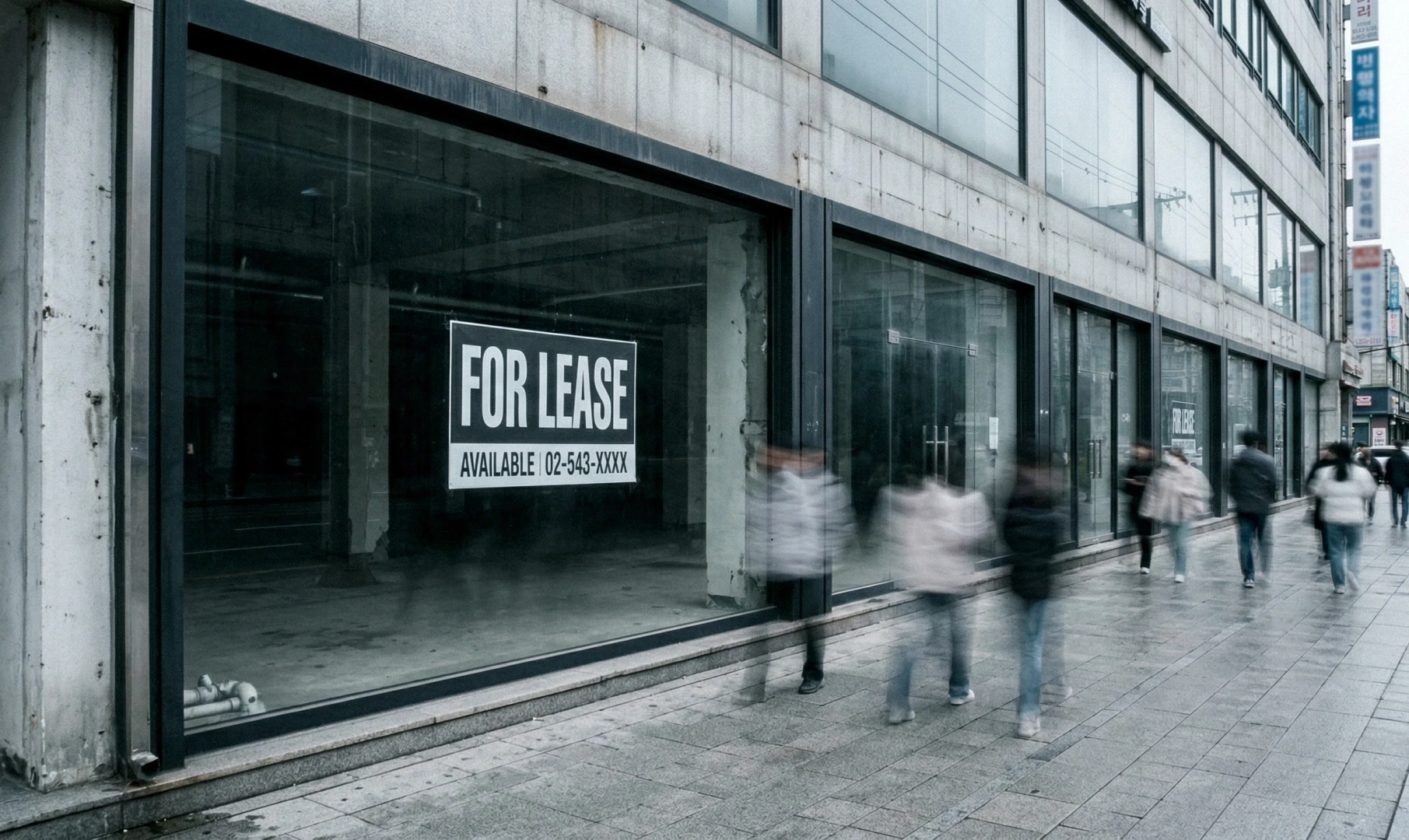
The End of Strata Retail?
Supply is down on paper. Vacancies are up on the ground. The hidden oversupply and structural flaw behind Korea's pre-sale retail crisis.
market
Apr 13, 2026
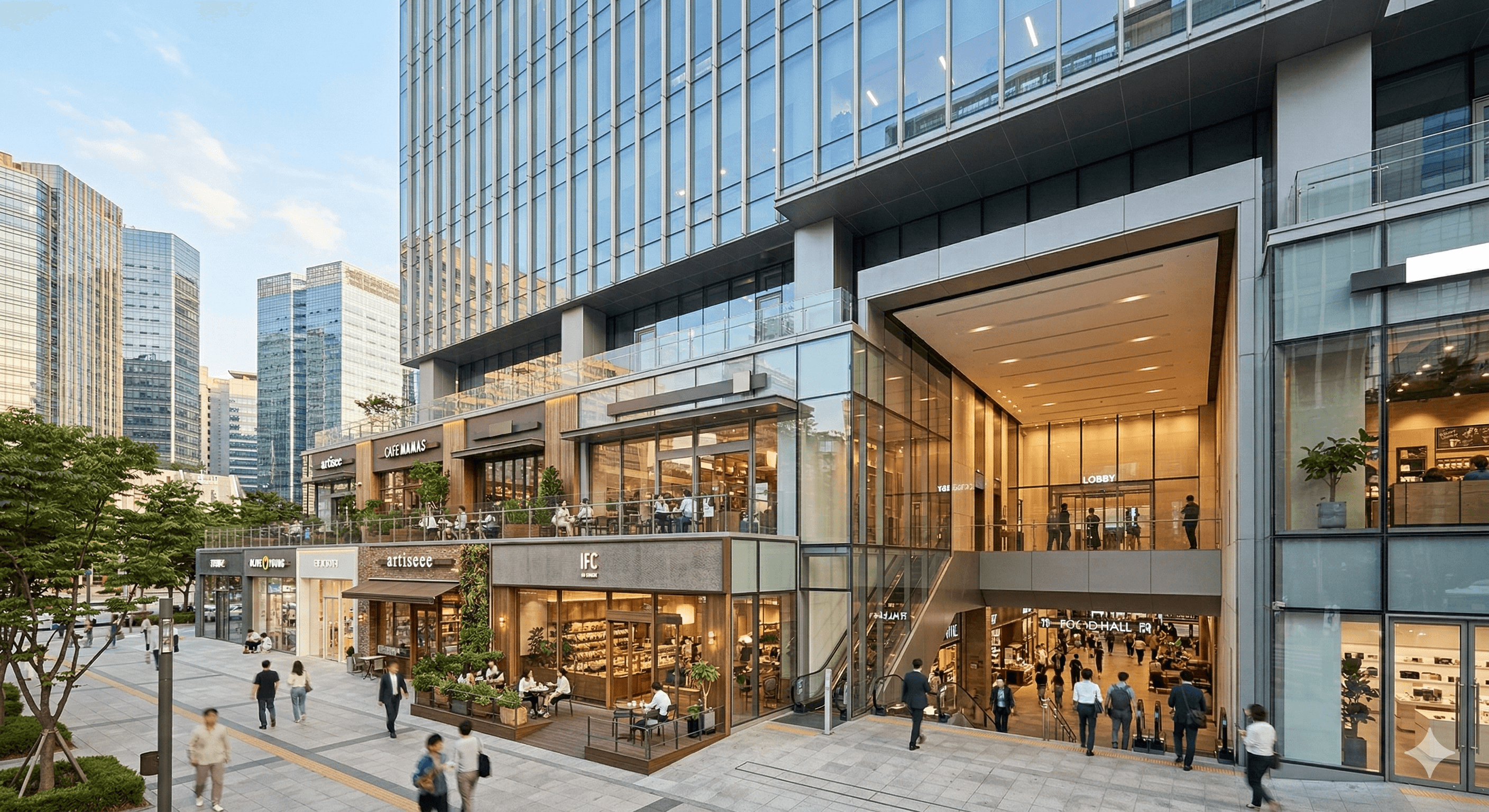
From Supporting Role to Lead: Office Retail
From basement canteen to asset value driver — fifteen years of structural change in Seoul's office building retail, from Centre One to Olive Young N Seongsu.

market
Apr 13, 2026
Why Gut Instinct Kills Your Flagship Store
Thirty-one retail real estate practitioners rank what actually determines flagship store performance.

market
Apr 13, 2026
Know Anyone Good to Set Me Up With?
How leasing decisions are actually made in Seoul's most competitive retail districts — and why the broker in the middle determines the outcome.

market
Apr 13, 2026
New Era, New Areas
Korean brands are going global. The ones that make it understand one thing first: overseas leasing is a credit game, not a rent game.

market
Apr 13, 2026
It's Not That They're Not Spending
Why foreign visitor spending data is replacing card transactions as the next frontier in retail intelligence.

market
Apr 13, 2026
You are so Beauti-cal
Dermatology clinics are now the most sought-after anchor tenants on Gangnam street

market
Apr 13, 2026
Reading a Brand's DNA Before They Do
The retail MD practitioner's job is translation — turning a brand's qualitative language into measurable spatial conditions. What that looks like in practice.