Back
Share
Like

market
Article Highlights
Seoul landlords prioritize financial stability, operational track record, and brand trajectory over headline rent.
Intermediary credibility acts as the first signal of trust when landlords review multiple competing proposals.
A tenant's professionalism at lease termination is the most lasting signal remembered by the market.
In high-demand prime districts such as Seongsu, Hannam, and Dosan, the encounter between a landlord and a brand transcends a mere space-rental transaction. It has evolved into a process akin to a "blind date," where both parties meticulously vet each other’s values and long-term visions.
Landlords are no longer simply hunting for the highest bidder. Instead, they are conducting rigorous due diligence on a brand’s financial stability and operational sustainability, evaluating how these factors will influence the building’s long-term asset value and eventual exit strategy (disposition).
Ultimately, a successful retail lease is built on a foundation of trust—established through first impressions, professional conduct, and a clear accountability structure. When a landlord’s asset management strategy aligns perfectly with a brand’s mid-to-long-term vision, the result is a landmark space that captures the public's attention. In this article, we explore the landlord-tenant relationship from the owner’s perspective and analyze exactly how it mirrors the dynamics of a high-stakes blind date.
Let’s start with the basic conditions.
As previously discussed, the rental rate serves merely as a baseline. For a landlord, the core criterion for judgment is the brand’s ability to operate the space stably and sustainably over the long term. Even if a lease is fixed for five years, its impact is far from temporary. To a landlord, this is a strategic decision that dictates the building’s identity, market value, and future exit strategy. Consequently, landlords have no choice but to be meticulously selective, evaluating the partnership from multiple strategic angles.
Quantitative Metrics | Revenue Scale, Financial Stability, and Operational Longevity |
Qualitative Factors | District & Asset Comprehension, Communication Protocol, and Customer Profile |
Asset Perspective | Contribution to Terminal Value (Exit Price) |
Portfolio Perspective | Strategic Alignment within the Owner’s Broad Asset Holdings |
The Matchmaker
Just as the success of a blind date often hinges on the reputation of the matchmaker, the initial channel through which a landlord and a brand first connect is paramount in the retail market. If an unreliable person acts as the matchmaker, doubt precedes expectation; similarly, who introduces the brand serves as the primary benchmark for its initial credibility.
During the preliminary review stage, landlords instinctively evaluate the following:
The Origin of Contact: Whether the brand reached out to the landlord directly.
Agency Reputation: Which specific agency is representing and introducing the brand.
Track Record: Whether the brand is arriving through a proven and vetted transaction channel.
An agency with extensive transaction experience or a history of successful deals in a specific district acts as a "Letter of Guarantee" for the landlord. Just as a trusted matchmaker elevates the quality of a pairing, a capable agency allows a landlord to bypass redundant verification processes and move straight to negotiations.
The influence of an agency is absolute when they have a history of managing post-contract issues—from store construction to intricate operational matters—alongside the landlord. Once this level of trust is established, landlords often proactively share vacancy information or seek advice, asking, "Are there any high-quality tenants available lately?"
Ultimately, for a brand, the most efficient strategy to secure competitive space in prime districts is not just searching for listings, but selecting an agency that can provide unshakeable credit in the eyes of the landlord.
Please show your profile.
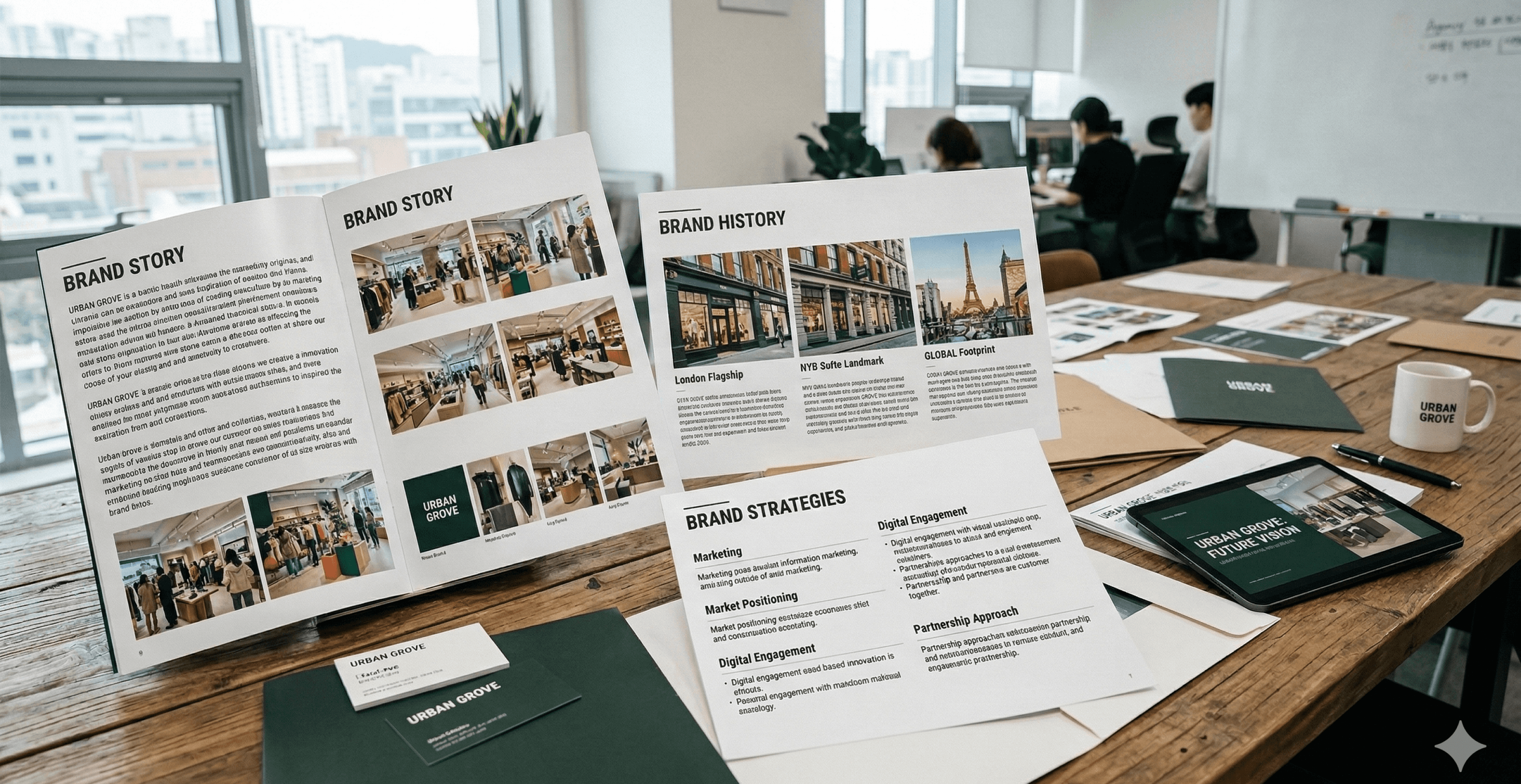
Just as one checks the image of the other party through Instagram pictures, landlords also gauge brands through their materials. (Source: AI-generated image)
Once a trusted matchmaker—a top-tier agency—is secured, the next hurdle is building a brand persona that captures the landlord’s interest at first sight. Just as a profile picture often dictates initial attraction in a blind date, landlords make lightning-fast decisions based on the brand materials presented to them.
When reviewing a brand’s "profile," landlords focus intensely on the following three pillars:
Visual Presence & Aesthetics: They scrutinize photography of currently operating stores to grasp the brand's unique "mood" and spatial identity.
Global Reference & Pedigree: Landlords gauge a brand’s prestige by looking at its global flagship stores or successful tenancies within international landmarks.
Tangible Performance Metrics: They validate business viability through concrete data, such as records from previous pop-up stores or specific revenue figures.
The conviction that "this brand belongs in our building" is usually formed during this preliminary stage. Just as one puts effort into self-PR to appear attractive on a date, the retail market requires a perfect harmony of sensibility and statistics. Visual appeal alone lacks business persuasion, while dry numbers fail to inspire a vision of how the brand will transform the physical space.
In practice, some landlords go as far as requesting audited financial statements, 3-to-5-year business plans, or even inviting competing brands to a face-to-face pitch or presentation. Ultimately, to leave a powerful and positive first impression, a brand must pair a visually compelling identity with objective, numerical evidence that grounds its creative vision in reality.
Beyond Brand Appeal
In the eyes of a landlord, the most critical question when reviewing a brand is: "Who is ultimately responsible for this operation?" This stage mirrors the process of a blind date where one looks beyond surface-level charm to verify a partner’s background and reliability. To a landlord, the distinction between a franchise and a corporate-owned (direct-to-market) model is paramount—akin to assessing the "pedigree" or "household stability" of a potential spouse. As the owner and manager of the asset, the landlord seeks a partner who will operate without friction throughout the entire lease term.
In this context, landlords conduct a deep dive into the following operational structures:
Nature of the Operating System: They verify whether the site is a Directly Managed Store (DMS) or a corporate-owned entity, rather than a third-party franchise.
Transparency of Decision-Making: They identify the ultimate decision-makers and the legal entity that will sign and assume liability under the lease.
Direct Communication Channels: They prioritize whether immediate and direct communication is possible with the brand’s headquarters or dedicated real estate team when issues arise.
The preference for direct-entry brands or corporate-owned stores is not merely about scale; it is about operational stability and clear accountability. When complications occur—such as tenant complaints, construction hurdles, or fluctuations in revenue—a clear line of responsibility significantly reduces the landlord’s management risk. In practice, some landlords go as far as requesting the contact information of the dedicated operations manager during negotiations to gauge the brand’s commitment to communication. This is an instinctive self-defense mechanism for landlords who wish to maintain a clean, reliable contractual relationship, using a brand’s structural clarity as a predictor of future behavior. Ultimately, the key to closing a deal in a prime district is not just flaunting brand recognition, but proving that the brand possesses a systemic support structure and a responsible communication framework that gives the landlord peace of mind.
The Decisive Factor: The Power of "Professional Attitude"
In a blind date, a sincere attitude often leaves a more lasting impression than flashy conversation. Basic manners—punctuality, responsiveness, and reliability—reveal one’s true nature. The same logic applies to the retail leasing market. Landlords judge a brand’s authenticity through the following lenses:
Communication Velocity: The speed and efficiency of feedback and follow-ups.
Operational Precision: Accuracy in coordinating meetings and administrative schedules.
Sincerity of Intent: Discerning whether a brand is merely "window shopping" or has a firm commitment to occupy the space.
Such professionalism assures a landlord that they can maintain a frictionless partnership throughout the lease term. Often, a single, sincere Letter of Intent (LOI) carries more weight than a hundred verbal explanations.
A critical reality to note is that the landlord communities in prime districts like Dosan, Seongsu, and Hannam are more tightly knit than one might imagine. Private group chats exist where owners share real-time updates on which brands are scouting which buildings. Therefore, rather than firing off LOIs to multiple sites just to test the market waters, it is far better for a brand’s reputation to deliver a proposal that reflects deliberate consideration and decisive intent.
Furthermore, post-tour feedback is crucial. Avoiding contact or "ghosting" after a site visit is as detrimental in retail as it is in dating. Providing honest, respectful feedback—such as, "The location is impressive, but specific elements do not align with our current strategy"—leaves a sophisticated impression.
In fact, such professional feedback can act as a catalyst for value-add investments. In one case in Hannam-dong, an owner took the objective concerns raised by brands during tours and made the bold decision to raise ceiling heights, install floor-to-ceiling windows, and convert a parking lot into a landscaped garden. By preemptively upgrading the building’s base specifications instead of simply slashing rent, the landlord successfully attracted a premium tenant and maximized the asset’s long-term value—a prime example of a win-win strategic partnership.
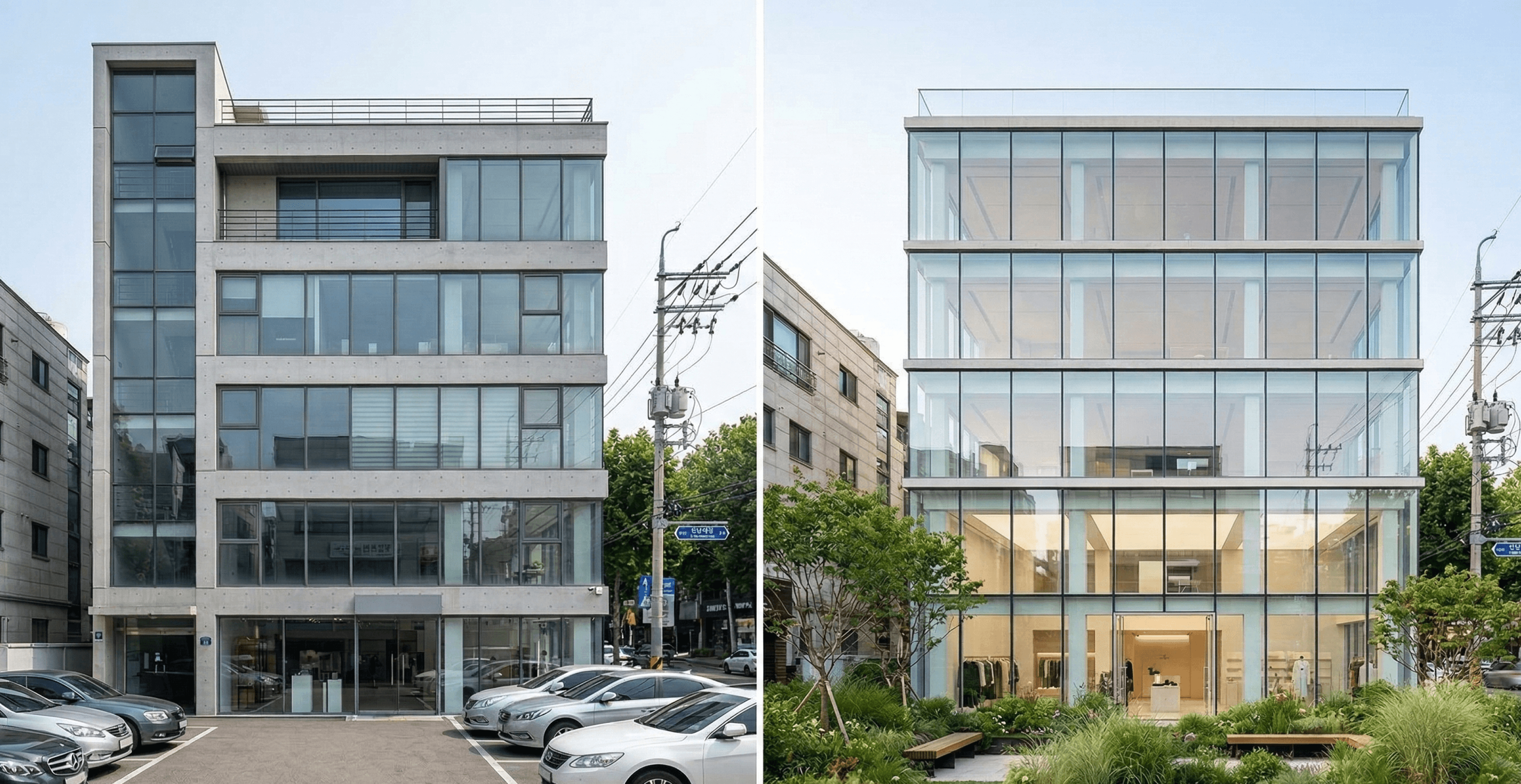
Strategic Asset Enhancement: Landlords Upgrading Facilities to Attract Premium Tenants and Maximize Asset Value (Source: AI-generated images)
Beyond Rent: Defining "Our Tomorrow"
As the relationship progresses, conversations shift toward realistic and granular details. This phase mirrors a couple discussing their shared values and future plans on a date; it is the stage where the landlord and the brand evaluate how essential they are to one another beyond mere figures.
At this juncture, both parties pose critical strategic questions:
The Landlord’s Question: "Will this brand’s presence tangibly appreciate the long-term value of my asset?"
The Brand’s Question: "Is this space the optimal choice to project our mid-to-long-term strategy and identity?"
These questions lead to the negotiation of highly specific terms: lease duration, rent escalation rates, contingency plans for business pivots, and restoration clauses. When this strategic alignment succeeds, the impact is explosive. A prime example occurred in November 2025 near Dosan Park, where a building was sold at a record-breaking price immediately after securing a premium tenant. The landlord realized a capital gain nearly double the original purchase price in just 16 months. This serves as the clearest evidence of how a single blue-chip tenant can redefine an asset’s worth.
Every clause in a lease agreement directly influences a landlord’s asset management plan and a brand’s future trajectory. Rather than insisting on one-sided gains, a robust retail contract is finalized when both parties respect each other’s interests and find a strategic middle ground that the market will ultimately notice.
Retail as a Strategic Matchmaking Between People
In the glittering arenas of Seongsu, Hannam, and Dosan, the encounter between a landlord and a brand may appear to be driven by the cold logic of capital. However, a closer look reveals a high-stakes "blind date," where both parties fiercely evaluate whether their "strategic chemistry" aligns. Vetting a matchmaker’s credibility (agency), perfecting a profile picture (brand deck), and scrutinizing backgrounds and manners are all instinctive maneuvers to secure a high-quality partnership.
There are moments when one might be tempted to cut ties if terms do not align. Yet, in this tightly-knit retail market, an unprofessional exit quickly escalates into a reputation risk that ripples across the entire district. The landlord community is more interconnected than most imagine. The era where paying "admission" in the form of rent guaranteed entry is over. Today, brands must act as strategic partners who enhance mutual asset value—requiring a level of sophistication where a "Good Goodbye" at the return of the keys is as celebrated as the initial signing of the lease.
Initial encounters are always challenging and delicate. However, when both parties momentarily set aside their calculators and respect each other’s long-term visions, they finally achieve a retail agreement that becomes the envy of the entire market.
© Copyright 2026. All rights reserved.
This publication has been prepared in good faith, based on CBRE Korea's current anecdotal and evidence based views of the commercial real estate market. Although CBRE Korea believes its views reflect market conditions on the date of this presentation, they are subject to significant uncertainties and contingencies, many of which are beyond CBRE Korea’s control. In addition, many of CBRE Korea’s views are opinion and/or projections based on CBRE Korea’s subjective analyses of current market circumstances. Other firms may have different opinions, projections and analyses, and actual market conditions in the future may cause CBRE Korea’s current views to later be incorrect. CBRE Korea has no obligation to update its views herein if its opinions, projections, analyses or market circumstances later change.
Nothing in this publication should be construed as an indicator of the future performance of CBRE’s securities or of the performance of any other company’s securities. You should not purchase or sell securities-of CBRE or any other company-based on the views herein. CBRE Korea disclaims all liability for securities purchased or sold based on information herein, and by viewing this publication, you waive all claims against CBRE Korea as well as against CBRE Korea’s affiliates, officers, directors, employees, agents, advisers and representatives arising out of the accuracy, completeness, adequacy or your use of the information herein. No part of this publication may be reproduced, quoted, distributed, or disclosed to any third party without the prior written consent of CBRE Korea.
market
Aug 24, 2026
Retail Ownership: The Era of Brands Becoming Landlords
From Leasing to Buying: The Ultimate Playbook for Space Strategy

market
Aug 18, 2026
K-Brand US Market Entry Strategy
NY vs. LA Commercial District Comparison and Retail Success Formula

market
Aug 3, 2026
The Busan Commercial District Transformed by Foreigners
The shifting consumer landscape shaped by a wave of 3.64 million people

market
May 26, 2026
2026 Retail Market Insights from the Head of CBRE Korea Retail
From Seoul to the globe, the variable determining the success or failure of retail spaces is shifting from 'where' to 'how'.

market
Apr 13, 2026
It starts with data and is completed in the field
The Essence of the 2026 Retail Market, According to CBRE's Head of Research
market
Apr 13, 2026
The End of Strata Retail?
Supply is down on paper. Vacancies are up on the ground. The hidden oversupply and structural flaw behind Korea's pre-sale retail crisis.

market
Apr 13, 2026
Two Years Locked in Permits
The real cost of overseas retail expansion without a project management framework — why permit risk has to be resolved before the lease is signed.
market
Apr 13, 2026
From Supporting Role to Lead: Office Retail
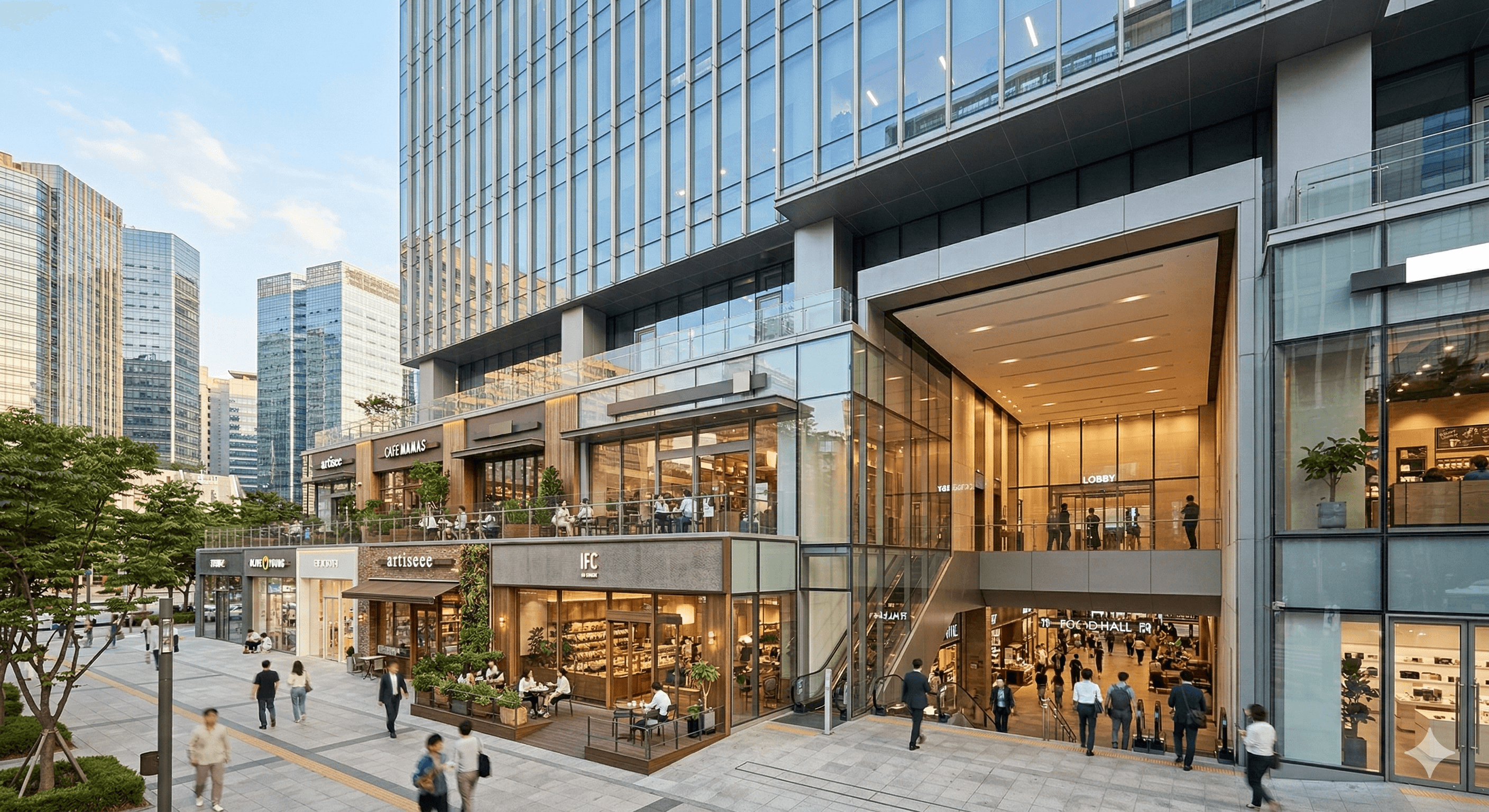
From basement canteen to asset value driver — fifteen years of structural change in Seoul's office building retail, from Centre One to Olive Young N Seongsu.

market
Apr 13, 2026
Why Gut Instinct Kills Your Flagship Store
Thirty-one retail real estate practitioners rank what actually determines flagship store performance.

market
Apr 13, 2026
New Era, New Areas
Korean brands are going global. The ones that make it understand one thing first: overseas leasing is a credit game, not a rent game.

market
Apr 13, 2026
It's Not That They're Not Spending
Why foreign visitor spending data is replacing card transactions as the next frontier in retail intelligence.

market
Apr 13, 2026
You are so Beauti-cal
Dermatology clinics are now the most sought-after anchor tenants on Gangnam street

market
Apr 13, 2026
Reading a Brand's DNA Before They Do
The retail MD practitioner's job is translation — turning a brand's qualitative language into measurable spatial conditions. What that looks like in practice.