Daytime construction
Shorter construction periods and lower costs. This is especially valuable as labor and construction costs rise.
Back
Copy
Share
Like

market
Three Cases of Resolving Office Retail Vacancies
Three Cases of Resolving Office Retail Vacancies
Article Highlights
Long-term vacancies can only be resolved by first understanding why brands rejected the space, rather than just lowering the rent.
Simply changing terms other than rent can sufficiently reduce the burden on tenants.
In the case of new office buildings, the first anchor tenant sets the stage for filling the remaining vacancies.
This is a question often heard when sharing case studies of resolving long-term vacancies. It is true. If the rent, maintenance fees, and initial investment burden do not align with business viability, it is difficult for a brand to decide on moving in.
However, looking at the field, there are vacancies that cannot be explained by terms alone. Even under similar conditions, some spots get filled quickly, while others stay empty for years. Because the first floor and basement of an office building are the face of the property, even if the upper-floor offices are fully occupied, the entire building looks deserted if the retail space next to the lobby has been boarded up behind construction partitions for months.

It is difficult to fully explain how a long-vacant space was filled merely by the final lease terms. One must also look at how a brand capable of operating in that space was found, what obstacles stood in the way of occupancy, and on what grounds the landlord adjusted the conditions. Lease terms can be given from the start, but they are also forged in the process of gauging market reaction and persuading both sides.
In this first installment of the Office Retail Series, we examine where long-term vacancies originate and how they were actually resolved. For landlords who own office buildings, we cover why vacancies persist and the methods used to solve them; for brands considering occupying lower-level spaces, we highlight the points at which landlords adjust terms. We will also look at three case studies where long-vacant spots were successfully occupied.
Brands decline to move in for various reasons. The burden of rent and maintenance fees may be too heavy compared to projected sales, or even if the location is desirable, signage exposure or HVAC and exhaust facilities might fall short of store opening standards. Sometimes a large floor area needs to be filled, but there is a mismatch between the tenant type desired by the landlord and the types actually capable of operating there. Therefore, one must go a step deeper beyond results such as receiving few inquiries or negotiations falling through. Which brands were approached, at what stage did evaluations halt, and what was the decisive obstacle? Unless these questions are answered, the cycle of proposing the same terms to similar brands and receiving the same answers will repeat.
When seeking solutions, one must distinguish between constraints that are hard to change and terms that can be adjusted. Factors such as location, floor level, and load-bearing columns are difficult to alter in the short term. For such spaces, it is realistic to find tenant types and brands that can operate despite those characteristics. On the other hand, rental structures, security deposits, rent-free periods, and target business sectors can be adjusted through discussions with the landlord. After reviewing whether facades, HVAC/exhaust systems, and floor-level differences can be improved, along with the associated costs and approval procedures, the scope of modifications is determined.

It is not necessary to renovate every space or lower the rent. The choice varies depending on what issue is hindering the contract. From the landlord's perspective, it comes down to weighing the required burden against the anticipated benefits.
There are also issues that can be resolved outside of numbers. Construction hours are a prime example. Office buildings typically restrict retail construction to nights and weekends. Allowing daytime work for tasks that produce minimal noise and dust can reduce the tenant's construction timeline and cost burden. Since relevant documentation, such as construction commencement notices, is submitted to the PM before work begins, the landlord can also check the schedule in advance. This is particularly effective in an environment where labor and material costs have risen significantly.

The same goes for signage. While many buildings allow only pylon signs for exterior maintenance reasons, brands want signs that are visible from across the street. If aesthetics are a concern, setting exterior signage guidelines covering font, size, and color, and allowing installation within those parameters, can be an effective approach. Some newly constructed office buildings in Yeouido operate in this manner.

Shorter construction periods and lower costs. This is especially valuable as labor and construction costs rise.
Install signage that is visible from across the street.
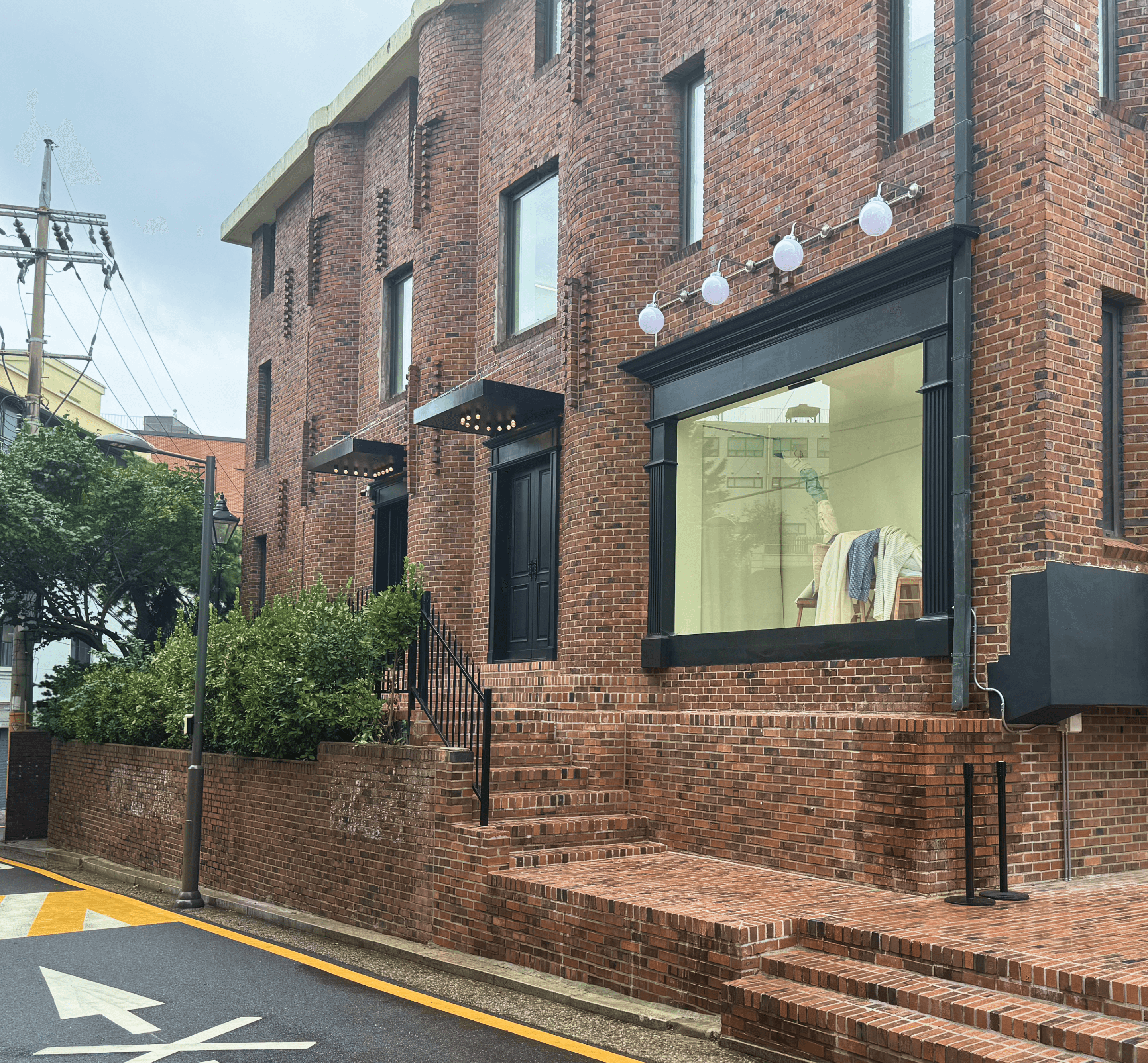
In an office building between Gyeongbokgung and Anguk Station, there were units that had been empty for years, as well as a vacant site left behind by a relocated gas station. Pondering how to utilize this space, the landlord proposed the idea of a major renovation.
What was noteworthy was how it would look after the major renovation. Going through construction would secure a new facade and allow utilization of the office building's parking facilities. When a terrace, a facade, and parking conditions rare for the vicinity were added to the location between Gyeongbokgung and Anguk Station, the criteria by which brands viewed this space could change. Alongside the major renovation plans, discussions with various brands began.
Attracting tenants was not easy. The mere fact that it had been vacant for a long time amplified brands' concerns, and prior to construction, it was hard to feel confident about the finished space and the operating environment. Several rejections followed, but the search continued for a brand capable of appreciating what the space would look like after its transformation.

The tenant that ultimately moved in was an Italian restaurant. This brand viewed the neighborhood's charm, the terrace, and the newly planned facade positively. With the landlord also actively engaging in negotiations over terms, the deal was struck, and the restaurant subsequently received great responses from both visitors and the landlord.
The starting point was the landlord's determination to improve the property. However, because it is difficult to be confident in a transformed space prior to construction, one must persistently search for brands that recognize its potential. For landlords considering space improvements, it is better to advance construction plans and tenant acquisition hand-in-hand rather than handling them separately.
A newly built office building along a back street in Euljiro struggled to attract tenants due to a narrow facade and high rent. The landlord was determined to resolve the vacancy and participated directly in brand meetings to discuss the potential for tenancy. Even so, deals did not materialize easily.
A brand moving into a new building as its first tenant finds it difficult to forecast foot traffic and sales after opening. If other units remain unoccupied, they must also bear the operational burden of being the pioneer. This is why brands hesitate to become the first tenant in a new office building. Through consultations with multiple brands, the strategy and terms needed to land that first lease had to be redesigned.

The direction shifted toward securing a brand with a proven track record as an anchor. Terms were offered to a Korean barbecue specialty restaurant taking up roughly 100 pyeong (approx. 330 sqm) in the basement, featuring zero fixed rent and charging only a percentage of sales. It was a choice to draw in the tenant by lowering the initial anchor's burden. Following the anchor lease, interest from other brands surged, and subsequent contracts followed, successfully resolving the vacancy in the retail arcade. Rather than applying uniform terms to all tenants, the strategic decision to concentrate favorable terms on a brand that could trigger follow-on leasing paid off.
In this case, the landlord was the key player who observed the market directly and made the necessary decisions. In new office buildings, leasing is often sluggish until the first anchor is established; once an anchor settles in, subsequent leases tend to follow quickly. Landlords with new buildings might do well to consider what they can offer the first anchor, rather than insisting on uniform conditions for every unit.
A space of approximately 300 pyeong (approx. 990 sqm) near Gangnam Station required balancing area, facilities, and the landlord's industry preferences all at once. The landlord did not want athletic or fitness facilities, and accommodating F&B required first solving facility challenges such as HVAC and exhaust systems. Another constraint was that foot traffic around the specific property was low, despite being within the Gangnam Station area. For such spaces, it is difficult to pinpoint the ideal business sector from the start. Through discussions with prospective tenants across diverse industries, we systematically checked the extent of tenant types the landlord could accommodate and how facility and locational limitations influenced actual opening decisions.
During this process, a large-scale pharmacy emerged as a candidate. While low foot traffic was a disadvantage for some sectors, its proximity to residential areas was actually a positive factor for a large pharmacy. Depending on the industry and business model, the evaluation of the exact same space can differ entirely. Once a specific tenant was identified, the landlord also actively pursued follow-up negotiations, and a lease agreement with the large pharmacy was executed.

The larger the space, the narrower the selection of business sectors may seem; however, there are sectors for which a space's weaknesses turn out to be strengths. Furthermore, when a tangible possibility of a deal emerges, the landlord's decision-making accelerates as well.
In the three cases, the points of alignment were distinct. Between Gyeongbokgung and Anguk Station, we found an Italian restaurant that recognized the post-renovation value; in Euljiro, favorable terms were concentrated on a proven anchor. In Gangnam, despite constraints in facilities and tenant types, we connected with a large pharmacy that viewed the specific location favorably. Even with the same space and the same conditions, the evaluation shifts depending on which brand is encountered.
Terms are important. Just as important is judging which terms to propose to whom, and guiding both parties toward reaching an agreement on those terms. The terms contained in a final lease agreement reflect the process of examining the space, sourcing brands, and conducting sustained negotiations. To understand how a vacancy was resolved, one must examine that journey as well.
In these three cases, the landlords' approaches to participation differed. There was a landlord who initiated the idea of a major renovation, another who personally joined brand meetings, and one who accelerated negotiations once a concrete candidate appeared.
Ultimately, resolving vacancies requires decisions from the landlord. However, few landlords know every solution from the beginning and act accordingly. When rejections and aborted negotiations repeat, it is easy to assume that adjusting terms is futile or to conclude that it is better to simply wait.
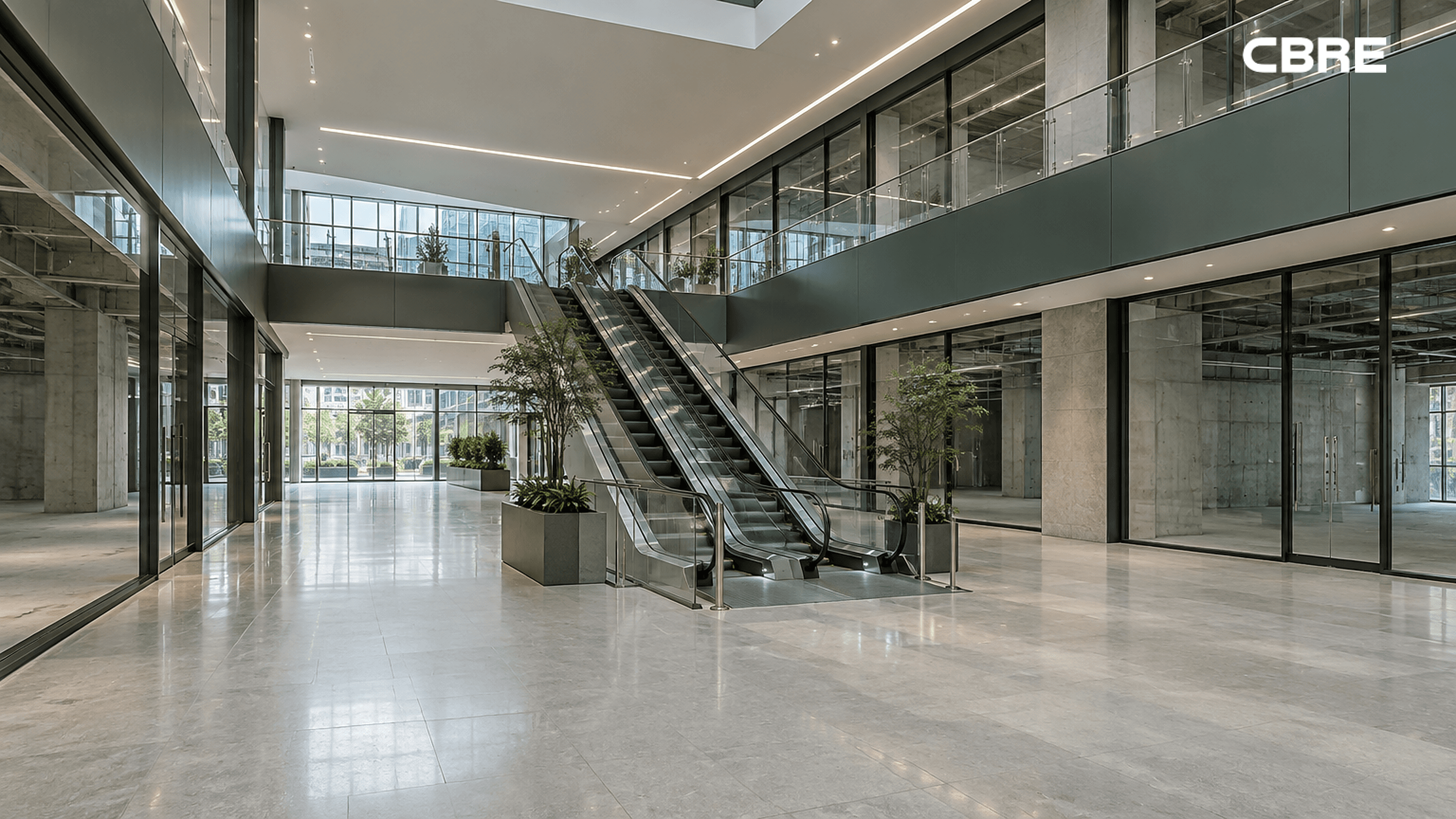
What is needed at such times is to convey specific market and brand feedback, explain why previous approaches fell short, and suggest alternatives to try next. This means demonstrating the effects of space improvements, connecting different business categories, and showing how adjusting conditions to a certain degree changes the likelihood of signing a lease. Helping landlords reassess and take action when their motivation wanes is also part of retail advisory.
While landlords know their own assets well, it is difficult for them to possess both the network required to reach diverse brands and the specialized personnel and experience from resolving similar issues. There are also limits to continually pouring time and resources into a single vacancy while juggling other asset management duties. Therefore, the longer a vacancy persists, the more essential the role becomes to diagnose the space based on brand networks and experience with similar assets, reflect the reasons behind stalled reviews into the next discussion, and mediate contentious points regarding facilities and contractual terms.
None of the three cases began with knowing the solution from day one. The potential for a deal began to emerge in the course of finding a brand that could evaluate the post-renovation space, identifying the conditions necessary for an anchor, and meeting a large pharmacy that viewed the location favorably.
That potential mostly arises on the ground. Reasons for rejection guide the direction of the next proposal, and interest shown by a tenant serves as a clue indicating the strengths of the space and terms that need adjustment. However, converting that potential into a contract requires seeing the landlord's decision-making, facility evaluations, and term negotiations through to the very end.
A space that went unutilized for a landlord can become a new business opportunity for the right tenant. If you are a landlord with a long-vacant space, it is worth examining the root reasons for the vacancy before merely lowering conditions. If you are a brand considering opening a location on the lower floors of an office building, it is better to examine whether the space can be transformed and how far the landlord is willing to adjust, rather than focusing solely on the fact that it has been empty for a long time.

In the next installment, we address what happens after filling a vacancy. We look into how much value can be elevated through merchandising (MD) and operation alone in buildings where structural alterations are difficult, how brands coveted by asset managers perceive office lower levels, and what tangible changes a single anchor truly brings to a building.
This is a question often heard when sharing case studies of resolving long-term vacancies. It is true. If the rent, maintenance fees, and initial investment burden do not align with business viability, it is difficult for a brand to decide on moving in.
However, looking at the field, there are vacancies that cannot be explained by terms alone. Even under similar conditions, some spots get filled quickly, while others stay empty for years. Because the first floor and basement of an office building are the face of the property, even if the upper-floor offices are fully occupied, the entire building looks deserted if the retail space next to the lobby has been boarded up behind construction partitions for months.
It is difficult to fully explain how a long-vacant space was filled merely by the final lease terms. One must also look at how a brand capable of operating in that space was found, what obstacles stood in the way of occupancy, and on what grounds the landlord adjusted the conditions. Lease terms can be given from the start, but they are also forged in the process of gauging market reaction and persuading both sides.
In this first installment of the Office Retail Series, we examine where long-term vacancies originate and how they were actually resolved. For landlords who own office buildings, we cover why vacancies persist and the methods used to solve them; for brands considering occupying lower-level spaces, we highlight the points at which landlords adjust terms. We will also look at three case studies where long-vacant spots were successfully occupied.
Brands decline to move in for various reasons. The burden of rent and maintenance fees may be too heavy compared to projected sales, or even if the location is desirable, signage exposure or HVAC and exhaust facilities might fall short of store opening standards. Sometimes a large floor area needs to be filled, but there is a mismatch between the tenant type desired by the landlord and the types actually capable of operating there. Therefore, one must go a step deeper beyond results such as receiving few inquiries or negotiations falling through. Which brands were approached, at what stage did evaluations halt, and what was the decisive obstacle? Unless these questions are answered, the cycle of proposing the same terms to similar brands and receiving the same answers will repeat.
When seeking solutions, one must distinguish between constraints that are hard to change and terms that can be adjusted. Factors such as location, floor level, and load-bearing columns are difficult to alter in the short term. For such spaces, it is realistic to find tenant types and brands that can operate despite those characteristics. On the other hand, rental structures, security deposits, rent-free periods, and target business sectors can be adjusted through discussions with the landlord. After reviewing whether facades, HVAC/exhaust systems, and floor-level differences can be improved, along with the associated costs and approval procedures, the scope of modifications is determined.
It is not necessary to renovate every space or lower the rent. The choice varies depending on what issue is hindering the contract. From the landlord's perspective, it comes down to weighing the required burden against the anticipated benefits.
There are also issues that can be resolved outside of numbers. Construction hours are a prime example. Office buildings typically restrict retail construction to nights and weekends. Allowing daytime work for tasks that produce minimal noise and dust can reduce the tenant's construction timeline and cost burden. Since relevant documentation, such as construction commencement notices, is submitted to the PM before work begins, the landlord can also check the schedule in advance. This is particularly effective in an environment where labor and material costs have risen significantly.
The same goes for signage. While many buildings allow only pylon signs for exterior maintenance reasons, brands want signs that are visible from across the street. If aesthetics are a concern, setting exterior signage guidelines covering font, size, and color, and allowing installation within those parameters, can be an effective approach. Some newly constructed office buildings in Yeouido operate in this manner.
Shorter construction periods and lower costs. This is especially valuable as labor and construction costs rise.
Install signage that is visible from across the street.
In an office building between Gyeongbokgung and Anguk Station, there were units that had been empty for years, as well as a vacant site left behind by a relocated gas station. Pondering how to utilize this space, the landlord proposed the idea of a major renovation.
What was noteworthy was how it would look after the major renovation. Going through construction would secure a new facade and allow utilization of the office building's parking facilities. When a terrace, a facade, and parking conditions rare for the vicinity were added to the location between Gyeongbokgung and Anguk Station, the criteria by which brands viewed this space could change. Alongside the major renovation plans, discussions with various brands began.
Attracting tenants was not easy. The mere fact that it had been vacant for a long time amplified brands' concerns, and prior to construction, it was hard to feel confident about the finished space and the operating environment. Several rejections followed, but the search continued for a brand capable of appreciating what the space would look like after its transformation.
The tenant that ultimately moved in was an Italian restaurant. This brand viewed the neighborhood's charm, the terrace, and the newly planned facade positively. With the landlord also actively engaging in negotiations over terms, the deal was struck, and the restaurant subsequently received great responses from both visitors and the landlord.
The starting point was the landlord's determination to improve the property. However, because it is difficult to be confident in a transformed space prior to construction, one must persistently search for brands that recognize its potential. For landlords considering space improvements, it is better to advance construction plans and tenant acquisition hand-in-hand rather than handling them separately.
A newly built office building along a back street in Euljiro struggled to attract tenants due to a narrow facade and high rent. The landlord was determined to resolve the vacancy and participated directly in brand meetings to discuss the potential for tenancy. Even so, deals did not materialize easily.
A brand moving into a new building as its first tenant finds it difficult to forecast foot traffic and sales after opening. If other units remain unoccupied, they must also bear the operational burden of being the pioneer. This is why brands hesitate to become the first tenant in a new office building. Through consultations with multiple brands, the strategy and terms needed to land that first lease had to be redesigned.
The direction shifted toward securing a brand with a proven track record as an anchor. Terms were offered to a Korean barbecue specialty restaurant taking up roughly 100 pyeong (approx. 330 sqm) in the basement, featuring zero fixed rent and charging only a percentage of sales. It was a choice to draw in the tenant by lowering the initial anchor's burden. Following the anchor lease, interest from other brands surged, and subsequent contracts followed, successfully resolving the vacancy in the retail arcade. Rather than applying uniform terms to all tenants, the strategic decision to concentrate favorable terms on a brand that could trigger follow-on leasing paid off.
In this case, the landlord was the key player who observed the market directly and made the necessary decisions. In new office buildings, leasing is often sluggish until the first anchor is established; once an anchor settles in, subsequent leases tend to follow quickly. Landlords with new buildings might do well to consider what they can offer the first anchor, rather than insisting on uniform conditions for every unit.
A space of approximately 300 pyeong (approx. 990 sqm) near Gangnam Station required balancing area, facilities, and the landlord's industry preferences all at once. The landlord did not want athletic or fitness facilities, and accommodating F&B required first solving facility challenges such as HVAC and exhaust systems. Another constraint was that foot traffic around the specific property was low, despite being within the Gangnam Station area. For such spaces, it is difficult to pinpoint the ideal business sector from the start. Through discussions with prospective tenants across diverse industries, we systematically checked the extent of tenant types the landlord could accommodate and how facility and locational limitations influenced actual opening decisions.
During this process, a large-scale pharmacy emerged as a candidate. While low foot traffic was a disadvantage for some sectors, its proximity to residential areas was actually a positive factor for a large pharmacy. Depending on the industry and business model, the evaluation of the exact same space can differ entirely. Once a specific tenant was identified, the landlord also actively pursued follow-up negotiations, and a lease agreement with the large pharmacy was executed.
The larger the space, the narrower the selection of business sectors may seem; however, there are sectors for which a space's weaknesses turn out to be strengths. Furthermore, when a tangible possibility of a deal emerges, the landlord's decision-making accelerates as well.
In the three cases, the points of alignment were distinct. Between Gyeongbokgung and Anguk Station, we found an Italian restaurant that recognized the post-renovation value; in Euljiro, favorable terms were concentrated on a proven anchor. In Gangnam, despite constraints in facilities and tenant types, we connected with a large pharmacy that viewed the specific location favorably. Even with the same space and the same conditions, the evaluation shifts depending on which brand is encountered.
Terms are important. Just as important is judging which terms to propose to whom, and guiding both parties toward reaching an agreement on those terms. The terms contained in a final lease agreement reflect the process of examining the space, sourcing brands, and conducting sustained negotiations. To understand how a vacancy was resolved, one must examine that journey as well.
In these three cases, the landlords' approaches to participation differed. There was a landlord who initiated the idea of a major renovation, another who personally joined brand meetings, and one who accelerated negotiations once a concrete candidate appeared.
Ultimately, resolving vacancies requires decisions from the landlord. However, few landlords know every solution from the beginning and act accordingly. When rejections and aborted negotiations repeat, it is easy to assume that adjusting terms is futile or to conclude that it is better to simply wait.
What is needed at such times is to convey specific market and brand feedback, explain why previous approaches fell short, and suggest alternatives to try next. This means demonstrating the effects of space improvements, connecting different business categories, and showing how adjusting conditions to a certain degree changes the likelihood of signing a lease. Helping landlords reassess and take action when their motivation wanes is also part of retail advisory.
While landlords know their own assets well, it is difficult for them to possess both the network required to reach diverse brands and the specialized personnel and experience from resolving similar issues. There are also limits to continually pouring time and resources into a single vacancy while juggling other asset management duties. Therefore, the longer a vacancy persists, the more essential the role becomes to diagnose the space based on brand networks and experience with similar assets, reflect the reasons behind stalled reviews into the next discussion, and mediate contentious points regarding facilities and contractual terms.
None of the three cases began with knowing the solution from day one. The potential for a deal began to emerge in the course of finding a brand that could evaluate the post-renovation space, identifying the conditions necessary for an anchor, and meeting a large pharmacy that viewed the location favorably.
That potential mostly arises on the ground. Reasons for rejection guide the direction of the next proposal, and interest shown by a tenant serves as a clue indicating the strengths of the space and terms that need adjustment. However, converting that potential into a contract requires seeing the landlord's decision-making, facility evaluations, and term negotiations through to the very end.
A space that went unutilized for a landlord can become a new business opportunity for the right tenant. If you are a landlord with a long-vacant space, it is worth examining the root reasons for the vacancy before merely lowering conditions. If you are a brand considering opening a location on the lower floors of an office building, it is better to examine whether the space can be transformed and how far the landlord is willing to adjust, rather than focusing solely on the fact that it has been empty for a long time.
In the next installment, we address what happens after filling a vacancy. We look into how much value can be elevated through merchandising (MD) and operation alone in buildings where structural alterations are difficult, how brands coveted by asset managers perceive office lower levels, and what tangible changes a single anchor truly brings to a building.

market
Oct 12, 2026
The Next 10 Years of Redevelopment Commercial Real Estate

market
Oct 6, 2026
The era of landlords who only collected rent is over
market
Aug 24, 2026
From Leasing to Buying: The Ultimate Playbook for Space Strategy

market
Aug 18, 2026
NY vs. LA Commercial District Comparison and Retail Success Formula

market
Aug 3, 2026
The shifting consumer landscape shaped by a wave of 3.64 million people

market
May 26, 2026
From Seoul to the globe, the variable determining the success or failure of retail spaces is shifting from 'where' to 'how'.

market
Apr 13, 2026
The Essence of the 2026 Retail Market, According to CBRE's Head of Research
market
Apr 13, 2026
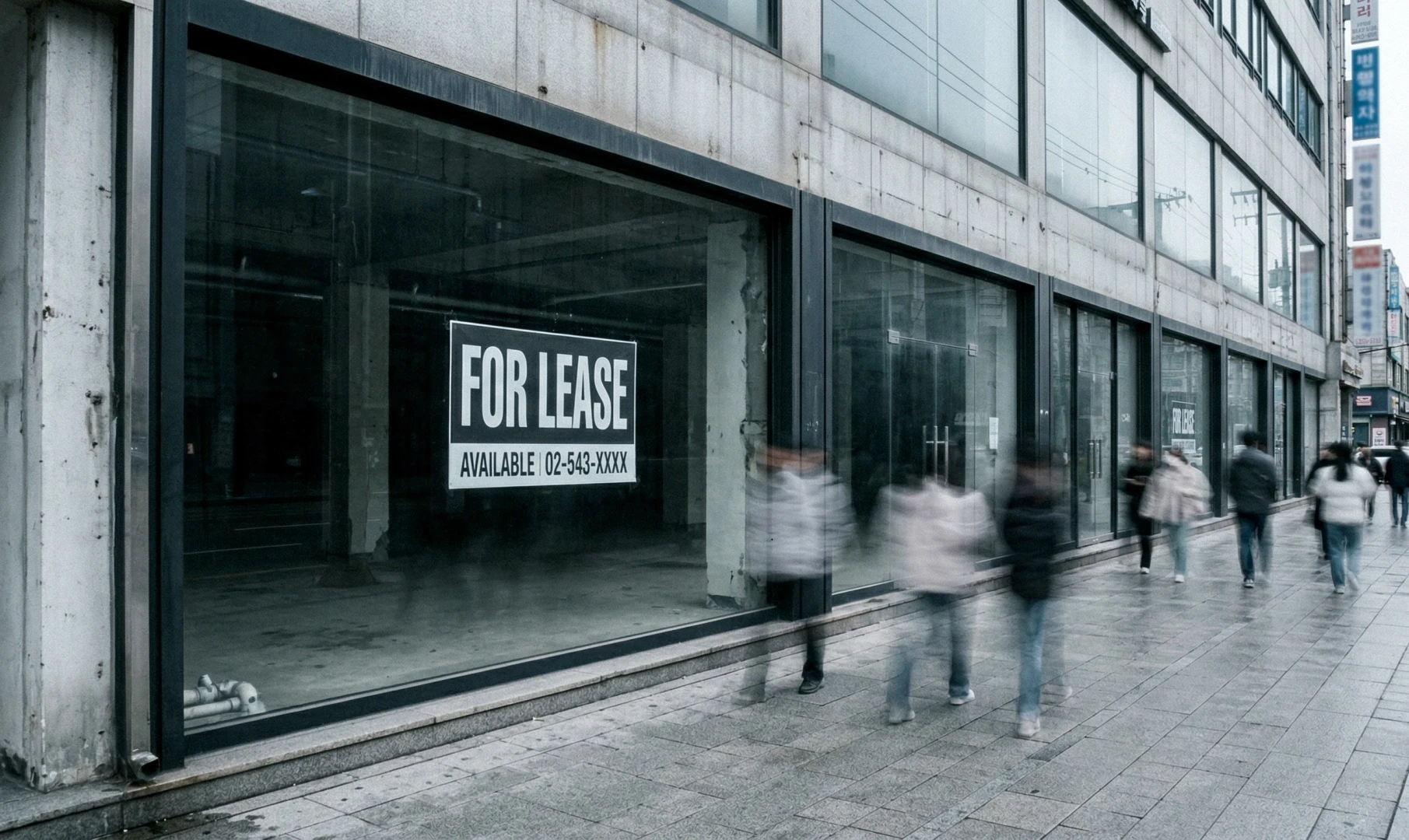
Supply is down on paper. Vacancies are up on the ground. The hidden oversupply and structural flaw behind Korea's pre-sale retail crisis.

market
Apr 13, 2026
The real cost of overseas retail expansion without a project management framework — why permit risk has to be resolved before the lease is signed.
market
Apr 13, 2026
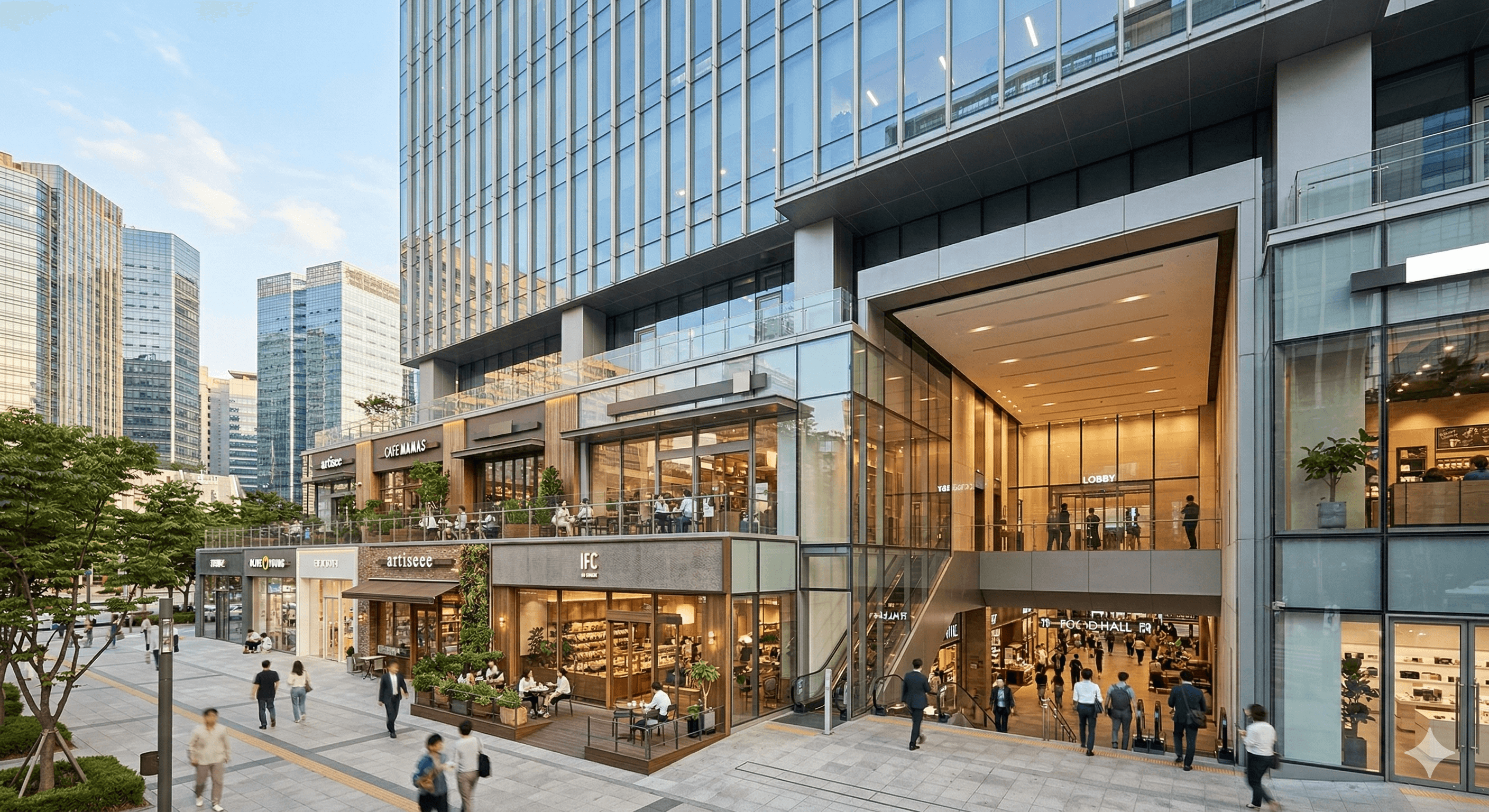
From basement canteen to asset value driver — fifteen years of structural change in Seoul's office building retail, from Centre One to Olive Young N Seongsu.

market
Apr 13, 2026
Thirty-one retail real estate practitioners rank what actually determines flagship store performance.

market
Apr 13, 2026
How leasing decisions are actually made in Seoul's most competitive retail districts — and why the broker in the middle determines the outcome.

market
Apr 13, 2026
Korean brands are going global. The ones that make it understand one thing first: overseas leasing is a credit game, not a rent game.

market
Apr 13, 2026
Why foreign visitor spending data is replacing card transactions as the next frontier in retail intelligence.

market
Apr 13, 2026
Dermatology clinics are now the most sought-after anchor tenants on Gangnam street
market
Apr 13, 2026
The retail MD practitioner's job is translation — turning a brand's qualitative language into measurable spatial conditions. What that looks like in practice.
Fresh Retail Insights, Every Week
Retail Dynamics & Edge Insights | by CBRE Korea Retail
New retail insights, updated every week.
Fresh Retail Insights, Every Week
Retail Dynamics & Edge Insights
| by CBRE Korea Retail
New retail insights, updated every week.
Fresh Retail Insights, Every Week
Retail Dynamics & Edge Insights | by CBRE Korea Retail
New retail insights, updated every week.