Back
Share
Like

market
Article Highlights
Daiso-to-luxury journeys prove Seoul's consumer polarization is an observable behavior at scale.
Airport-to-city transaction tracking by nationality and age is the next retail consulting edge.
New Balance Kids' success shows brands intersecting parental taste and child practicality win the floor.
The official numbers say the market is contracting. The field says otherwise. Major retail assets — department stores, malls, mixed-use centers — are posting strong sales. The "malling" pattern, where consumers resolve everything in a single visit, is more entrenched than ever. Korea's weather-driven indoor culture only amplifies this: when it rains or freezes, people don't browse streets, they go to Starfield. The crisis narrative doesn't hold up on the ground. What's actually happening is a market that's becoming more demanding — not one that's disappearing. Stella Jung, Senior Manager at CBRE Korea Consulting, explains what the data is actually showing.
Retail Consulting That Designs Purpose
Q. What is the consulting team’s practical role and position in the real estate development process?
Every project starts before the land is bought. Our job is to define what a site should become — before the developer, the contractor, or the leasing team gets involved. We set the concept, model the revenue, and build the foundation that everything downstream depends on. Consulting is the first point of contact with market intelligence, and the first to see what's coming.
Q. There's a lot of talk about retail being in crisis. What does it actually feel like on the ground?
People outside the industry are convinced that commercial real estate is failing. That's not what we see. Sales at major retail assets are strong — department stores, large malls, mixed-use centers. The "malling" trend, where consumers do everything in one place, is accelerating. Korea's climate reinforces this: people prefer to stay inside a single building and complete their entire routine. Starfield is the clearest proof of that.
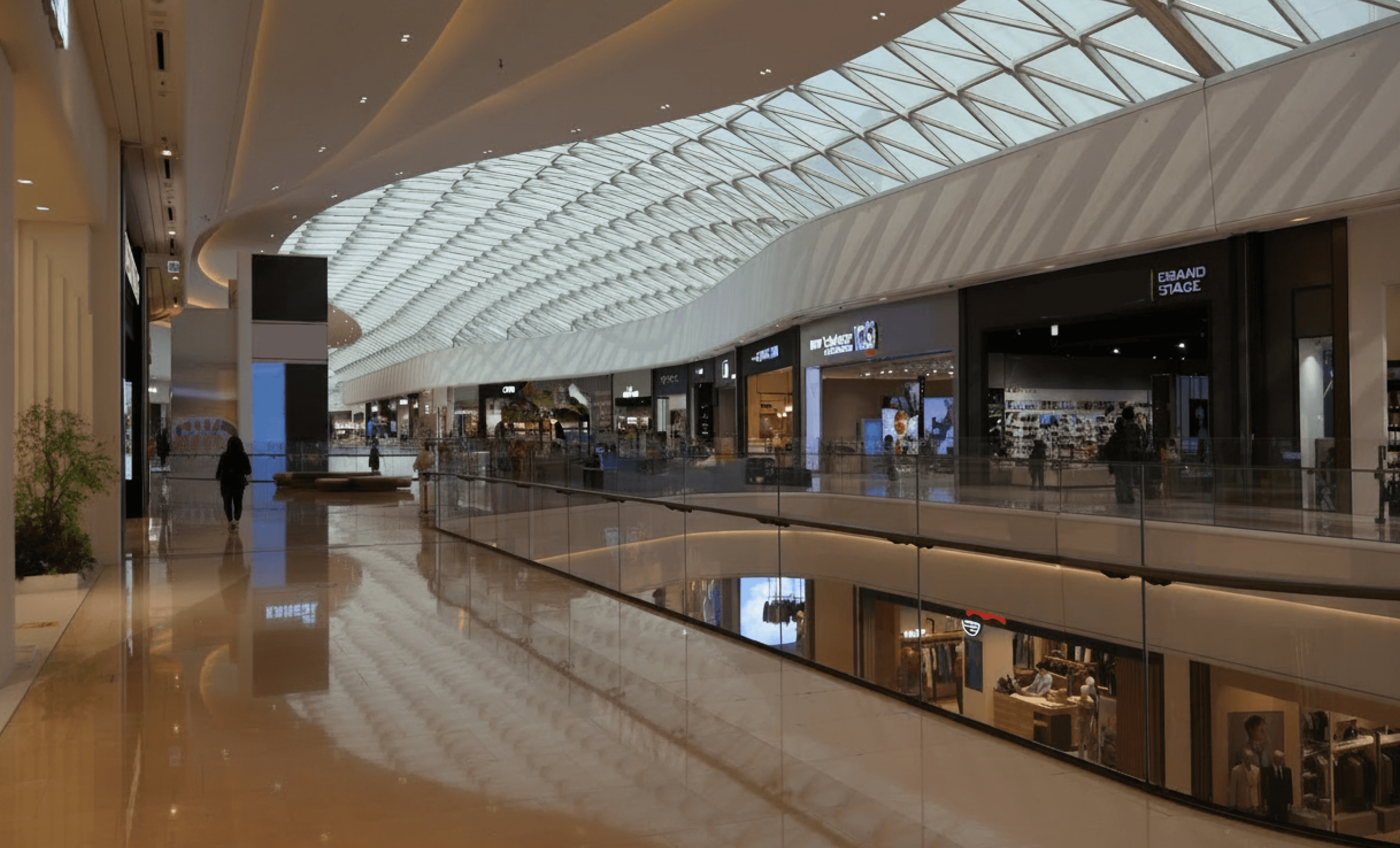
A quiet view inside a retail mall in the morning. After lunchtime, it becomes crowded even on weekdays with nearby residents and visitors.
It’s Not That People Aren’t Spending—It’s Just Polarized
Q. What did your 600-person mall survey actually show?
The pattern was clear. A large share of visitors made Daiso and Olive Young a routine stop — on the way in or on the way out, every visit. That tells you something important: people don't come to malls just for the headline tenants. They come to solve real, everyday needs. What the same data also showed is that luxury is performing strongly alongside those value anchors. Daiso and Hermès in the same visit. That's not a contradiction — that's polarization, playing out at scale, in real time.
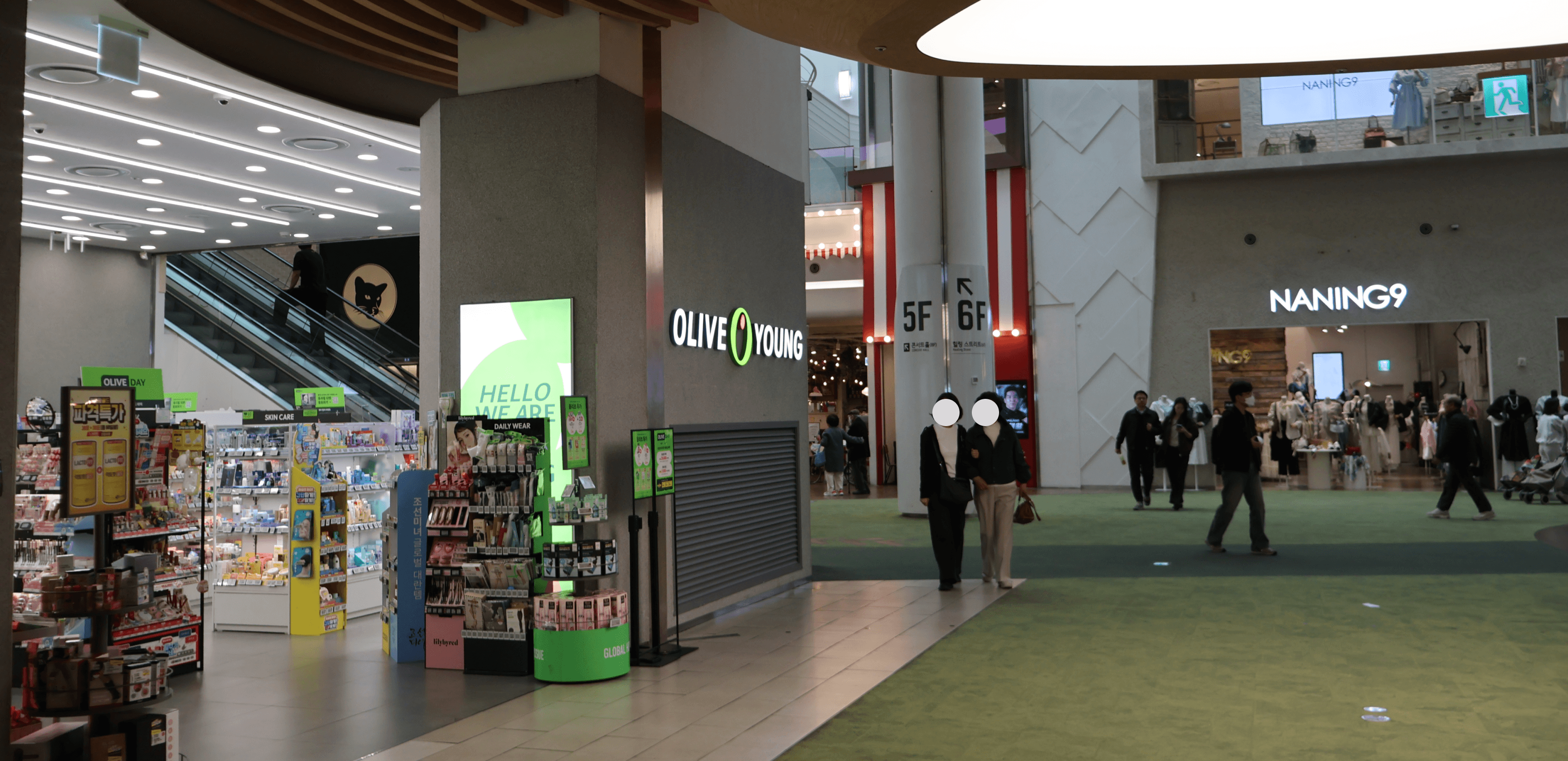
An Olive Young located inside Lotte World Mall.
Q. How significant is the status of Daiso and Olive Young within retail malls?
This survey confirmed what the market suspected but couldn't fully prove. Daiso draws across every demographic — locals, tourists, high-income, budget-conscious — in both residential catchments and tourist corridors like Dongdaemun. That's rare. Most anchors are demographic-specific. Daiso is not.
The cosmetics section is the most striking development. Foreign visitors are buying Daiso beauty products by the box. JUNGSAEMMOOL, a premium Korean beauty brand, recently launched a Daiso-exclusive line — cushion foundations that used to sell for 40,000 won, now available for around 5,000 won — and the shelves sell out before most customers can reach them. At that point, Daiso isn't just a value retailer. It's a serious competitor to Olive Young.

Daiso cosmetics shelves are filled with a wide variety of cosmetic products.
Q. What does polarization look like inside a mall right now?
The middle is gone. Aspirational mid-tier luxury — the brands that feel expensive but aren't quite premium — is struggling. True high-end is outperforming. Consumers are investing in jewelry and five-figure bags on the same trip they're buying Daiso nail supplies. They're not being irrational. They're being precise. They know exactly where the value is, and they open their wallets there and nowhere else.
Q. Why does department store revenue keep outpacing inflation?
VIP spending is carrying the numbers. The top tier of department store customers represents a disproportionate share of total revenue, and that cohort hasn't pulled back. Beyond that, emerging designer labels and curated multibrand platforms like Musinsa Premium have found a home in department stores and are absorbing the trend-sensitive middle market. The 6% growth figure isn't just price increases — it reflects a genuine upgrade in tenant quality and food hall investment.
Try It Here, Buy It Cheaper Online: The Wall That Killed Toy Retail
Q. Which category on the kids' floor is underperforming, and why?
Toy stores and kids' cafés look like obvious winners on paper. The data disagrees. Parents bring their children to the kids' floor more than any other floor — but the actual purchase doesn't happen there. It happens on their phone, on the way home, after a quick search for the lowest price. Parents know this better than anyone: kids' attention spans are short. A toy that's exciting in the store is forgotten by dinner. The place that actually delivers satisfaction on a ten-thousand-won budget is Daiso — not a specialty toy retailer. That's the wall toy stores can't get over.
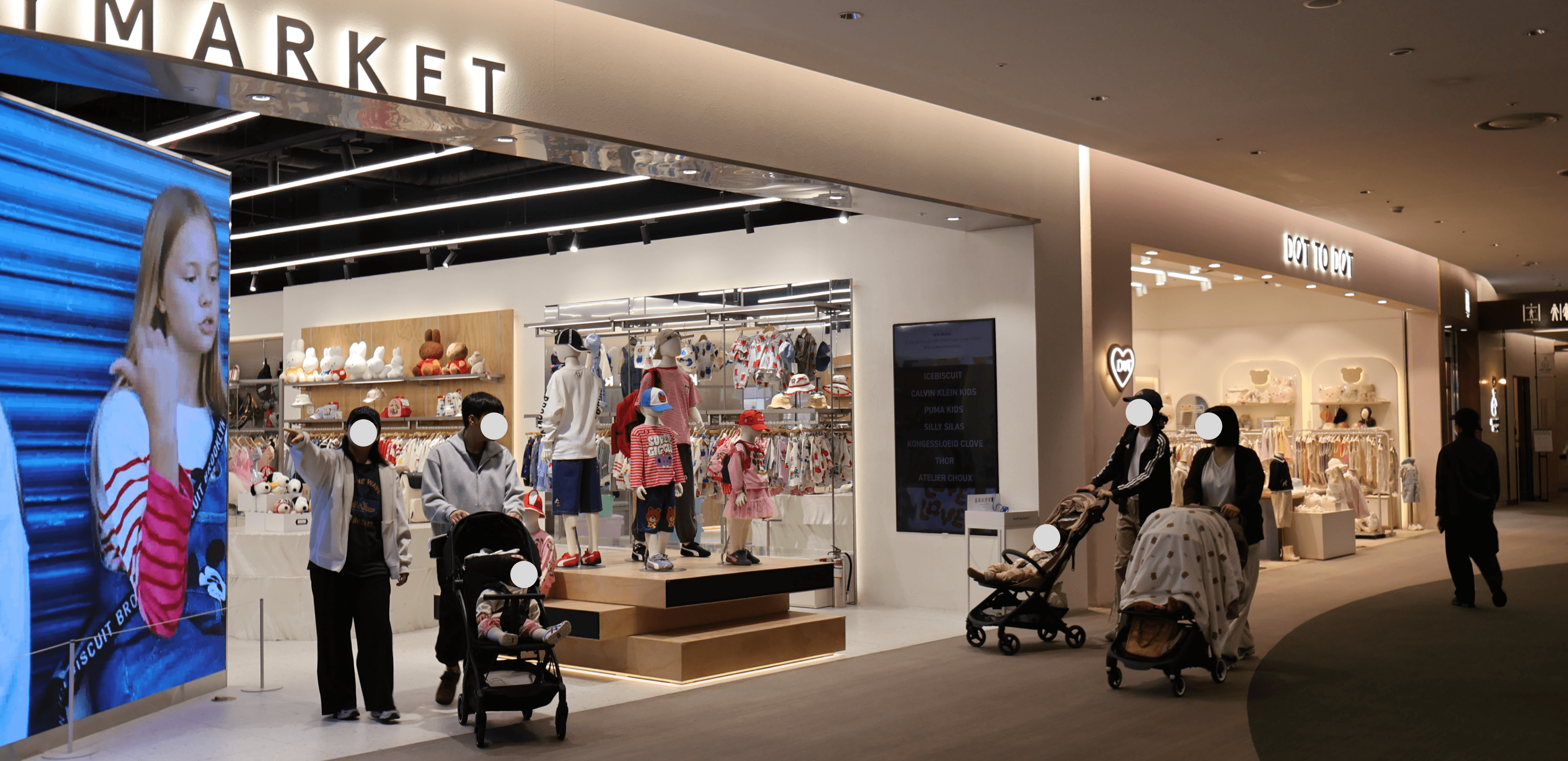
Q. What's the top-performing brand on the kids' floor, and why does it win?
New Balance Kids. It's the number one sales performer on the kids' floor in recent mall surveys. The reason is straightforward: it sells to both the parent and the child simultaneously. Parents trust the brand. The shoes are designed for kids' movement and comfort, so the functional argument is real. And parents and children can buy matching styles. That shared-value structure — where the brand makes sense for both generations at once — is what wins in that space. Toy brands sell to one side of the equation. New Balance sells to both.
The Data Generation Shift
Q. What are the real limits of card transaction data at this point?
Card data is now publicly available. Government agencies publish it. It's a commodity, not an edge. More fundamentally, it only tells you what was purchased — not where people went first, what they walked past, or why they didn't buy. You can't reconstruct a customer's decision from a transaction record. You can't explain causality.
The gap is most visible when you try to analyze foreign visitor spending. International tourists pay heavily in cash and through mobile platforms like PayPal, Alipay, and WeChat Pay. None of that shows up in domestic card data. So the brands and landlords who have actual point-of-sale contact with tourists are sitting on better data than any public dataset. That's a significant reversal.
Q. What's replacing card data as the primary analytical tool?
Telecom mobility data. We can now match, minute by minute, which stores a customer entered, how long they stayed, and whether a transaction message was sent to their phone. That gives us a complete picture of how someone moved through a mall — from the parking garage to the exit — and what they actually did along the way. Going forward, the consulting firms that can interpret that behavioral data accurately are the ones that will win mandates.
Q. Where's the biggest untapped data opportunity in retail right now?
Foreign visitor data, by a significant margin. In districts like Myeongdong and Seongsu, international visitors represent an overwhelming share of actual spending — but they're nearly invisible in conventional data. Tracking their path from airport arrival, by nationality and age cohort, by category and by brand, is the next competitive battleground in retail consulting. CBRE is building that capability now, through close collaboration between the consulting and retail teams. It will underpin every major site and tenant decision we make.
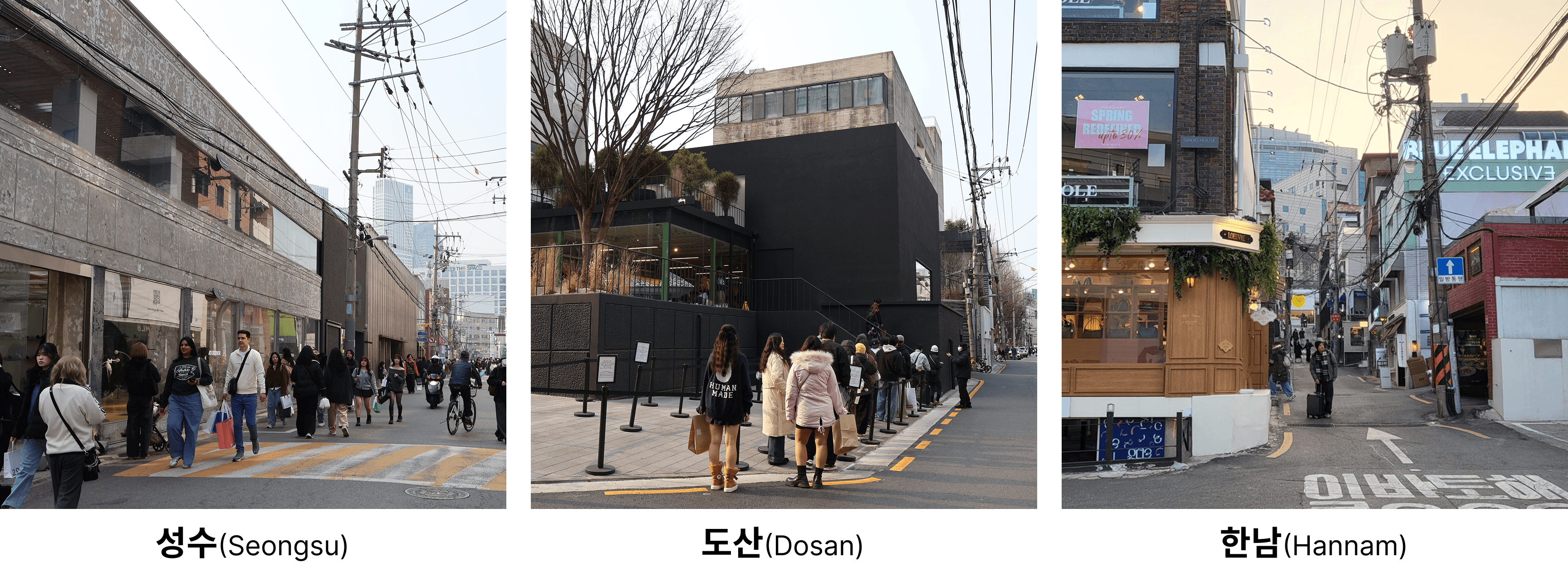
The future market’s success or failure will depend on how three-dimensionally fragmented consumer movement paths are interpreted and how precisely data blind spots, such as foreign consumer patterns, are turned into assets. In a changing environment, thorough preparation is needed so that new market opportunities can be preempted through strategic insights aligned with global standards.
© Copyright 2026. All rights reserved.
This publication has been prepared in good faith, based on CBRE Korea's current anecdotal and evidence based views of the commercial real estate market. Although CBRE Korea believes its views reflect market conditions on the date of this presentation, they are subject to significant uncertainties and contingencies, many of which are beyond CBRE Korea’s control. In addition, many of CBRE Korea’s views are opinion and/or projections based on CBRE Korea’s subjective analyses of current market circumstances. Other firms may have different opinions, projections and analyses, and actual market conditions in the future may cause CBRE Korea’s current views to later be incorrect. CBRE Korea has no obligation to update its views herein if its opinions, projections, analyses or market circumstances later change.
Nothing in this publication should be construed as an indicator of the future performance of CBRE’s securities or of the performance of any other company’s securities. You should not purchase or sell securities-of CBRE or any other company-based on the views herein. CBRE Korea disclaims all liability for securities purchased or sold based on information herein, and by viewing this publication, you waive all claims against CBRE Korea as well as against CBRE Korea’s affiliates, officers, directors, employees, agents, advisers and representatives arising out of the accuracy, completeness, adequacy or your use of the information herein. No part of this publication may be reproduced, quoted, distributed, or disclosed to any third party without the prior written consent of CBRE Korea.

market
Oct 6, 2026
The laws that move the high street, which even small-scale building investors should know
The era of landlords who only collected rent is over
market
Aug 24, 2026
Retail Ownership: The Era of Brands Becoming Landlords
From Leasing to Buying: The Ultimate Playbook for Space Strategy
market
Aug 18, 2026
K-Brand US Market Entry Strategy
NY vs. LA Commercial District Comparison and Retail Success Formula

market
Aug 3, 2026
The Busan Commercial District Transformed by Foreigners
The shifting consumer landscape shaped by a wave of 3.64 million people

market
May 26, 2026
2026 Retail Market Insights from the Head of CBRE Korea Retail
From Seoul to the globe, the variable determining the success or failure of retail spaces is shifting from 'where' to 'how'.

market
Apr 13, 2026
It starts with data and is completed in the field
The Essence of the 2026 Retail Market, According to CBRE's Head of Research

market
Apr 13, 2026
The End of Strata Retail?
Supply is down on paper. Vacancies are up on the ground. The hidden oversupply and structural flaw behind Korea's pre-sale retail crisis.
market
Apr 13, 2026
Two Years Locked in Permits
The real cost of overseas retail expansion without a project management framework — why permit risk has to be resolved before the lease is signed.
market
Apr 13, 2026
From Supporting Role to Lead: Office Retail
From basement canteen to asset value driver — fifteen years of structural change in Seoul's office building retail, from Centre One to Olive Young N Seongsu.

market
Apr 13, 2026
Why Gut Instinct Kills Your Flagship Store
Thirty-one retail real estate practitioners rank what actually determines flagship store performance.

market
Apr 13, 2026
Know Anyone Good to Set Me Up With?
How leasing decisions are actually made in Seoul's most competitive retail districts — and why the broker in the middle determines the outcome.
market
Apr 13, 2026
New Era, New Areas
Korean brands are going global. The ones that make it understand one thing first: overseas leasing is a credit game, not a rent game.

market
Apr 13, 2026
You are so Beauti-cal
Dermatology clinics are now the most sought-after anchor tenants on Gangnam street

market
Apr 13, 2026
Reading a Brand's DNA Before They Do
The retail MD practitioner's job is translation — turning a brand's qualitative language into measurable spatial conditions. What that looks like in practice.