Back
Share
Like

market
Article Highlights
· Ground-floor spaces have transformed from simple office amenities into destination retail, directly driving the asset's overall perception and value.
· With rising construction costs, unlocking a property's latent potential through targeted, non-structural value-add strategies is the most effective approach.
· The key lies in assessing physical limitations, curating the right tenant mix, and executing collaboratively alongside the landlord.
A barbecue restaurant space in Yeouido City Plaza. The incoming tenant took over the previous tenant's kitchen facilities and interior intact, maintaining the exact same barbecue concept. The only change was the brand itself, yet sales surged 2.5 to 3 times compared to before. This revenue growth does not benefit the brand alone. A thriving brand seeks long-term occupancy, substantially mitigating the landlord's vacancy risk, while the increased footfall revitalizes neighboring stores on the floor and the building as a whole. Without altering the physical infrastructure, simply curating the right brand elevated the underlying asset value.
Part 1 of the Office Retail series explored why lower-floor office vacancies persist and how long-vacant spaces were successfully leased. Even units burdened with overlapping challenges in pricing, mechanical infrastructure, and micro-location were ultimately filled once matched with industries the space could realistically sustain. Part 1 (Office Retail | Root Causes and Solutions for Prolonged Vacancy) concluded with the strategic dilemma: "To fill quickly, or to maximize asset value?" Part 2 delves into that second path—value-add strategies that unlock and elevate the value of an existing space.
What is Value-Add: Unlocking Greater Value from Existing Spaces
In commercial real estate, a value-add strategy involves selectively enhancing a property's physical and operational components to maximize rental revenue and capital value. While it often evokes images of large-scale remodeling, value-add for ground-floor office retail largely falls into three stages depending on the scope of intervention.
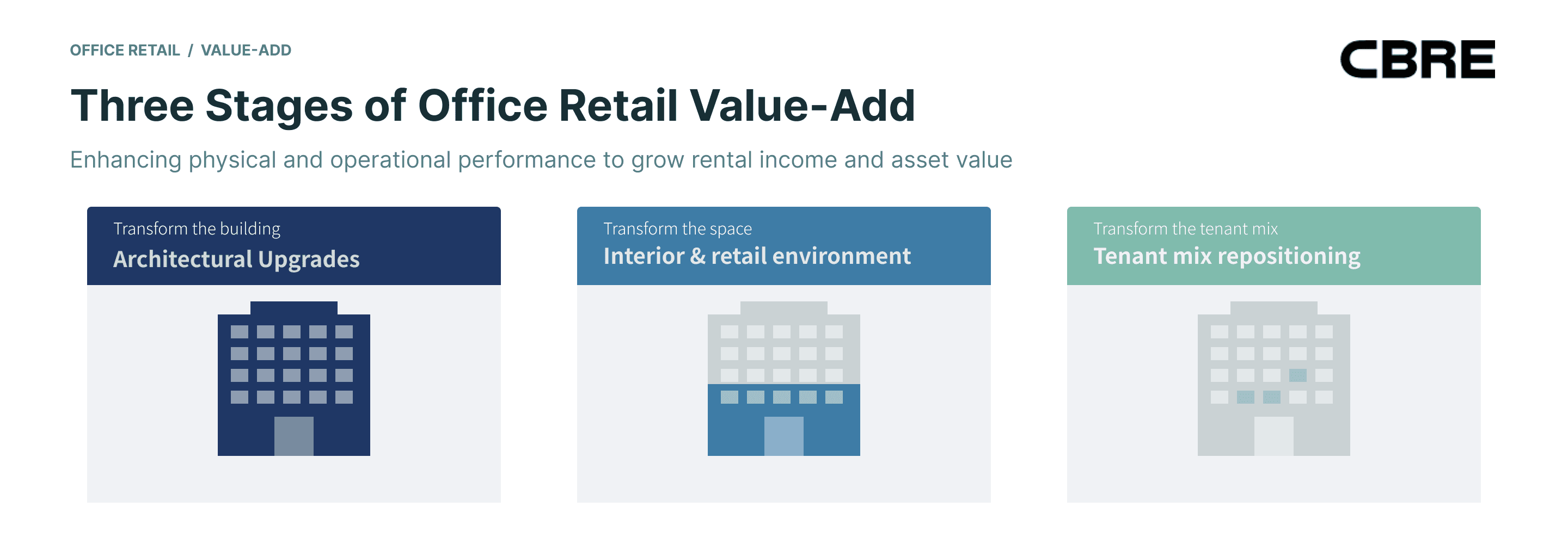
Commercial environments—including foot traffic circulation, store visibility, and the ambiance of common areas—significantly influence how visitors experience the space and how brands evaluate potential entry. While the physical hardware defines the operational parameters of what retail categories can physically fit, the key to maximizing revenue within that framework lies in the software: the MD curation. The success of the barbecue restaurant mentioned earlier was not driven by brand fame alone, but rather by placing an operator that deeply understood both the consumption patterns of Yeouido office workers and the specific nuances of that exact space.
Why Value-Add Is Now Essential for Office Retail
For a long time, ground-floor office retail remained merely an ancillary convenience, catering to tenant employees for lunch and takeaway coffee. While convenient for those working inside, it was never a place people intentionally went out of their way to visit. That is no longer the case. A well-curated ground floor can transform into a destination retail hub that attracts outside visitors who have no affiliation with the building, and both consumers and brands seeking such spaces are growing rapidly. Multiple structural shifts in the office retail environment are converging to accelerate this transition.

Surge in Weekend Foot Traffic and International Visitors
Office retail historically relied strictly on weekday trade, with many stores operating for only half a day on weekends or remaining closed entirely. Today in Gwanghwamun, an increasing number of retailers operate throughout both Saturday and Sunday, and prime office towers increasingly mandate weekend operations as a lease covenant. Driven by a surge in inbound international tourists and a broader shift toward experiential retail, ground floors are transitioning from utilitarian lunch spots into lifestyle and culinary destinations for social gatherings and extended stays. Prime examples include Yeouido IFC Mall, which creates strong synergies with The Hyundai Seoul, and the Gwanghwamun corridor connecting D-Tower, KT West, and Seoul Finance Center (SFC) through to Jonggak Station. Buildings adding English signage or offering halal dining guidance at the information desk have also become common.
Office Workers Consolidating Daily Spending Within the Office Radius
As urban lifestyles increasingly prioritize the proximity of home and workplace alongside work-life balance, high-earning professionals aged 30 to 50 are consolidating their daily routines—from meals to wellness, lifestyle shopping, and corporate gifting—within their immediate office perimeter. Dwell time within office retail is lengthening, and ticket sizes per visit continue to rise.
Trendy Brands Expanding into Office Podiums
Lifestyle and trend-forward brands once confined to high streets and department stores are actively expanding unique F&B concepts, beauty boutiques, and wellness flagships into office lower levels. For these brands, a dense base of high-spending resident employees combined with the pristine, professionally managed environment of a prime office building offers a low-risk, high-return location. Office podiums have emerged as preferred locations that leading brands actively compete to enter.
Ground Floors Defining First Impressions and Leasing Competitiveness
Today, ground-floor retail defines the overall first impression and market standing of an office asset. The design sophistication and tenant quality of the lobby and podium directly influence tenant employee satisfaction as well as the landlord's leverage in attracting top-tier corporate tenants. The lower levels possess the decisive power to either elevate or drag down the capital value of the entire property.
Existing Spaces Struggle to Meet Modern Retail Demands
Most legacy office buildings were never originally engineered to accommodate this heightened level of retail demand. Even if a landlord envisions a high-margin dining venue in a vacated bank branch or stationery space on the ground floor, physical limitations in power loads, water supply, drainage, or exhaust ventilation often force the space to settle for generic coffee chains. Furthermore, compact floor plates make it challenging to orchestrate a diversified mix of dining, cafes, retail, and services that encourages long stays. In haste to fill vacancies, leasing to tenants with overlapping target audiences triggers severe cannibalization rather than capturing new demand. Amid surging labor and material costs, full-scale structural overhauls are rarely commercially viable. This underscores the necessity of a software-driven value-add strategy—one that rigorously assesses physical baseline constraints and unlocks maximum asset potential within feasible operational boundaries.
Value-Add Case Studies by Intervention Scale
Transforming the Building Itself: Major Renovation and Reconstruction
The former gas station site building in northern CBD, introduced in Part 1, underwent a comprehensive major renovation. Prior to construction, many brands hesitated or outright declined to enter. However, leases were successfully executed with target tenants who highly valued the modernized facade, terrace spaces, and upgraded parking facilities delivered through the renovation.
Even with newly constructed properties, whether retail specifications align with tenant requirements demands independent verification. At the newly reconstructed TP Tower in Yeouido, CBRE acted as the exclusive leasing advisor for levels B2 through 2F. Following completion, certain physical specifications fell short of tenant requirements. The landlord swiftly executed corrective measures within feasible limits, while the tenant mix was recalibrated to fit the building's actual operational conditions, resulting in robust sales performance across most stores today.
Upgrading Interiors and Commercial Environments: MD Reconfiguration
Completed in 1985, the 63 Building served as Seoul’s defining landmark for decades, but gradually lost ground to newer destinations in Gangnam and Jamsil as an aging property. Approaching its 40th anniversary, significant structural overhauls were physically constrained. With retail gross area spanning approximately 3,500 pyeong against an office resident population of roughly 4,800, internal employee demand alone was insufficient to absorb the retail floor plate. Consequently, Hanwha Life pivoted its strategy toward creating compelling destinations that draw outside visitors intentionally into the building.
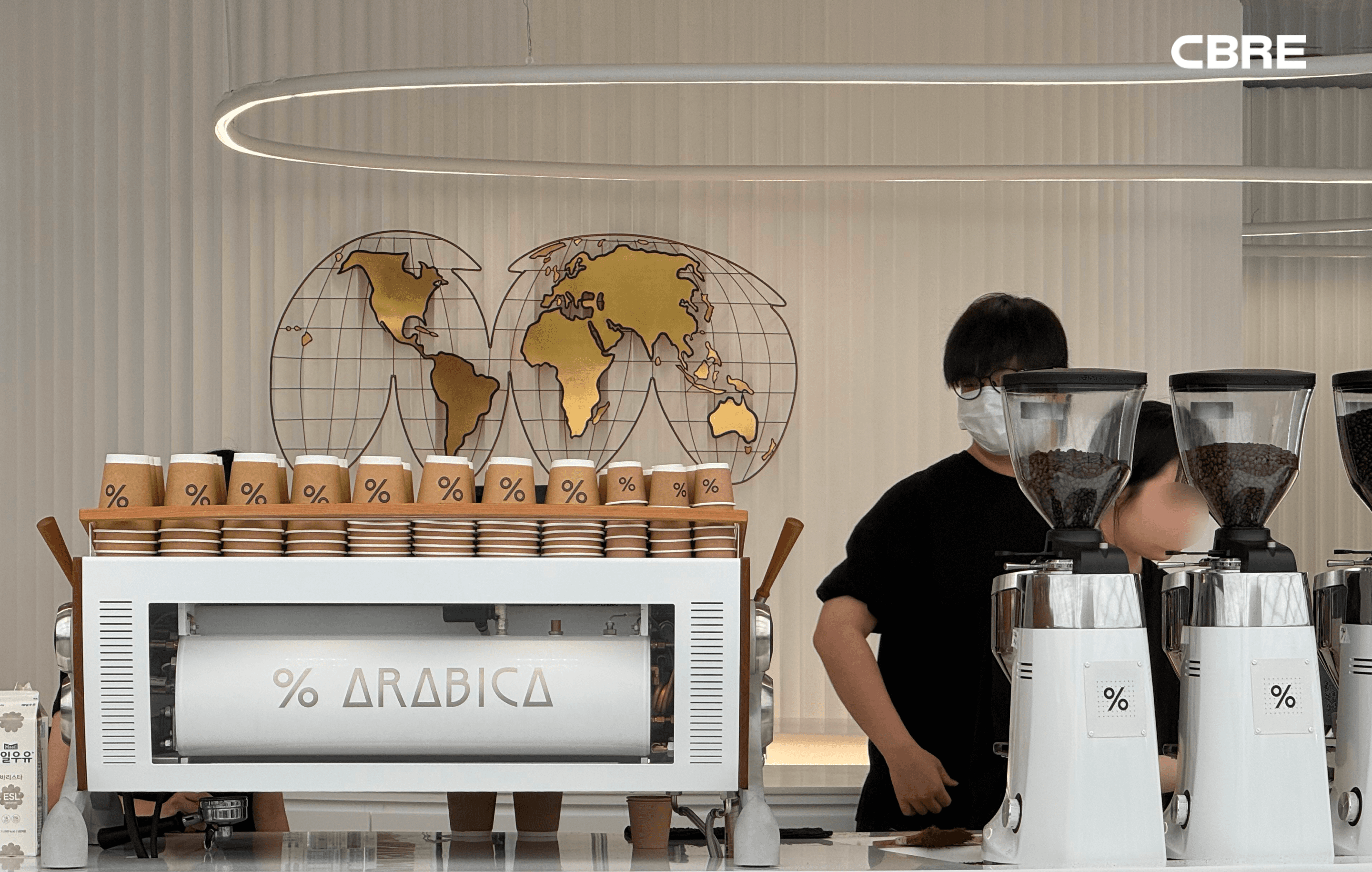
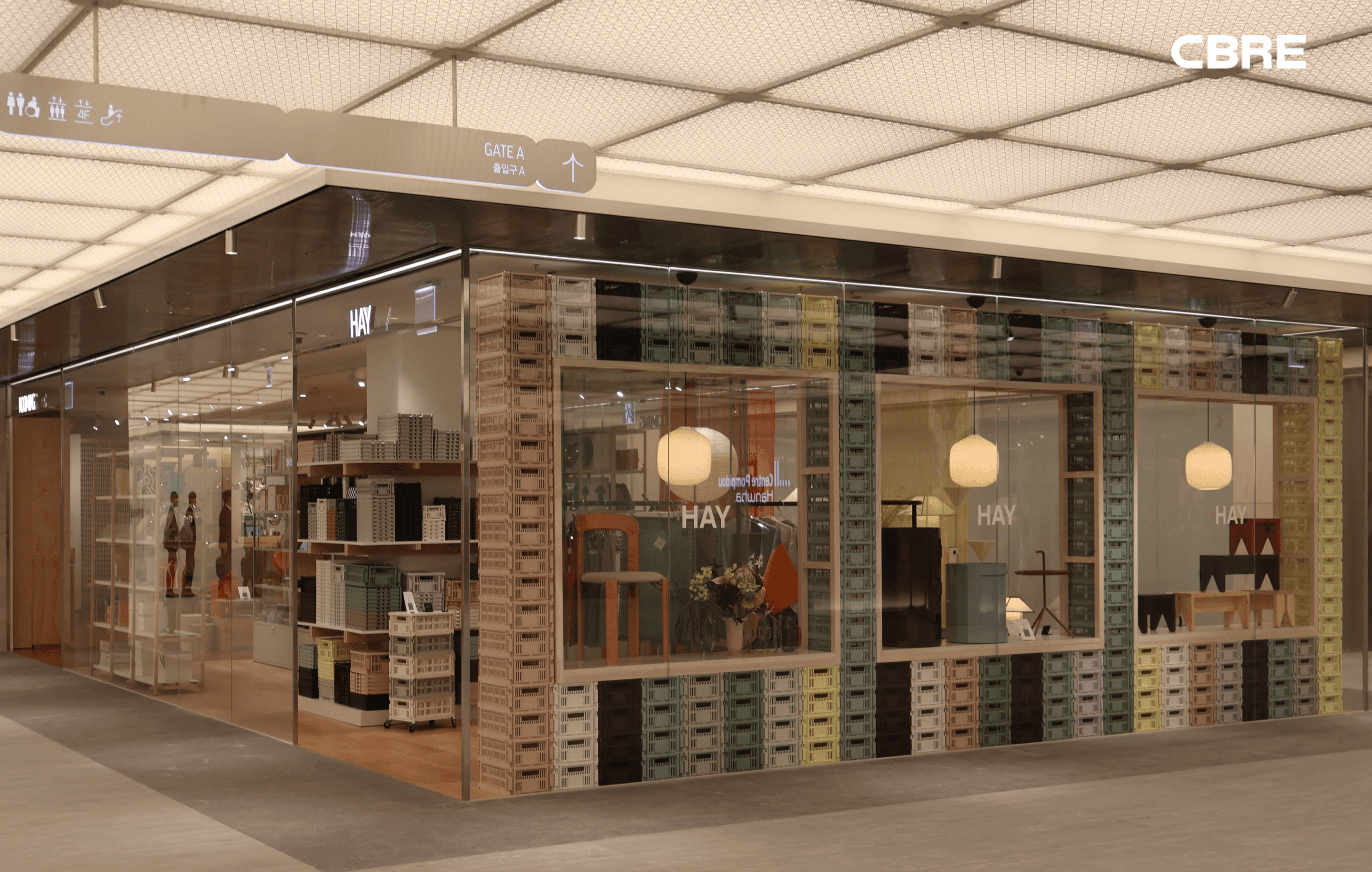

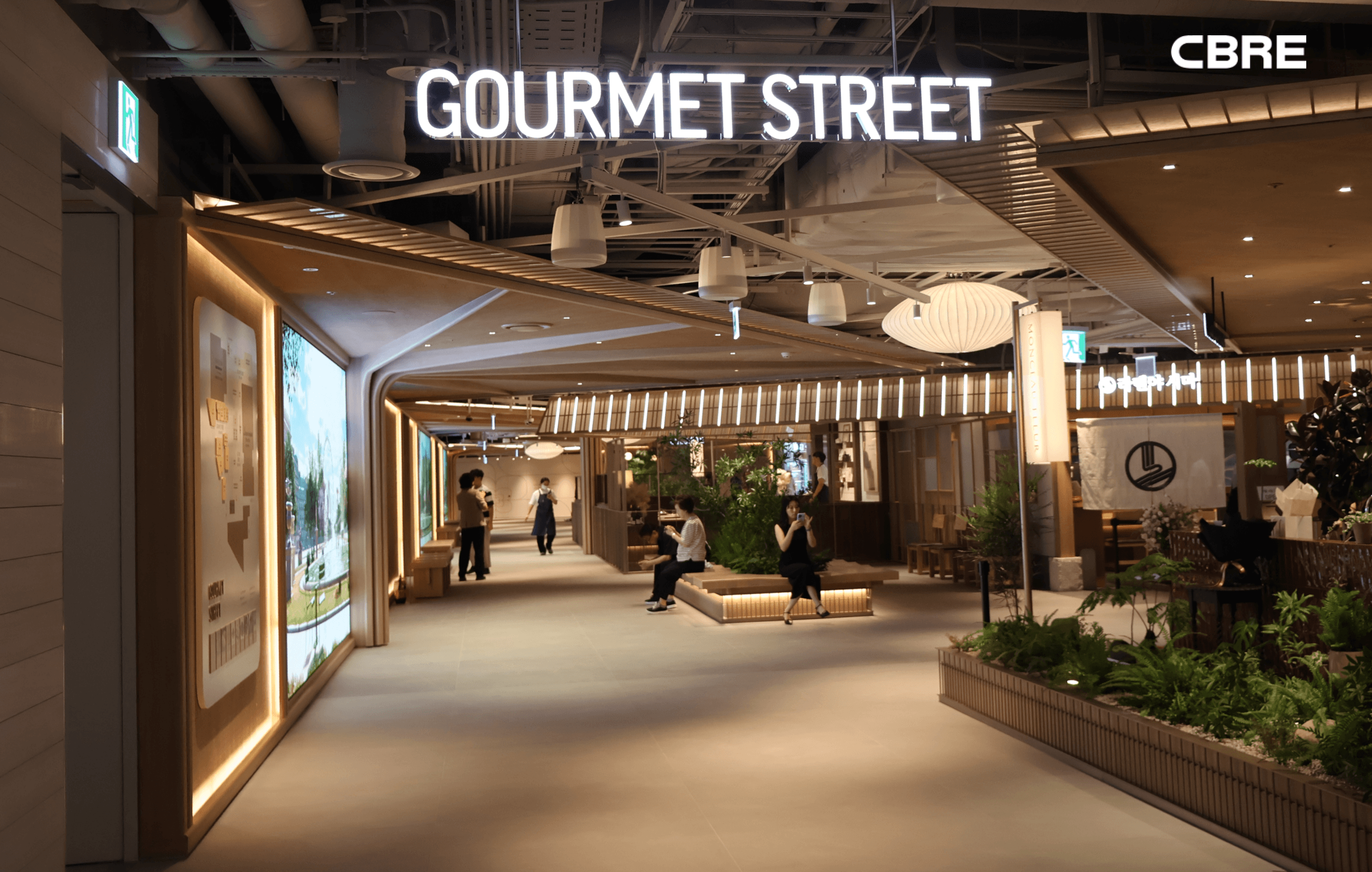
When the 63 Building reopened in June 2026, it ensured foot traffic flowed seamlessly from the museum directly into the retail space. "Culture Street" gathered living and lifestyle select shops alongside % Arabica. % Arabica functions not only as a cafe but also as the primary gateway leading into the museum. "Welcome Street" introduced light F&B concepts, including the first domestic outpost of Island Vintage Coffee. "Gourmet Street" curated dining-oriented anchors such as the first Korean store of a Tokyo ramen specialist, an authentic Pyongyang naengmyeon institution, and a chef-driven contemporary Korean dining concept to capture destination dining demand. With the addition of the "63 Sky Picnic" observatory—reopened for the first time in 16 years—exhibition, shopping, dining, and scenic views were fully integrated into a unified visitor journey. Sales significantly exceeded expectations, but the greater takeaway was distinct: it demonstrated that aging office amenities can be repositioned as an enduring destination landmark that gives people a compelling reason to visit when legacy spaces are upgraded and culture, retail, and dining are woven into a single cohesive experience.
Retaining Facilities and Replacing Tenants
There are other successful precedents where existing kitchen and MEP facilities were preserved to drive performance. A Chinese dining venue in a prime CBD office took over part of the previous tenant's built-out infrastructure and achieved more than double its predecessor’s revenue. The tenant mitigated initial capex and operational risk to open far faster, while the landlord curtailed vacancy downtime—a mutually beneficial structure.
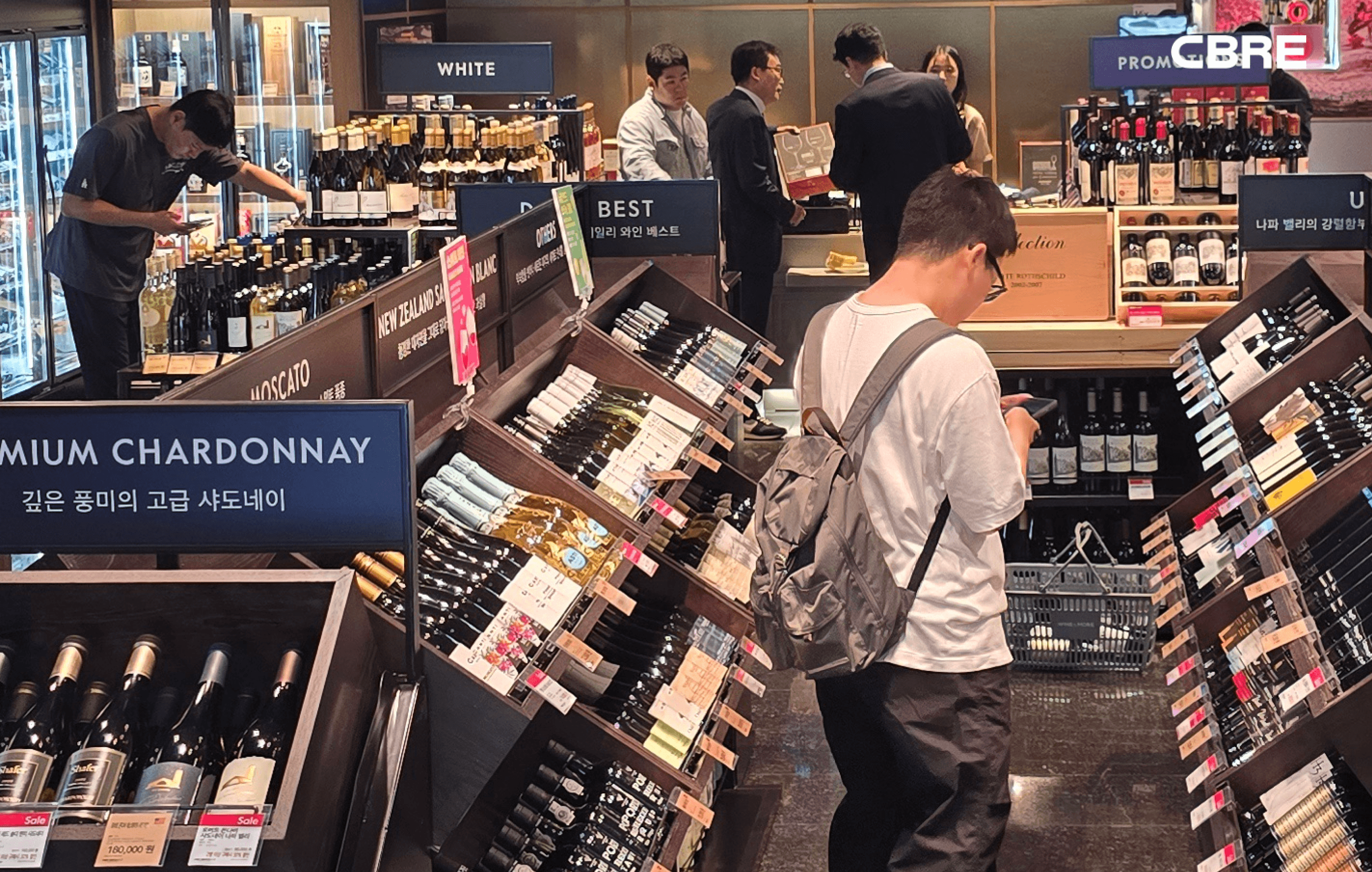
The impact of changing a single tenant rarely ends at that individual unit, especially when it involves an anchor tenant. Brands often base their expansion decisions on which operators have already committed to a building; establishing an anchor is therefore essential to shaping the property's entire MD blueprint. At Gangnam Finance Center (GFC), the fitness zone presented challenging operational constraints, spanning approximately 550 pyeong of dedicated area with a 7-meter ceiling height across two levels and a large-scale sauna. CBRE connected the property with Buffet Ground, which had established a track record across prime office assets, and the brand dedicated months to preparing a customized brand identity tailored exclusively to GFC. On the same building's lobby level, addressing the landlord's concern over an already saturated cafe presence after a bookstore vacated, Wine & More was introduced. The flagship-style store reshaped the lobby atmosphere and delivered robust sales, leading Wine & More to evaluate additional office building locations.

Co-Planning the Asset from Inception
The preceding cases illustrate how selective modifications to existing assets can drive value appreciation. While such value-add approaches are highly effective, late advisory intervention can make it challenging to fulfill required operational conditions even when suitable tenants are identified. When parameters such as floor area, circulation, facade, electrical capacity, and HVAC/exhaust systems are already fixed, spaces frequently fail to meet brand specifications; similarly, committing to lease renewals or tenant replacements without thorough preliminary review can forfeit opportunities to secure superior operators or optimize the tenant mix. Partnering from the very inception of planning allows modifiable elements to be prepared in advance, while fixed constraints can be matched early with viable tenants and tailored spatial strategies. Crucially, advisory engagement must begin while options remain open to evaluation and adjustment.
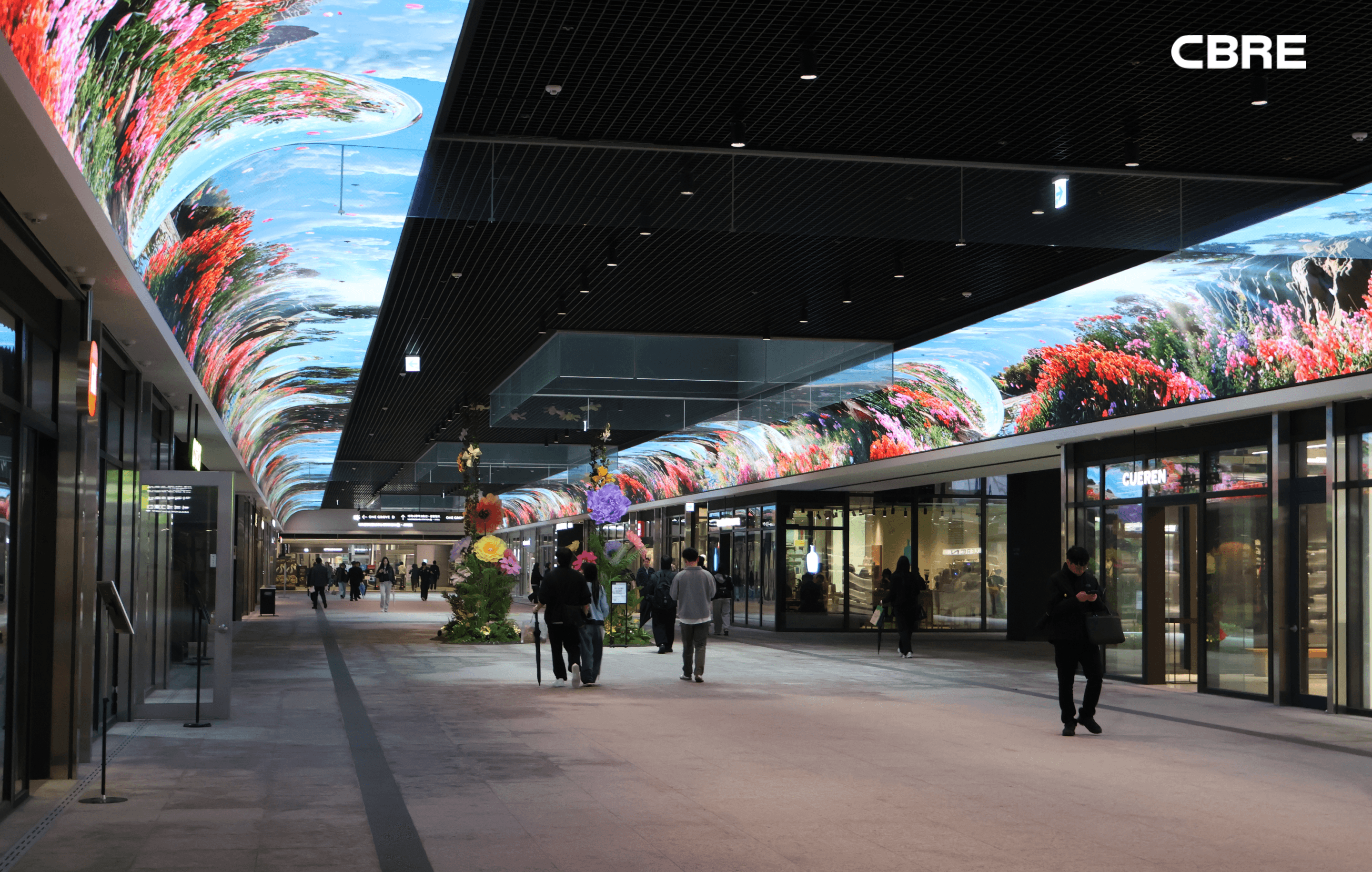
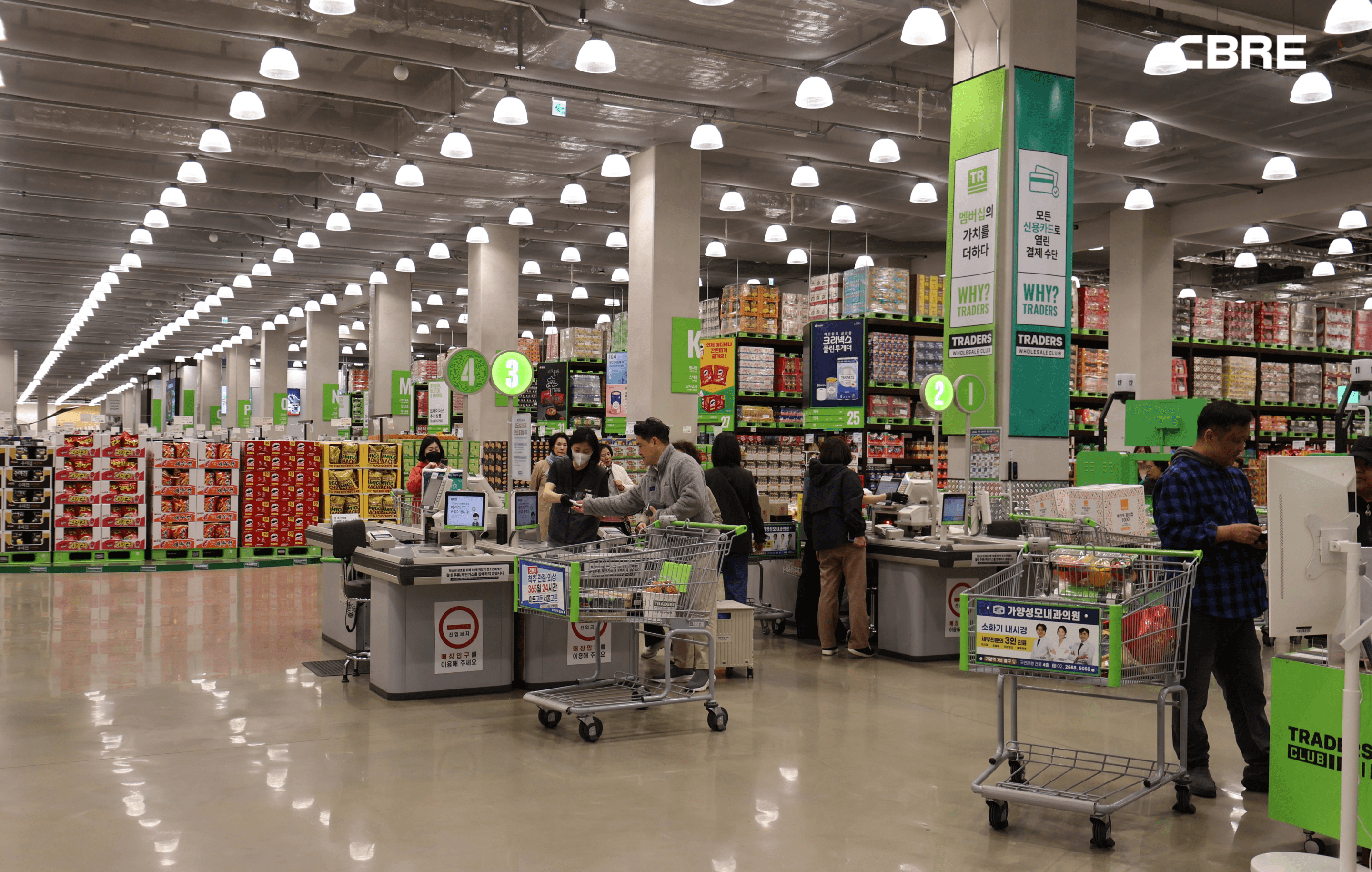
Although not strictly a value-add case, One Grove in Magok exemplifies strategic collaboration initiated at the earliest planning stages. Opened in 2025, One Grove is an asset where CBRE co-planned the retail program alongside the landlord from day one. Conducting weekly alignment sessions, both teams systematically curated the MD mix and finalized incoming brands. While shaping the mall into a destination venue in its own right, the plan integrated direct synergy with Traders Wholesale Club, daily convenience, and dining services tailored to office tenants. For brands hesitant to commit, the team identified specific barriers to entry, validating commercial viability through pop-ups or resolving technical and mechanical challenges to execute final leases. As of October 2026, the retail occupancy rate achieved through this collaborative process stands at 98.6%—a direct outcome of co-designing the retail blueprint from inception, eliminating the need for post-completion value-add intervention.
Knowing the Right Brands and Operating as One Team with the Landlord
The ultimate success of a value-add strategy hinges on curating the right brand for each specific space. High revenue potential does not automatically translate into a brand's willingness to enter an office setting. Wellness grocers targeting affluent professionals in their 30s to 50s, premium formats of major coffee chains, and gift-oriented dessert brands actively favor office locations. In contrast, brands driven by Instagram-led footfall among teens and young adults or those heavily reliant on distinctive exterior staging prioritize high streets. Recently, however, prominent brunch restaurants and specialty coffee brands that established strong cachet in Seongsu, Seochon, and Dosan are increasingly expanding into prime office assets. For CBRE Korea Retail, advisory begins with an acute understanding of which brands are currently seeking which specific locations.
Consequently, advisory moves far beyond simple brokerage, simultaneously evaluating physical constraints, submarket catchment demand, and brand rollout strategies. When selecting an anchor, operational capability and expansion intent carry greater weight than sheer name recognition. The advisory team partners closely with the landlord across the entire spectrum—from orchestrating the MD mix to prevent tenant cannibalization, to negotiating detailed lease terms with incoming operators. Addressing potential friction—such as reassuring adjacent operators when a buffet concept with overlapping menus enters—is integral to this process. Office retail demands a long-term perspective: establishing the initial tenant mix is critical, but preserving and evolving that structural balance over time is equally vital.
As noted earlier, the optimal timing for retail advisory is the moment a landlord begins considering change. This applies not only to acquisitions, new developments, and major renovations, but equally to decisions surrounding lease renewals and tenant replacements. Engaging early allows landlords to define clear directions grounded in actual asset demand and brand requirements, ensuring operational readiness for seamless execution. To meet each landlord’s unique objectives, CBRE Korea Retail approaches every mandate as a dedicated team rather than relying on a single individual. Each project mobilizes the professionals best equipped to resolve its specific challenges, drawing upon the collective expertise and comprehensive brand network of the entire team. This enables clients to leverage organizational capability that extends far beyond individual practitioner capacity.
Office Retail and Beyond
The value of an office podium is rarely completed by flashy architectural renovations or a single anchor tenant alone. With the utility and demand patterns of office retail fundamentally shifting, value-add strategies that rigorously analyze both hardware and software to elevate an asset from multiple dimensions have become more crucial than ever. An office building is no longer an office space with ancillary amenities tacked on. It must be understood as an integrated synergy of 'office plus retail' where both components mutually reinforce and drive the asset's overall capital value. Ultimately, a sophisticated retail strategy that transforms spatial constraints into opportunities is the definitive way to maximize the asset value of an office property.
© Copyright 2026. All rights reserved.
This publication has been prepared in good faith, based on CBRE Korea's current anecdotal and evidence based views of the commercial real estate market. Although CBRE Korea believes its views reflect market conditions on the date of this presentation, they are subject to significant uncertainties and contingencies, many of which are beyond CBRE Korea’s control. In addition, many of CBRE Korea’s views are opinion and/or projections based on CBRE Korea’s subjective analyses of current market circumstances. Other firms may have different opinions, projections and analyses, and actual market conditions in the future may cause CBRE Korea’s current views to later be incorrect. CBRE Korea has no obligation to update its views herein if its opinions, projections, analyses or market circumstances later change.
Nothing in this publication should be construed as an indicator of the future performance of CBRE’s securities or of the performance of any other company’s securities. You should not purchase or sell securities-of CBRE or any other company-based on the views herein. CBRE Korea disclaims all liability for securities purchased or sold based on information herein, and by viewing this publication, you waive all claims against CBRE Korea as well as against CBRE Korea’s affiliates, officers, directors, employees, agents, advisers and representatives arising out of the accuracy, completeness, adequacy or your use of the information herein. No part of this publication may be reproduced, quoted, distributed, or disclosed to any third party without the prior written consent of CBRE Korea.

market
Oct 19, 2026
Office Retail | Causes of Long-Term Vacancies and Solutions
Can lease terms alone fill vacancies?

market
Oct 12, 2026
Is reconstruction without commercial facilities the right answer?
The Next 10 Years of Redevelopment Commercial Real Estate

market
Oct 6, 2026
The laws that move the high street, which even small-scale building investors should know
The era of landlords who only collected rent is over
market
Aug 24, 2026
Retail Ownership: The Era of Brands Becoming Landlords
From Leasing to Buying: The Ultimate Playbook for Space Strategy
market
Aug 18, 2026
K-Brand US Market Entry Strategy
NY vs. LA Commercial District Comparison and Retail Success Formula

market
Aug 3, 2026
The Busan Commercial District Transformed by Foreigners
The shifting consumer landscape shaped by a wave of 3.64 million people
market
May 26, 2026
2026 Retail Market Insights from the Head of CBRE Korea Retail
From Seoul to the globe, the variable determining the success or failure of retail spaces is shifting from 'where' to 'how'.

market
Apr 13, 2026
It starts with data and is completed in the field
The Essence of the 2026 Retail Market, According to CBRE's Head of Research
market
Apr 13, 2026
The End of Strata Retail?
Supply is down on paper. Vacancies are up on the ground. The hidden oversupply and structural flaw behind Korea's pre-sale retail crisis.
market
Apr 13, 2026
Two Years Locked in Permits
The real cost of overseas retail expansion without a project management framework — why permit risk has to be resolved before the lease is signed.
market
Apr 13, 2026
From Supporting Role to Lead: Office Retail
From basement canteen to asset value driver — fifteen years of structural change in Seoul's office building retail, from Centre One to Olive Young N Seongsu.

market
Apr 13, 2026
Why Gut Instinct Kills Your Flagship Store
Thirty-one retail real estate practitioners rank what actually determines flagship store performance.

market
Apr 13, 2026
Know Anyone Good to Set Me Up With?
How leasing decisions are actually made in Seoul's most competitive retail districts — and why the broker in the middle determines the outcome.
market
Apr 13, 2026
New Era, New Areas
Korean brands are going global. The ones that make it understand one thing first: overseas leasing is a credit game, not a rent game.

market
Apr 13, 2026
It's Not That They're Not Spending
Why foreign visitor spending data is replacing card transactions as the next frontier in retail intelligence.
market
Apr 13, 2026
You are so Beauti-cal
Dermatology clinics are now the most sought-after anchor tenants on Gangnam street
market
Apr 13, 2026
Reading a Brand's DNA Before They Do
The retail MD practitioner's job is translation — turning a brand's qualitative language into measurable spatial conditions. What that looks like in practice.