Back
Share
Like

street
Article Highlights
You cannot read a commercial district simply by the numbers showing an increase in foreign visitors. You have to look at what customers from which countries are looking for in that district that they cannot find in their home countries.
Hannam: Japanese visitors spend money on products they cannot buy in Japan, such as Korea-exclusive lines or emerging brands that do not yet have stores in Japan. Chinese visitors explore trendy, emerging brands while also seeking out global brands that offer a price advantage compared to their home country.
Dosan: As global brands gathered—where visitors can buy limited-edition items that are hard to find or brands that do not yet have stores in China at more reasonable prices than in their home country—Chinese visits (up 121%) and card spending (up 128%) surged significantly. Japanese visitors enjoy taking walks and experiencing F&B, such as bakeries, in Dosan that offer spatial experiences not found in their own country.
Hannam and Dosan Park are Seoul's representative street commercial districts, located just a ten-minute drive apart. While both areas have seen an increase in foreign visitors over the past year, trends diverge sharply when broken down by nationality. According to the Korea Tourism Organization, 2.7 million Japanese tourists visited South Korea between January and August 2026, marking a 17.5% year-over-year increase. However, comparing the most recent year (September 2025 – August 2026) to the same period the previous year using Korea Tourism Data Lab figures reveals that Japanese visitors to Apgujeong-dong (home to Dosan Park) increased by 21%, while those visiting Hannam-dong decreased by 6%. Although Chinese tourists increased in both districts, the growth was far steeper in Dosan (121%) than in Hannam (73%). Does this mean that Dosan, with its more rapid numeric surge, has solidified its dominance, while Hannam’s momentum has weakened?


Above: Hannam; Below: Dosan. Both are core commercial districts in Seoul demonstrating formidable drawing power with morning "open runs" and long waiting lines.
Evaluating a commercial district solely by the growth rate of foreign foot traffic is a one-dimensional approach. One must look closer at the behavioral patterns inferred from foreign consumer spending. According to CBRE Korea Retail’s analysis of foreign credit card transaction data and spending patterns by district, Japanese transactions are evenly distributed across various stores, but the locations showing notably higher transaction sizes are those offering exclusive product lines not available in Japan or brands that have yet to enter the Japanese market. Similarly, Chinese tourists spent heavily at global brand stores that have not yet launched in their home country or offer superior price competitiveness due to exchange rates and tax benefits. Though nationalities differ, their spending criteria remain identical: foreign shoppers open their wallets more readily for items that are difficult to find back home or can be purchased at more reasonable prices than in their home countries. However, what constitutes "unavailable at home" differs between Hannam and Dosan.
Hannam District: Japanese Shoppers Exploring K-Brands vs. Chinese Shoppers Targeting Global Brands & K-F&B
Hannam is a commercial district that has grown since 2018 as emerging domestic designer brands established their first brick-and-mortar bases here. Mardi Mercredi aggressively expanded its showrooms after opening its first store in Hannam in 2020, while Nonfiction and Emis also solidified their brand presence by using Hannam as their launchpad. For foreign tourists, Hannam served as the initial stage where they could directly encounter the unique identity of K-brands unavailable in their home countries.
Japanese Shoppers — Shifting from K-Brands Expanding to Tokyo to Those Not Yet in Japan
For a time, the primary reason Japanese tourists visited Hannam was for brands like Mardi Mercredi, Nonfiction, Emis, and Amomento. Convinced of local market demand by the long lines of Japanese shoppers outside their Hannam stores, these brands successively established footholds in Tokyo starting in 2024. Mardi Mercredi expanded to Daikanyama in June 2024, followed by Nonfiction in March 2025, and Emis and Amomento in October 2025. As these brands' products became readily accessible in Japan, the incentive to visit Hannam solely to purchase them naturally declined. The slight drop in Japanese visitors to Hannam-dong is largely attributable to this overseas expansion of K-brands rather than a decline in the district's intrinsic appeal.

Instead, the spending of Japanese visitors in Hannam has decisively shifted toward products that strictly cannot be acquired in Japan—primarily Korea-exclusive lines and emerging brands that have yet to enter the Japanese market.
According to CBRE Korea Retail's analysis, the average transaction amount by Japanese shoppers in a building housing a global outdoor brand in Hannam rose by 28%. This is because the store carries an extensive array of exclusive, specialized lines not distributed in the Japanese market.
Meanwhile, Hannam stores of emerging domestic brands without official presence in Japan have recently shown steep growth. Over the past year, Japanese transaction counts more than doubled year-over-year, and sales from Japanese customers surged by a staggering 159%. With sharp increases in both domestic and foreign sales since last year, these brands are leveraging this momentum to plan full-scale overseas market entries.

Another K-brand store in Hannam displays an equally interesting indicator. At this women's apparel brand store—previously accessible in Japan only through pop-ups—Japanese transactions in September 2026 reached 1.5 times those of Chinese shoppers. While the broader floating population of Japanese visitors to Hannam has become somewhat dispersed, those who do visit demonstrate stronger purchasing power than before, opening their wallets for rare lineups and emerging brands absent from their home country.

Chinese Shoppers — Pairing Favorable Global Brand Pricing with Viral Café Tours
Chinese visitors to Hannam-dong maintained a steep upward trajectory over the past year, with foot traffic increasing by 73% and card spending rising by 72%. While Chinese tourists visit Hannam to explore trendy cafes and emerging designer brands discovered on platforms like Xiaohongshu, large-scale transactions actually occur in global brand stores that offer a distinct price advantage over their home market.
A large global brand flagship in the Hannam district clearly demonstrates this trend. Approximately two-thirds of the store's revenue over the past year came from foreign shoppers, with Chinese consumers accounting for 87% of that share. In contrast, Japanese customers—who have little reason to purchase in Korea due to their well-established domestic distribution network—did not even rank in the top 10 foreign sales nationalities. Compared to the tariffs and high distribution markups imposed on foreign brands in China, Korea offers a significant price advantage fueled by immediate foreign value-added tax (VAT) refunds and a weak Korean won.

Adding to this momentum, Swiss running brand On opened its first Korean street store in Hannam in March 2026, and premium activewear brand Alo also planted its flag in Hannam following Dosan. As flagship stores of global sports and wellness brands join an area once dominated by domestic designer labels, foot traffic from Chinese consumers seeking both price advantages and current trends is accelerating.

At the same time, Chinese shoppers actively utilize channels like Xiaohongshu to frequent Hannam’s F&B venues. Stylish cafes like Milestone, which went viral on Xiaohongshu as one of Korea’s "Top 3" Einspänner hotspots, have become essential stops, shaping visits centered around a blend of shopping and culinary exploration.

Dosan District: Japanese Bakeries & Spatial Experiences vs. Chinese Pursuit of Global Brands
Backed by the luxury infrastructure of Apgujeong Rodeo and Cheongdam-dong's luxury fashion street, the Dosan Park area has long served as a hub for high-end houses such as Hermès. Following the arrival of HAUS DOSAN in 2021 and London Bagel Museum Dosan in 2022, the demographic profile of visitors skewed dramatically younger, solidifying the area as a prime stage where prominent domestic brands roll out large-scale flagships leveraging proven brand awareness.
The clear difference from Hannam lies in the scale and clustering of brands. While Hannam is a district that grew around hidden-alley showrooms and emerging labels, Dosan capitalizes on Apgujeong and Cheongdam's luxury infrastructure, forming prominent clusters along main streets and prime corners with global mega-flagships—such as Supreme, Stüssy, and Alo—that capture massive capital and high average transaction values.
Japanese Shoppers — Bakeries and Leisurely Strolls
Although Japanese visitors to Apgujeong-dong increased by 21%, accounting for 19.3% of all foreign visitors, their share of foreign card spending was limited to 10.4%. Compared to their visit volume, their expenditure remains relatively modest. Because many global brands in Dosan already operate stores in Tokyo, Japanese shoppers have little motivation to buy them in Korea.
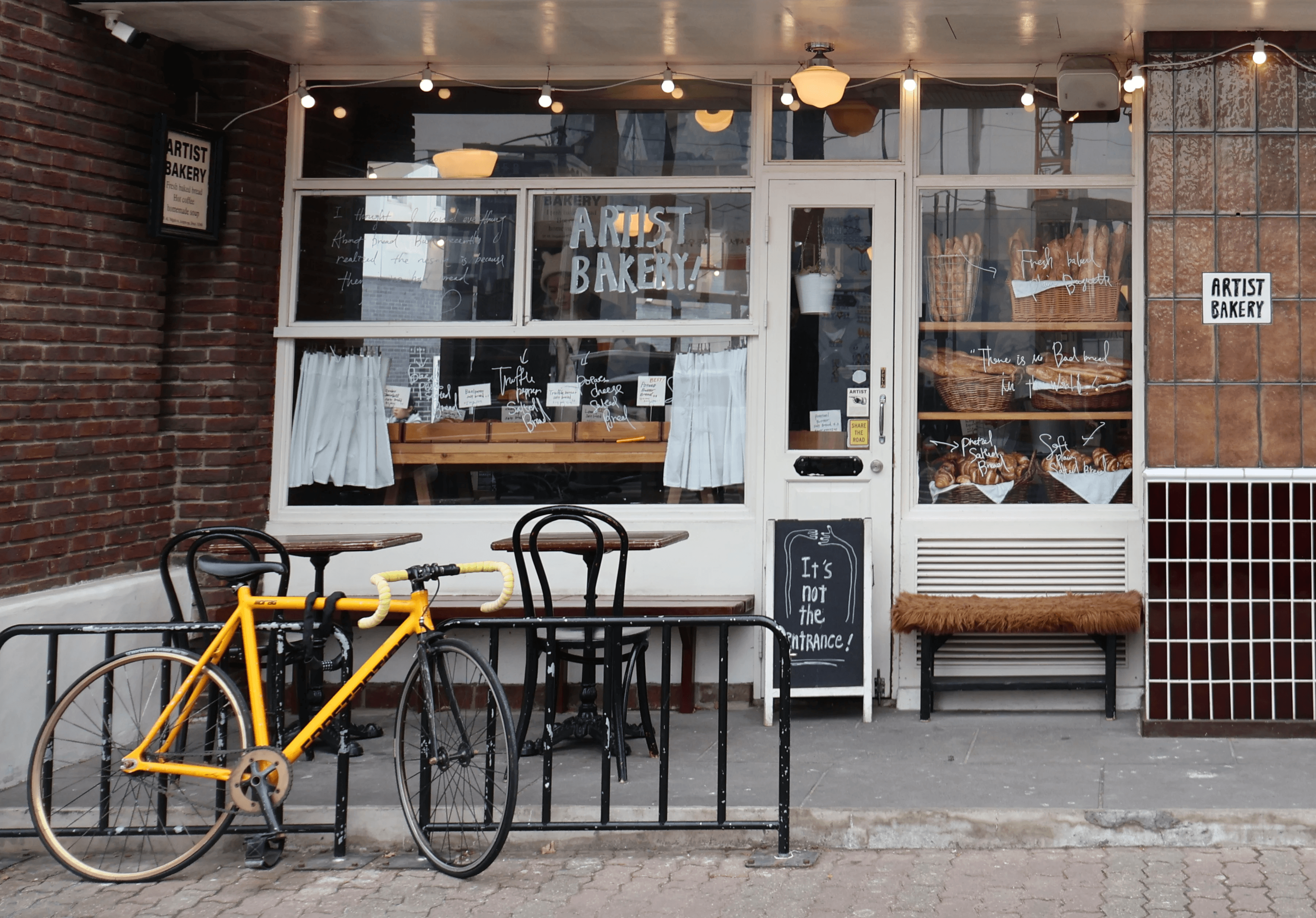
Instead, Japanese demand steers heavily toward F&B. According to CBRE Korea Retail analysis, foreign visitors accounted for approximately 40% of sales at a famous Dosan bakery brand over the past year, with Japanese customers making up 49.5% of that foreign total.


Japan is a confectionery and baking powerhouse with exceptionally high domestic bakery standards. Yet, the secret behind these Korean-style bakeries captivating Japanese tourists lies less in the taste of the bread itself and more in an unmatched format and experience absent back home. Bakeries and cafes in Japan are predominantly compact, neat, and minimalist. In contrast, this Korean brand meticulously brings an exotic vintage concept to life across interior props, packaging, staff uniforms, and music, transforming the entire store into a themed destination.
For Japanese consumers in their 20s and 30s, this is not merely a bakery; it is closer to a tourist attraction where they take photos and consume the ambiance. Ultimately, the "thing not available at home" that Japanese visitors seek in Dosan is not a tangible good, but a "spatial experience"—making stopping by bakeries and strolling through the neighborhood a distinctive itinerary unique to Dosan.
Chinese Shoppers — Purchasing Global Brands Unavailable or Hard to Find in China
Chinese consumers shape the commercial landscape with distinct scale and decisive spending power. This propensity to embrace both K-brands and global brands is even more pronounced in Dosan. A prime example is Alo. Alo opened its first Asian flagship in Dosan in July 2025; until it opened stores in Hong Kong and Shanghai in the fall of 2026, it was unavailable for purchase in China. Supreme and Stüssy have stores in China, but their limited weekly drops and city-exclusive items remain difficult to obtain anywhere. Pricing is also more favorable in Korea. Supreme's Shanghai store, opened in 2024, is considered among the most expensive in the world, with prices estimated to be roughly a third higher than in Japan. This is further magnified by the aforementioned VAT refunds and the weak won. According to CBRE Korea Retail, Chinese shoppers accounted for 46.5% of foreign sales at a foreign streetwear brand in Dosan, with their average spend per transaction exceeding twice that of Japanese shoppers at the same store.


Behind this influx of high-spending Chinese shoppers lies a macroeconomic shift in travel destinations. Amid strained China-Japan relations since late 2025, Japan National Tourism Organization (JNTO) figures show that Chinese visitors to Japan plummeted 56.7% year-over-year between January and August 2026. A substantial portion of the massive shopping demand once bound for Japan redirected to South Korea, directly channeling foot traffic into Seoul's premier shopping districts.
The True Nature of Data Commercial Districts and Brands Must Read
Between January and August 2026, foreign visitors to South Korea reached 15.05 million, up 21.6% from the same period the previous year. However, one should not expect uniform spending across all districts based merely on the macro indicator of rising foreign arrivals. Travelers spend money on what they cannot experience at home. Just as Koreans seek out brands exclusive to destination countries and purchase goods with more favorable pricing than in Korea, foreign tourists open their wallets for brands, experiences, or price advantages unavailable in their domestic markets.
In Hannam, Japanese shoppers buy Korea-exclusive lines and emerging designer brands absent in Japan, while Chinese shoppers purchase global brands with significant price advantages over home and visit viral cafes discovered on Xiaohongshu. In Dosan, by contrast, Japanese shoppers stop by bakeries and enjoy walking the streets to experience distinctive spaces not found in Japan, while Chinese shoppers spend heavily on global mega-brands that are either unavailable domestically or cheaper to buy in Korea. While Japanese shoppers demonstrate nuanced consumption patterns, shifting tastes and routes depending on the district, Chinese shoppers treat both Hannam and Dosan as prime destinations to aggressively target price-competitive global brands. Behind the identical headline metric of "rising foreign visitors," who visits each district and what they buy are completely different.
In retail operations, this seemingly simple difference dictates which stores attract concentrated spending and which ones are bypassed. Landlords and brands opening stores or planning commercial assets in these two districts must look beyond the one-dimensional figure of "increasing foreign foot traffic." They must first use data to decipher which nationality's unmet needs—brand scarcity, price advantages, or spatial experiences—align with their specific location and asset.
Ultimately, the core of analyzing foreign visitor data is not "how many foreigners are coming," but holistically identifying "which nationality opens their wallet at this store, and why." Spending dynamics within a commercial district are constantly reshaped by home-country exchange rates, economic conditions, and brand global expansion roadmaps. This is why commercial history and store-level transaction data must be cross-analyzed from multiple angles. Only by decoding the underlying spending motivations behind the data can brands identify optimal locations and timing where target customers genuinely respond, and landlords build sophisticated tenant mixes aligned with qualitative shifts in the market.
© Copyright 2026. All rights reserved.
This publication has been prepared in good faith, based on CBRE Korea's current anecdotal and evidence based views of the commercial real estate market. Although CBRE Korea believes its views reflect market conditions on the date of this presentation, they are subject to significant uncertainties and contingencies, many of which are beyond CBRE Korea’s control. In addition, many of CBRE Korea’s views are opinion and/or projections based on CBRE Korea’s subjective analyses of current market circumstances. Other firms may have different opinions, projections and analyses, and actual market conditions in the future may cause CBRE Korea’s current views to later be incorrect. CBRE Korea has no obligation to update its views herein if its opinions, projections, analyses or market circumstances later change.
Nothing in this publication should be construed as an indicator of the future performance of CBRE’s securities or of the performance of any other company’s securities. You should not purchase or sell securities-of CBRE or any other company-based on the views herein. CBRE Korea disclaims all liability for securities purchased or sold based on information herein, and by viewing this publication, you waive all claims against CBRE Korea as well as against CBRE Korea’s affiliates, officers, directors, employees, agents, advisers and representatives arising out of the accuracy, completeness, adequacy or your use of the information herein. No part of this publication may be reproduced, quoted, distributed, or disclosed to any third party without the prior written consent of CBRE Korea.

street
Sep 21, 2026
The Seongsu-dong Alley Chosen by Supreme | The Rise of 'Between-the-Alleys Commercial Districts' Noted by CBRE
Seongsu-iro 7-gil, chosen by Supreme and New Era

street
Sep 3, 2026
Why Global Brands Are Heading Back to Myeong-dong
The Generational Shift and Retail Analysis of a 100-Year-Old Prime Shopping District

Street
Jul 27, 2026
Dosan Park Commercial District Analysis | The Alley Where Brand Drives Land Value
Comparing Seongsu with Dosan: the opposite growth formulas of two Seoul hotspots

street
Jul 13, 2026
Gangnam ② - Medical Accounts for 75% of Gangnam-daero Sales
A place where hospitals fill the upper floors emptied by the pandemic, and attracting spending from international visitors.

street
Jun 22, 2026
Gangnam ① - Gangnam-daero Retail, Chosen by Global Brands
From 18 vacancies three years ago to just two. The real reason why low-floor retail along Gangnam-daero has made a complete comeback.

street
May 26, 2026
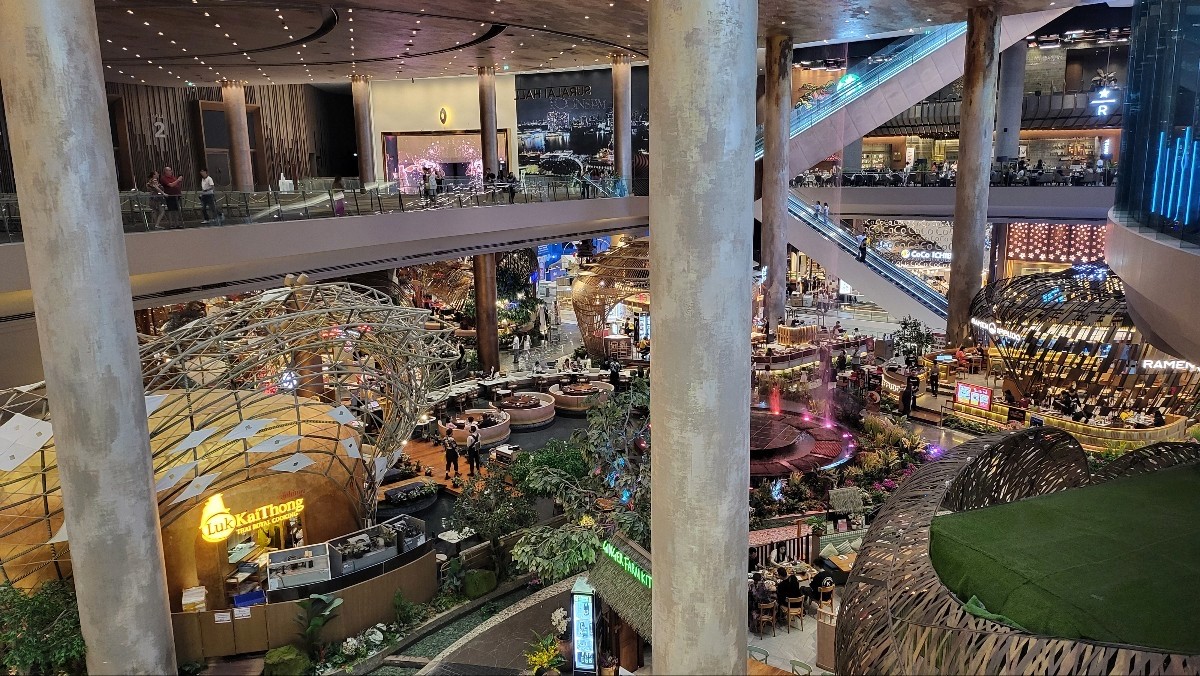
Bangkok Retail 101 ②
Bangkok shopping malls want K-brands. The question is how to get in.
street
May 26, 2026
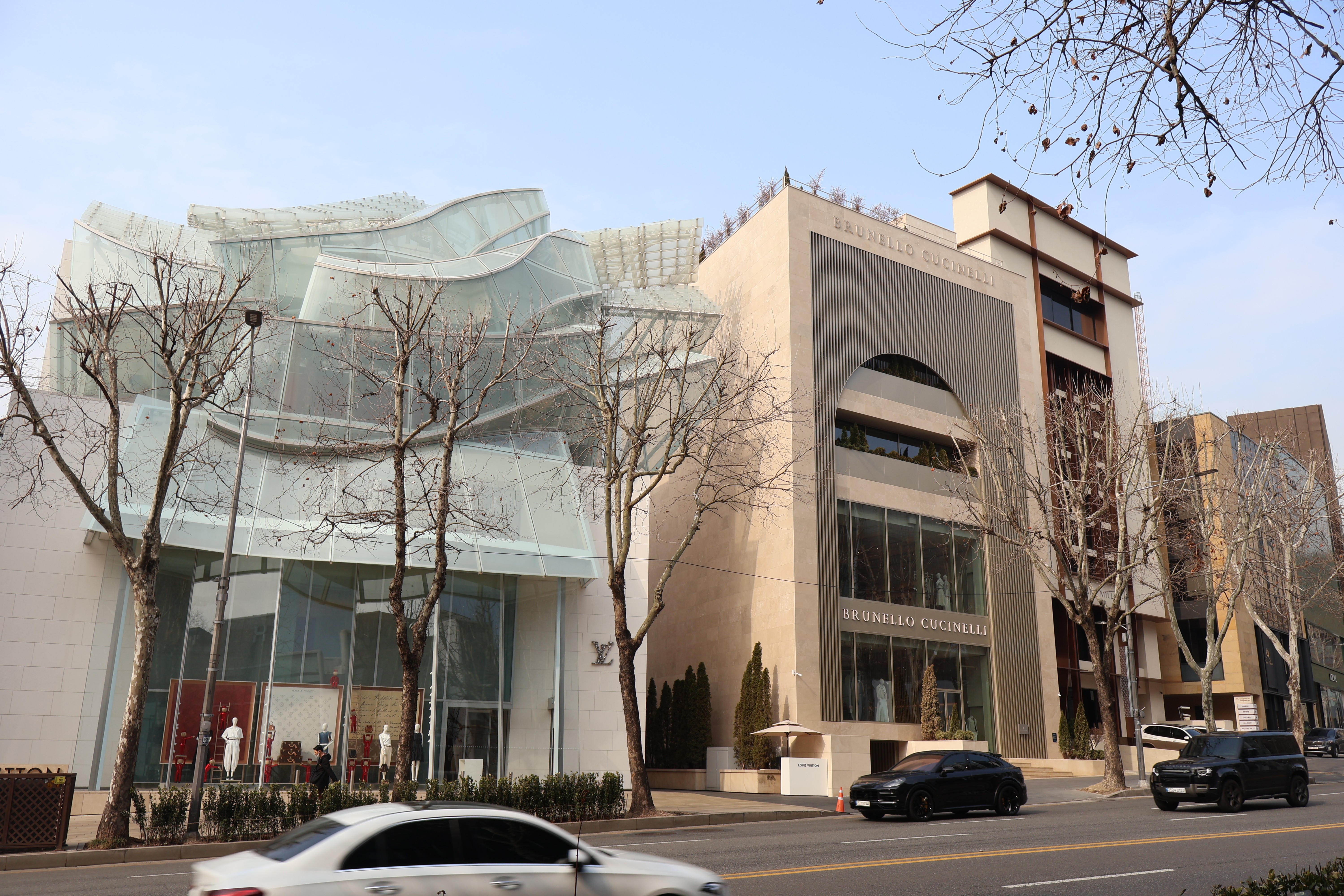
Bangkok Retail 101 ①
The Developer's Playground: What Sets Bangkok's Retail Evolution Apart from Seoul
street
Apr 13, 2026
Cheongdam: The Art of Elegant Detachment
High jewelry chases the light. Fashion houses build walls. A structural analysis of how capital occupies Cheongdam — and why this street operates by rules that apply nowhere else in Seoul.

street
Apr 13, 2026
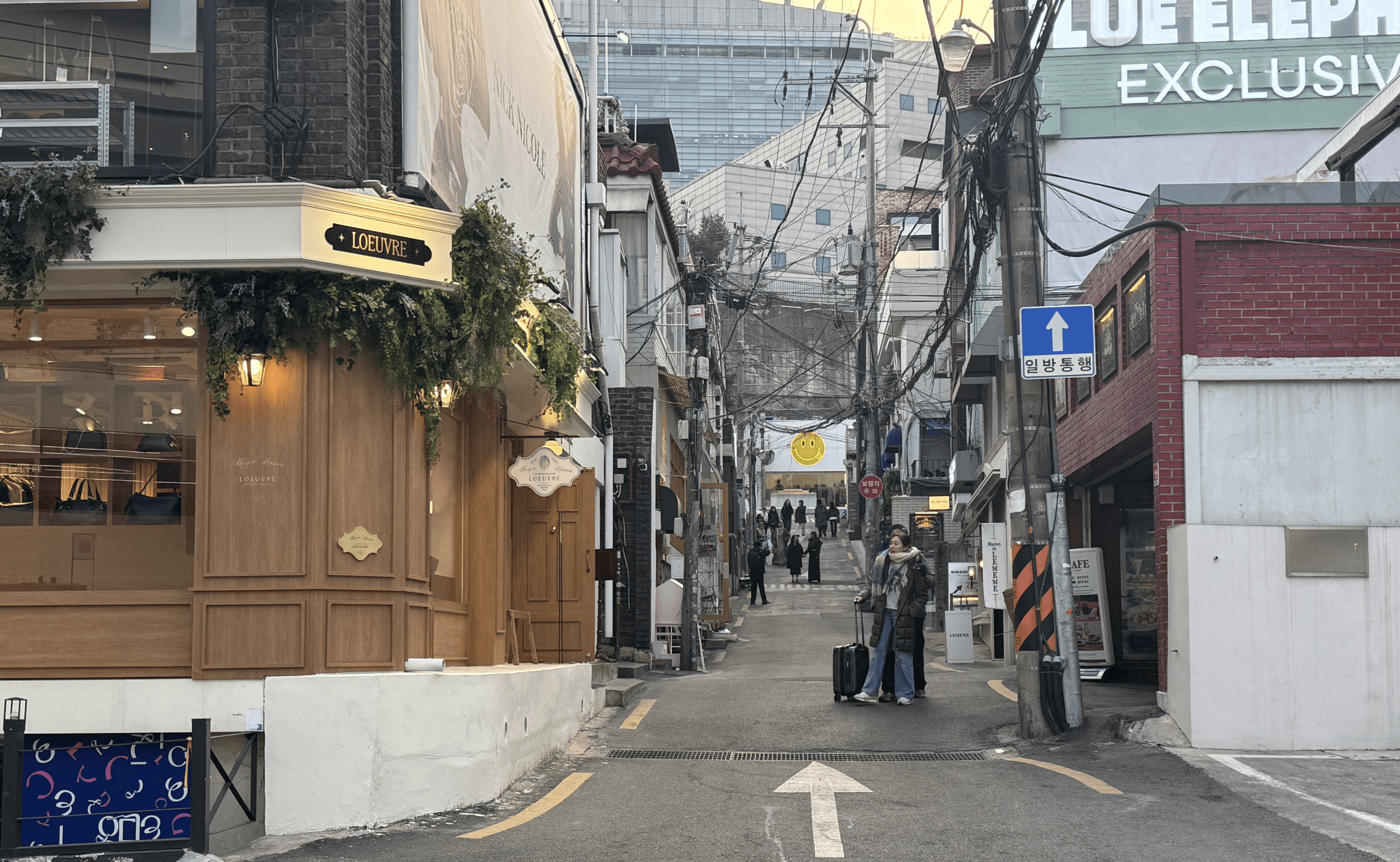
Hannam-dong, Seoul's private club. ②
Zero vacancy. Key money reaching 1.3 billion Korean won. Inside Hannam-dong's brand selection market, where who you are matters more than what you offer to pay.
street
Apr 13, 2026
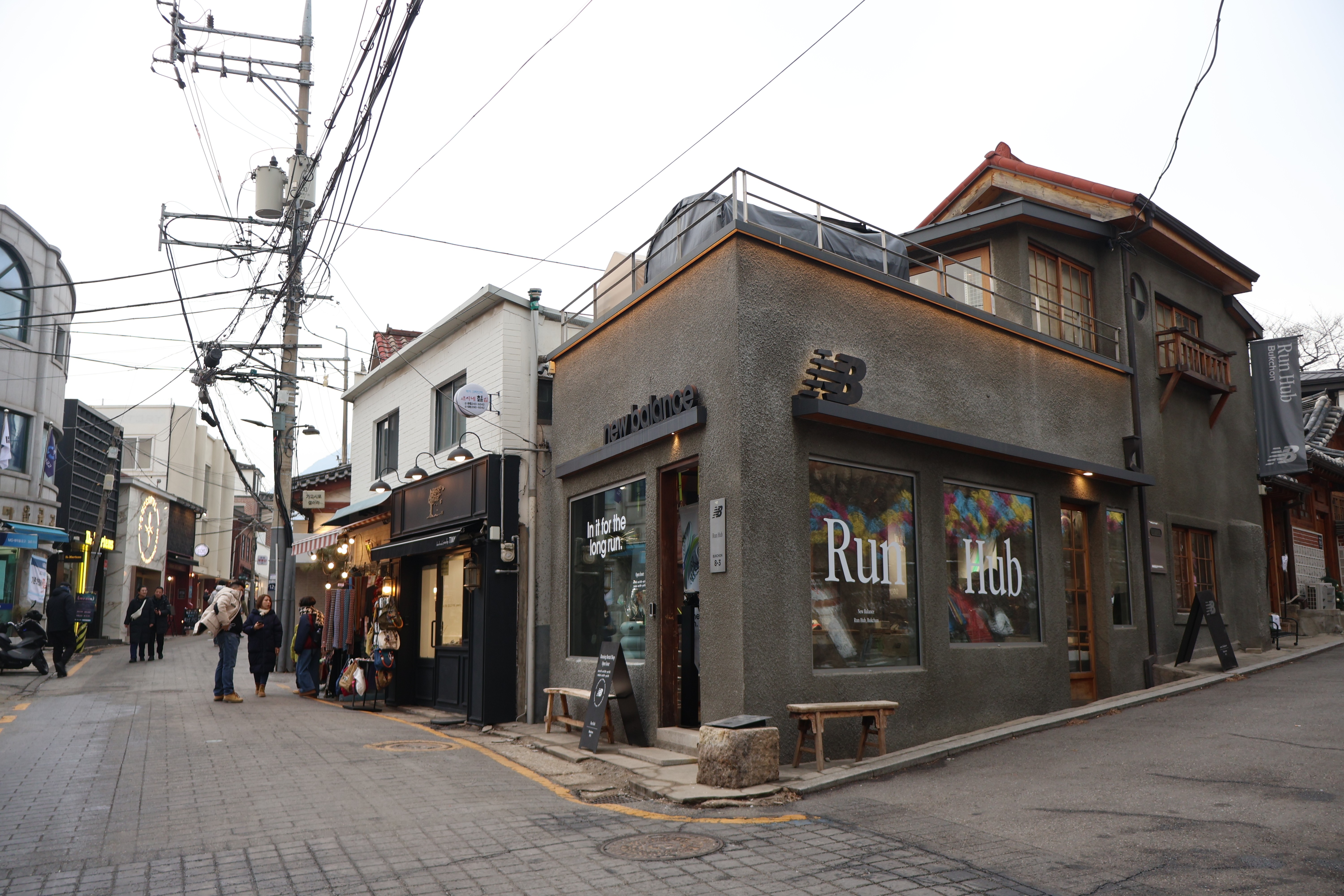
Hannam-dong, a private club in Seoul. ①
Between Seongsu's raw energy and Dosan's polish — how Hannam-dong became Asia's most credible ground for testing a global brand's Korea positioning.
street
Apr 13, 2026
Same Bukchon, Different Strategy ③
Blue Bottle, New Balance, Adidas, Le Labo — how Hwadong and Sogyeokdong became the global flagship core of Seoul's Bukchon retail market.

street
Apr 13, 2026
Same Bukchon, Different Strategy ②
Why Amorepacific spent 30 billion won acquiring a hanok compound in Gahoe-dong — and how Bukchon-ro 5-gil became Seoul's fastest-growing K-brand retail cluster.
street
Apr 13, 2026
Same Bukchon, Different Strategy ①
Anguk Station and Gye-dong-gil: The entrance to Bukchon, focusing on the flagship near Anguk Station and the concentration of F&B on Gye-dong-gil.